一,How Large Are the Light Requirement Differences Across Greenhouse Zones
Different crops have significantly differentHow Large Are the Light Requirement Differences Across Greenhouse Zones
ally require a Daily Light Integral (DLI) of 12–17 mol/m²/d. Fruiting crops like tomatoes and peppers often need 20–30 mol/m²/d or higher for optimal growth and high yields. Ornamentals, succulents, or certain foliage plants may thrive at much lower PPFD levels of only 50–150 µmol/m²/s.
When a uniform lighting schedule is applied across the entire greenhouse, low-light-demand zones can suffer yield losses of 15–30%, while high-light-demand zones risk photoinhibition or burn. Research on crop responses to light consistently shows that failing to match PPFD and DLI to specific crop requirements directly reduces productivity and quality.
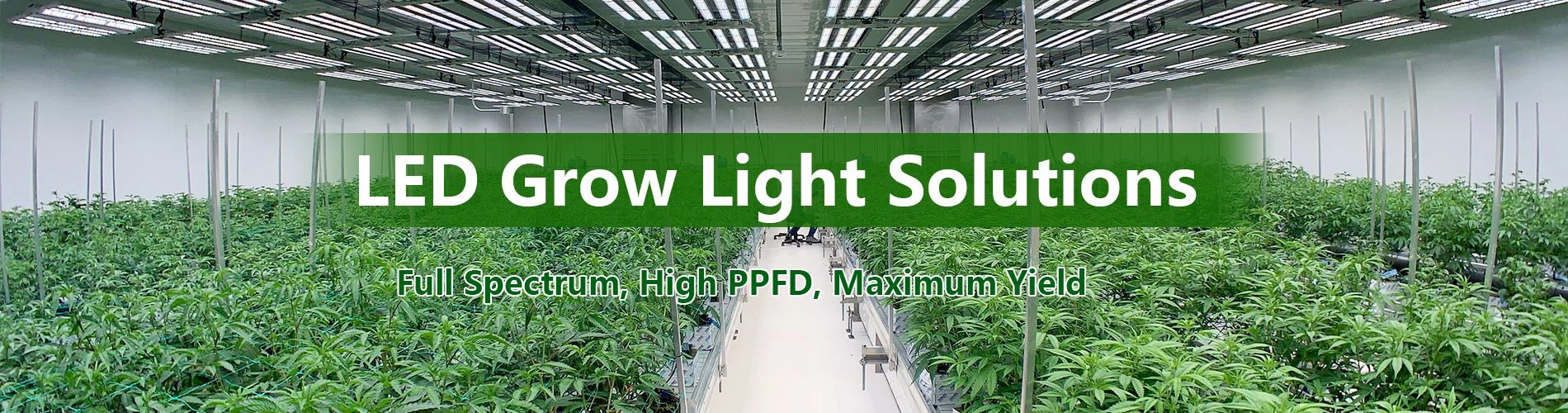
Greenhouse zone lighting control solves this by allowing independent dimming and scheduling for each zone. This forms the foundation of precision horticulture lighting, ensuring every square meter receives a customized light regime tailored to the crops growing there.
二, High electricity bills and lighting are the biggest controllable costs
In many greenhouses, supplemental lighting accounts for 30–50% of total electricity expenses. With rising energy prices, this becomes one of the few major operational costs that growers can actively optimize.
Traditional all-on/all-off systems waste substantial energy on sunny days when natural light already meets or exceeds crop DLI targets. Studies from Wageningen University & Research on energy-efficient greenhouse horticulture show that combining zone control with dimming and natural-light compensation can reduce lighting energy consumption by 20–40% in real-world scenarios.
Closed-loop DLI systems use sensors to monitor ambient light and automatically adjust LED output: full power on cloudy days and reduced to as low as 40% on bright days. This maintains ideal photosynthesis while significantly cutting unnecessary electricity use.
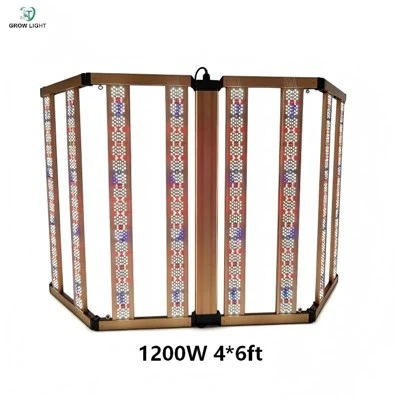
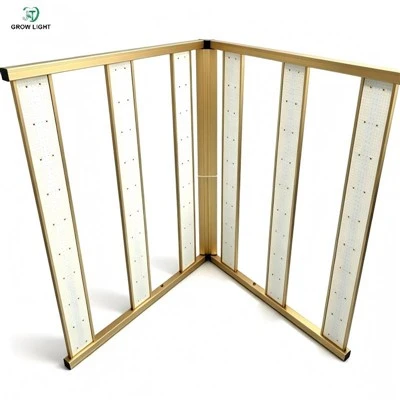
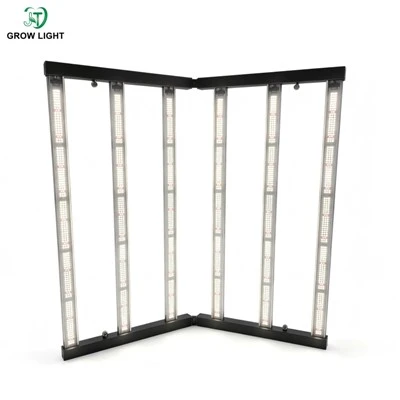
Modern Commercial LED Grow Light for Greenhouse fixtures equipped with 0-10V or PWM dimming make zone control both practical and highly effective. With zoning, lighting shifts from a fixed overhead expense to a flexible, precisely managed input.
3: Inconsistent Crop Growth Directly Drags Down Revenue and Increases Labor Costs
Uneven lighting leads to uneven plant development. Some plants mature faster than others, stretching harvest windows and requiring multiple selective picking passes. This increases labor hours for harvesting, sorting, and packaging while lowering overall operational efficiency.
Horticultural lighting standards emphasize achieving good uniformity (typically targeting a uniformity ratio of at least 0.7). Without zone control, it is difficult to consistently reach this target in large or multi-crop greenhouses.
Commercial case studies show that introducing zone control can improve harvest batch uniformity by more than 20% in flower and vegetable production. Better synchronization of crop development reduces labor needs and increases the percentage of high-quality marketable produce. Precision horticulture lighting achieved through zoning helps align growth rhythms, streamlining operations and enhancing profitability.
4: Lack of Precision Growing Creates Data and Control Blind Spots
Basic on/off lighting provides no real-time feedback and offers no ability to adjust spectrum or intensity according to growth stage. Seedlings and vegetative-stage plants often benefit from higher blue-light ratios for compact, sturdy growth, while flowering and fruiting stages respond better to increased red light for better sugar accumulation, color development, and higher brix levels.
Zone control combined with IoT sensors enables dynamic adjustments: continuous PPFD and DLI monitoring, growth-stage-specific spectral tuning (such as R:B ratio control), and seamless integration with overall greenhouse climate systems. This supports smart greenhouse energy saving while delivering measurable improvements in fruit quality and consistency.
Without zoning and sensor feedback, growers remain stuck in a reactive mode, missing opportunities to produce higher-value crops and use resources more efficiently.
5:Core Solution: Four Practical Ways to Implement Greenhouse Zone Lighting Control
Greenhouse zone lighting control can be implemented at different levels of complexity depending on your greenhouse size, budget, and goals:
1.Independent Circuit Switching - The simplest and lowest-cost option. Divide the space into zones with separate electrical circuits for basic on/off control per area. Ideal for smaller operations or as an entry-level solution.
2.0–10V or PWM Dimming per Zone - The most widely adopted commercial solution. Provides smooth, linear dimming and works seamlessly with most modern Commercial LED Grow Light for Greenhouse fixtures. Offers an excellent balance of performance and cost.
3.DALI or Zigbee Intelligent Networking - Fixtures become individually addressable, enabling granular grouping, advanced scheduling, and remote management via apps or central software. Well-suited for medium-to-large facilities needing scalability.
4.AI-Driven Closed-Loop Systems - The most advanced option. Integrates light sensors, weather forecasts, DLI prediction algorithms, and cloud analytics for real-time automatic optimization of intensity, spectrum, and timing.
Choose Commercial LED Grow Light for Greenhouse models that support your preferred dimming protocol and carry an IP65 (or higher) rating to withstand humid greenhouse conditions. Solid hardware ensures long-term reliability and easier future expansions.
6:Investment Return: ROI Framework for Zone Control Systems
Zone control delivers clear financial benefits. For a typical 1,000 m² greenhouse with electricity at approximately $0.12/kWh, implementing zone control with dimming can generate annual energy savings of $8,000–$15,000 by reducing waste and maximizing natural light utilization.
Studies on optimized supplemental lighting (including strawberries and other crops) show yield improvements of 10–20% through better uniformity, reduced plant stress, and stage-specific light strategies. These gains translate into higher revenue from both increased volume and improved quality.
LED grow light ROI can be estimated using this straightforward formula: (Annual energy savings + Revenue from yield and quality gains – Maintenance costs) ÷ Incremental investment × 100%
The incremental investment for controllers, wiring, and sensors typically pays back within 18–30 months. After payback, the system contributes positively to cash flow for years.
Here is a simplified 3-year Total Cost of Ownership (TCO) comparison (estimates based on aggregated university modeling and commercial energy reports; actual results vary by location, crop, and local energy rates):
|
Item |
Without Zone Control |
With Zone Control |
3-Year Benefit |
|
Annual Electricity Cost |
≈$28,000 |
≈$18,000 |
≈$30,000 savings |
|
Annual Crop Value |
Baseline |
+10–20% |
+$54,000–$72,000 (estimated) |
|
Incremental Investment |
$0 |
≈$25,000 |
- |
|
Net 3-Year Benefit |
- |
- |
+$59,000–$77,000+ |
7:Decision Checklist: Does Your Greenhouse Need Zone Control
Quickly evaluate your operation with these questions:
Is your greenhouse 500 m² or larger?
Are you growing two or more crops with different light requirements?
Does lighting account for more than 30% of your electricity operating costs?
Do you have expansion or crop diversification plans in the next 1–2 years?
If you answer "yes" to two or more questions, greenhouse zone lighting control is strongly recommended. For competitive, large-scale greenhouse production, it has become essential infrastructure rather than an optional upgrade.
Conclusion and Next Steps
Zone control transforms supplemental lighting from a blunt, one-size-fits-all tool into a precise, responsive instrument. It achieves smart greenhouse energy saving, enables true precision horticulture lighting, and significantly improves LED grow light ROI by ensuring every photon serves a specific purpose for your crops.
For commercial growers and agricultural investors, the benefits include lower operating costs, higher and more consistent yields, superior produce quality, and greater resilience against rising energy prices and variable weather.
Take action today:
Contact a professional greenhouse lighting team for a free, no-obligation lighting assessment and customized zone control proposal.
Download the Greenhouse LED Zone Lighting Buyer's Guide for detailed specifications, product checklists, and ready-to-use ROI calculation worksheets.
Share your current lighting challenges or greenhouse setup in the comments - our team is ready to provide practical, tailored advice.
Zone control is the smarter way to light your greenhouse. Your crops and your bottom line will both benefit.
References
Bugbee, B. (2021). Quantifying crop responses to light and validating the predictions of a crop simulation model. Utah State University. - https://digitalcommons.usu.edu/
Wageningen University & Research. (2022). Energy-efficient greenhouse horticulture. - https://www.wur.nl/en/research-results/research-institutes/greenhouse-horticulture.htm
USDA NRCS. (2023). Energy Efficiency for Agriculture: Greenhouse Lighting. - https://www.nrcs.usda.gov/
IES. (2021). RP-35: Recommended Practice for Horticultural Lighting. Illuminating Engineering Society. - https://www.ies.org/
UC Davis Controlled Environment Agriculture. (2022). Strawberry yield response to LED zone lighting protocols. - https://cea.ucdavis.edu/