Quantum Board Grow Lights
The Complete Buyer's Guide for Growers and Distributors
Quantum board grow lights have become one of the most searched lighting formats in the controlled environment agriculture market — and for good reason. The flat panel design, passive cooling, and distributed LED chip layout deliver a combination of efficiency, uniformity, and simplicity that works exceptionally well for a specific range of applications.
But quantum board grow lights are not the right format for every application. It excels in grow tents, small commercial rooms, and R&D environments. It has real limitations in large-scale commercial deployments. Understanding where it wins — and where it loses — is the difference between a lighting decision you're happy with in 18 months and one you're retrofitting.
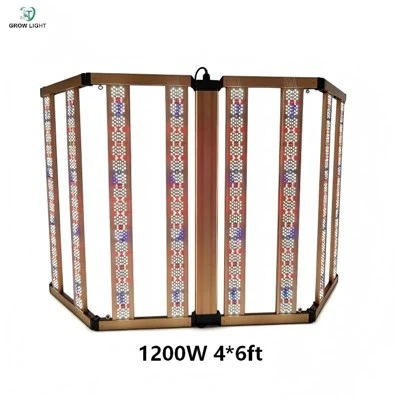
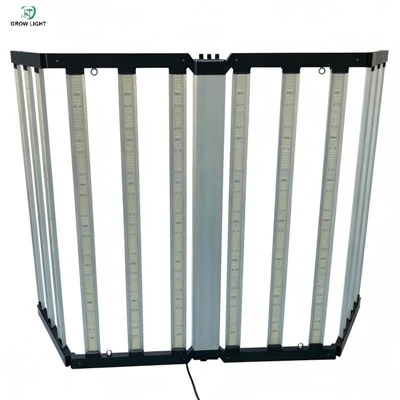
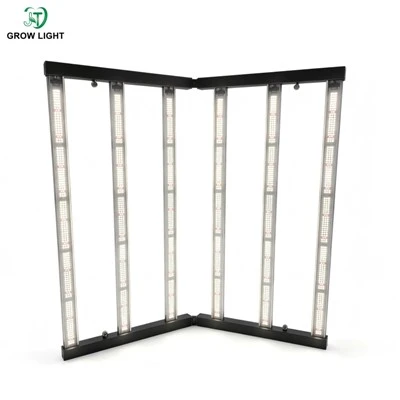
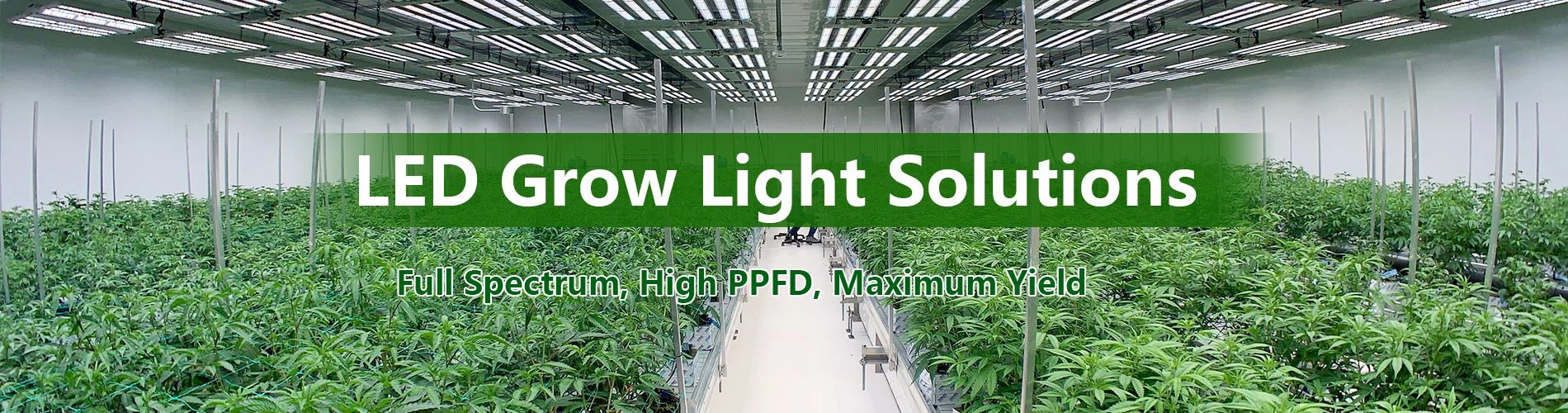
At JTGL, we manufacture quantum board grow lights, multi-bar foldable commercial systems, vertical farming lighting, and under-canopy lighting. That means we have no incentive to push quantum board when a different format is the right answer — and we'll tell you directly when it isn't. This guide gives you the honest version: what a quantum board LED grow light actually is, how it compares to COB and bar formats, which wattage fits your grow, and how to source direct from a quantum board grow lights manufacturer without overpaying.
|
Know your grow space dimensions and crop? Skip to Section 3 — tell us your setup and we'll confirm whether the quantum board (QB) is the right format, or point you to what is. |
-
![Quantum Board LED Grow Lights]() Quantum Board LED Grow Lights①Simple structure and good heat dissipation effect.view more
Quantum Board LED Grow Lights①Simple structure and good heat dissipation effect.view more
②Full spectrum+UV
③High PPFD Value
④Accept OEM/ODM, suitable for home tent planting -
![Full Spectrum LED Grow Light Panel]() Full Spectrum LED Grow Light Panel💡The quantum board LED chips are arranged closely, and the light distribution is more uniform;view more
Full Spectrum LED Grow Light Panel💡The quantum board LED chips are arranged closely, and the light distribution is more uniform;view more
💡The PPE reaches 2.7 µmol/J, with high photon energy efficiency and energy saving;
💡Full spectrum design to adapt to each... -
![400W Panel LED Grow Light]() 400W Panel LED Grow Light🔥0-100% flexible adjustment of light intensity;view more
400W Panel LED Grow Light🔥0-100% flexible adjustment of light intensity;view more
🔥Full spectrum design to adapt to each stage;
🔥Efficient aluminum plate design, better heat dissipation;
🔥PPE 2.7 µmol/J, with high energy efficiency and energy... -
![200W Full Spectrum Light Panel]() 200W Full Spectrum Light Panel🔥Full spectrum designview more
200W Full Spectrum Light Panel🔥Full spectrum designview more
🔥The PPE reaches 2.7~3.0 µmol/J.
🔥Efficient aluminum plate design, better heat dissipation
🔥The LED chips are closer; the light distribution is uniform -
![100W Quantum Board Grow Light]() 100W Quantum Board Grow Light1. The PPE reaches 2.7 µmol/J, with high photon energy efficiency and energy saving;view more
100W Quantum Board Grow Light1. The PPE reaches 2.7 µmol/J, with high photon energy efficiency and energy saving;view more
2. Full spectrum design to adapt to each stage of plant growth;
3. The quantum board LED chips are arranged closely, and the light... -
![Quantum Board Full Spectrum Grow Light]() Quantum Board Full Spectrum Grow LightHighlightsview more
Quantum Board Full Spectrum Grow LightHighlightsview more
✅ Customized full spectrum
✅ Thickened aluminum alloy heat sink plate
✅ Easy to operate and easy to install
✅ Accept OEM/ODM (Logo/lamp beads, wattage, etc.) -
![Quantum LED Grow Lights]() Quantum LED Grow LightsA. Full Spectrum+660nmview more
Quantum LED Grow LightsA. Full Spectrum+660nmview more
B. Ensures uniform lighting of the plant.
C. Improves the light energy and promotes plant growth.
D. Good heat dissipation function and extends the service life . -
![LED Plant Grow Light Panel]() LED Plant Grow Light Panel👉PPE is 2.8~3.0μmol/J, energy savingview more
LED Plant Grow Light Panel👉PPE is 2.8~3.0μmol/J, energy savingview more
👉Low Heat Output, high light efficiency
👉Adjustable function design, precise dimming


What Is a Quantum Board Grow Light
A quantum board grow light is a flat panel format where LED chips are distributed across a large printed circuit board (PCB) surface — rather than concentrated in a single COB cluster or arranged in a linear bar. This distributed chip layout is the defining characteristic of the quantum board (QB) design, and it drives most of the format's advantages and limitations.
The quantum board design isn't new technology — it's a different way of arranging the same LED chips. Understanding why that arrangement matters tells you when to choose it and when not to.
The distributed chip architecture
In a standard LED grow light panel with quantum board design, hundreds of individual LED chips are spaced evenly across the PCB surface. Instead of a few high-power chips running hot, you have many lower-power chips running cool. This distribution has three practical consequences:
- Lower junction temperature per chip — each chip runs at a fraction of its maximum rated current, reducing heat generation and extending lifespan
- Passive cooling viability — distributed heat across a large surface area can be dissipated by an aluminium heat sink without active fans — no moving parts, no fan noise, no fan failure risk
- Inherently better uniformity — chips distributed across the full panel surface create more even PPFD distribution than a centralised source, particularly at close mounting distances
Passive cooling
Passive cooling LED grow lights eliminate the fan assembly entirely. Zero fan noise, zero fan failure risk, and simplified maintenance. For the LED chips, passive cooling at reduced drive current means lower operating temperature — directly related to lifespan and output consistency over time.
The trade-off: passive cooling works because heat is spread across a large surface. As wattage increases at the same panel size, thermal management becomes harder. This is why quantum board grow lights at 480W are physically larger than those at 100W. At very high wattages (600W+), active cooling or multi-bar foldable designs become more thermally efficient than single-panel QB format.
External driver
Most quality panel LED grow lights in quantum board format use an external driver mounted separately from the panel. This separation keeps driver heat away from the LED chips, allows the driver to be replaced independently if it fails, and enables dimmable quantum board functionality — the 0–10V dimming interface on most commercial drivers allows smooth intensity adjustment from 0–100% without changing fixtures.
At JTGL, every quantum board grow light in our range uses an external driver as standard — not an integrated design that forces full fixture replacement if the driver fails. It's a small decision that adds meaningful reliability over a 5–7 year commercial operating cycle.


Quantum Board vs COB vs LED Bar
his is the question every serious buyer asks — and the one that gets the most misleading answers from suppliers who only sell one format. Because JTGL manufactures all three formats, we have no stake in which answer fits your application. Here's the full picture.
There is no objectively best LED grow light format. There's the right format for your specific application — and getting that wrong is more expensive than almost any other specification error.
|
Factor |
Quantum Board |
COB LED |
LED Bar / Multi-Bar Foldable |
|
Chip arrangement |
Distributed across large PCB |
Concentrated cluster (single high-power chip) |
Linear arrangement across multiple bars |
|
Cooling method |
Passive (heat sink only) |
Active (fan required for high power) |
Passive or active depending on design |
|
Uniformity at canopy |
Excellent at close range (<60 cm) |
Good — depends on lens/reflector design |
Excellent — optimised for commercial coverage areas |
|
PPFD at coverage edge |
Strong — distributed source minimises edge drop-off |
Can vary — centralised source creates edge fall-off |
Excellent — bar geometry designed for uniform coverage |
|
Heat management |
Good at ≤480W |
Requires active cooling at >100W per COB |
Good — bars run cool, efficient heat dissipation |
|
Scalability |
Limited — large format at high wattage |
Scalable via multi-COB arrays |
Highly scalable — add bars to cover any area |
|
Best application |
Grow tents, small commercial, R&D, home growing |
Targeted high-intensity spotlighting, supplemental |
Commercial rooms, cannabis facilities, vertical farms |
|
Mounting flexibility |
Fixed panel size — limited geometry options |
Flexible — individual COBs can be positioned freely |
Highly flexible — bars can be configured to any layout |
|
Maintenance |
Low — no fans, replaceable driver |
Higher — fans require maintenance |
Low — individual bar replacement if needed |
|
Cost per µmol/s |
Competitive at small scale |
Higher at equivalent output |
Most competitive at large commercial scale |
|
The mistake that costs growers money: choosing quantum board format for a large commercial room because it performed well in a grow tent. QB panels at 480W effectively cover a 4×4 ft area. Covering 1,000 m² with QB panels requires hundreds of individual fixtures, complex mounting, and loses the cost-per-µmol advantage vs. multi-bar commercial systems.
|

Quantum board vs COB
Quantum board grow lights outperform COB where: close mounting distance is needed (QB uniformity at 30–80 cm is better than COB), passive cooling is preferred, the coverage area matches a standard QB panel size, and cost-efficiency at moderate wattage matters. For quantum board grow lights for cannabis in standard 4×4 or 2×4 tent configurations, QB is typically the better choice over COB.
Quantum board vs LED bar
LED bars in multi-bar foldable format outperform QB where: coverage area is larger than a single panel handles efficiently, scalability across multiple rooms matters, or PPFD uniformity over a 5×5 ft+ area is the primary requirement. For commercial cannabis flowering rooms and vertical farming, LED grow light panels in QB format are not the optimal choice. The geometry doesn't scale as efficiently as multi-bar systems.

When to Choose Quantum Board Grow Lights
The best quantum board grow lights guide is the one that tells you when QB is not the right answer. Here's the honest breakdown — and if your application falls in the 'QB loses' column, we'll point you to the right product rather than sell you the wrong one.
A well-specified QB LED grow lights in the right application outperforms a more powerful fixture in the wrong format. Match the tool to the job.
QB wins here
|
Application |
Why QB Excels |
Recommended Format |
|
Grow tents (2×2, 2×4, 4×4) |
Panel size matches standard tent dimensions; close mounting distance suits QB uniformity |
100W–240W for 2×2/2×4; 240W–480W for 4×4 |
|
Small commercial rooms (<50 m²) |
Cost-effective at moderate scale; passive cooling suits enclosed rooms |
Multiple 240W–480W units with independent dimming |
|
Home growing / personal cultivation |
Quiet operation, simple installation, no fan maintenance |
100W–200W depending on coverage area |
|
R&D and trial growing |
Consistent, repeatable light environment; easy to adjust intensity |
100W–240W with 0–10V dimming |
|
Propagation and seedling trays |
Uniform PPFD at close range suits early-stage plants |
100W–200W at 30–50 cm mounting distance |
|
Multi-strain testing |
Individual dimming per unit allows different intensity zones |
Multiple 100W–200W units per zone |
QB loses here — choose a different format
|
Application |
Why QB Underperforms |
Better Alternative |
|
Large commercial cannabis rooms (>100 m²) |
Scaling QB panels is less cost-efficient than multi-bar foldable systems |
Multi-bar foldable commercial LED grow lights |
|
Vertical farming multi-tier racks |
Panel format doesn't integrate cleanly into rack underside |
LED grow light bars, T8 format |
|
Greenhouse supplemental lighting |
Panel geometry not optimised for wide greenhouse bay coverage |
Linear greenhouse top lights (120–140° beam) |
|
Under canopy applications |
Panel size and mounting depth don't suit dense canopy interior |
IP65 under canopy bar or strip format |
|
High-ceiling facilities (>2.5 m mounting) |
QB panel PPFD advantage at close range diminishes at greater mounting distances |
Multi-bar foldable with optimised optics for distance |


|
Not sure whether QB is the right format for your grow? Tell us your room or tent dimensions, crop, ceiling height, and target PPFD. At JTGL we'll tell you honestly whether QB is the right call — or whether a different format in our range will perform better for your specific setup.
|
Quantum Board Wattage and Coverage
Wattage selection for quantum board grow lights comes down to two variables: your target PPFD and your coverage area. The table below maps the main QB power ranges to real grow space applications — but we've removed specific PPFD figures deliberately.
|
A note on PPFD claims: Most QB spec sheets publish PPFD figures taken at the manufacturer's most flattering distance, reflectivity, and room conditions. The number on the box is almost never the number you'll measure in your actual setup. At JTGL, we don't publish reference PPFD figures we can't verify at your specific mounting height and room configuration. Send us your setup details and we'll provide a PPFD estimate based on your actual conditions — not a marketing reference. |
Wattage to application mapping
|
Power Range |
Coverage Footprint |
Primary Application |
What Changes With Higher Wattage |
|
100W quantum board grow lightt |
2×2 ft (0.36 m²) |
Seedlings, clones, propagation, small personal grows |
Adequate intensity for early-stage and low-PPFD crops |
|
200W quantum board grow light |
2×3 ft (0.56 m²) |
Veg stage, small flowering, compact cannabis in 2×2 tent |
Sufficient for full-cycle veg; flowering needs more |
|
240W LED grow lights |
2×4 ft (0.74 m²) |
2×4 tent full cycle, 3×3 veg |
Standard choice for 2×4 tent — most common QB size |
|
400W quantum board grow lights |
3×3 to 4×4 ft |
Cannabis flowering 3×3 tent, veg 4×4 |
Covers larger footprint; appropriate for flowering intensity targets |
|
480W quantum board grow lights |
4×4 ft (1.44 m²) |
4×4 tent full cycle, small commercial cannabis |
Maximum QB coverage for standard tent format |

LED grow light for 2×4 tent
The LED grow light for 2×4 tent is the single most common quantum board application. A 240W quantum board grow lights at 2.8–3.0 µmol/J system-level PPE is the standard specification for this footprint — covering the 2×4 area at adequate intensity for cannabis veg and early flower. For maximum flowering intensity in a 2×4, a 240W–320W quantum board or two 200W units with independent dimming provides more stage flexibility across a full crop cycle.

2×2 LED grow light
A 2×2 LED grow light in quantum board format — typically 100W–150W — makes the most of QB's close-range uniformity advantage. The 30–45 cm mounting distance is exactly where distributed chip architecture outperforms COB and bar formats. For seedlings, clones, and auto-flowering plants, this is the most efficient format available at this scale.
Spectrum, LED Chips, and What "Full Spectrum" Actually Means for QB
Quantum board full spectrum has become a near-universal claim in the QB market — but what it means in practice varies significantly between products.
'Full spectrum' on a quantum board spec sheet is a claim, not a measurement. Ask for the spectral power distribution graph — that's the measurement.
What full spectrum quantum board grow lights should deliver
A genuine full spectrum quantum board grow light covers the photosynthetically active range (400–700 nm) with meaningful output across blue, green, and red wavelengths — not just a red-dominant spectrum with token blue added. Quality products also include far-red (700–800 nm) for Emerson enhancement and photoperiod response. Some include UV (280–400 nm) for secondary metabolite stimulation in cannabis and high-value specialty crops.
Samsung LM301B and LM301H — why chip generation matters
Samsung LM301B grow lights became the industry benchmark for QB chip quality. Samsung LM301H grow lights (the current generation) improve further — better blue output and higher performance at elevated drive currents. Chip generation directly affects the system-level PPE your fixture delivers. A QB using LM301H chips driven at 60–70% of rated current will outperform a QB using older-generation chips driven at 90% — and last significantly longer.
Dimmable quantum board — why it matters more than most buyers realise
Dimmable quantum board grow lights with 0–10V control allow intensity adjustment from 0–100% without changing fixtures. Lower intensity for seedlings and early veg, ramp up through veg, maximum intensity for late flower, reduce again before harvest. For multi-strain rooms or mixed growth stage environments, independent zone dimming per fixture section removes the need for multiple fixture types across a single facility. All QB products in our range include 0–10V dimming as standard.
|
JTGL quantum board grow lights include: full spectrum 380–780 nm with far-red and UV channels, Samsung LM301H or equivalent top-bin chips, 0–10V dimmable external driver as standard, passive cooling aluminium heat sink, ETL and CE certified. Available in 100W, 200W, 240W, 400W, and 480W. SPD graph provided with every order. Custom spectrum and OEM from 1 unit. |
Driver Quality, Passive Cooling For Quantum Board
Two components determine whether a quantum board grow light performs consistently over its rated lifespan or degrades before it should: the driver and the thermal design. Most buyers spend their evaluation time comparing chip specs. These two components are where the real quality differences between products live — and where budget products consistently cut corners.
A premium LED chip in a poor thermal design degrades faster than a standard chip in a well-engineered heat sink. Driver quality determines whether your fixture performs the same in year 5 as it did in year 1.
Driver quality — the component most buyers don't check
The driver converts mains AC power to the DC power the LED chips require. Driver quality affects: power conversion efficiency (a poor driver wastes 5–15% of input power as heat before it reaches the chips), output stability (current variation causes PPFD fluctuation), dimming linearity (poor drivers dim in steps rather than continuously), and long-term reliability (driver failure is the most common cause of grow light failure in commercial settings).
For low watt LED grow lights in the 100W–200W range, driver quality is easy to cut costs on — and many budget products do. At JTGL, we use external drivers with rated efficiency ≥93% and 0–10V continuous dimming as standard across the full quantum board grow lights range.
Passive cooling aluminium design — thickness and surface area matter
The aluminium heat sink in a passive cooling LED grow light does all the thermal work that a fan does in an active-cooled fixture. Heat sink performance is determined by surface area, fin geometry, and aluminium thickness. A thin, lightweight heat sink may look identical to a properly specified one on a product photo — and will run significantly hotter under load.
At 400–480W, heat sink engineering is critical. Fixtures running LED chips above 65–70°C junction temperature show accelerated lumen depreciation — a high PPFD LED grow light at purchase becomes a notably lower-output fixture within 2–3 years. At JTGL, we specify aluminium thickness and fin count to keep junction temperature within rated range at full drive current — and provide junction temperature data on request.
Technical Specifications Of Quantum Board Grow Lights
|
Product |
|
|
|
Wattage |
100W/200W/400W/600W |
120W/240W/480W |
|
Full Spectrum |
Full spectrum+660nm+730nm (Customized) |
Full spectrum+660nm+730nm (Customized) |
|
Light Source |
Samsung 281B/301B/301H/301H EVO |
Samsung 281B/301B/301H/301H EVO |
|
PPE |
2.6~3.0 umol/J |
2.6~3.0 umol/J |
|
PPFD Uniformity |
≥ 0.85 |
≥ 0.85 |
|
PF |
≥0.97 |
≥0.95 |
|
Beam angle |
120° |
120° |
|
ROI |
Energy saving vs HPS: up to 40–50% |
Energy saving vs HPS: up to 40–50% |
|
Support Dimmer |
0-10V |
0-10V |
|
IP Rating |
IP65 |
IP65 |
|
Lifespan (hours) |
>50,000 |
>50,000 |
|
Working Time (hours) |
>50,000 |
>50,000 |
|
Input Voltage(V) |
AC110-277/50/60Hz |
AC110-277/50/60Hz |
|
Working Temperature(℃) |
-20°C~+45°C |
-20°~+45°C |
|
Lamp Body Material |
6063 aluminum |
6063 aluminum |
|
Color Rendering Index(Ra) |
90 |
90 |
|
Cooling method |
passive cooling |
passive cooling |
|
Customization |
OEM & ODM |
OEM & ODM |
|
Certification |
CE FC RoHS |
CE FC RoHS |
|
Warranty(Year) |
3-Year |
3-Year |
|
Application |
Grow Tent,Indoor Cannabis,Vegetable & Herb Cultivation,Seedling and Clone Lighting |
|


Sourcing Our Quantum Board Grow Lights
Wholesale, OEM, and Factory Direct
The quantum board market has more products — and more product quality variance — than almost any other segment in commercial grow lighting. At the low end, cheap panels with unspecified chips, poor thermal design, and certification claims that don't hold up to documentation requests. At the high end, verified PPE data, genuine top-bin chips, and certifications that are actually documented.
In the quantum board market, the gap between the best and worst products at the same price point is larger than in almost any other lighting category. This is not the place to buy on price alone.

Factory direct from JTGL — a quantum board grow lights manufacturer
Buying directly from JTGL — a dedicated quantum board grow lights manufacturer with 4 in-house production lines — removes the 20–35% distribution margin that inflates pricing at every reseller layer. For distributors and commercial buyers, direct factory access means production scheduling visibility, consistent batch-to-batch quality, chip generation documented per production run, and engineering support for OEM specifications. No middleman between your order and the factory floor.
Wholesale quantum board grow lights
For quantum board grow lights wholesale buyers — distributors, retail operations, commercial lighting consultants — JTGL offers wholesale pricing programs with volume tiers and stable production allocation. Standard product lead time: 10–15 days. Production capacity: 8,000–12,000 units/month across 4 in-house production lines. Full testing and aging validation before shipment. Contact us with your target quantity and market for tiered pricing.


OEM quantum board grow lights — private label from 1 unit
OEM quantum board grow lights with custom specifications are available from 1 unit with 20–25 day lead time. This isn't a minimum order concession — it's how JTGL operates. We run our own production lines, which means custom configurations don't require large production runs to justify the setup. OEM programs include:
- Custom spectrum configuration
- Custom wattage — 100W to 480W
- Samsung LM301H or equivalent top-bin chips
- Private label branding
- Market certification packages
- Custom driver integration
|
Building a quantum board product line or sourcing for commercial distribution? Send us your target wattage range, market, spectrum requirements, and monthly volume. JTGL will respond with full pricing, chip specifications, lead time, and certification documentation within 24 hours. |
Our Certificate

FCC

CE

CE

RoHS
FAQ
Q: What is a quantum board grow light?
A: A quantum board grow light is a flat LED grow light panel where LED chips are distributed evenly across a large PCB surface, paired with an aluminium heat sink for passive cooling and an external driver for power conversion and dimming. The distributed chip layout provides excellent PPFD uniformity at close mounting distances, quiet operation, and no fan failure risk. QB format is best suited to grow tents, small commercial rooms, and R&D applications.
Q: What size quantum board do I need for a 4×4 tent?
A: For a 4×4 ft (1.2×1.2 m) tent: a 480W quantum board grow light at 2.8–3.0 µmol/J system-level PPE is the standard specification — sufficient for cannabis flowering with CO₂ supplementation. For veg-only use, a 400W quantum board grow light is adequate and runs cooler. Driving at 80% of rated current gives better lifespan with minimal PPFD trade-off. Request a PPFD map at your specific mounting height before ordering — not a reference condition figure.
Q: What is the best quantum board for a 2×4 grow tent?
A: For LED grow light for 2×4 tent applications: a 240W quantum board at 2.8–3.0 µmol/J system PPE is the standard specification. Two 120W units with independent dimming is an alternative for running different growth stages simultaneously in a split tent.
Q: Are quantum board grow lights better than COB?
A: For most grow tent and small commercial applications: yes, QB outperforms COB on close-range uniformity, passive cooling reliability, and cost-efficiency at moderate wattage. COB has advantages in targeted high-intensity applications and configurations requiring flexible individual chip positioning. For standard 2×2 to 4×4 coverage, quantum board LED grow lights are generally the better choice.
Q: What wattage quantum board do I need for cannabis?
A: Target PPFD first, not wattage. For cannabis flowering, most operations target 900–1,200 µmol/m²/s at canopy level. Work backward from that number using system-level PPE of the fixture and your coverage area. A 480W quantum board grow light at 3.0 µmol/J covers a 4×4 ft area at flowering intensity. A 400W quantum board grow light covers a 3×3 ft area. For veg stage, run your flowering fixture at 40–60% via 0–10V dimming.
Q: What does full spectrum mean for quantum board grow lights?
A: Full spectrum quantum board grow lights cover the full 400–700 nm photosynthetically active range with meaningful blue, green, and red output — plus far-red (700–800 nm). Genuine full spectrum shows continuous spectral output on an SPD graph. A two-spike blue/red product is not full spectrum. At JTGL, we provide the SPD graph with every order — request it before purchasing from any supplier.
Q: Do quantum board grow lights need to be IP65?
A: For standard grow tent use: IP65 not required. For commercial grow rooms with irrigation or cleaning: IP65 recommended. For vertical farming and greenhouse: IP65 minimum, IP66 preferred. JTGL's commercial-grade panel LED grow lights are available with IP65 rating for facility applications.
Q: Can I get OEM or private label quantum board grow lights?
A: Yes — from 1 unit. OEM quantum board grow lights with custom spectrum, wattage, chip generation, private label branding, and market-specific certifications under your brand are available with 20–25 day lead time from JTGL.
Q: What is the minimum order for quantum board grow lights wholesale?
A: No minimum for standard products. For quantum board grow lights wholesale volume pricing, contact JTGL with your target quantity and market — tiered pricing and production scheduling confirmed within 24 hours.
Find the Right Quantum Board for Your Grow
JTGL Will Match It in 24 Hours
Quantum board grow lights are excellent — when matched correctly to the application. Here's what JTGL offers across the full QB range:
1) 100W to 480W — full wattage coverage from propagation to 4×4 flowering
2) Samsung LM301H or equivalent top-bin chips — verified chip generation documented per production run, not just brand claim
3) Full spectrum 380–780 nm with far-red and UV — genuine full spectrum, SPD graph provided with every order
4) 0–10V dimmable external driver as standard — Equivalent, stage-by-stage intensity control
5) Passive cooling, separate driver — no fans, driver replaceable independently
6) ETL + CE + DLC + RoHS — certified for USA and European commercial and personal applications
7) OEM and private label from 1 unit — 20–25 day lead time, full certification under your brand
8) Wholesale programs — 10–15 day standard lead time, volume pricing for distributors
|
Tell us your grow space dimensions, crop, and target PPFD. JTGL will confirm the right wattage and format, provide verified system-level PPE data and PPFD layout at your mounting height, and send full certification documentation — within 24 hours. If QB isn't the right format for your application, we'll tell you that too. And point you to what is. |
← Back to: LED Grow Lights — Complete Buyer's Guide
→ Related: Commercial LED Grow Lights | Greenhouse LED Grow Lights | Vertical Farming LED Lighting | Under Canopy Lighting
We're well-known as one of the leading quantum board grow lights manufacturers and suppliers in China. Please rest assured to buy cheap quantum board grow lights for sale here from our factory. Contact us for customized service and discount information.
waterproof grow light, led easy to install light, vertical farming lighting