Treating commercial cannabis cultivation as a business rather than a craft leads to the appearance of one metric everywhere: cannabis yield per square foot. It is not a bragging number. It is the first line most owners and investors look at when deciding whether a facility is truly profitable or simply busy.
Over the past five years, this number has changed-and not in a gentle, evenly distributed way. What we're seeing instead is a widening gap. Facilities that have learned how to run stable systems are pushing the average upward, while those that haven't are being squeezed harder and harder by cost pressure. The industry isexperiencing more than just improvements. It's stratifying.
Let's start with the data that frames this shift. These shifts are consistent with broader findings from recent cannabis lighting market research tracking how commercial growers are adapting their systems. Based on recent research on cannabis lighting for commercial indoor and greenhouse growers.
- 55% of respondents reported achieving 50 grams per square foot or more in 2022.
- By 2024, that figure climbed to 70%.
- In 2025, it reached 77%.
A more significant change is observed at the higher end of the scale. When researchers used 80 g/ft² as a threshold closer to sustainable commercial performance.
- Only 14% of growers reached it in 2023.
- In 2024, that jumped to 47%.
- In 2025, it rose again to 57%.
Even more striking, 14% of growers in 2025 reported average yields exceeding 130 g/ft², up from the year before.
This isn't slow, incremental progress. It's a clear signal that a growing portion of the industry has figured out how to make systems work-and that those who haven't are falling behind fast.
Please clarify what factors contributed to the increase in commercial grow yield over these five years. If the answer is simply "LEDs replaced HPS" or "lights became more efficient," it's only a superficial understanding. The real changes happened inside the yield equation itself: how light is distributed, how the environment is stabilized, how the canopy is structured, how workflows are repeated, and how data informs decisions. LED technology established the groundwork, but it never reached the final stage. Some growers explore spectrum adjustments as part of this evolution, while others focus first on physical light distribution and stability.
Is Higher PPFD Always Better?
For a long time, yield discussions revolved around one assumption: more PPFD equals more production. Experience over the last five years has challenged that idea. The most important shift wasn't pushing light levels higher-it was making light controllable.
Anyone who has run the same room through multiple cycles knows the facts intuitively. Higher light intensity does not create linear gains. It creates linear risk. Facilities that consistently increased yield share two traits. First, top lighting stopped being the only lighting strategy. Growers began paying attention to PPFD uniformity across the canopy, and many introduced supplemental approaches to bring previously underperforming flower sites back into the equation. Second, control systems turned light from a simple on/off input into a managed rhythm.
This matters because when light becomes rhythmic instead of static, plants operate under controlled stress rather than constant pressure. Heat load becomes manageable. Transpiration stabilizes. Microclimates inside the canopy stop tearing themselves apart. What emerges is not just a higher peak yield but something far more valuable: a repeatable high-yield cycle. That's why recent surveys show such high adoption of lighting control systems. Control is no longer a luxury feature. It's infrastructure. This is why dimming strategies and lighting control systems have become central to managing yield, risk, and ROI. From an ROI perspective, it stabilizes yield, quality, energy use, labor efficiency, and failure rates-things no commercial operator can afford to leave to chance.
Precision Environment Control as a Yield Multiplier
One of the quietest but most powerful drivers of yield growth over the last five years has been the evolution of environmental control from "functional" to "precise." Many facilities once treated temperature and humidity as background conditions. Today, they are understood as variables directly shaping the yield curve.
The reason is economic. With pricing pressure, taxes, and labor costs rising, increasing cannabis production can no longer rely on expanding footprint alone. Square footage is expensive. The only viable path forward is increasing output per square foot. Instability, not low light, is the real threat to unit-area productivity. These challenges rarely come from a single component, but from system-level lighting issues that emerge as operations scale.
Fluctuations in DLI, VPD, leaf temperature, root-zone oxygen, and CO₂ utilization don't just reduce peak performance. They create inconsistency. Inconsistency turns into losses that never show up in marketing slides but dominate real-world balance sheets. Moving from 50 g/ft² to a stable 80 g/ft² doesn't require heroic pushes. It requires that nothing goes wrong at night, that no room drifts off-script, and that every cycle looks boringly similar to the last. This explains why energy cost management and heat load management remain top lighting-related challenges year after year. More light means more heat. More heat means less control. Less control means unstable yield. And unstable yield breaks financial models.
Canopy Design and Cultivation Process
Facilities that successfully raised yield over the last five years share another trait: they think about the canopy like engineers, not hobbyists. In high-performing rooms, the canopy is not something that "happens." It is designed. Branch count, layer depth, airflow corridors, topping timing, defoliation strategy, and flower-site distribution all serve one purpose: to make light, air, temperature, and transpiration as uniform as possible.
Uniformity is expensive to build but incredibly profitable to operate. When plants contribute more evenly, harvests become predictable, trimming becomes smoother, drying curves flatten, and labor planning stops being a nightmare. Many people fixate on total grams. Owners watch the cost curve behind those grams. Uniform systems reduce hidden costs everywhere.
This is also where the limitations of top lighting alone become obvious. Even with excellent fixtures, dense canopies naturally shade their lower regions. That reality has pushed many growers to rethink how light moves through the plant - not just from above, but within and below. As canopy density increases, many growers discover that top lighting alone can no longer deliver uniform performance across the entire plant.
Genetics and the Rise of Repeatability
Yield gains over the past five years were also supported by more disciplined genetic selection. Not because genetics suddenly became magical, but because the industry learned to prioritize replicability over extremes. Commercially successful cultivars tend to share traits: consistent flower structure, predictable finish windows, and clear responses to environmental changes.
Anyone who has dealt with wildly inconsistent batches in the same room understands the stakes. Inventory planning, contract fulfillment, and brand consistency all suffer. Mature operations often value repeatability more than chasing record-breaking yields. That's why quality and yield consistently appear together as top priorities in grower surveys. They aren't opposites. They're two sides of the same commercial reality. High yield without quality pushes problems downstream. Quality without yield creates art projects, not businesses.
Lighting Systems: From Selling Fixtures to Stabilizing Results
As 80 g/ft² becomes reachable for more operators, the role of lighting suppliers is changing. Value is no longer defined by selling a stronger fixture. It's defined by helping facilities run stable systems. This is where companies focused on commercial projects, such as JTGL, naturally fit in.
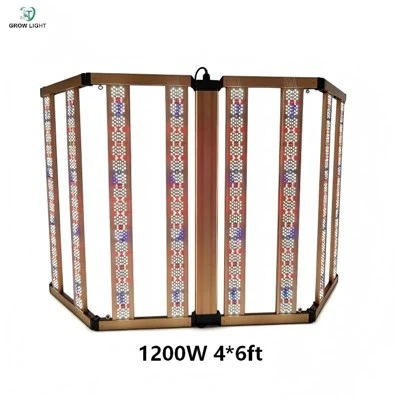
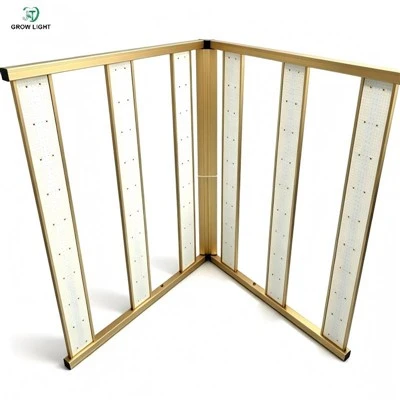
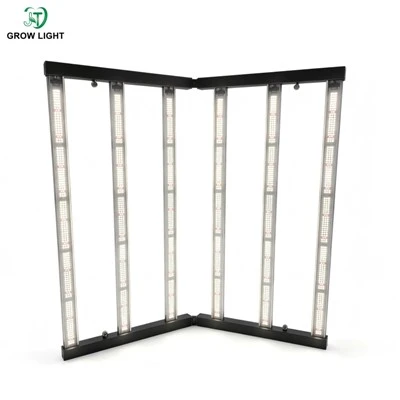
The real contribution isn't noise or novelty. Its reliability at critical points: stable spectrum consistency over time, dependable dimming and control compatibility, thermal durability under long operating hours, and - importantly - leaving room for system evolution. Modern facilities increasingly combine top lighting with thoughtful under-canopy lighting strategies to activate flower sites that were previously structural losses. Supplemental lighting approaches are now being used to activate flower sites that were structurally under-lit for years. When planned correctly, under-canopy lighting doesn't disrupt the room. It complements the existing system and improves yield contribution where it was historically weakest.
The Bigger Picture
If we reduce the last five years to a single sentence, it would be this: the industry moved from installing lights to reproducing yield. The rise in cannabis yield per square foot is not the result of a single breakthrough. It's the outcome of systems maturing together.
The hardest part of yield improvement is not technology. It's management. The most valuable achievement is not peak data points, but consistent replication. And the greatest risk is not low yield - it's believing you are high-yield while quietly draining system resilience.
Facilities that will continue pushing commercial grow yield upward will do so by trading control for certainty, and certainty for cash flow.
If your rooms are hovering around 50 g/ft² but struggling with consistency or lower-canopy contribution, the solution is rarely "a stronger top light." The smarter move is to reassess light distribution, control strategy, and supplemental lighting readiness. JTGL can support that process by helping design lighting combinations - top lighting paired with under-canopy lighting - that aim for commercial ROI, not theoretical maximums.
Once you start calculating yield and cost per square foot seriously, the most cost-effective upgrades often aren't full replacements. They are the ones that wake up capacity already there - especially in the middle and lower canopy zones that have been underestimated for years. Solutions like JT-UCL under-canopy grow lights are designed to activate these lower zones without disrupting existing room dynamics.
That's where the next gains are coming from.
You do not have enough Humanizer words left. Upgrade your Surfer plan.