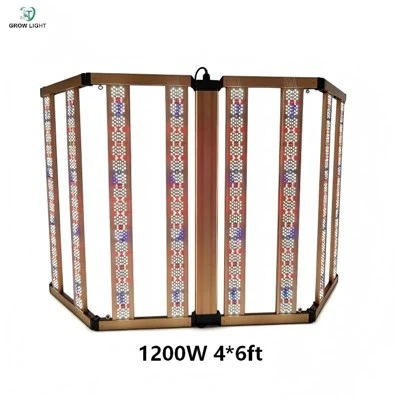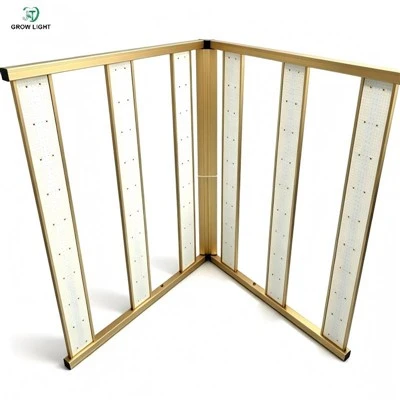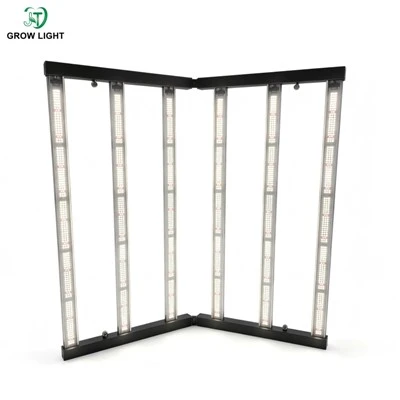
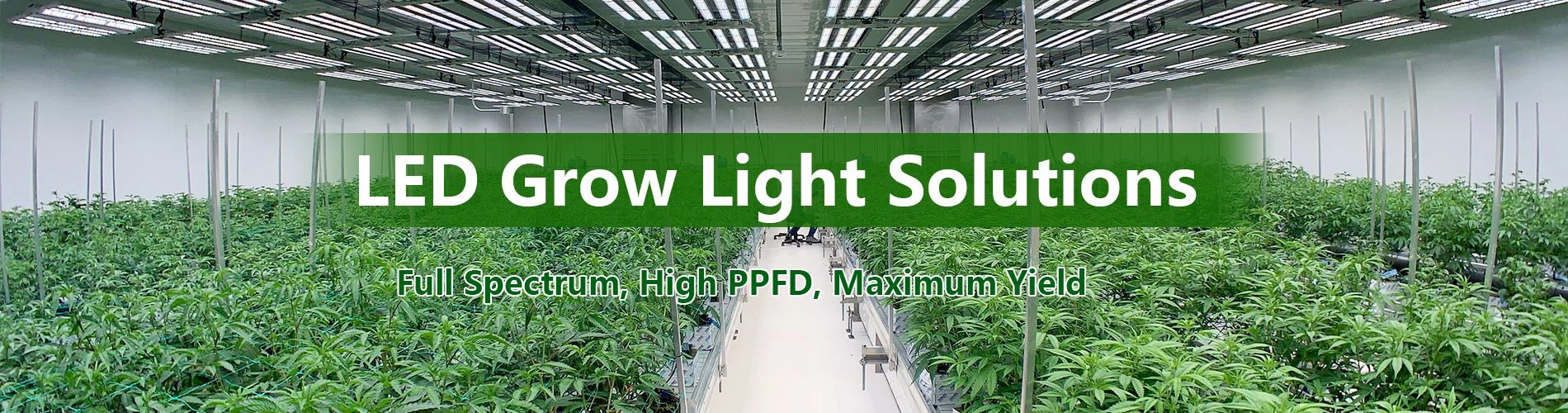
If you ask cannabis growers what they care about most, the answers usually come quickly.
Quality.
Yield.
Consistency.
But if you listen a little longer-really listen-you'll notice something else underneath those words.
What growers care about in 2025 isn't the light itself. This refers to the control that the light provides to the growers.
Over the past decade, commercial cannabis cultivation has matured into a results-driven business. This shift is clearly reflected in how growers across the industry are now using LED lighting, dimming strategies, and control systems in daily operations.
Early on, simply producing a viable flower was enough. Today, survival depends on repeatable outcomes: predictable harvests, stable quality, and margins that can withstand market pressure.
That shift has quietly changed how growers evaluate everything-especially lighting.
Quality Is No Longer a Marketing Term
In the early years of legalization, quality was often defined visually. Dense buds. Bright color. Bag appeal. Lighting decisions were sometimes made to maximize appearance rather than long-term consistency.
In 2025, quality means something different.
- It means uniform flowers across the room, not just at the top of the canopy.
- It means predictable cannabinoid and terpene expression from run to run.
- It means fewer surprises during harvest and post-processing.
Grow light quality is now evaluated less by spec sheets and more by how reliably it supports those outcomes.
This is one reason cannabis LED grow lights have become so widely adopted. This is not because LEDs automatically yield better flowers, but rather because they seamlessly integrate into controlled environments.
- Lower radiant heat reduces stress.
- More even distribution supports uniform development.
- Stable output simplifies environmental balancing.
Many growers learned the lesson gradually. Some growers discovered this through difficult experiences. Quality problems usually announce themselves later. The effects of environmental imbalances become apparent weeks later.
Lighting that supports quality is lighting that stays predictable under real operating conditions.
Yield Still Matters-But Not at Any Cost
Yield optimization remains a central concern in commercial cultivation. Every facility tracks grams per square foot, cycle time, and output per room. But the industry's relationship with yield has become more nuanced.
In the past, yield was often pursued through intensity alone. Push more light. Increase PPFD. Extend photoperiods.
In 2025, cannabis yield optimization is increasingly about balance rather than brute force. Growers understand that uneven light distribution creates uneven results. Hot spots drive stress. Shaded zones quietly limit potential.
This is where systems thinking enters the conversation.
Top lighting alone can only do so much, especially in dense canopies. As plants mature, lower and interior sites receive less usable light, even though they consume the same resources.
That realization has driven growing interest in supplemental strategies such as under-canopy lighting. This is not a mere gimmick, but rather a method to ensure that the entire plant contributes more evenly to the final yield.
Yield gains achieved through better distribution tend to be more stable than gains achieved through intensity alone. They also come with fewer side effects.
Control is the Real differentiator
If quality and yield are the goals, control is the mechanism. This is where lighting control systems and dimming strategies begin to directly influence ROI, not just plant response.
Large or experimental facilities are no longer the only ones with lighting control systems in 2025. They are widely used across indoor and greenhouse operations because growers have learned that static systems limit flexibility.
Lighting control doesn't mean constant micromanagement. The most effective systems actually lessen daily intervention.
Dimming LED grow lights allows growers to respond to seasonal temperature shifts, adjust intensity during peak utility hours, and fine-tune output as plants transition between stages. These adjustments help stabilize environments rather than disrupt them.
Control systems also support consistency across rooms. Instead of treating each space as a separate experiment, growers can apply proven parameters across the facility, reducing variability between cycles.
This feature matters more than it might seem. In commercial operations, inconsistency creates hidden costs-rework, delayed harvests, quality grading issues, and strained planning.
Control doesn't guarantee success. But lack of control almost guarantees inefficiency.
Why LED grow lights Fit the Way Growers Think Now
The widespread adoption of cannabis LED grow lights reflects this shift toward control and predictability.
LED systems are inherently adjustable. Output can be tuned. Spectra can be refined. Intensity can be reduced without compromising uniformity. Heat load can be managed more precisely.
HPS systems, by contrast, are largely fixed. Once installed, their behavior is difficult to change without physical intervention. That rigidity clashes with the way modern facilities operate.
Growers today want systems that adapt with them - not systems that force them to adapt.
This doesn't mean LEDs are automatically superior in every situation. Poor layout, improper spacing, and unrealistic expectations still lead to disappointing results. But LEDs provide growers with more tools to correct problems before they escalate.
That flexibility has become essential as facilities grow larger and more complex.
Under Canopy Lighting Reflects a Shift in Priorities
The growing interest in under-canopy lighting says a lot about how growers will think in 2025.
Lower canopy sites were once treated as expendable. Many facilities accepted uneven development as the cost of doing business. Today, that mindset feels increasingly outdated.
Under canopy lighting isn't about pushing maximum output everywhere. It's about improving uniformity and making better use of resources already invested in the plant.
When lower sites receive usable light, they develop more consistently. That can improve overall yield distribution, reduce waste during trimming, and create more predictable harvest profiles.
Not every facility needs under-canopy lighting. But the fact that so many growers are actively exploring it reflects a broader shift: growers care less about headline numbers and more about usable, repeatable results.
Results Trump Features
Growers rarely discuss features in isolation, which is one of the most noticeable changes in their conversations.
1) Growers don't ask first about wattage anymore. They ask how a system behaves in their room.
2) They don't focus solely on efficiency. They ask how lighting interacts with HVAC, airflow, and canopy structure.
3) They don't want promises. They want stability.
This mindset prioritizes well-understood, controllable, and scalable systems. It favors lighting solutions that integrate smoothly rather than dominate the room.
That's why discussions about dimming, control platforms, and supplemental lighting feel less like innovation and more like standard practice.
Trust Is Built Through Outcomes
For B2B relationships, this shift matters deeply
Growers evaluating suppliers are not looking for the most impressive specification list. They are searching for partners who understand how lighting decisions affect real cultivation outcomes.
Trust is built when suppliers speak the same language growers do-quality, yield, control-and can explain how systems behave over time, not just on day one.
In 2025, selling lights without addressing results feels incomplete. The conversation has moved upstream.
What This Means: Going Forward
Cannabis cultivation will continue to evolve. Genetics will improve. Automation will expand. Markets will fluctuate.
But the core priorities are unlikely to change.
Growers will continue to care about quality because it protects brand value.
They will continue to care about yield because it sustains operations.
And they will care increasingly about control because it ties everything together.
Lighting systems that support those priorities-rather than complicate them-will remain central to commercial cultivation.
The industry has moved past asking which light is best. The more important question now is whether the light helps growers get the results they need consistently.