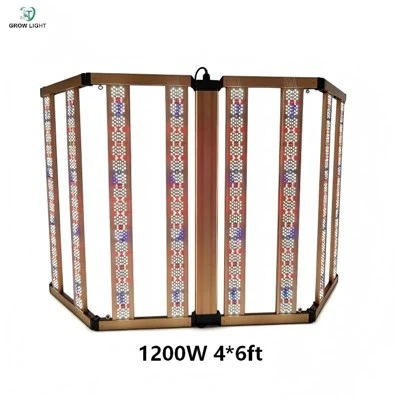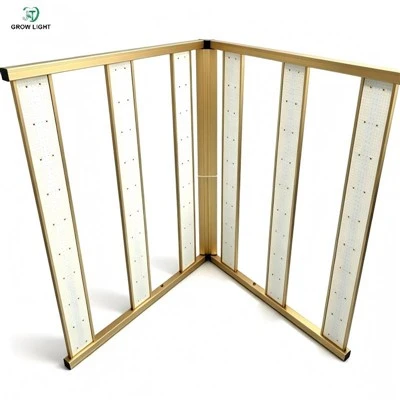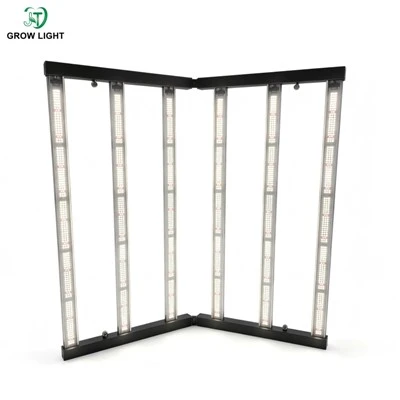
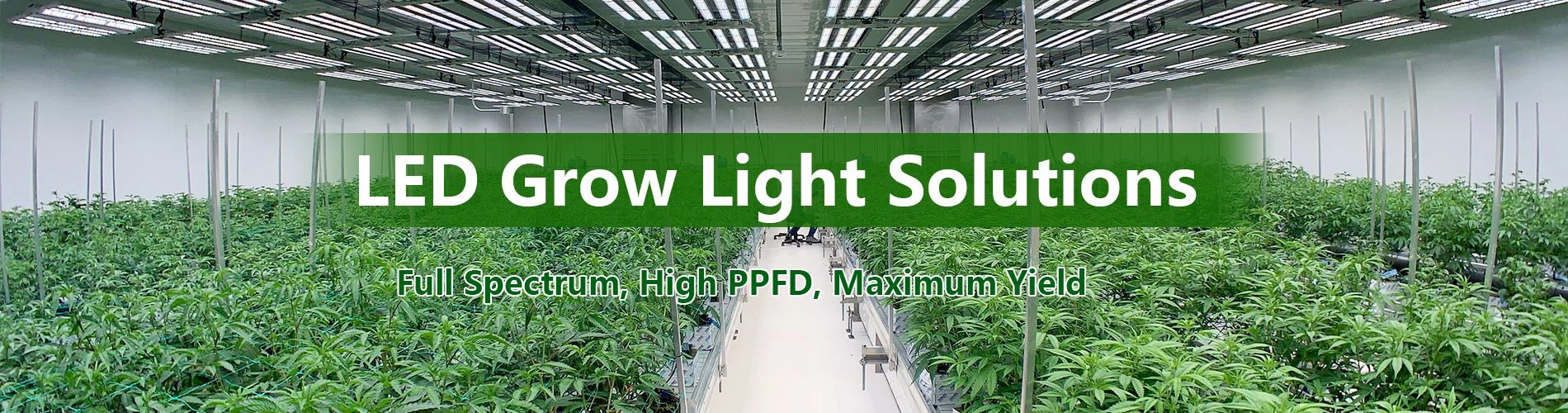

There is a moment in almost every commercial grow room when the conversation changes. It usually happens after the third or fourth harvest cycle.
Top lighting has already been upgraded. PPFD numbers look solid. Energy consumption is under control. The facility is no longer "new." And yet, the same frustration keeps showing up in the same place - the under-canopy. Lower buds are lighter. Density drops off fast below the top layer. Harvest grades become inconsistent. Labor hours stretch longer than expected.
At this stage, most growers do not ask whether under-canopy lighting works. They ask a different question: Is it actually worth the money?
That question is often framed the wrong way. Because under canopy lighting rarely makes economic sense in terms of saving power. It makes economic sense when it stops money from leaking out of the system in places that are easy to ignore and expensive to tolerate.
The Biggest Misunderstanding About "Economic Sense"
When people evaluate under canopy grow light solutions, the first instinct is almost always electrical.
- How many watts?
- How much additional load?
- How long is the payback period?
That way of thinking is understandable, but incomplete. Under canopy LED grow light systems are not designed to replace top lighting or reduce total energy use. They exist because, at a certain point, adding more top light produces diminishing returns while hidden costs continue to grow.
Those costs rarely show up on the lighting invoice. They appear later, in yield instability, labor inefficiency, and inconsistent product value.
Once a facility reaches that stage, the economic calculation changes completely.
Where the Real Money Is Being Lost: The Under-Canopy Problem
In dense commercial facilities, the under-canopy is often the least discussed and most expensive problem area. Not because it consumes resources, but because it underperforms quietly.
Lower buds that never fully develop still consume nutrients, water, HVAC capacity, and labor. They occupy space but contribute less value. Over time, this creates a structural inefficiency that compounds every cycle. Typical symptoms include:
- Lower flower sites failing to reach premium grade
- Increased variability across the same room
- More time spent deciding what to harvest and what to discard
- Reduced predictability in output
None of these problems looks like a lighting problem at first glance. But they are all symptoms of light failing to reach productive zones.
This is the point where under-canopy grow light systems start to make economic sense - not because they add yield everywhere, but because they stabilize parts of the plant that were already costing money without paying it back.
When Adding More Top Light Stops Making Financial Sense
In early facility development, increasing top light usually produces clear gains. Plants respond, yields rise, and the ROI is easy to justify. But once canopy density increases and leaf area expands, light interception changes. Upper leaves absorb most of the incoming photons. Additional top light increasingly benefits zones that are already saturated. The result is a familiar pattern:
- More power at the top
- Higher thermal load
- Higher HVAC demand
- Minimal improvement in under-canopy performance
At this stage, additional top lighting improves numbers, not outcomes. Under canopy lighting shifts the economic logic. Instead of forcing more energy into already saturated areas, it redirects energy to zones that were previously underlit and underperforming. That redirection is where the economic inflection point appears.
Uniformity: The Hidden Financial Lever
For small operations, peak yield is often the main goal. For commercial facilities, uniformity is what keeps the business model stable. Uniform output simplifies:
- Harvest scheduling
- Labor planning
- Quality grading
- Sales forecasting
Inconsistent under-canopy development disrupts all of these. Under canopy LED grow light systems are rarely installed to chase higher maximum yield. They are installed to reduce variability. When under-canopy light levels become predictable, plant structure becomes more consistent. When structure is consistent, harvest outcomes become easier to manage.
That predictability has direct economic value - even if total grams per watt do not change dramatically. For operations that sell into structured markets, consistency is often worth more than marginal gains.
Labor Costs: The Expense That Scales the Fastest
Lighting discussions often ignore labor, even though labor is one of the fastest-growing costs in modern cultivation. Under-canopy inconsistency forces people to make more decisions:
- Which sites are worth harvesting
- Which areas need extra attention
- When a room is truly ready
These decisions consume time. They also introduce variability between teams and cycles. Under canopy lighting does not just affect how plants grow. It changes how people work. Facilities that integrate under canopy lighting properly often report:
- Shorter harvest windows
- Less selective trimming
- Fewer rechecks and corrections
- More repeatable workflows
When under canopy lighting reduces manual intervention, its economic value extends far beyond energy consumption.
When Under Canopy Lighting Does Not Make Economic Sense
Under canopy lighting is not a shortcut, and it is not a solution for early-stage problems. It usually does not make economic sense when:
- Canopy density is still low
- Top lighting penetration is adequate
- Yield issues are driven by airflow or nutrition
- The facility has not yet stabilized basic processes
In these cases, under canopy lighting adds complexity without fixing the real issue. Economic sense only appears after simpler problems have already been solved.
From a Manufacturer's Perspective: Why Economic Sense Depends on Design
From a source manufacturer's point of view, the biggest economic mistake is over-specifying under canopy lighting. Higher wattage, narrow beam fixtures placed too close to plants often increase cost without improving outcomes.
At JT Grow Light, under canopy projects are usually approached from a system-integration mindset rather than a product-first mindset. The focus is on:
- Beam distribution that matches canopy geometry
- Power levels appropriate for close-range operation
- Stable long-term performance
- Fixtures that integrate cleanly into existing layouts
When under canopy LED grow light systems are designed to fit the structure of the grow room, they tend to deliver economic value through stability rather than raw output.
When Under Canopy Lighting Becomes a Structural Investment
The clearest sign that under canopy lighting makes economic sense is a shift in mindset. At early stages, lighting upgrades are treated as cost items. At later stages, they become structural investments. Facilities that reach this stage usually care less about:
- Maximum PPFD
- Marketing specifications
And more about:
- Predictable harvest outcomes
- Stable labor requirements
- Reduced variance between cycles
At that point, under canopy lighting is no longer optional. It becomes part of maintaining operational discipline.
Under canopy lighting starts to make economic sense when a facility realizes that the under-canopyis not just a biological issue - it is a financial one.
When money is being lost through inconsistency, inefficiency, and unpredictability, redirecting light to underperforming zones becomes a rational investment. Not because the lights are cheap. Not because energy savings are dramatic. But leaving the under-canopy unstable is more expensive than fixing it.
That is the moment when under canopy grow light systems stop being an upgrade - and start being a correction. Under-canopy grow light only works when it is treated as one layer within a broader layered lighting strategy.