
Almost every grower who installs under canopy lighting starts with the same expectation.
The lower canopy looks weak.
Top lighting feels maxed out.
There must be unrealized potential below.
The solution seems obvious: add Under Canopy Grow Light, activate the lower canopy, and recover what was previously lost. Yet after a cycle or two, many rooms end up in an uncomfortable middle ground. The system is more complex. Daily management takes longer. Results improve in some areas but remain inconsistent in others.
What most growers eventually realize - often without being able to articulate it clearly - is that under canopy lighting was treated as a fix, not as a layer. It was added to a lighting strategy that was never designed to be layered in the first place.
This article is not about whether under canopy lighting works. It clearly does. It is about why it only works when it is treated as one part of a layered lighting strategy, and why separating it from structure, stage, layout, and power distribution almost always leads to disappointment.
In commercial cultivation, lighting problems are rarely about intensity alone. They are about where light is delivered, when it is delivered, and which part of the plant is expected to respond. Under-canopy lighting doesn't just add photons-it changes the overall lighting strategy, not just intensity.
A layered lighting strategy starts from a simple engineering reality: different canopy heights experience fundamentally different light environments, even in the same room. Top lighting drives primary photosynthetic demand, sets overall vigor, and defines the upper boundary of yield potential. Mid-level and inter-canopy light deal with self-shading and structural density. Under canopy lighting addresses what happens when structure blocks light entirely.
This is why experienced growers do not talk about under canopy LED grow lights as "extra power." They talk about them as structural insurance. In a layered strategy, each lighting layer exists to solve a specific limitation that the layer above cannot address, no matter how strong it becomes.

Why Top Lighting Alone No Longer Solves Lower-Canopy Problems
For years, the industry attempted to solve lower-canopy weakness by increasing top-light intensity. Higher-output fixtures, tighter spacing, and aggressive spectral tuning were expected to push photons deeper into the canopy. This is why adding more top lights and introducing under-canopy lighting solve completely different problems in modern grow rooms.
In practice, structural reality intervenes. Leaves overlap. Branch angles change. Distance increases. Even the most advanced top-light systems eventually experience a reduction in their effectiveness. The issue is not insufficient power but insufficient angle and proximity. This is why simply adding more top lighting often fails to address lower-canopy issues, while under-canopy solutions solve a fundamentally different problem.
This is where many growers misdiagnose the problem. They assume the lower canopy is underperforming because it needs more light from above. In reality, it needs light from somewhere else. LED under canopy lights do not replace top lighting; they operate in a region where top lighting cannot function efficiently.
In a layered lighting strategy, top lighting establishes potential. Under canopy lighting prevents that potential from collapsing downward.
The Real Role of Under Canopy Grow Light in a Layered System
One of the most persistent misconceptions is that under canopy grow light exists to "boost" the lower canopy. That framing sets unrealistic expectations and leads to poor system decisions.
In reality, under canopy lighting is not about acceleration. It is about retention. It helps the plant maintain commitment to lower sites that would otherwise be abandoned as energy is prioritized upward.
In system terms, under canopy lighting stabilizes structure. It reduces the number of zones the plant is forced to write off. It does not push production upward; it prevents structural loss downward. This distinction is subtle, but it explains why under canopy lighting often improves uniformity and consistency before it meaningfully affects total yield.
When growers evaluate under canopy lighting as a standalone upgrade, they miss this role entirely. When they evaluate it as one layer in a layered lighting strategy, the results suddenly make sense.
To understand this distinction clearly, it helps to look at what under-canopy lighting is actually designed to fix in modern grow rooms.
Why Growth Stage Determines Whether Under Canopy Lighting Belongs in the System
Layered lighting strategies are not static. They evolve with the plant.
During vegetative growth, structure is still forming. Apical dominance remains strong, and the plant has not begun discarding inefficient growth. In this stage, under canopy lighting often has limited impact because the plant has not yet entered the phase where lower-canopy decisions matter.
In flowering, the logic changes. Energy becomes finite. The plant begins actively deciding which structures are worth finishing. Lower sites that receive weak or inconsistent signals are deprioritized. This is the point at which under canopy lighting becomes a system-level intervention. It does not change the plant's ambition; it changes its willingness to follow through. In a layered strategy, under canopy lighting is activated not because the lower canopy exists, but because it has entered a phase where the plant is deciding whether to abandon it.
The plant's response to under-canopy light varies dramatically between vegetative and flowering stages.
This timing component is why early deployment often disappoints and late deployment often fails. Layered lighting only works when each layer is activated at the stage where it can influence decisions, not after those decisions are already locked in. This is also the point at which under-canopy lighting begins to make economic sense, rather than just theoretical sense.
How Layout and Space Turn Under Canopy Lighting Into a System Variable
Introducing under canopy LED grow lights fundamentally alters how space is used inside a grow room. Light no longer flows exclusively from above. Power distribution changes. Human access patterns shift.
In top-light-only rooms, lower-canopy zones are often treated as secondary. Walkways, row spacing, and maintenance routines reflect this assumption. Once under canopy lighting is added, those assumptions collapse. Once lower-canopy zones become productive, layout stops being a background detail and becomes a system-level constraint.
This is why under canopy lighting demands a different layout mindset. It exposes weaknesses in room design that were previously tolerable. Tight rows become bottlenecks. Poor access becomes risk. Lighting transforms layout from a background constraint into an active system variable.
In layered lighting strategies, space is designed to accommodate light at multiple heights. In retrofit scenarios, this often requires compromise. Understanding this upfront is the difference between a system that scales smoothly and one that constantly resists its own complexity.
In high-density facilities, dense canopies quickly break the assumptions that top lighting alone can support uniform growth. Facilities with limited ceiling height face a different challenge, where vertical light distribution becomes even more critical.
Power Distribution Changes When Lighting Becomes Layered
One of the least discussed impacts of under canopy lighting is how it reshapes power allocation.
In a single-layer system, power is concentrated at the top. Thermal load, wiring, and energy management follow a predictable pattern. Adding under canopy lighting redistributes that load vertically. Once centralized power becomes decentralized. Once lighting becomes layered, power distribution shifts in ways that affect far more than just electrical load.
This redistribution has consequences. Electrical planning, thermal behavior, and even HVAC response change subtly. While under canopy lighting rarely dominates total load, it changes where energy is consumed and how that energy interacts with plant transpiration and airflow.
In a layered lighting strategy, under canopy grow light is accounted for early in system planning. When added later, it often feels like friction because the system was never balanced for it.
Why Under Canopy Lighting Sometimes Adds Complexity Without Benefit
Not every room is structurally prepared for layered lighting.
If the lower canopy has already been eliminated through aggressive pruning, if layout constraints prevent access, or if operational capacity is stretched thin, under canopy lighting becomes a liability rather than a benefit. Many under-canopy installations fail not because the technology is flawed, but because the system was never ready for another layer.
In these cases, the technology does not fail - the strategy does. Under canopy lighting amplifies whatever system it enters. In well-prepared rooms, it amplifies clarity and consistency. In poorly prepared ones, it amplifies confusion.
This is why experienced growers treat under canopy lighting as a calibration tool, not a default upgrade. They ask whether it will reduce uncertainty or increase it. Only when the answer is clear do they commit to adding another layer.

Why Fixture Design Matters in a Layered Lighting Strategy
When lighting becomes layered, fixture design stops being about headline performance and starts being about spatial control.
Coverage that is too wide creates interference. Coverage that is too narrow creates blind spots. In a layered system, the goal is not maximum intensity but predictable interaction with plant structure and human workflow.
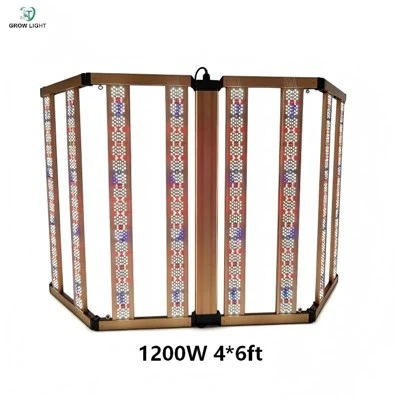
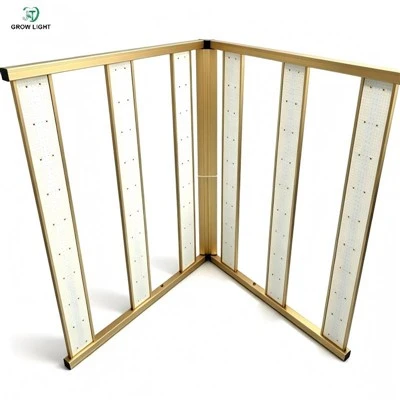
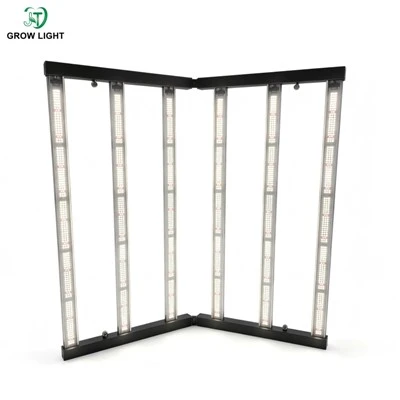
This is where practical engineering choices matter. In real projects, JTGL under canopy grow lights are selected not because they promise exaggerated gains, but because they offer control. Providing both 120° and 240° beam angle options allows growers to integrate under canopy lighting into different layouts without forcing the room to conform to the fixture.
A 120° beam angle supports tighter environments by limiting spill and reducing intrusion into walkways. A 240° beam angle supports more open layouts by smoothing lateral coverage and reducing shadow zones. In a layered strategy, these are not upgrades - they are matching tools to space.
Why Under Canopy Grow Light Is Not a Standalone Solution
The most important takeaway from a layered lighting strategy is this: no lighting layer works in isolation.
- Top lighting sets ambition.
- Structure determines reach.
- Layout governs access.
- Growth stage defines response.
Under canopy lighting stabilizes the system - if the system is ready. When under canopy lighting is treated as a standalone solution, it inherits all the weaknesses of the system it enters. When treated as a layer, it becomes a force multiplier. Better under-canopy lighting doesn't just affect plants - it directly impacts labor efficiency and reduces rework.
This is why the most successful implementations look unremarkable from the outside. They do not chase extremes. They integrate deliberately.
Under Canopy Lighting Belongs to the System, Not the Hype
Under canopy grow light has earned its place in modern cultivation, but only when it is positioned correctly.
- It is not a shortcut.
- It is not a universal upgrade.
- It is not a replacement for good structure or good layout.
It is one layer in a layered lighting strategy, designed to address a specific limitation that no other layer can solve.
Growers who understand this stop asking whether under canopy lighting is worth it. They start asking whether their system is ready for another layer.
That shift in thinking is what separates rooms that feel burdened by complexity from those that quietly perform, cycle after cycle, with fewer weak points and more predictable outcomes.