


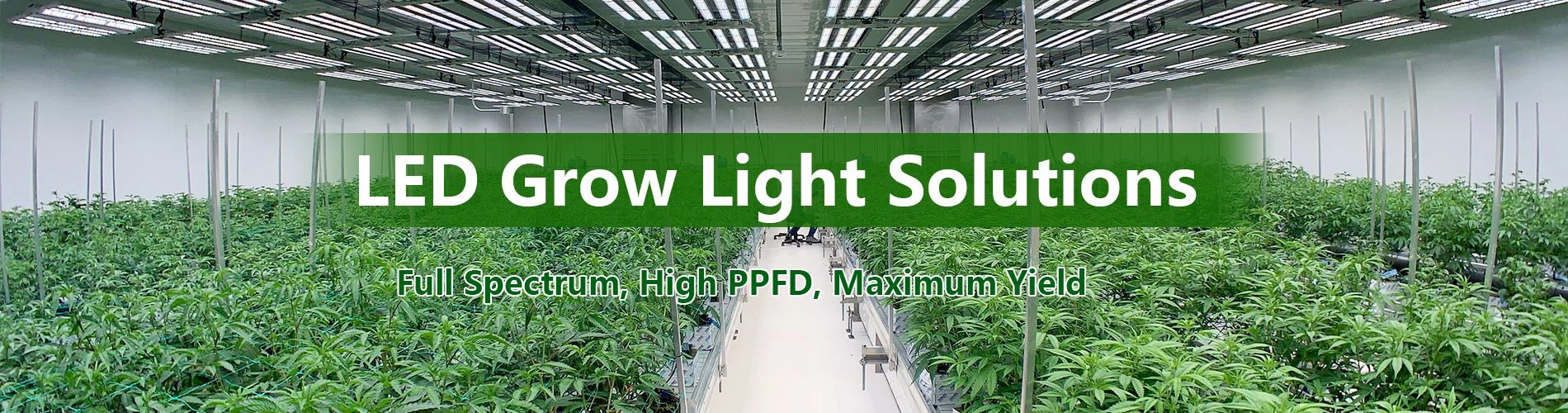
When choosing full-spectrum LED grow lights, you often run into a question:
Some emit white light, while others have a more pinkish hue. These are full-spectrum white and full-spectrum pink, two different light spectrums.
What exactly are the differences? And which plants are suitable for each? Today, we'll explore them in detail.

What is full-spectrum white light?
Simply put, full-spectrum white light is a spectrum designed to be closer to natural sunlight. It may look similar to household lighting, but it's much more complex:
1. Broad spectrum coverage: From blue (400-500nm), green (500-600nm), red (600-700nm), and even some far-infrared, it covers virtually all the light that plants need.
2. High comfort: It looks more natural to the human eye, reducing fatigue for growers working in greenhouses or indoors.
3. Widely adaptable: It can be used for everything from leafy vegetables to fruits and vegetables, especially during the vegetative growth phase, making it a universal spectrum.

In other words, White Full Spectrum Grow Light is suitable for seed germination and the growing season. It promotes better root development, thicker and larger leaves, and thicker stems, laying a solid foundation for subsequent flowering and fruiting. It's particularly well-suited for vegetables and leafy plants.
So what is full-spectrum pink light?
Pink light is essentially a full-spectrum light with an increased ratio of red and blue light, particularly red light (approximately 660nm). This is why it appears pink. Its features are:
1. Promotes flowering and fruiting: Its high red light content makes it particularly suitable for the fruiting and flowering stages.
2. High efficiency: It strongly drives photosynthesis, making it particularly suitable for crops that require a lot of energy.
It is commonly used in large-scale commercial plantations because pink light is more important to plant efficiency than visual comfort.
Pink Full Spectrum Grow Lights are often used for:
1. Fruits such as strawberries and blueberries;
2. Ornamental flowers, especially when strong light is needed to promote flowering;
3. Crops such as cannabis and medicinal plants that require high yield and active ingredients.

Many commercial growers in JT have seen a 10% reduction in flowering time, a 12% increase in fruit set, and higher THC content after using full-spectrum pink lights.
Similarities between the two lights
Don't just look at their appearance; these two light spectrums actually have many similarities:
1. Both are Full-Spectrum LED Grow Lights.
2. Both are more energy-efficient than traditional HPS or fluorescent lights;
3. Both shorten the plant's growth cycle and increase overall yield.
So, white and pink aren't opposites; rather, they're like brothers, performing different tasks but sharing the same goal: to keep plants healthy and growing happily.
Don't get hung up on it; choosing the right light is key.
If I had to summarize it in one sentence:
1. White light, with more blue light, is suitable from germination to growth.
2. Pink light, with more red light, is suitable from flowering to fruiting.
One is responsible for the early growth of the plant, while the other is responsible for the later fruiting.
Which one you choose depends on what you're growing and at what stage of growth. If you want both visual comfort and high yields, consider combining these two light spectrums and opting for an adjustable spectrum solution. This will provide both comfort and optimal plant growth.
If you're still unsure about the right choice after reading this, it's understandable; spectrum analysis is a complex subject. Don't worry, JT Grow Light can help you develop a plan. Simply tell us your growing scenario and the plants you're planting, and we'll take care of the rest. Contact us today!


