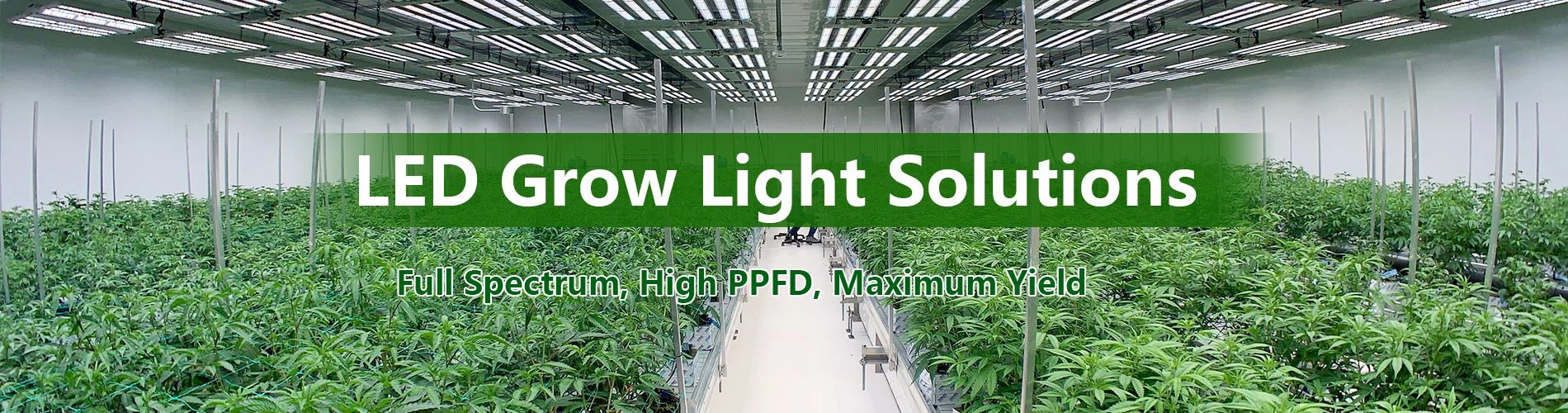
Vertical Grow Rack Systems
The Commercial Grower's Guide to Multi-Tier Indoor Farming
Here's a number that should bother you: in a typical single-level indoor grow room, 40% to 50% of the total floor area is taken up by aisles. You're paying rent, electricity, climate control, and insurance on space that produces absolutely nothing.
In most grow rooms, three to four meters of air above the canopy just sits there — empty. Every month you're not using it is a month of lost production. Revenue that went to your ceiling instead of your harvest.
This is the core problem that a vertical grow rack system solves. Not by giving you more floor space — you already have that. By turning the height of your facility into productive canopy, stacking 3, 4, 5, or 6 tiers of plants in the same footprint where you used to grow one layer.
A well-designed commercial grow rack installation multiplies your usable growing area by 3 to 5 times. Same facility. Same lease. Same utility connections. Dramatically more production. That's not a marketing claim — it's math, and we'll show you exactly how it works below.
Whether you're running a licensed cannabis cultivation facility, a commercial hydroponic farm, a microgreen growing rack operation, or scaling up a propagation lab — this page covers everything: rack types, material specs, real ROI data, and the questions you must ask any supplier before you sign a purchase order.
→ Tell us your facility size and ceiling height — we'll show you exactly how much canopy you're losing right now, and what a vertical grow rack system would recover.
-
![Rolling Vertical Farming Racks For Indoor Plant Growing With Glide Grow System]() Rolling Vertical Farming Racks For Indoor Plant Growing W...JT Grow Light Rolling Vertical Farming Racks is an efficient indoor planting solution. The structure is stable, and the surface is oxidized, which is corrosion-resistant and rust-proof. The hand-cranked slide design can easily move the...view more
Rolling Vertical Farming Racks For Indoor Plant Growing W...JT Grow Light Rolling Vertical Farming Racks is an efficient indoor planting solution. The structure is stable, and the surface is oxidized, which is corrosion-resistant and rust-proof. The hand-cranked slide design can easily move the...view more -
![Hydroponic Seed Starting Shelf With Lights For Seed Growing]() Hydroponic Seed Starting Shelf With Lights For Seed GrowingThickened steel is used for strong stability. The surface is oxidized for corrosion and rust resistance and long service life. The multi-layer seed growing rack can be customized with adjustable layer height, which makes assembly and...view more
Hydroponic Seed Starting Shelf With Lights For Seed GrowingThickened steel is used for strong stability. The surface is oxidized for corrosion and rust resistance and long service life. The multi-layer seed growing rack can be customized with adjustable layer height, which makes assembly and...view more -
![Hydroponic Cloning Seed Starting Rack With Lights For Seedling]() Hydroponic Cloning Seed Starting Rack With Lights For See...The seed starting rack is a planting equipment that integrates seedling cultivation, cloning, hydroponics, and supplementary lighting, a one-stop cultivation solution. The adapted seedling spectrum promotes the rapid growth of...view more
Hydroponic Cloning Seed Starting Rack With Lights For See...The seed starting rack is a planting equipment that integrates seedling cultivation, cloning, hydroponics, and supplementary lighting, a one-stop cultivation solution. The adapted seedling spectrum promotes the rapid growth of...view more -
![Hydroponic Rack System With Multi-layer Growing Rack For Indoor Vegetable Planting And Growing]() Hydroponic Rack System With Multi-layer Growing Rack For ...An efficient solution designed for indoor vegetable growing. Customizable multi-layer planting to maximize space utilization and support hydroponic cultivation of various crops. Made of thickened steel, it is sturdy and durable, with a...view more
Hydroponic Rack System With Multi-layer Growing Rack For ...An efficient solution designed for indoor vegetable growing. Customizable multi-layer planting to maximize space utilization and support hydroponic cultivation of various crops. Made of thickened steel, it is sturdy and durable, with a...view more -
![Commercial Multi-layer Mobile Indoor Vertical Grow Racks With Grow Tray]() Commercial Multi-layer Mobile Indoor Vertical Grow Racks ...1. The multi-layer vertical structure efficiently uses the planting space and is equipped with professional LED Grow lights to achieve a one-stop planting solution.view more
Commercial Multi-layer Mobile Indoor Vertical Grow Racks ...1. The multi-layer vertical structure efficiently uses the planting space and is equipped with professional LED Grow lights to achieve a one-stop planting solution.view more
2. The bottom of the Vertical Grow racks is equipped with...


What Is a Vertical Grow Rack
A vertical grow rack is a purpose-engineered multi-tier metal structure that holds growing trays, hydroponic channels, lighting, and irrigation lines across multiple stacked levels. It is not a regular storage shelf with plants sitting on it. The structural design, load ratings, surface treatments, and integration points are all built specifically for the demands of a living, wet, high-intensity growing environment.
Each tier functions as its own independent growing zone. Lights mount to the underside of the shelf above — putting the light source 15 to 30 cm above the canopy rather than 2 to 3 meters overhead. Irrigation lines run along the frame, delivering water and nutrients directly to each tier. Airflow is managed between tiers to prevent humidity buildup and ensure even CO₂ distribution.
The most important thing to understand before you buy: you are not buying a rack. You are building a system. A rack sitting alone in a room does nothing. The yield comes from the interaction between structure, lighting, irrigation, and climate — designed together, not bolted together as an afterthought.
The best indoor vertical farming rack suppliers don't just sell you a frame. They help you think through the whole system before a single piece of steel is cut. That's the standard we hold ourselves to at JT Grow Light.
The Real ROI — What the Numbers Actually Look Like
Let's run the actual math for a facility conversion. Take a 500 m² grow room currently running a single-level setup with traditional overhead lighting:
|
Cost Factor |
Traditional Setup |
Vertical Grow Rack System |
Improvement |
|
Canopy per m² floor |
0.7 m² |
3.0–3.5 m² |
4–5× increase |
|
Lighting energy per kg yield |
Baseline |
20–35% lower |
Under-shelf proximity efficiency |
|
Water use per kg yield |
Baseline |
Up to 90% less |
Closed-loop hydro integration |
|
Labor per kg yield |
Baseline |
15–30% lower |
Compact layout, less walking |
|
Rent cost per kg produced |
Baseline |
60–75% lower |
More output, same lease |
The payback calculation for most commercial operations lands in the 18 to 36 month range, depending on crop value and system quality. For high-value crops like cannabis, payback can be as short as 12 months. For lower-margin crops like microgreens, expect a 24- to 36-month timeline.
Real example: A cannabis operator converted a 3,000 sq ft warehouse from a single-tier table layout to a 2-tier rolling grow rack system. Licensed canopy increased from 1,800 sq ft to approximately 3,200 sq ft — without expanding the building. Revenue increased by approximately 78% in the first full production year. The rack investment was fully recovered within 18 months.
→ Send us your facility size and current layout — we'll calculate exactly how much canopy you're leaving on the table right now.
6 Types of Vertical Grow Racks
Which One Is Right for Your Operation
Fixed Multi-Tier Grow Rack
The most common configuration for general indoor farming. Fixed racks are bolted to the floor or wall and remain in position. They're simpler, more affordable, and suitable where permanent aisle access is acceptable. Most indoor vertical grow rack installations for microgreens, leafy vegetables, and propagation use fixed configurations. Standard tier counts: 3, 4, 5, and 6 tiers — with 4-tier and 5-tier most popular for ceiling heights between 3.0 m and 4.0 m.

Mobile / Rolling Grow Rack System

A mobile grow rack — also called a rolling grow rack system — sits on wheeled carriages that ride along floor-mounted rails. The racks compress together when not in use, eliminating permanent aisles. Only one working aisle is maintained, sliding to wherever access is needed.
In a fixed-rack layout, aisles consume 40 to 50% of total floor area. A rolling system compresses that to a single shared aisle, recovering all that space for additional growing tiers. For a 10,000 sq ft facility, this means an additional 3,000 to 4,000 sq ft of canopy — a 30 to 40% capacity increase with no construction work. Rolling systems cost 25 to 40% more than fixed racks upfront, but the canopy gain typically justifies the premium within the first year for high-value crops.
Hydroponic Grow Rack
A hydroponic grow rack integrates the structural frame with a water delivery and drainage system. Depending on grow method, the rack holds NFT (Nutrient Film Technique) channels, DWC (Deep Water Culture) reservoirs, or ebb-and-flood trays. Frame material must be fully corrosion-resistant — powder-coated steel, anodized aluminum, or stainless steel — because these systems live in constant contact with nutrient solution and humidity.
Research from controlled environment agriculture programs consistently shows leafy green yields of 10 to 15 lbs per square foot per year in well-managed vertical hydroponic systems — compared to 1 to 2 lbs in conventional field production. A 7 to 10× yield improvement from the same land area.

Cannabis Grow Rack

The cannabis industry has been one of the primary drivers of cannabis grow rack development. Licensed facilities have specific requirements standard agricultural racks don't address: support for high-intensity lighting (600W to 1,000W equivalent full-spectrum LED), integrated electrical management, adjustability for different growth stages, and dimensional consistency that supports canopy documentation for licensing compliance.
In regulated markets, canopy square footage is either licensed, taxed, or both. A properly specified cannabis grow rack system with standardized dimensions makes it straightforward to calculate, document, and defend your licensed canopy in regulatory audits.
Clone Rack and Tissue Culture Rack
Clone racks are propagation-specific shelving systems designed for rooting cuttings and germinating seeds. They run lower-intensity LED strip lighting, maintain high humidity, and are built around standard propagation trays. A tissue culture rack is the cleanroom version — 316-grade stainless steel construction, fully sanitizable surfaces, no crevices that trap contamination, and compatibility with UV sterilization protocols. These are mandatory in pharmaceutical plant labs, university research facilities, and commercial in-vitro propagation operations.

Microgreen Growing Rack

Commercial microgreen growing rack systems are optimized for 7 to 14 day crop cycles at maximum tray density. Key requirements: even light distribution at low PPFD levels (100 to 250 μmol/m²/s for most varieties), easy tray loading and unloading, good drainage, and quick-clean surfaces. Because microgreen production runs continuously with no off-season, sanitation access and durability under frequent cleaning are as important as structural specs.
→ Tell us your crop and ceiling height — we'll tell you which vertical grow rack configuration recovers the most canopy for your specific setup.
Vertical Grow Rack Specifications
Materials, Load Ratings and Tier Guide
Frame Material Comparison
|
Material |
Load/Tier |
Corrosion Resistance |
Lifespan |
Best Application |
|
Carbon steel (powder coated) |
200–500 kg |
Moderate |
5–10 yrs |
Dry grow rooms, standard indoor |
|
Galvanized steel |
200–500 kg |
Good |
10–15 yrs |
High-humidity, greenhouse |
|
Aluminum alloy (6063) |
100–300 kg |
Excellent |
15–20+ yrs |
Hydroponic, cleanroom, lightweight |
|
Stainless steel 304 |
300–600 kg |
Excellent |
20–25+ yrs |
Food production, FDA-audited |
|
Stainless steel 316 |
300–600 kg |
Marine-grade |
25+ yrs |
Tissue culture, pharmaceutical |
Aluminum alloy and stainless steel options are available for specialized applications upon request. Standard commercial configurations use powder-coated carbon steel or hot-dip galvanized steel frames.
For most commercial grow rack applications, galvanized steel or high-quality powder-coated carbon steel delivers the best cost-to-performance ratio. Aluminum is the right call when minimizing weight matters — rooftop farms, upper floors, or facilities that frequently reconfigure. Stainless steel is non-negotiable for any facility that undergoes food safety or pharmaceutical audits.
Tier Count and Ceiling Height Guide
|
Tier Count |
Total Height |
Min. Ceiling Height |
Crop Suitability |
|
3-tier |
1.8–2.1 m |
2.4 m+ |
Cannabis veg, tall vegetables |
|
4-tier |
2.2–2.6 m |
3.0 m+ |
Mixed crops, clones, microgreens |
|
5-tier |
2.8–3.2 m |
3.6 m+ |
Microgreens, leafy greens, strawberries |
|
6-tier |
3.4–3.8 m |
4.2 m+ |
High-bay warehouses, dense greens |
Lighting Integration Specs
|
Light Type |
PPFD Range (μmol/m²/s) |
Energy Efficiency |
Best For |
|
LED Tube Grow Light |
100–250 |
Moderate |
Clones, seedlings, tissue culture,Microgreens, leafy greens |
|
Quantum board LED grow lights |
400–800 |
Very high |
Vegetables, indoor grow tent |
|
Comercial LED grow lights |
600–1,200+ |
High |
Cannabis flower, fruiting crops |
The Full Vertical Grow Rack System
Structure, Lighting, Irrigation and Climate
This is where most vertical grow projects either succeed or fail — and most suppliers won't walk you through it before you order.
1. Lighting Integration — Under-Shelf vs. Overhead
Under-shelf mounting puts your light source 15 to 30 cm above the canopy instead of 2 to 3 meters overhead. Less light energy is lost to dispersion, uniformity across the canopy improves, and you can run lower wattage fixtures to achieve the same PPFD at the plant surface. Most well-specified vertical grow rack systems include pre-drilled mounting points, cable management channels, and electrical conduit routing built into the frame — not added as an afterthought.
Heat management is the most common lighting mistake in vertical setups. High-power LEDs generate heat that rises through the tiers. If your rack wasn't designed with that airflow pattern in mind, your upper tiers will run 3 to 5°C hotter than your lower tiers — and your crops will show it.
2. Irrigation Design for Multi-Tier Systems
Irrigation in a multi-tier system is not the same as irrigation on a single-level bench. You're delivering water and nutrients to plants at six different heights, with gravity and water pressure working differently at each tier. A proper hydroponic grow rack design uses pressure-compensating drippers that deliver consistent flow regardless of tier height, drainage channels that carry runoff cleanly away from lower tiers, and collection sumps sized appropriately for the total system volume.
The most common irrigation failure in DIY vertical setups: the top tier gets too much pressure, the bottom tier too little — or runoff from one tier drips onto the canopy below, creating disease pressure. Both problems are entirely avoidable with proper design from the start.
3. Climate Control and Airflow in a Vertical Setup
Temperature stratification — warm air rising to the top, cooler air at the bottom — means tier 1 and tier 6 can have meaningfully different growing conditions if your HVAC setup doesn't account for it. Professional-grade commercial grow rack systems are designed with consistent inter-tier spacing and open frame geometry that allows horizontal airflow to move across all tiers uniformly. The target for most controlled environment crops is less than 1.5°C temperature variation between the warmest and coolest tier.
At JT Grow Light, we supply all four. Our pre-sales team works with you to design the full system before anything is manufactured — rack configuration, under-shelf lighting layout, irrigation line routing, and airflow spacing are all specified together as one integrated plan. You get a complete drawing package.
→ Tell us your room size, ceiling height, and target crop — we'll put together a complete structure, lighting, irrigation and climate design proposal at no cost.
Grow Rack + LED Grow Lights
Why Sourcing Both Together Matters
Most growers end up sourcing lights from one supplier and racks from another — then spending weeks troubleshooting why the PPFD isn't right at canopy level, or why the tier height doesn't match the light's beam angle. It's a common and expensive problem.
When your lights and your structure come from different suppliers, nobody is responsible for making them work together. That gap is where most system failures happen — and where yields quietly underperform.
At JT Grow Light, we manufacture both. Our LED grow lights are engineered to integrate directly with our vertical grow rack systems — matched by tier height, light distribution angle, PPFD targets, and thermal management. Our under-shelf LED bars are designed for ±10% PPFD uniformity across the full shelf area, so every plant on every tier gets the same light dose and your harvest is predictable.

|
Growing Setup |
Recommended LED Grow Lights |
Rack Configuration |
|
Cannabis cultivation |
High-PPFD full-spectrum LED, 600–1000W |
2–3 tier, heavy-duty, rolling option |
|
Leafy greens / herbs |
Full-spectrum LED bars, T8 tube |
4–8 tier, NFT hydroponic rack |
|
Microgreens |
T8 LED bars, low-heat output |
5–6 tier, high tray density |
|
Tissue culture / propagation |
4ft LED tube, blue+red optimized |
6–7 tier, 20–30 cm tier spacing |
|
Cloning / seedlings |
Low-intensity full-spectrum strip LEDs |
4–6 tier clone rack |
All-in pricing is available for complete grow rack system wholesale orders — racks, lights, mounting hardware, and accessories quoted together. No sourcing from multiple vendors, no compatibility surprises.
→ Ask for a matched system quote — vertical grow rack + LED grow lights, specified together so nothing gets left to chance.
Vertical Grow Rack Mistakes That Cost Growers Thousands
This is the section most suppliers won't write for you, because it requires admitting that the wrong purchase decision causes serious, expensive problems. We're writing it anyway — we'd rather you buy the right thing than buy the wrong thing and blame the rack.
|
Mistake |
What Actually Happens |
The Real Cost |
|
Buying on price without checking load ratings |
A rack rated for 100 kg/tier loaded with 200 kg deflects, warps, or fails — destroying weeks of crop and your irrigation system |
Structural failure, crop loss, safety risk |
|
Wrong surface treatment for humid environment |
Standard powder coat without proper pre-treatment rusts within 6–18 months. By year 3: structural corrosion |
Full system replacement at 3–5× original cost |
|
Not planning lighting heat before installation |
Adding heat extraction after the rack is installed is expensive and often compromises structural integrity of the tiers |
Retrofit costs, yield loss from hot tiers |
|
Fixed-height shelves in a multi-crop facility |
When you change your crop or lighting setup, fixed shelves lock you into one configuration permanently |
Lost flexibility, expensive modifications |
|
Underestimating floor load for rolling systems |
Rails pull loose, carriages bind or tip — especially if floor slab isn't rated for the concentrated load of a full rolling system |
Safety hazard, complete system replacement |
|
Sourcing rack and lights from different suppliers |
Nobody is responsible for the integrated system — PPFD gaps, heat issues, and mounting problems fall into a finger-pointing gap |
Wasted yield, costly retrofitting |
People don't regret buying better equipment. They regret buying the wrong equipment — and finding out after installation.
Every one of the scenarios above is preventable with the right system design before you order. That's exactly what our pre-sales team is here for. Send us your specs and we'll flag issues before they become your problem.
→ Send us your current quote or spec sheet — we'll tell you exactly what to watch out for before you commit.
Real Project Cases

7-Tier Tissue Culture Lab with Integrated LED Grow Lights (Asia)
A plant tissue culture laboratory in Asia was producing micropropagated seedlings at scale. Core problems: plant elongation (etiolation) across batches, inconsistent batch quality, and high labor costs from handling fragile plants. The root cause was a lighting and structure mismatch — inadequate overhead lighting with no per-tier control caused plants to stretch toward the light source.
JT Grow Light supplied a 7-tier vertical grow rack system custom-configured for tissue culture container dimensions, with 20–30 cm tier spacing. Per-tier 4ft full-spectrum LED grow light bars were mounted at each level — blue+red optimized spectrum (400–500nm blue to control compact growth; 600–700nm red for biomass). PPFD target: 50–120 μmol/m²/s at canopy.
|
Parameter |
Before |
After |
|
Plant height |
Elongated (etiolation) |
Compact — blue spectrum suppressed stretching |
|
Batch consistency |
Unstable across cycles |
Standardized across all 7 tiers |
|
Survival rate |
Baseline |
↑ 15–25% improvement |
|
Labor cost |
High (handling fragile plants) |
Reduced — fewer losses, less remediation |
|
Light source |
Generic overhead lighting |
Per-tier 18W LED grow bars, full spectrum |
|
Rack structure |
Single-level, non-optimized |
7-tier vertical rack, tissue culture configured |
Key insight: the elongation problem wasn't solved by better lights alone, and it wasn't solved by a better rack alone. It was solved by specifying both together — correct tier spacing, correct spectrum, correct canopy distance. This is system thinking in practice.
3-Tier Mobile Grow Rack System for Licensed Cannabis Facility
A licensed cannabis cultivator needed a complete vertical growing setup for a 16,700 × 16,700 mm indoor facility — two parallel rack rows, one floating 940 mm access aisle, 12 rack units total.
Equipment Supplied
|
Equipment |
Specification |
Qty |
|
3-Tier Mobile Grow Rack |
L 15.12 m × W 1.22 m × H 3.9 m, hand-wheel operated, dual-drive gear reduction, upgraded rails, load ≥300 kg/tier |
12 units |
|
Tidal Ebb & Flow Trays |
1.22 × 2.44 m, 3.2mm ABS, 18 trays per unit across 3 tiers |
216 trays |
|
640W Full-Spectrum LED Grow Lights |
640W, full spectrum, mounted per tier via motorized lift system — 13 lights per rack unit × 3 tiers |
468 units |
|
Per-Tier Ventilation |
780 m³/h, 4× Q75 fire-rated ducts per tier, 174W ETL-certified fan, 120V |
36 sets |
|
Light Lift System |
220V motor, ≥300 kg lift capacity, 0–3 m adjustment range, steel cable mechanism |
36 sets |
The mobile rack system keeps one floating aisle serving the entire floor — recovering the canopy space that fixed aisle layouts permanently sacrifice. Each tier runs 13 × 640W full-spectrum LED grow lights mounted on a motorized lift system, allowing light height to be adjusted across the full veg-to-flower cycle without manual repositioning — critical for managing canopy distance as cannabis plants develop through each growth stage. Tidal ebb & flow trays deliver identical nutrient solution to every plant simultaneously, eliminating batch inconsistency and the standing water conditions that cause botrytis in flowering rooms. Per-tier ducting at 780 m³/h maintains consistent airflow across the full 15.12 m rack length, preventing the temperature stratification that standard HVAC alone cannot address in a 3.9 m racking system.


Licensed Cannabis Facility, Western United States
A multi-state cannabis operator needed to increase canopy in an existing licensed facility without expanding the building — the expansion permit was delayed by 18 months. Solution: full conversion from single-tier fixed benches to a custom 2-tier rolling grow rack system with integrated 640W LED fixtures and drip irrigation on each tier. Rail tracks were installed over two weekends without shutting down production in the rest of the facility.
|
Parameter |
Before |
After |
|
Licensed canopy area |
4,200 sq ft |
~7,800 sq ft (+86%) |
|
Rack configuration |
Single-tier fixed benches |
2-tier rolling grow rack system |
|
Lighting |
Overhead HPS |
640W LED per tier, programmable controller |
|
Investment recovery |
— |
~16 months |
|
Building footprint |
5,000 sq ft |
5,000 sq ft (unchanged) |
Commercial Microgreen Farm, Northern Europe
A fresh produce supplier needed to double microgreen production capacity to meet a new supermarket chain contract, without budget or planning permission for a new facility. Solution: installation of 6-tier microgreen growing rack systems with T8 LED bars and automated ebb-and-flood irrigation. 316 stainless steel frames were specified to meet the retailer's food safety audit requirements.
|
Parameter |
Before |
After |
|
Weekly production |
~900 kg/week |
~3,800 kg/week |
|
Rack configuration |
Single-tier benches |
6-tier microgreen rack, 316 SS frame |
|
Facility footprint |
800 m² |
800 m² (unchanged) |
|
Investment recovery |
— |
~22 months |
|
Retail compliance |
Standard |
GFSI food safety audit passed |

→ Send us your floor plan — we'll show you what your numbers could look like with a vertical grow rack system.
How to Choose the Right Vertical Grow Rack for Your Facility
Start with Ceiling Height, Crop, and Compliance
Before you look at a single spec sheet, answer three questions: What is your usable ceiling height — floor to lowest obstruction, not floor to roof deck? What crop are you growing, and what are the height and light requirements at each growth stage? Are you subject to any regulatory framework — cannabis licensing, food safety certification, pharmaceutical GMP — that imposes material or design requirements on your infrastructure?
The answers immediately narrow your options and prevent you from specifying a system that meets your current needs but creates problems the moment your operation evolves.
Match Rack Type to Your Operation
|
Crop / Operation |
Recommended Rack Type |
Priority Specs |
|
Cannabis (veg & flower) |
Heavy-duty fixed or rolling grow rack |
Load rating, electrical integration, canopy documentation |
|
Leafy greens / herbs |
Hydroponic grow rack (NFT or DWC) |
Corrosion resistance, drainage design, light uniformity |
|
Microgreens |
Microgreen growing rack |
Tray density, sanitation access, airflow |
|
Clones / propagation |
Clone rack |
Low-intensity lighting, humidity management |
|
Tissue culture / research |
Tissue culture rack (316 SS) |
Cleanroom compatibility, UV resistance, contamination control |
|
Strawberries / vegetables |
Angled vegetable planting rack |
Shelf angle, runner management, light penetration |
Why Source Your Vertical Grow Rack from JT Grow Light
JT Grow Light is a direct vertical grow rack manufacturer and vertical grow rack factory with over 10 years of production experience supplying grow infrastructure to commercial facilities across North America, Europe, Australia, and Asia. Our manufacturing campus covers more than 10,000 square meters and operates CNC cutting lines, automated MIG and TIG welding stations, a fully automated powder coating line, and in-house load testing and dimensional inspection equipment. We are not a trading company. Every rack that ships from us was built in our facility.
|
What We Offer |
Details |
|
Factory-direct pricing |
Competitive wholesale and bulk pricing |
|
Rack + LED lights together |
Both designed and manufactured in-house — matched specs, one warranty, one point of accountability |
|
OEM / ODM capability |
Custom dimensions, surface finishes, load ratings, branded packaging — all product lines |
|
Flexible MOQ |
Standard items from 10 complete units; custom specs from 20 units |
|
Fast lead times |
Standard: 25–35 days; Custom: 35–60 days |
|
Pre-shipment load testing |
Every rack load-tested at 150% of rated capacity before it leaves our floor |
|
Global logistics |
Full export documentation, container loading, customs coordination — 40+ countries supplied |
|
Technical support |
Pre-sales layout consulting + post-sales installation guidance |
Certifications and Quality Standards
CE (Conformité Européenne) — European market compliance
ISO 9001 — Quality Management System certification
RoHS — EU Restriction of Hazardous Substances compliance
Salt spray test: 500+ hours per ASTM B117 for powder-coated steel frames
Material test certificates and weld inspection reports available on request for food-grade and pharmaceutical-grade orders
→ Not sure where to start? Tell us your ceiling height, crop type, and room size — we'll work through the details with you and recommend the right configuration. Most buyers have a clear answer within one conversation.
FAQ
Q: What is a vertical grow rack, and how is it different from a regular storage shelf?
A: A vertical grow rack is purpose-engineered for plant cultivation — not adapted from a warehouse shelf. The differences are structural: load ratings designed for wet, dynamic irrigation loads; corrosion-resistant surface treatment for high-humidity environments; integrated mounting points for under-shelf lighting, irrigation lines, and electrical conduit; and tier spacing calculated for specific crop heights and light distances. A standard storage shelf meets none of these requirements.
Q: What load capacity do I need for a commercial grow rack?
A: Standard commercial racks are rated for 150 to 300 kg per tier. Heavy-duty systems for hydroponic applications can reach 400 to 600 kg per tier. Always request documented load test results — not just the spec sheet figure. This is especially important for rolling grow rack systems where dynamic loading during movement adds stress beyond the static rated load.
Q: What is the difference between a rolling grow rack and a fixed grow rack?
A: A fixed rack is anchored in place and permanently occupies its floor position including the surrounding access aisle. A rolling grow rack system sits on wheeled carriages that compress the racks together, eliminating permanent aisles. Rolling systems cost 25 to 40% more upfront but recover 30 to 40% of floor space — a return that typically pays back the premium within 12 months for high-value crops like cannabis.
Q: Are vertical grow racks suitable for cannabis cultivation?
A: Yes, and cannabis is one of the most demanding applications for grow rack design. Our cannabis grow rack systems are built for high-intensity lighting loads, integrated electrical management, canopy documentation support, and the structural adjustability needed to manage different growth stages. We can supply documentation packages that support licensing compliance in regulated markets.
Q: Can I get LED grow lights included with my rack order?
A: Yes. JT Grow Light manufactures both racks and LED grow lights in-house. We offer integrated system pricing — racks, under-shelf LED bars, mounting hardware, and accessories quoted together as a matched package. This eliminates compatibility issues and gives you a single warranty covering the entire system.
Q: Can I customize the dimensions of my grow rack order?
A: Yes. As a direct vertical grow rack factory, we produce custom dimensions for the majority of our commercial orders. Real grow rooms rarely match catalog dimensions — customization is the norm, not the exception. Custom projects typically carry a small tooling fee and add 7 to 14 days to lead time.
Q: What is the minimum order for wholesale grow rack purchasing?
A: For standard catalog items, our MOQ for grow rack system wholesale orders starts at 10 complete units. Custom-specification projects start from 20 units. Contact us directly — we evaluate all inquiries individually and can often accommodate smaller initial orders for new clients.
Q: How long does production and delivery take?
A: Standard catalog items: 25 to 35 days production. Custom orders: 35 to 60 days depending on complexity. Sea freight to North America or Europe adds 18 to 32 days transit depending on destination port. We provide production progress updates throughout and can arrange pre-shipment inspection.
Q: Do you offer OEM and private-label services?
A: Yes. Full OEM and ODM services for distributors and brands building their own commercial grow rack product lines — including custom dimensions, surface finishes, branded packaging, and engineering support from prototype through mass production. We currently supply private-label products to brands in North America, Europe, and Asia-Pacific.
Ready to Build Your Vertical Grow Rack System? Start Here
Whether you're planning a new commercial facility, expanding an existing grow operation, or sourcing a vertical grow rack manufacturer to supply your distribution network — our team is ready to help you get it right from the start.
Most buyers who contact us don't know exactly what they need yet. That's fine. Tell us your situation and we'll help you figure out the right configuration — not the most expensive one, the right one.
- Tell us your crop, ceiling height, and room size
- We show you how much canopy you're currently losing — and what a vertical grow rack system would recover
- You get factory-direct pricing with no middleman markup
- If you need OEM — we handle everything from engineering to branded packaging
- If you need a complete system — vertical grow racks, LED lights, and accessories as one matched package
|
→ Send your floor plan — we'll show you how much canopy you're losing right now, and what a vertical grow rack system would recover |
|
→ Request factory-direct pricing or OEM quote for vertical grow racks |
|
→ Ask about complete system packages — vertical grow rack + LED grow lights, matched and quoted together |
JT Grow Light — vertical grow rack manufacturer | commercial grow rack supplier | vertical grow rack factory direct | CE / ISO 9001 / RoHS | 40+ export markets | OEM available
We're well-known as one of the leading vertical grow rack system manufacturers and suppliers in China. Please rest assured to buy cheap vertical grow rack system for sale here from our factory. Contact us for customized service and discount information.