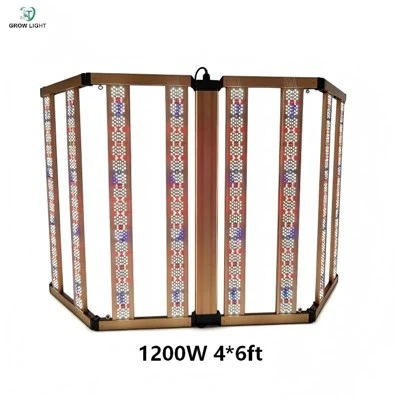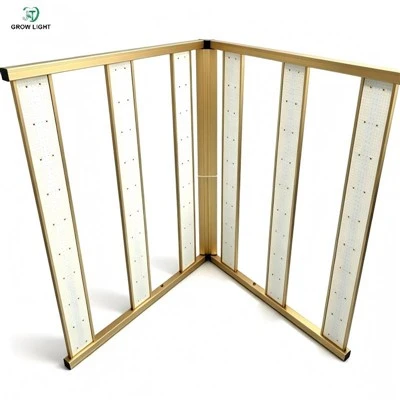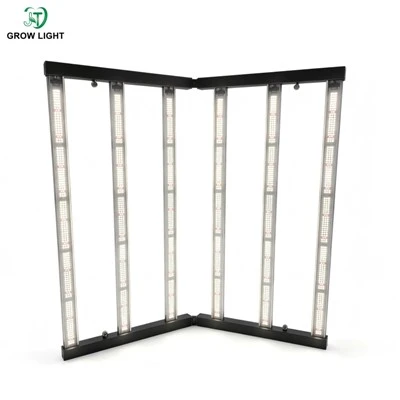
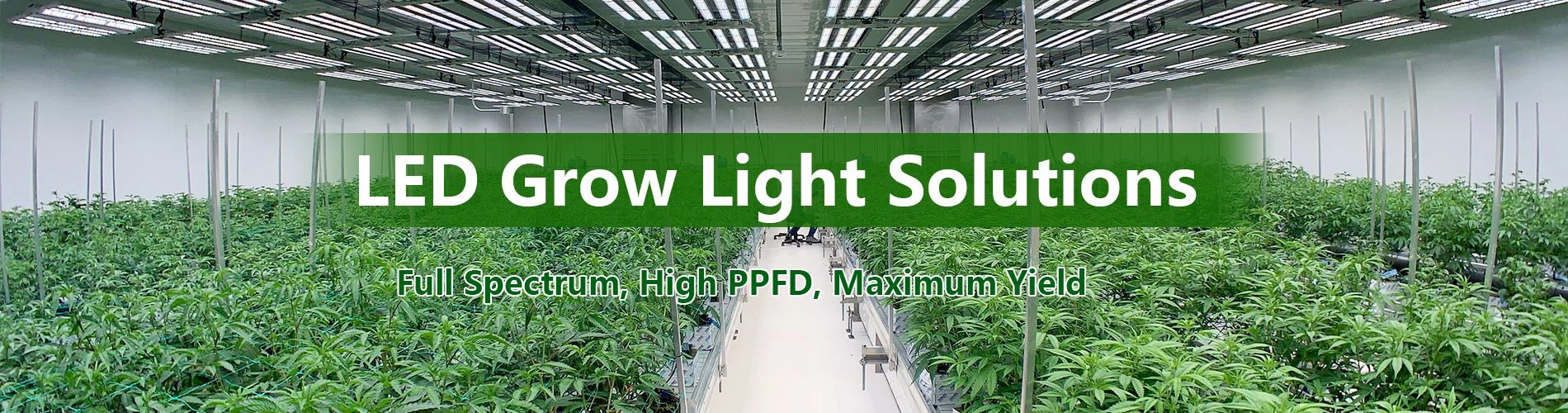
Greenhouse LED Grow Lights
Product Guide for Commercial Greenhouse Operator
A greenhouse LED grow light is not simply a smaller or cooler version of a commercial indoor grow light. It's a fundamentally different product - designed for a fundamentally different environment. The moment you understand that distinction, every other specification decision becomes much clearer.
Greenhouses work with natural sunlight. That single fact changes everything about how the lighting system needs to be designed: the beam angle, the mounting geometry, the spectrum configuration, the IP rating, the dimming behaviour, and the thermal management requirements are all different from a fixture built for a sealed indoor room where the sun doesn't exist.
This guide is written from direct experience specifying and supplying greenhouse LED grow lights for commercial operations across the Netherlands, Belgium, Canada, the UK, and North America. Whether you're a greenhouse operator specifying a new supplemental lighting system, a facility manager evaluating an HPS replacement, or an LED greenhouse lighting supplier building a distribution program, this is the product specification guide you need.
|
Know your greenhouse dimensions, crop, and location? Skip to Section 7 - send us the details and we'll deliver a complete fixture specification and photometric layout within 24 hours. |
-
![4FT 50W Inter Lighting LED Grow Light For Vegetable]() 4FT 50W Inter Lighting LED Grow Light For VegetableTurn Your inter-Canopy into a Production Powerhouse.view more
4FT 50W Inter Lighting LED Grow Light For VegetableTurn Your inter-Canopy into a Production Powerhouse.view more
The inter-Canopy grow light is a 2.9 µmol/J powerhouse that puts light exactly where your top lights can't reach. With IP66 durability, 270° coverage, and factory-direct... -
![IP66 Inter Canopy LED Grow Light For Indoor Cultivation]() IP66 Inter Canopy LED Grow Light For Indoor CultivationUnleash Your Plant's Full Potential Below the Canopy.view more
IP66 Inter Canopy LED Grow Light For Indoor CultivationUnleash Your Plant's Full Potential Below the Canopy.view more
JTGL-IC12050 Inter-Canopy LED: 2.8 umol/J high efficacy, IP66 waterproof, and 270° uniform lighting. Eliminate light deficits, boost yields by 40%, and ensure consistent... -
![50W E27 UFO LED Grow Lights For Seedlings And Vegetables]() 50W E27 UFO LED Grow Lights For Seedlings And VegetablesThe 50w E27 grow light is a low-wattage supplemental grow light designed for stable, long-hour operation in small to medium growing environments. Featuring a standard E27 screw base, UFO-style aluminum reflector, and customized...view more
50W E27 UFO LED Grow Lights For Seedlings And VegetablesThe 50w E27 grow light is a low-wattage supplemental grow light designed for stable, long-hour operation in small to medium growing environments. Featuring a standard E27 screw base, UFO-style aluminum reflector, and customized...view more -
![E27 LED Plant Grow Light]() E27 LED Plant Grow LightWith an E27 screw base for easy installation, a UFO aluminum reflector for even light coverage, and a plant-tuned full spectrum, this grow light is ideal for seedlings and vegetables. No complicated setup, no harsh lighting—just...view more
E27 LED Plant Grow LightWith an E27 screw base for easy installation, a UFO aluminum reflector for even light coverage, and a plant-tuned full spectrum, this grow light is ideal for seedlings and vegetables. No complicated setup, no harsh lighting—just...view more -
![Commercial Full Spectrum Dimmable LED Grow Light Bar For Greenhouse Cultivation]() Commercial Full Spectrum Dimmable LED Grow Light Bar For ...Made for commercial greenhouses, the 660W Toplighting LED Grow Light has high PPE output (2.8–3.4 µmol/J), making it a better choice than HPS lighting. Whether for hydroponic vegetables, tomatoes, strawberries, or cannabis and medicinal...view more
Commercial Full Spectrum Dimmable LED Grow Light Bar For ...Made for commercial greenhouses, the 660W Toplighting LED Grow Light has high PPE output (2.8–3.4 µmol/J), making it a better choice than HPS lighting. Whether for hydroponic vegetables, tomatoes, strawberries, or cannabis and medicinal...view more -
![Commercial Full Spectrum LED Grow Lights For Greenhouse Supplemental Lighting]() Commercial Full Spectrum LED Grow Lights For Greenhouse S...Designed for vegetables, flowers, and cannabis, this commercial greenhouse LED grow light delivers high efficiency, uniform full-spectrum lighting, low heat output, smart dimming control, and durable construction. Perfect for consistent...view more
Commercial Full Spectrum LED Grow Lights For Greenhouse S...Designed for vegetables, flowers, and cannabis, this commercial greenhouse LED grow light delivers high efficiency, uniform full-spectrum lighting, low heat output, smart dimming control, and durable construction. Perfect for consistent...view more -
![Commercial LED Greenhouse Grow Light]() Commercial LED Greenhouse Grow Light🌱High efficiency and energy saving: multi-channel dimmingview more
Commercial LED Greenhouse Grow Light🌱High efficiency and energy saving: multi-channel dimmingview more
🌱Increase production and quality: high PPFD to promote growth
🌱Lens Advantage: Concentration of light to increase brightness, uniform light ... -
![Adjustable Spectrum Greenhouse Grow Lights]() Adjustable Spectrum Greenhouse Grow Lights🔎Adjustable spectrum: accurately matches plant growth needs and improves yield and quality.view more
Adjustable Spectrum Greenhouse Grow Lights🔎Adjustable spectrum: accurately matches plant growth needs and improves yield and quality.view more
🔎High efficiency and energy saving: light efficiency 2.8~3.1 µmol/J, saving energy costs.
🔎High-quality heat dissipation: fast... -
![IP65 Waterproof Greenhouse Grow Light]() IP65 Waterproof Greenhouse Grow Light1. Waterproof and moisture-proof: IP65 waterproof designview more
IP65 Waterproof Greenhouse Grow Light1. Waterproof and moisture-proof: IP65 waterproof designview more
2. High efficiency and energy saving: Light efficiency reaches 2.8~3.1µmol/J
3. Strong light output: Maximum PPF reaches 3960 µmol/s
4. Intelligent... -
![Greenhouse Top Grow Light]() Greenhouse Top Grow Light🪴Full spectrum: simulates natural light to accelerate plant growth;view more
Greenhouse Top Grow Light🪴Full spectrum: simulates natural light to accelerate plant growth;view more
🪴High photon efficiency: less energy consumption, higher yield;
🪴 Large area coverage: directional optical design, uniform lighting; ... -
![Commercial Top LED Greenhouse Supplemental Linear Grow Light]() Commercial Top LED Greenhouse Supplemental Linear Grow LightDesigned for greenhouses, with an integrated aluminum alloy shell, a sturdy structure and corrosion resistance, and adapted to high humidity and high-temperature environments. High-density cooling holes for efficient heat dissipation....view more
Commercial Top LED Greenhouse Supplemental Linear Grow LightDesigned for greenhouses, with an integrated aluminum alloy shell, a sturdy structure and corrosion resistance, and adapted to high humidity and high-temperature environments. High-density cooling holes for efficient heat dissipation....view more -
![Commercial LED Grow Light for Greenhouse]() Commercial LED Grow Light for Greenhouse🌍PPFD and PAR performance is better than conventional full-spectrum lamps;view more
Commercial LED Grow Light for Greenhouse🌍PPFD and PAR performance is better than conventional full-spectrum lamps;view more
🌍Equipped with high-density heat dissipation teeth, excellent heat dissipation effect;
🌍Supports multiple lamps to be controlled in series through...


What Makes a Greenhouse LED Grow Light Different From an Indoor Grow Light
This is the question most buyers don't ask clearly enough - and the reason a significant number of greenhouse supplemental lighting projects end up with the wrong product. The differences are not subtle. They affect almost every aspect of fixture design.
Specifying an indoor grow light for a greenhouse application is one of the most common and expensive mistakes in commercial horticulture lighting. We've taken calls from operators six months post-installation asking why their energy bills are 2–3× higher than projected. Almost every time, it's this mistake.
The greenhouse lighting environment vs. indoor
|
Design Factor |
Greenhouse LED Grow Lights |
Indoor Commercial LED Grow Lights |
|
Light source |
Works alongside natural sunlight |
Sole light source - replaces the sun entirely |
|
PPFD target |
50–300 µmol/m²/s supplemental |
900–1,200 µmol/m²/s full replacement |
|
Fixture density |
Lower - supplemental contribution only |
Higher - must cover full crop requirement |
|
Mounting height |
3–6 m above crop (greenhouse roof structure) |
Typically 45–75 cm above canopy |
|
IP rating required |
IP66 - condensation, cleaning, irrigation |
IP65 sufficient for most indoor environments |
|
Operating temperature |
−10°C to 45°C (cold greenhouse winters) |
Typically 0–40°C sufficient for sealed rooms |
|
Humidity exposure |
Persistent - condensation cycles daily |
Controlled - lower average humidity |
|
Bay width coverage |
Must cover 6–12 m greenhouse bays uniformly |
Optimised for 1.2–1.5 m canopy footprint |
|
Dimming behaviour |
Must respond to solar variation automatically |
Stage-based manual or scheduled dimming |
The two products overlap in some components - LED chips, drivers, aluminium housings - but the engineering priorities are completely different. A fixture optimised for a 5×5 ft indoor cannabis canopy at a 45 cm mounting distance will leave dark lanes between rows when mounted 4 metres above a 9-metre-wide greenhouse bay. The beam geometry is simply wrong for the application.
Supplemental vs. full-replacement: two different products
Some greenhouse operators - particularly those growing cannabis or high-value crops in extreme low-light climates - choose to black out the greenhouse entirely and use LED as the sole light source. This is a valid approach, but it means you're running an indoor cultivation project within a greenhouse. The product you need is commercial LED grow lights - not greenhouse supplemental lighting.
If your project involves PPFD targets above 600 µmol/m²/s, full environmental control, and lighting as the sole light source, our Commercial LED Grow Lights guide is the right starting point. If your project is supplemental lighting for a working greenhouse - filling the DLI gap, extending the production season, stabilising winter yield - you're in the right place.
The two systems are not interchangeable. Supplemental greenhouse lighting at full-replacement density run 2–3× the operating cost of the right-sized supplemental system. Full-replacement indoor fixtures in a supplemental greenhouse application deliver oversized PPFD, wrong beam geometry, and unnecessary capital cost. Get the classification right before you specify anything.
Greenhouse LED Grow Lights Product Formats
Top Light, Linear, and Intra-Canopy
Greenhouse grow lights come in three main physical formats, each suited to a different installation position and crop type. Choosing the wrong format is as problematic as choosing the wrong wattage - a fixture that performs well in one position will underperform significantly in another.
Format determines beam geometry. Beam geometry determines how well your light actually reaches the crop. This decision comes before wattage.
Top LED grow lights - the standard for most greenhouse applications
Top LED grow lights are mounted overhead in the greenhouse structure - typically at 3–6 metres above the crop - and deliver downward illumination across wide greenhouse bays. For most commercial greenhouse crops (tomatoes, peppers, cucumbers, lettuce, herbs, strawberries, flowers), top lighting is the primary, and often the only, fixture type needed.
The defining design requirement for top grow lights in greenhouse applications is wide beam angle - 120° minimum to cover 6–12 metre bay widths from 3–6 metre mounting heights without dark lanes between fixtures. This is the most common specification gap we see: buyers sourcing a fixture with a 90° beam that works in an indoor room, then discovering at installation that it creates significant PPFD drop-off between fixture rows across a wide greenhouse bay.
At JTGL, our greenhouse LED grow lights for top-light applications are engineered with a 120° beam angle as standard - matched to the real geometry of commercial greenhouse bays, not to indoor canopy coverage targets.

Linear LED grow lights - efficient bay coverage at scale

Linear LED grow lights in bar or tube format are increasingly used as top-light fixtures in modern commercial greenhouses, particularly in wide-bay structures where long continuous illumination rows align with crop row spacing. The linear format provides excellent uniformity along the row direction and simplifies installation in greenhouse structures with existing rail or cable systems.
Greenhouse LED strip lighting and full-spectrum LED grow light strips in linear format are also used as supplemental inter-lighting in tall crop greenhouses - mounted within the crop canopy at 1–2 metre intervals to deliver supplemental PPFD directly to lower fruiting zones that overhead lighting cannot reach effectively.
Intra-canopy LED lighting - the yield multiplier for tall crops
Intra-canopy LED lighting places fixtures within the crop canopy itself - typically at 1–2 metre intervals along the crop row for indeterminate tomatoes, cucumbers, and tall pepper varieties. The lower 60–70% of a 3–5 metre tall crop canopy receives minimal light from overhead fixtures. Installing linear LED grow lights within the canopy at strategic heights delivers targeted supplemental PPFD directly to the lower fruiting zones.
Research from Wageningen University & Research consistently shows intra-canopy lighting in tall crop greenhouses increases total marketable yield by 10–20% compared to top lighting alone. We've supplied and specified intra-canopy systems for commercial tomato and cucumber growers in the Netherlands and Canada - the placement and spacing recommendations we make are based on results from those real installations.

Specifications of Our Greenhouse LED Grow Lights
Below are some of our typical greenhouse LED grow lights configurations for commercial growers, greenhouse supplemental lighting projects, and custom OEM/ODM requirements.
|
Product |
 |
 |
 |
 |
|
Wattage |
800W/1000W/1200W |
660W |
240W |
50W/100W |
|
Full Spectrum |
Full spectrum+660nm (Customized) |
Full spectrum+730nm (Customized) |
Full spectrum+660nm (Customized) |
Full spectrum+660nm (Customized) |
|
Light Source |
Samsung 281B/301B/301H |
Samsung Samsung 281B/301B/301H |
Samsung 281B/301B/301H | Samsung 281B/301B/301H |
|
PPE |
2.8~3.4 umol/J |
2.9~3.1 umol/J |
2.8~3.0 umol/J |
2.8~3.0 umol/J |
|
PPFD Uniformity |
≥ 0.85 |
≥ 0.85 |
≥ 0.85 |
≥ 0.85 |
|
PF |
≥0.97 |
≥0.95 |
≥0.95 |
≥0.95 |
|
Beam angle |
90°*120° |
60°/90° |
60/90/120/140° |
270° |
|
ROI |
Energy saving vs HPS: up to 40–50% |
Energy saving vs HPS: up to 40–50% |
Energy saving vs HPS: up to 40–50% |
Energy saving vs HPS: up to 40–50% |
|
Support Dimmer |
0–10V dimming |
0–10V dimming |
0–10V dimming |
0–10V dimming |
|
IP Rating |
IP65 |
IP65 |
IP65 |
IP65 |
|
Lifespan (hours) |
>50,000 |
>50,000 |
>50,000 |
>50,000 |
|
Working Time (hours) |
>50,000 |
>50,000 |
>50,000 |
>50,000 |
|
Product Weight(kg) |
19~30 |
10~25 |
6 |
2~4 |
|
Input Voltage(V) |
AC110-277/50/60Hz |
AC110-277/50/60Hz |
AC110-277/50/60Hz |
AC110-277/50/60Hz |
|
Working Temperature(℃) |
-20°C~+45°C |
-20°~+45°C |
-10°C to +45°C |
-10°C to +45°C |
|
Lamp Body Material |
6063 aluminum |
6063 aluminum |
6063 aluminum |
6063 aluminum |
|
Color Rendering Index(Ra) |
90 |
90 |
90 |
90 |
|
Cooling method |
passive cooling |
passive cooling |
passive cooling |
passive cooling |
|
Mounting Height |
36''-72''(90-180cm) |
≥ 3.94ft (120cm) Above canopy |
36''-72''(90-180cm) |
36''-72''(90-180cm) |
|
Customization |
OEM & ODM |
OEM & ODM |
OEM & ODM |
OEM & ODM |
|
Certification |
CE FC RoHS |
CE FC RoHS |
CE FC RoHS |
CE FC RoHS |
|
Warranty(Year) |
5-Year |
5-Year |
5-Year |
5-Year |
Spectrum for Greenhouse LED Grow Lights
Why It's Different From Indoor
Spectrum is where greenhouse lighting and indoor lighting diverge most significantly - and where a lot of buyers apply indoor growing logic to a greenhouse application and get the wrong result.
An indoor fixture replaces the sun. A greenhouse lighting supplements it. Those two roles require fundamentally different spectrum strategies.
What natural sunlight already provides
Natural sunlight is broad-spectrum - it covers the full 380–780 nm range and beyond, with relatively balanced output across wavelengths. When you're designing a greenhouse supplemental lighting system, you're adding light to a plant that is already receiving full-spectrum natural illumination for part of the day or part of the year. The spectrum your supplemental fixture contributes interacts with - and needs to complement - what the sun is already delivering.
This is fundamentally different from an indoor environment where the LED is the only light source and must cover the entire spectrum the plant needs from zero. In a greenhouse, full spectrum greenhouse grow lights don't need to replicate the sun - they need to efficiently deliver the wavelengths most useful for driving photosynthesis during low-light supplemental periods.


The greenhouse spectrum strategy: red-dominant efficiency with far-red support
In greenhouse supplemental lighting applications, the most efficient spectrum strategy concentrates output in the wavelengths with the highest photosynthetic efficiency - primarily red (650–670 nm) and blue (440–460 nm) - with far-red (720–740 nm) supplementation for Emerson enhancement and photoperiod management. Green (500–560 nm) is less critical in a supplemental context because natural sunlight already provides significant green output during daylight hours.
This is why commercial greenhouse LED grow lights from serious manufacturers tend toward higher red:blue ratios (3:1 to 6:1 depending on crop stage) compared to indoor full-replacement fixtures that run more balanced spectra. The greenhouse fixture is filling a specific gap - not providing everything.
Indoor spectrum strategy: full spectrum balance is non-negotiable
In a sealed indoor grow room, the LED is the only photon source. Plants need the complete spectrum - blue for vegetative development, green for canopy penetration, red for photosynthesis, far-red for flowering response. An indoor full spectrum LED grow lights for greenhouse application (i.e., blackout greenhouse, full replacement) must cover all of these wavelengths with adequate intensity because there is no sunlight filling any gap.
Running a red-dominant supplemental spectrum fixture as the sole light source in a blackout application creates severe blue light deficiency - compact growth, abnormal leaf development, and reduced photosynthetic efficiency. This is one of the failure modes we see when operators use supplemental fixtures for full-replacement applications.

All full spectrum LED grow lights for greenhouse in our range offer adjustable R:B ratio - not a fixed spectrum. A fixed spectrum fixture forces you to choose between vegetative-optimal and flowering-optimal spectrum at purchase time. An adjustable fixture adapts to your crop's current growth stage without hardware changes. For multi-crop greenhouse operations, this single feature is often the deciding factor in our product recommendation.
What We Build Into Our Greenhouse LED Grow Lights
Beyond spectrum, there are five design requirements that separate a fixture genuinely built for commercial greenhouse environments from one that looks appropriate on a spec sheet but fails in practice. We've learned some of these from installations where the wrong specification caused problems - and built our product range around making sure they're all addressed as standard.
Every one of these requirements has a version that costs money to get right and a version that cuts corners. The corner-cut version works fine in a lab. It fails in a greenhouse.
1. IP66
IP65 is the specification most greenhouse fixtures claim. IP66 is what commercial greenhouse environments actually require. The difference: IP65 protects against low-pressure water jets from any direction. IP66 protects against powerful water jets - which is the actual condition in commercial greenhouses with overhead irrigation, misting systems, and high-pressure cleaning protocols.
We specify IP66 as standard because greenhouse environments involve high-pressure cleaning and continuous moisture exposure. - not immediately, but progressively, as seals degrade from repeated high-pressure exposure. A fixture failure during a critical crop window in January is not a warranty conversation - it's a production loss. IP66 from the start prevents it.
2. Wide beam angle
Commercial greenhouse bays are typically 6.4 m, 9.6 m, or 12.8 m wide. Mounting heights for top lights range from 3 to 6 metres. At a 4 m mounting height with a 90° beam angle, effective coverage width is approximately 7 m - adequate for a 6.4 m bay with minimal overlap but creating significant edge drop-off in wider structures. At 120°, coverage width at 4 m mounting height extends to approximately 13 m - sufficient for proper overlap and uniformity in most standard bay widths.
Our top LED grow lights for greenhouse applications are manufactured with 120–140° beam angle as standard. We don't offer a narrow-beam version for greenhouse top-light applications because the geometry doesn't work - and we'd rather tell you that upfront than sell you the wrong product.
3. Wide operating temperature range
Commercial greenhouses in Northern Europe, Canada, and northern US states experience ambient temperatures from below 0°C in winter (before heating activates fully) to above 40°C in summer. Fixtures rated for 0–40°C operating range are at the edge of these conditions. Our LED greenhouse lights are rated for −10°C to 45°C - designed for the full range of conditions in commercial greenhouse environments, not for the controlled temperature of an indoor grow room.
4. 0–10V dimming with solar response
In a greenhouse supplemental lighting application, fixture intensity needs to respond to natural light variation - reducing output when solar irradiance is high, increasing it when clouds reduce natural PPFD below target. This requires 0–10V continuous dimming compatible with light-sensing climate control systems, not just manual or scheduled dimming.
Fixtures with on/off switching or step-only dimming cannot respond to real-time solar variation. The result is either over-lighting on bright winter days (unnecessary energy cost) or under-lighting on overcast days (DLI shortfall). All our supplemental greenhouse lighting products support 0–10V continuous dimming as standard.
5. L90 lifespan
n a greenhouse supplemental lighting system that runs October through March (6 months/year) for 16–18 hours/day, a fixture reaches approximately 25,000 operating hours in 8–9 years. A fixture rated at L70 over 50,000 hours will have dropped to 70% of initial output by year 8–9 - meaning your supplemental PPFD contribution is 30% lower than when you designed the system, without any obvious failure to alert you.
We specify L90 across our greenhouse LED grow lights range - 90% of initial output maintained over 50,000 hours. The DLI contribution you designed the system for is the DLI contribution you'll still have at the end of the fixture's commercial life.
What we provide before you commit to an order: system-level PPE test report, PPFD distribution map at your bay width and mounting height, IP66 test documentation, spectrum SPD graph, and a sample unit for independent testing if required. We've found that customers who verify these five parameters before ordering never have post-installation surprises. The ones who don't are the ones who call us six months later.
Sourcing Our Greenhouse LED Grow Lights
Factory Direct, Wholesale, and OEM
Commercial greenhouse lighting projects involve real scale - hundreds of fixtures, multi-bay installations, phased rollouts across growing seasons. How you source determines not just day-1 fixture cost, but the quality of technical support, the consistency of specification across production batches, and what happens when you need something resolved mid-season.
In commercial greenhouse projects, the supplier relationship matters as much as the fixture specification. You need someone who answers the phone in October when your crop is in peak production.

Factory direct from a greenhouse LED grow lights manufacturer
Buying directly from a greenhouse LED grow lights manufacturer removes distribution margin - typically 20–35% - from every order. On a 300-fixture greenhouse installation, that's $25,000–$50,000 in cost that stays in your project budget rather than going to a reseller who added no engineering value to the transaction.
Direct factory access also means: engineering support for bay layout and photometric specification, production batch visibility for phased rollouts, and direct accountability when post-installation issues arise. We've supported greenhouse projects from initial DLI gap analysis through installation commissioning and seasonal adjustment - not just as a fixture supplier, but as a project partner.
Wholesale programs for LED greenhouse lighting suppliers
For LED greenhouse lighting suppliers and distributors building a commercial greenhouse lighting business, we support wholesale programs with volume pricing, stable production allocation, and technical support for project specification. Standard lead time: 10–15 days. Production capacity: 8,000–12,000 units/month. Full in-house quality testing before shipment.


OEM greenhouse LED grow lights
Custom spectrum, custom beam angle, private label, market-specific certification - available from 1 unit with 20–25 day lead time:
- Custom R:B spectrum ratio
- Custom beam angle
- Private label branding
- Market certification packages
- Custom wattage and driver integration
- Custom operating temperature rating
Planning a greenhouse lighting project or building a distribution program? Tell us your greenhouse bay dimensions, crop, location, and mounting height. We'll deliver a complete fixture specification - PPFD distribution map across your bay width, spectrum recommendation by crop stage, energy model, and DLC rebate estimate - within 24 hours. No charge for the specification.
Our Certifications

FCC

CE

EMC

RoHS

IP66

CE
FAQ
Q: What is the difference between greenhouse LED grow lights and indoor grow lights?
A: Greenhouse LED grow lights are supplemental fixtures designed to work alongside natural sunlight - filling the DLI gap with 50–300 µmol/m²/s additional PPFD. Indoor grow lights are full-replacement fixtures designed as the sole light source at 800–1,200 µmol/m²/s. They are different products with different beam angles, spectrum strategies, IP ratings, and operating cost profiles. Using an indoor fixture for greenhouse supplemental lighting means oversized output, wrong beam geometry for bay coverage, and 2–3× the operating cost of the right-sized supplemental system.
Q: Why does greenhouse supplemental lighting use a different spectrum from indoor growing?
A: Because natural sunlight already provides full-spectrum illumination for part of the day. Greenhouse supplemental lighting is filling a specific gap - not replacing the sun. This means the fixture can concentrate output in the most photosynthetically efficient wavelengths (primarily red and blue) rather than replicating the full solar spectrum. Indoor fixtures must provide everything because there is no sunlight to supplement - requiring more balanced full-spectrum output with higher blue and green content.
Q: Do I need IP65 or IP66 for greenhouse LED grow lights?
A: IP66 is the standard we specify for commercial greenhouse environments. IP65 resists low-pressure water jets; IP66 resists powerful water jets from any direction - which is the actual condition in commercial greenhouses with overhead irrigation and high-pressure cleaning. IP65 fixtures fail progressively in these conditions as seals degrade. All our greenhouse grow lights are IP66 rated and pressure-tested on production units.
Q: What beam angle do I need for greenhouse top lighting?
A: For commercial greenhouse bays of 6–12 metres width: 120–140° minimum. A 90° beam from 4 metres mounting height covers approximately 7 metres - adequate for narrow bays but creating significant edge drop-off in standard 9-metre structures. Our top LED grow lights for greenhouse applications are 120–140° as standard, matched to real commercial greenhouse bay geometries.
Q: What is intra-canopy lighting and do I need it for tomatoes?
A: Intra-canopy LED lighting places fixtures within the crop canopy at 1–2 metre intervals along the row, delivering supplemental PPFD to lower fruiting zones that overhead lighting cannot reach. For indeterminate tomatoes and cucumbers grown to 3–5 metres, intra-canopy lighting increases total marketable yield by 10–20% compared to top lighting alone. For crops below 1.5 metres, it's generally not needed.
Q: What certifications do greenhouse LED grow lights need in Europe?
A: CE marking and RoHS compliance are legal requirements for all commercial greenhouse lighting sold or installed in EU and UK markets. IP66 is the practical standard for wet greenhouse environments. For the Netherlands, Belgium, and Germany - the largest greenhouse markets in Europe - CE documentation must be available before import. We prepare CE documentation in parallel with production for all European orders.
Q: Can I get custom spectrum LED grow lights for my specific crop?
A: Yes - adjustable R:B ratio is standard across our range. Fixed custom spectrum ratios and multi-channel adjustable configurations are available from 1 unit through our OEM program with 20–25 day lead time. If you have a specific crop protocol, send us the spectrum requirements and we'll configure accordingly.
Q: What is the minimum order for greenhouse LED grow lights wholesale?
A: No minimum for standard products. For greenhouse LED grow lights wholesale programs with volume pricing, contact us with your target quantity and market. OEM and private label from 1 unit, 20–25 day lead time.
Specify Your Greenhouse Lighting System - We'll Handle the Rest
The right greenhouse LED grow light is the one that matches your bay geometry, your crop's spectrum requirements, your climate conditions, and your production economics. Here's what we bring to every project:
- 2.8–3.1 µmol/J system-level PPE - verified by third-party lab data
- 120–140° beam angle as standard - engineered for commercial greenhouse bay widths, not indoor canopy footprints
- IP66 on every fixture - pressure-tested on production units
- Adjustable R:B spectrum with far-red - adapts to crop stage without hardware changes
- −10°C to 45°C operating range - built for northern European and Canadian greenhouse conditions
- ETL + CE + DLC + RoHS standard - USA and European commercial markets
- Top light, linear, and intra-canopy formats - complete system capability from a single supplier
- OEM from 1 unit - 20–25 day lead time, full certification under your brand
- Wholesale programs - 10–15 day standard lead time for distributors and project supply
|
Tell us your greenhouse bay dimensions, crop, location, and mounting height. We'll send you a complete product specification - PPFD distribution map across your bay width, spectrum recommendation by crop stage, fixture format selection, energy model, and DLC rebate estimate for your market - within 24 hours. Not a product catalogue. A specification. The document your team needs to make the right procurement decision. |
← Back to: LED Grow Lights - Complete Buyer's Guide
→ Related: Commercial LED Grow Lights | Vertical Farming LED Lighting | Under Canopy Lighting | Quantum Board Grow Lights
We're well-known as one of the leading greenhouse led grow lights1 manufacturers and suppliers in China. Please rest assured to buy cheap greenhouse led grow lights1 for sale here from our factory. Contact us for customized service and discount information.
durable led grow lights, high-intensity led grow lights, quiet led grow lights