

When it comes to indoor gardening, one of the most critical factors that often gets overlooked is the distance between grow lamps and plants. As a grow lamps supplier, I've seen firsthand how this seemingly minor detail can make a world of difference in plant health and growth. In this blog post, I'll delve into the science behind determining the optimal distance between grow lamps and plants, considering various factors such as the type of grow lamp, plant species, and growth stage.
Understanding the Basics of Grow Lights
Before we discuss the optimal distance, it's essential to understand how grow lights work. Plants rely on light for photosynthesis, the process by which they convert light energy into chemical energy to fuel their growth. Natural sunlight contains a full spectrum of light, including different wavelengths such as red and blue, which are crucial for various stages of plant development. Grow lights are designed to mimic natural sunlight, providing the necessary wavelengths for photosynthesis.
There are several types of grow lights available on the market, including LED, fluorescent, and high-intensity discharge (HID) lights. Each type has its own characteristics, such as light intensity, spectrum, and heat output, which can influence the optimal distance between the light and the plants.
Factors Affecting the Optimal Distance
1. Type of Grow Lamp
- LED Grow Lights: LED grow lights are becoming increasingly popular due to their energy efficiency, long lifespan, and customizable spectrum. They produce less heat compared to other types of grow lights, allowing them to be placed closer to the plants. For example, our Foldable LED 600W Grow Lights and 1000 Watt Folding LED Grow Lamps are designed to provide high-intensity light while minimizing heat output. Generally, LED grow lights can be placed 6 - 12 inches away from seedlings and young plants and 12 - 24 inches away from mature plants.
- Fluorescent Grow Lights: Fluorescent lights are a cost-effective option for small-scale indoor gardening. They produce less light intensity compared to LED and HID lights and also generate less heat. Compact fluorescent lights (CFLs) can be placed 2 - 4 inches away from seedlings and young plants, while T5 fluorescent lights can be placed 4 - 6 inches away.
- High-Intensity Discharge (HID) Lights: HID lights, such as metal halide (MH) and high-pressure sodium (HPS) lights, are known for their high light intensity. However, they also produce a significant amount of heat, which requires careful consideration when determining the distance. MH lights are typically used during the vegetative stage, and they can be placed 18 - 24 inches away from the plants. HPS lights, which are more suitable for the flowering stage, can be placed 24 - 36 inches away.
2. Plant Species
Different plant species have different light requirements. Some plants, such as succulents and cacti, are adapted to bright, direct sunlight and can tolerate higher light intensities. On the other hand, plants like ferns and orchids prefer lower light levels. For example, lettuce and herbs generally require less light intensity compared to tomatoes and peppers. When growing multiple plant species under the same grow lights, it's important to find a balance and adjust the distance accordingly.
3. Growth Stage
The light requirements of plants change throughout their growth cycle. During the seedling and vegetative stages, plants need more blue light to promote leafy growth. As they enter the flowering and fruiting stages, they require more red light. The optimal distance between the grow lamp and the plants also varies depending on the growth stage.
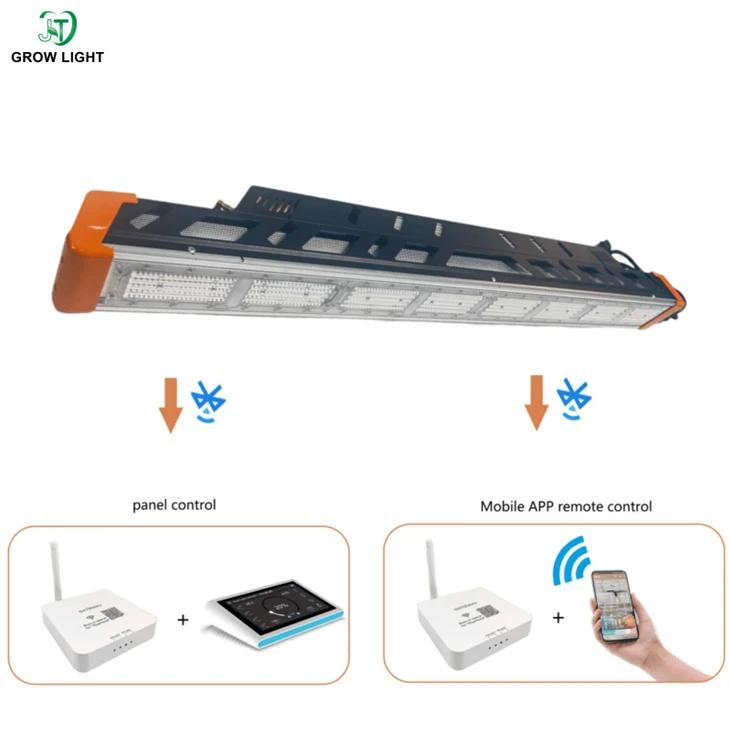

- Seedling Stage: Seedlings are delicate and require less light intensity. They are more susceptible to light burn, so it's important to keep the grow lights at a greater distance. For most grow lights, a distance of 12 - 18 inches is recommended during the seedling stage.
- Vegetative Stage: As the plants grow and develop more leaves, they can tolerate higher light intensities. The distance between the grow lamp and the plants can be gradually reduced to 6 - 12 inches for LED lights and 18 - 24 inches for HID lights.
- Flowering and Fruiting Stage: During the flowering and fruiting stages, plants need more intense light to support the development of flowers and fruits. The distance can be further adjusted to 8 - 16 inches for LED lights and 24 - 36 inches for HID lights.
Monitoring and Adjusting the Distance
Determining the optimal distance between grow lamps and plants is not an exact science, and it may require some trial and error. It's important to monitor the plants closely for signs of light stress, such as yellowing leaves, wilting, or stunted growth. If the plants show signs of light burn, the grow lights should be moved further away. Conversely, if the plants are stretching or leaning towards the light, it may indicate that they are not receiving enough light, and the distance should be reduced.
In addition to visual inspection, you can also use a light meter to measure the light intensity at different distances from the grow lamp. This can help you ensure that the plants are receiving the appropriate amount of light for their growth stage.
Our Grow Lamp Solutions
At our company, we offer a wide range of high-quality grow lamps to meet the diverse needs of indoor gardeners. Our 600w Commercial Foldable LED Grow Light with Full Spectrum provides a balanced spectrum of light for all stages of plant growth. It is energy-efficient, easy to install, and can be adjusted to the optimal distance for your plants.
For larger-scale commercial growers, our 660W Supplemental LED TopLighting Grow Light For Greenhouse is a great option. It features high-intensity light output and can be used to supplement natural sunlight in greenhouses.
If you're looking for a flexible and portable grow light solution, our Detachable LED Plant Lights are perfect. They can be easily adjusted and positioned according to the needs of your plants.
Contact Us for Procurement
Finding the optimal distance between grow lamps and plants is crucial for successful indoor gardening. Our team of experts is here to help you choose the right grow lamps and provide guidance on setting up your indoor garden. Whether you're a hobbyist gardener or a commercial grower, we have the products and knowledge to support your needs.
If you're interested in purchasing our grow lamps or have any questions, please don't hesitate to contact us. We look forward to working with you to achieve healthy and thriving plants.
References
- Smith, J. (2020). Indoor Gardening: A Comprehensive Guide. Green Thumb Press.
- Johnson, A. (2019). The Science of Grow Lights. Horticulture Journal.
- Brown, C. (2018). Optimal Lighting Conditions for Different Plant Species. Plant Science Review.


