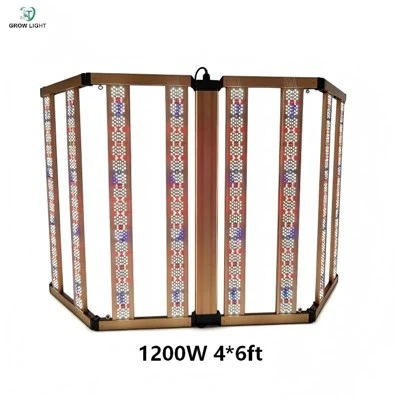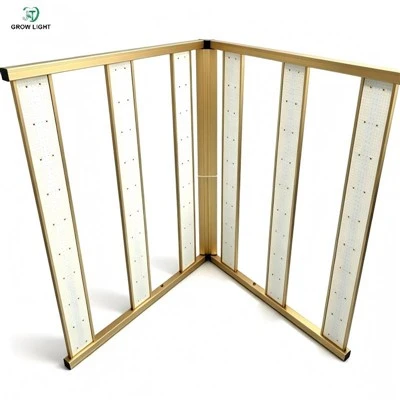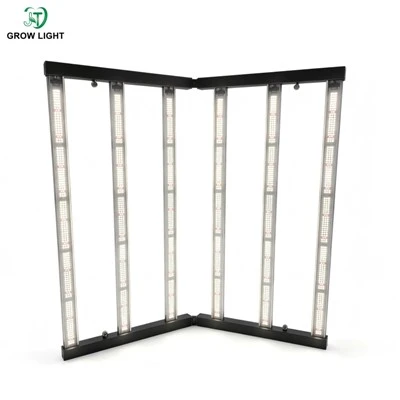
Comparison of light source features: LED is not the only option, but it has many benefits.
1. The ability to manipulate the spectrum: The "precise strike" of LED and the "broad-spectrum coverage" of other types of light sources
Using semiconductor luminescence, LED plant lights can accurately match essential wavelength bands like red light (600–700nm) and blue light (400–500nm). Studies indicate that employing LED light sources with a red to blue light ratio of 4:1 during the blooming phase of tomatoes can enhance the fruit setting rate by 27% and elevate the vitamin C content by 15%. The spectrum of high-pressure sodium lamps is similar to that of sunlight, however only 30% of the light is red and less than 5% is blue. So, a filter needs to be used to change the spectrum, which causes a loss of more than 40% of the energy.
Laser synthesis spectroscopy technique is a new way to customise the spectrum by using many wavelengths of laser light. It works especially well for adding far red light (700–750nm). In a plant factory experiment, lettuce with laser fill light had 8% more chlorophyll than lettuce with LED light, but the laser fill light equipment cost three times as much. It is only good for crops that add a lot of value right now.
2. Energy efficiency and heat control: changing the way LED's "cold light source" works to make it work better
LEDs are able to convert 50% to 60% of the light they receive into electricity. This is twice as good as high-pressure sodium lamps, which only convert 30% of the light they receive. For example, a 400W LED supplemental lighting system uses roughly 1200 kWh of power per year in a one-acre greenhouse. A 1000W high-pressure sodium lamp system with the same brightness uses 3600 kWh of power per year. More importantly, the LED can be irradiated 10 cm close to the plant if its surface temperature is below 40 °C. However, the high-pressure sodium lamp must stay more than 1.5 meters away from the plant if its surface temperature is above 200 °C, which means that only 60% of the light energy it uses is efficient.
3. Lifespan and maintenance costs: The "long termism" benefit of LED
LED plant lights last 50,000 hours, which is 2.5 times longer than high-pressure sodium lights, which last 20,000 hours. LEDs last for 8.5 years with 16 hours of daily use, but high-pressure sodium lamps need to be changed every 3 years. A large vegetable base reveals that the average yearly cost of maintaining an LED system is 0.8 yuan per square metre, while the cost of maintaining a high-pressure sodium lamp system is 2.3 yuan per square metre.
Differentiation of application scenarios: techniques for choosing light sources based on distinct needs
1. High-value crops: LED is now a standard feature.
In high-value fields like flowers and medical plants, LED's ability to precisely regulate the spectrum leads to direct economic benefits. After using full spectrum LED supplemental illumination in a certain orchid planting base in Yunnan, the blossom period was moved up by 15 days, and the export unit price was up by 40%. LED lights can offer even light for growing tissue culture seedlings. They can keep the difference in light intensity inside the tissue culture bottle to within ± 5%, which greatly increases the proliferation coefficient.
2. Growing a lot of vegetables: many options for when money is tight
In the north, where vegetables are grown in the winter, the first cost of an LED fill light system is about 80 yuan per square metre, which is 2.7 times the cost of a high-pressure sodium lamp system (30 yuan per square metre). But because it uses less energy, LED lights can pay for themselves in three years. Farmers with limited funds can use a hybrid solution of "LED top fill light + high-pressure sodium lamp side fill light." They can use LED lights during important growth phases and switch to high-pressure sodium lamps during daily maintenance intervals to get the best results at the lowest cost.
3. Extreme environmental response: The flexibility of LED
In Northeast China during the winter, gloomy and snowy weather is common, which means there isn't enough sunlight. A laser supplementary light system is used in a vegetable base in Heilongjiang Province. It can still perform well at -30 °C. When used with a ground source heat pump, it can control temperature and light together, which leads to a cucumber yield that is 2.3 times higher than growing them in the open air. But old-fashioned light sources have drawbacks, like being hard to start and losing light faster at low temperatures.
The trend in technological evolution: a breakthrough in LED's "Evolutionary Theory" and other options
1. LED technology has changed from a single light source to smart systems.
New LED plant lights have light sensors and AI algorithms built in. These can automatically change the spectrum based on how the plants are growing. A smart greenhouse experiment found that utilising a dynamic spectrum control LED system cut the growth cycle of lettuce by 20% and made nitrogen fertiliser use more efficient by 18%. Innovations like foldable LED films and flexible LED strips are also shattering the mould of classic lighting fixtures.
2. Breakthrough in Alternative Technologies: Possible Problems with OLED and Laser
Laser supplemental illumination is costly, although it offers distinct benefits for dark leafy crops. A research group has revealed that laser fill can boost the iron content of spinach by 22%. The equipment volume is just 1/5 that of LED. OLED plant lights have surface light sources that make them perfect for three-dimensional cultivation because they don't cast any shadows. However, they only last for 10,000 hours, therefore they haven't yet achieved the market threshold.
3. Policy and Market Driven: The Speeding Up of LED Adoption
Many areas have put in place energy-saving subsidy policies for facility agriculture as part of the push for the "dual carbon" goal. These policies give LED fill light systems a 30%–50% purchasing subsidy. The price of LED plant lights has reduced from 5 yuan per watt in 2018 to 1.2 yuan per watt in 2025, which is close to the price of high-pressure sodium lamps. An industry research says that by 2028, 75% of plant lighting will use LEDs.
Decision framework: How do you pick the best lighting option?
Type of crop: High-value-added crops come first LED and bulk crops can be blended for use.
Laser or LED lights can be used in very cold places, and high-pressure sodium lamps can be utilised in places that are not too cold.
Cycle of investment: Long-term planting efforts can use LED lights, but short-term projects can use regular lights.
Technical ability: Dynamic spectrum LEDs are used by bases with smart control features, while fixed spectral products are used by traditional bases.