For years, the LED story in cannabis cultivation sounded almost too simple: replace HPS, reduce heat, save electricity, improve uniformity, and call it a win. But when you look closely at what leading operators are doing now, the real change is not the fixture itself. The real change is that LED grow lights are becoming a strategic lever that allows growers to redesign workflows, reshape facility utilization, and build resilience inside operations. That is exactly why the Cannara Biotech case matters. It is not a "we switched to LED" story. It is a "we used LED to break old cultivation rules" story, and those two are completely different things.
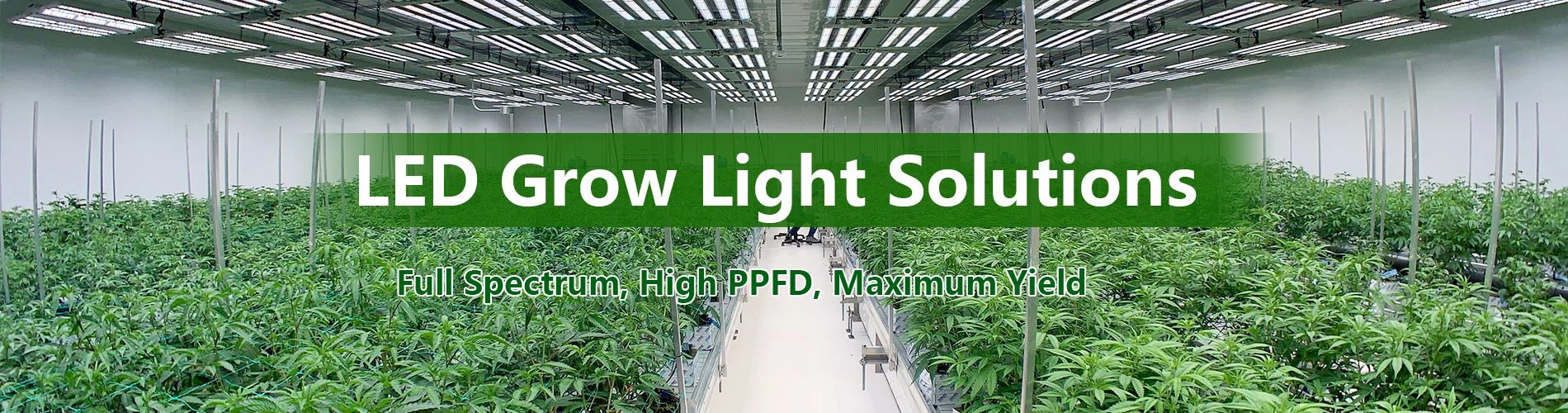
Cannara is a vertically integrated producer in Quebec, founded in 2018, operating at a large scale across two major facilities: a sizeable indoor site and a massive hybrid greenhouse setup with multiple grow zones. Their business goal is straightforward: produce high-quality cannabis at low cost, with advanced cultivation methods that can scale. When a company operates at that scale, lighting is no longer just a line item. It becomes infrastructure that controls how flexible the whole organization can be. This is why Cannara's production and R&D leadership emphasized a priority that many suppliers underestimate: flexibility. They cited three drivers for moving away from HPS toward dimmable LED grow lights, energy efficiency, and light quality, of course, but most importantly, operational flexibility. In other words, LED is valuable because it allows the facility to do more things with the same rooms, without breaking the production rhythm.
The most interesting part is what happens when a dimmable LED grow light enters rooms that were previously "locked" into a single purpose. Under HPS, rooms are often forced into rigid roles because the thermal load, spectrum limitations, and lack of control make it difficult to repurpose a flowering room for mother plants or adjust a space smoothly between phases. Cannara used dimmable LED to remove those constraints. Their smaller indoor facility was upgraded not only to expand capacity, but also to support deeper R&D activity such as phenohunts and clone propagation, reportedly producing tens of thousands of clones per week under LED before moving them into larger cultivation environments. That detail matters because it shows that LED is not just serving production, it is serving decision-making. When a company can run continuous genetic screening and cloning under controlled light, it gains speed in selecting winners and consistency in scaling them.

Then they pushed the idea further. Instead of maintaining a separate vegetative room in the classic clone veg flower chain, they began moving toward a model where plants can stay in the same room for veg and flowering. This is where LED becomes a workflow tool. With dimmable control, plants can be transplanted into an LED room, acclimated gradually by ramping intensity, then transitioned into flowering simply by changing photoperiod to 12:12. That eliminates physical movement steps, reduces labor, and reduces the hidden cost growers rarely quantify: the time and disruption associated with moving biomass, resetting rooms, and protecting plants during transfers. If you've ever managed a busy facility, you know those transitions create risk, slowdowns, and human error. Cannara's strategy is essentially to make the building do less "shuffling" and more "growing," which is a powerful lever in a competitive market.
This approach also aligns with a broader trend that lighting consultants sometimes describe as "space-as-a-nursery" thinking: the facility is designed so plants don't need to travel between zones to follow a fixed process. Instead, the process adapts to the space. That kind of operating model becomes far more achievable when lighting is controllable, cool enough to separate climate strategy from light strategy, and stable enough to support multiple phases without compromise. And this is where LEDs' low radiant heat and controllability become much more than "comfort improvements." They become structural advantages that can change the way the facility is run.
Quality and climate control were another major pillar in Cannara's decision. With LED, they reported improved ability to manage VPD not only in the room environment but closer to leaf surface conditions, because they can deliver target intensity and spectrum without adding the same heat burden that HPS brings. That reduces the tug-of-war between hitting PPFD targets and keeping the climate in a disease-resistant range. They specifically linked this to reducing risk from issues like powdery mildew, which is one of those problems that quickly turns "lighting choice" into "business survival" when consistency and compliance matter. Even if the full dataset is still being collected, early observations of 25%–30% energy efficiency improvement are meaningful, but the deeper value is the operational control they gained: the ability to separate lighting decisions from climate penalties, and the ability to pivot room usage based on production needs.
So what does this mean for the wider market? It means the future LED conversation is not only about efficacy numbers. It is about the ability to design workflows. As cannabis grows more competitive, operations become more precise, and the winners tend to be the teams that can respond fast, minimize waste, and keep consistency high. Lighting systems that can be dimmed, tuned, and integrated into an operational strategy are becoming strategic assets. That is why some "lighting stories" are bigger than lighting, because they are actually facility stories.
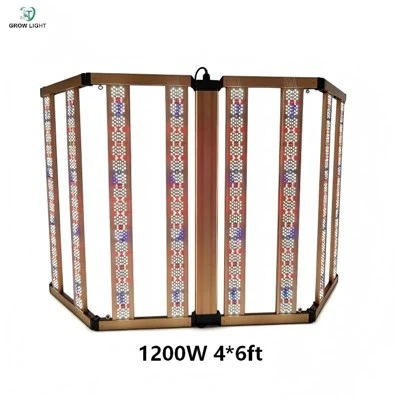
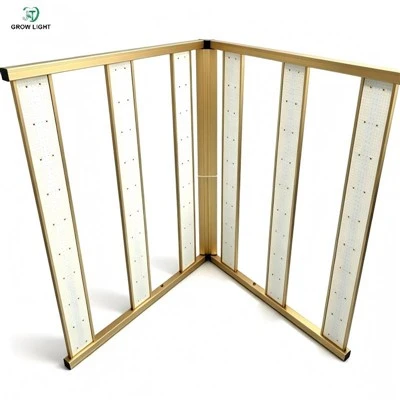
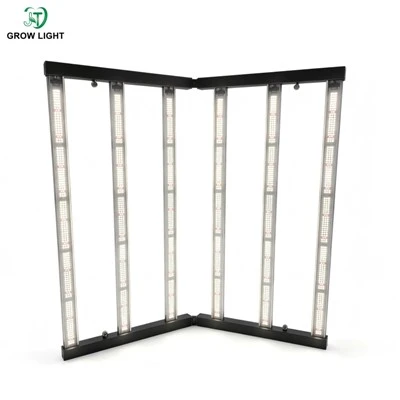
This is also where many suppliers need to evolve. If you sell LED like it is just a replacement for HPS, you will compete on price forever. If you frame LED as a controllable cultivation tool, the conversation moves to outcomes, process design, and long-term ROI. At JTGL, this is exactly how we think about commercial LED grow light projects. The lights must be reliable, efficient, and stable, but the real value is how they fit a cultivation system. That is why many commercial operators prefer architectures that support scalable coverage and uniformity, such as foldable and spider designs for large rooms, and why under-canopy lighting is increasingly used in dense canopies to improve lower-site performance when top-light alone can't deliver uniform biological results.
If you want to explore how different light architectures support different operational goals, you can reference our commercial LED grow light families here with no obligation, simply as a technical overview of the categories many large facilities use: foldable LED grow lights. If your facility is heavily workflow-driven and needs quick maintenance and clean room turnovers, foldable LED grow lights are commonly chosen because they simplify handling in large rooms. And if your canopy density creates lower-site limitations, under-canopy LED grow light is increasingly used as a practical complement when quality and uniformity become priority metrics rather than nice-to-have features. The main takeaway is not "buy a light." The takeaway is that lighting selection should follow the operating model you are building.
Cannara's case shows where the industry is heading. LED lighting is no longer just a more efficient lamp. In the hands of serious operators, it becomes a tool to reduce transfers, compress cycles, improve sanitation workflows, stabilize climate control, and make the building adaptable to future strategies. In a market that rewards consistency and punishes inefficiency, that kind of adaptability is not a luxury. It is a strategy.
References:
Cannabis Business Times: How to Turn LED Lighting Into a Strategic Cultivation Tool