If you are looking for LED grow lights today, the hardest part is no longer finding a product. It is deciding which one actually fits your growth. Every manufacturer talks about efficiency, spectrum, and yield improvement. On paper, most of them look professional. In reality, many growers end up spending money on lights that work well for someone else, but not for them.
The problem usually starts with the wrong question. Most growers ask which LED grow light is the best. Experienced growers ask something different: which LED grow light matches how I grow, how much control I have, and what problems I keep running into every cycle. That difference in thinking is what separates wasted upgrades from meaningful improvements.
Home Growers: When Too Much Light Becomes the First Mistake
For home growers, the story often begins with limited space and high expectations. A small tent, a spare room, or a corner of the house becomes a grow area, and the instinct is to buy the strongest light possible. The assumption is simple: more power means better plants. At first, growth responds quickly, and the canopy looks strong, but problems tend to follow. Heat builds up faster than expected, airflow struggles to keep up, and plants begin to show stress instead of healthy vigor.
At this scale, the real challenge is not yield potential, but environmental stability. Small spaces amplify mistakes. A light that is excessively intense or overheated can rapidly push plants beyond their comfort limits. That is why the right LED grow light for home growers is not defined by maximum output, but by control. Dimming capability, even light distribution, and thermal stability matter far more than peak wattage.
For home growing, we usually tell people one simple thing: don't overbuy your light. In a tent or a spare room, the "strongest" light isn't always the best. What you really want is something you can control easily, that doesn't cook your space, and that spreads light evenly so you're not constantly fighting hot spots and weak corners.
If you're growing at home, a Quantum Board (QB) LED grow light is often the easiest starting point. JTGL's QB grow lights come in 100W, 200W, 400W, and 480W, so you can match the wattage to your tent instead of forcing a one-size-fits-all setup. The flat board design also gives you a lovely, even spread across the canopy, which is exactly what most home growers need. This design results in less drama, fewer instances of "why is this side always behind," and more steady progress week by week.

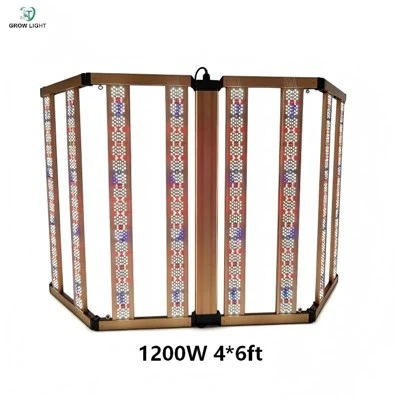
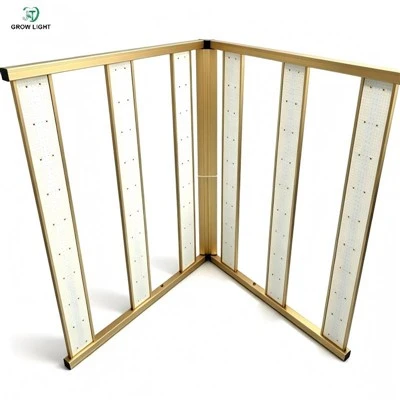
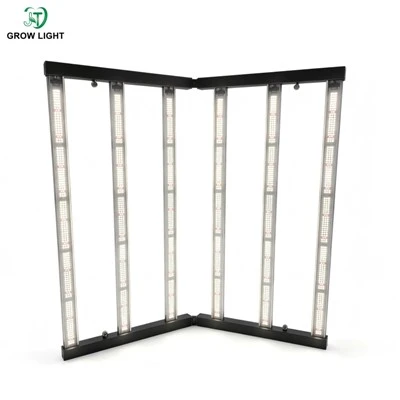
If you prefer something a bit more "open it and go," the foldable style is another solid choice. JTGL has 320W, 480W, and 600W foldable LED grow lights. The reason home growers like these is simple: they're easy to install, easy to position, and they cover a tent well without you having to overthink the layout. You're not trying to build a commercial room at home - you just want a setup that works.

Both the QB and foldable options can be dimmed. That means you don't have to blast your plants from day one. You can start gentler, then turn it up as the plants ask for more. For beginners and hobby growers, that one feature alone saves a lot of stress, many mistakes, and honestly… a lot of unnecessary disappointment.
Small-Scale Growers: Where Inconsistency Eats Profit Quietly
Small-scale growers sit in the most difficult middle ground. They are no longer growing casually, but they also do not have the space or redundancy of large facilities. Every plant counts, and every uneven section shows up in yield. Many growers at this stage try to replicate what commercial operations are using, assuming that professional setups automatically translate to better results.
In practice, this often creates new problems. Larger lighting systems are designed for high ceilings, wide layouts, and strong airflow. When placed in smaller rooms, they can create hot spots, uneven coverage, and underperforming corners. The real pain here is not insufficient intensity, but lack of uniformity. Plants that receive uneven light never develop at the same pace, and the grower spends the entire cycle compensating instead of optimizing.
For small-scale operations, the right LED grow lights prioritize consistent coverage, predictable results, and ease of management. A system that delivers stable PPFD across the canopy and repeats the same performance cycle after cycle is far more valuable than chasing higher numbers. When lighting becomes predictable, planning becomes easier, and profit improves quietly without increasing total power.
This is why an approximately 800W foldable LED grow light is a sensible choice for many small-scale grows. The power level sits in a very practical middle ground. It's strong enough to push healthy development but not so aggressive that it overwhelms smaller rooms or tighter airflow. You get output that you can actually use, instead of power that creates new problems.

The foldable design is not just about convenience, either. In smaller spaces, layout flexibility matters more than people expect. Being able to open, adjust, or slightly reposition the fixture helps growers dial in coverage without rebuilding the room. Maintenance is simpler, access is easier, and adjustments don't feel like a major operation. When something needs attention mid-cycle, that matters.
Price also plays a quiet but important role here. Small-scale growers need equipment that performs reliably without forcing them into long ROI timelines. A well-designed 800W foldable light offers a balance between performance and cost, allowing growers to focus on consistency rather than constantly calculating whether the upgrade was "worth it."
Commercial Growers: When Lighting Becomes Part of the System, Not a Product
Commercial growers rarely debate whether LEDs are the right choice. Their concerns are operational. Downtime, maintenance, variability between rooms, and long-term reliability matter far more than marketing claims. At this scale, a grow light is no longer a standalone product. It is a component within a larger system that includes airflow, layout, labor, and maintenance routines.
Many large facilities run into trouble not because their lights are low quality, but because lighting decisions are made in isolation. Fixtures that are difficult to access, manage heat poorly over long operating hours, or create uneven lower-canopy performance slowly undermine efficiency. Small inconsistencies multiply when hundreds or thousands of lights are involved. The cost is not always visible immediately, but it shows up over time in labor, yield stability, and operational stress.
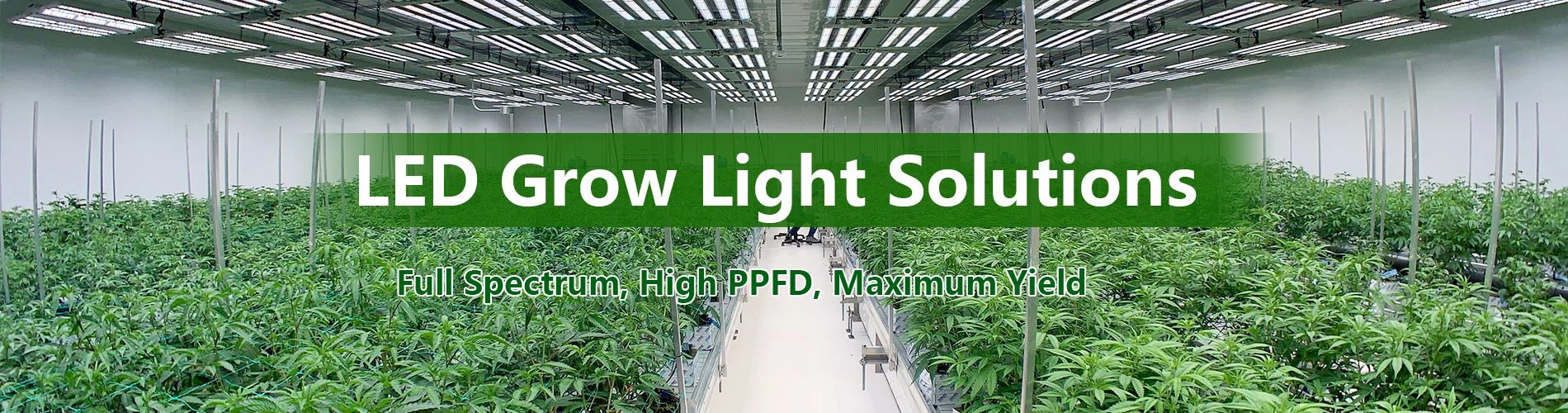
The right LED grow lights for commercial operations integrate smoothly into the facility. They maintain consistent performance, manage heat reliably, and support uniform growth from top to bottom. When lighting is done correctly, it fades into the background. The system runs calmly, decisions become simpler, and growers stop chasing constant adjustments.
Commercial operations typically move toward high-power LED grow lights that are designed to work as part of an integrated environment. Fixtures like 1000W dual-channel dimmable foldable LED grow lights or 1060W spider LED grow lights exist for a reason. They allow growers to separate intensity control from spectrum strategy, adjusting output as the crop develops instead of locking the room into one aggressive setting.

Including UV and IR in the spectrum is not about chasing buzzwords. In properly managed commercial environments, these wavelengths are used deliberately, at the right stages, to support crop quality, morphology, and overall production performance. At scale, small improvements multiplied across thousands of plants become meaningful gains.
Another reality of commercial growing is that top lighting alone often reaches its limits. Dense canopies block light, and lower sites quietly underperform. This is where under-canopy lighting changes the conversation. Adding 120W under-canopy LED grow lights is not about pushing more power from above but about delivering light to places that never receive enough of it. The result is more uniform development, stronger lower sites, and a harvest that looks consistent instead of top-heavy.

Choosing LED Grow Lights Starts With Reality, Not Specifications
Across the home grow small-scale rooms and commercial facilities; the same mistake appears again and again. Growers choose lights based on what looks impressive, rather than what solves their recurring problems. The most successful growers do not begin with specifications. They begin with observation. Where do plants struggle? Where does inconsistency appear? Which problems repeat every cycle?
Once those answers are clear, choosing the right LED grow lights becomes much simpler. The goal is not to buy the strongest light available, but to match the tool to the grower, the space, and the stage of operation. Most meaningful improvements do not come from pushing systems harder. They come from aligning them correctly. That is where wasted investment stops, and where long-term progress begins.