


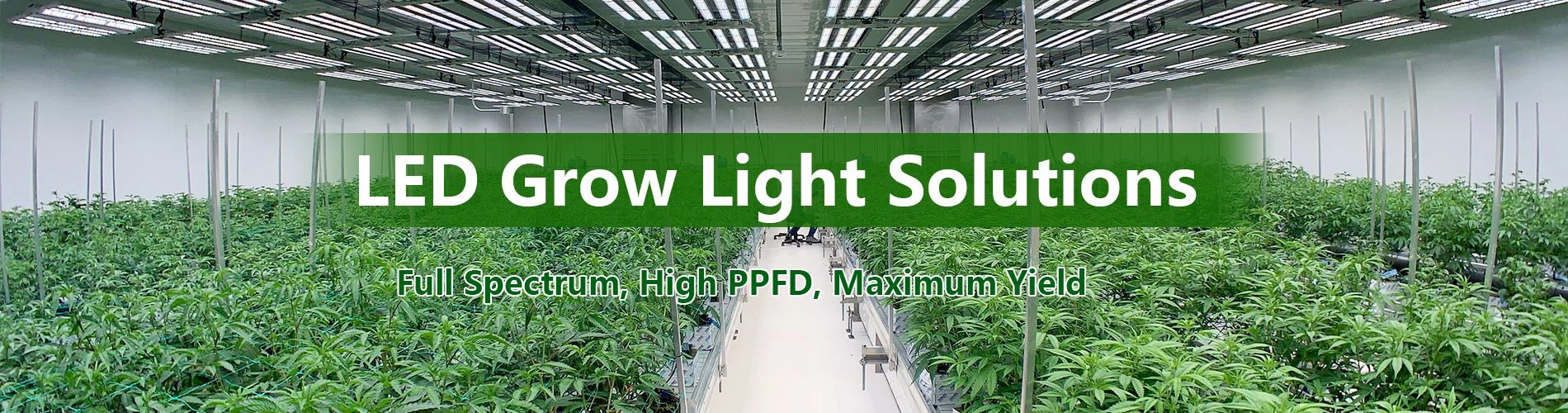
The spectrum of LED grow lights plays a crucial role in plant growth, influencing healthy growth, high yields, and improved quality. Many people ask: Should I choose a red and blue light grow light or a full-spectrum LED grow light? Here, we'll take a closer look at the effects and return on investment of different spectrum combinations for growing.

Red and Blue LED Grow Lights: Single Spectrum Combination
Most of the earliest LED grow lights used a combination of red and blue light.
1. This is because expert research has found that:
1) Blue light (approximately 450nm): Promotes root development in seedlings, resulting in stronger stems and thicker leaves, laying the foundation for healthy future growth.
2) Red light (approximately 660nm): Helps plants produce carbohydrates, promoting taller and more robust growth. It also accelerates photosynthesis, promoting rapid flowering and fruiting.
2. Therefore, the advantages of red and blue light are clear:
1) Energy-saving and efficient – They maximize their effectiveness when plants need photosynthesis most, eliminating wasted electricity and reducing growing costs.
2) Low cost – The red and blue light spectrum maximizes its effectiveness, reducing wattage and the cost of purchasing LED grow lights.
For growing vegetables, red and blue light are sufficient for healthy growth, such as leafy vegetables like lettuce and spinach.
The above analysis is based on an idealized growing environment. However, prolonged exposure to red and blue light can be detrimental to workers' health and eyesight.
3. A single light spectrum does not correspond to natural sunlight, which can lead to:
1) Plants may become elongated, leaves may turn yellow, or even suffer from nutrient deficiencies.
2) Poor quality, such as poor fruit taste and less vibrant color.
4. Full-spectrum LED grow lights: Closer to sunlight
In recent years, full-spectrum LED grow lights have become increasingly popular. The so-called "full spectrum" means that the lamp covers a wider range of wavelengths, including:
1) Blue and red light (the core photosynthesis band), as well as green, far-red, and even UV light.
2) Far-red light (around 730nm) - helps regulate the photoperiod for more balanced flowering.
UV light - promotes secondary metabolism, improves plant resistance, and enhances flavor and nutrients.
In other words, full-spectrum LED lights more closely mimic natural sunlight, providing plants with a more comprehensive spectrum.
Specific Advantages:
1) Promotes overall growth - not just photosynthesis, but also improves nutrient accumulation, resulting in healthier plants.
2) Improves crop quality - resulting in sweeter fruits, brighter flower colors, and higher levels of active ingredients in medicinal plants.
3) Suitable for full-cycle cultivation - from seedling to flowering, a single lamp handles all needs, eliminating the need for frequent replacements.
4) Wider Applications - Full-spectrum LEDs are effective in both greenhouse supplemental lighting and indoor environments devoid of natural light.
How should you choose between red and blue light and full-spectrum?
1. Red and blue LED Grow Lights
Suitable for small grow environments, growing leafy vegetables, where users have low quality requirements and don't prioritize yield or flavor. Furthermore, these environments are not often occupied.
2. Full-spectrum LED Grow Lights
Suitable for medium- to large-scale, commercial grows, greenhouse supplemental lighting, and enclosed indoor grow environments, growing high-value crops such as fruits, flowers, and cannabis. Through precise spectrum control and adjustments to plant growth cycles, growers can achieve high yields and high-quality crops.
In short: red and blue light = basic, full spectrum = professional.

Advantages of full-spectrum LEDs in greenhouse cultivation
The biggest challenge in greenhouse cultivation is insufficient natural light. Especially in winter, in northern China, or during rainy weather, crops often lack light, resulting in reduced yields.
In this situation, supplemental lighting is essential.
Using red and blue light supplements can only barely maintain plant growth, with limited gains in yield and quality.
Using full-spectrum LED supplements not only boosts photosynthesis but also improves fruit taste and increases commercial value.
For example:
1) In tomato cultivation, using full-spectrum greenhouse supplemental lighting can make the fruit redder and have a higher sugar content.
2) In flower greenhouses, full-spectrum lighting can extend the flowering period and enhance the color of flowers.
3) In cannabis cultivation, full-spectrum lighting can significantly increase bud yield and active ingredient content.

Return on Investment for Full-Spectrum Lighting
Some may think that full-spectrum lighting is more expensive than red and blue light, but in the long run, full-spectrum lighting is more cost-effective:
1) Increased Yield: For the same acre of greenhouse, full-spectrum lighting can produce 20%-30% higher yields than red and blue light.
2) Improved Quality: The crops appear better, have higher nutritional value, and can fetch a higher price.
3) Energy Efficiency: Modern full-spectrum LED grow lights have already achieved high luminous efficacy (e.g., over 3.0 μmol/J), saving over 40% energy compared to traditional HPS lamps.
Therefore, if you're a commercial grower, full-spectrum lamps are definitely a better investment.
Conclusion: Full-spectrum is the future trend
While red and blue LED grow lights still have a market, they're often only suitable for entry-level or low-cost applications.
Full-spectrum LED grow lights, on the other hand, are the future mainstream. They not only help plants grow better, but also enable growers to achieve higher yields and returns.
If you're considering upgrading your greenhouse or indoor lighting system, now is a good time to choose full-spectrum lamps.


