First: Low Luminous Efficiency of Blue and Red Light
While blue and red light spectra were indeed important technologies a decade ago, by 2025, they are no longer sufficient for high-yield commercial cultivation. The fundamental reason is their low luminous efficacy. Blue LED chips have low efficiency, and deep red LEDs have limited efficiency. The combined luminous efficacy of red and blue LED lights is typically around 2.0–2.3 μmol/J, while current full-spectrum LED grow lights easily achieve 2.8–3.1 μmol/J. The difference isn't just a point or two; it's a 20–30% difference in electricity costs. For commercial growers, this isn't a "small difference"; it directly determines whether you can make a profit in a year.
Second: Weak Penetration
The blue and red light spectrum has weak penetrating power. This isn't just an opinion; it's a physical law. Blue light scatters strongly, while red light has weak directionality. The result is that it can "illuminate", but it can't "penetrate". If you hang blue and red LED grow lights, you'll notice that the upper leaves are blindingly bright, the middle leaves begin to darken, and the lower leaves appear to be in shadow, receiving no light at all. The canopy profile of blue and red light is always "stronger at the top and weaker at the bottom," leading to low flower density, weak branching, withered lower buds, uneven yield, excessive pruning, and significant waste. In contrast, full-spectrum LED grow lights, with their green light and mid-band wavelengths, can penetrate the canopy, allowing photons to truly enter the plant's internal structure. This is why commercial growers have collectively abandoned blue and red light-not because "it doesn't look good", but because it only feeds the surface, not the entire plant.
Third: Uneven PAR Distribution
Blue and red light typically uses a concentrated light source design with no optical diffusion and a narrow emission angle, resulting in a central PPFD spike and extremely weak periphery – a PAR map will show a "volcano-like centre and a cloudy periphery". This directly leads to inconsistent canopy growth: central burnt seedlings, weak periphery seedlings, and uneven growth across the entire area. Modern full-spectrum strip-style, distributed structures aim to "spread" the light, making the canopy grow as evenly as if it's being rained down with photons – this is what commercial cultivation truly needs. High yield isn't about "high yield at one point" but about "stable yield across the entire area".
Fourth: Poor Photon Utilisation
Blue and red light are absorbed too strongly by plants, causing excessive concentration of photons in the surface leaves. While "high absorption" sounds good, it actually makes plants more prone to light saturation, leading to physiological stress, phototoxicity, and an imbalance in photosynthetic efficiency. Plants don't thrive on just two wavelengths; they need a balanced spectrum. The green light in full-spectrum LED grow lights can penetrate, reflect, and diffuse, resulting in a more even distribution of photons and improved overall plant efficiency. This explains why you see "blue-red light-lit plants with vibrant colours but struggling to grow tall; full-spectrum plants are thicker, stronger, and more uniform."
Fifth: Blue-red light is unsuitable for 2025 planting scenarios
Modern planting is no longer the "just light is enough" era of 2010. Consider today's mainstream scenarios: multi-layer vertical racks, commercial greenhouses, cannabis greenhouses, high-rise supplemental lighting, high-density planting, and automated environmental control. All of these require high penetration, high uniformity, high luminous efficiency, and high spectral stability. Blue-red light lacks these four qualities. Blue-red light is suitable for "keeping plants alive", but 2025 planting aims to "unleash the genetic potential of plants". All commercial projects, engineering companies, and cannabis farms are now pursuing full-spectrum technology, not because of trends, but because blue-red light is fundamentally outdated and cannot meet the demands. Sixth: Commercial cultivation requires long-term stability. Blue and red light is unstable, which is the core reason for its obsolescence. It suffers from rapid light decay, significant spectral drift, heat generation during operation, and high chip stress. You'll find that growth is decent in the first round but declines in the second and becomes unacceptable in the third. Growers hate not "insufficient brightness" but "the second year is worse than the first." Full-spectrum commercial grow lights employ constant current drive, large-area heat dissipation, low junction temperature operation, and a stable spectral design, ensuring consistent performance across multiple cropping cycles. Commercial cultivation demands predictability, not lights that deliver "a pleasant surprise in the first round, a horrible surprise in the second."
JT Grow Light's Full Spectrum LED grow lights
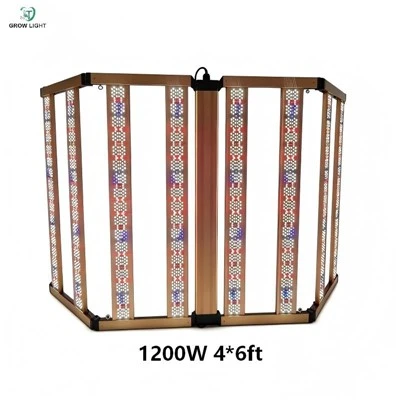
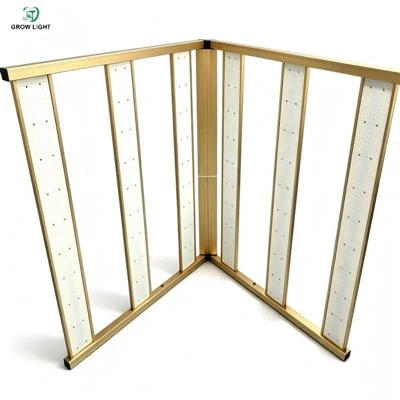
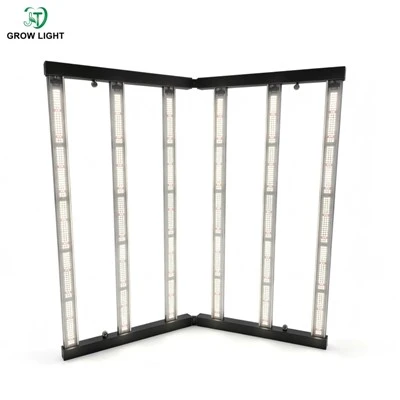
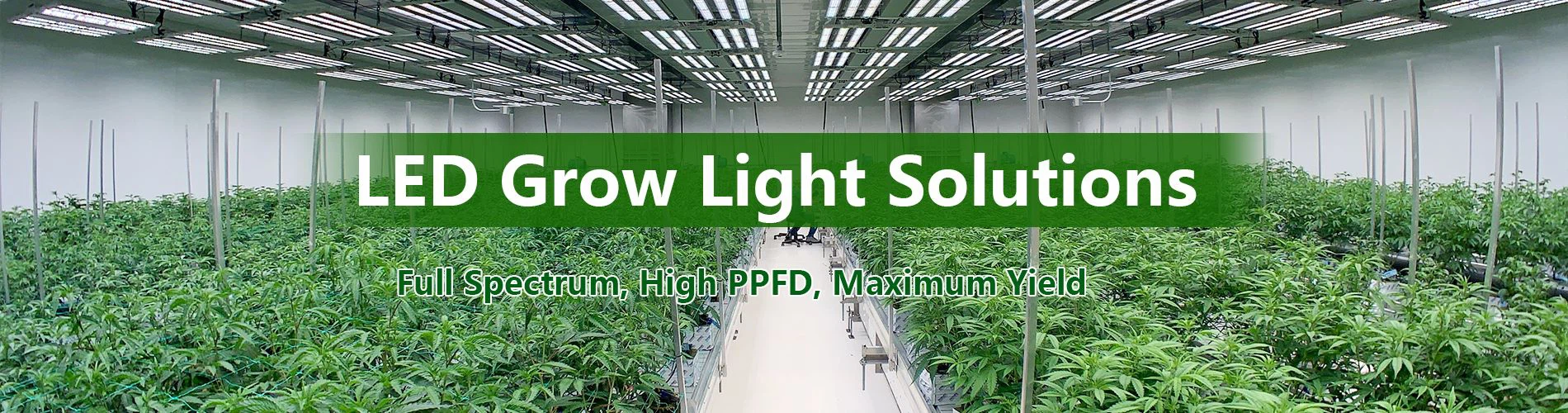
JT's full-spectrum series is designed based on modern commercial cultivation needs: a high-penetration spectral structure, high luminous efficacy of 2.8–3.1 μmol/J, a uniformly distributed light bar structure, low light decay, strong heat dissipation, high spectral stability, suitability for multi-layer racks and greenhouses, and applicability during both flowering and vegetative growth stages. Growers use our LED grow lights not because they "look good", but because they save them electricity, maintain yields, improve canopy uniformity, reduce light decay risk, and essentially help them make money. Blue and red light keep plants alive, but the full spectrum allows plants to reach their full potential.