
Why Your Top Lights Aren't Doing the Full Job
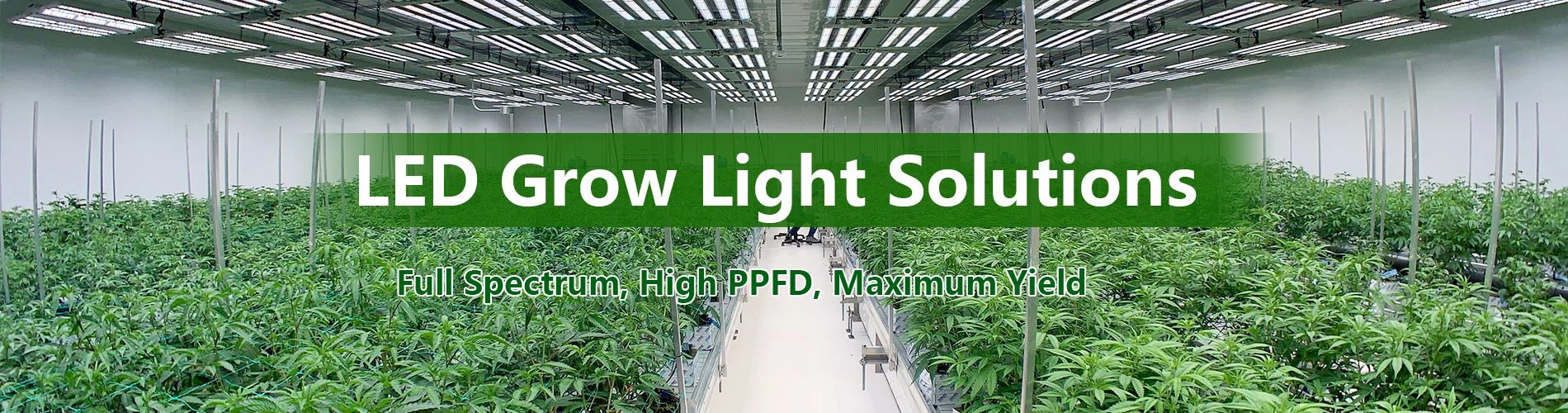
Most growers start with overhead lighting - and for good reason. A strong top light covers the canopy, drives photosynthesis, and gets the job done for the upper portion of the plant. But here's something a lot of commercial growers figure out after a few cycles: the leaves and branches sitting below the canopy barely see any of that light.
Dense plant canopies can block anywhere from 50% to 80% of incoming light before it ever reaches the lower portions of the plant. That means your lower bud sites, side branches, and under-leaves are running on fumes - and that directly impacts your yield, your quality, and your overall return per square foot.
This is where under canopy LED grow light bars come in. They're not meant to replace your overhead fixtures. They work alongside them, filling in the gaps where top light simply can't reach. The result? More uniform light distribution, better use of your canopy space, and in many cases, a noticeable bump in final yield.
If you're running a vertical farm, a multi-tier cannabis grow, a tomato greenhouse, or a commercial strawberry setup, under canopy lighting isn't a luxury anymore. It's quickly becoming a standard part of how serious growers set up their rooms.
What Is an Under Canopy Grow Light?
An under canopy grow light is a compact, bar-shaped LED fixture designed to be mounted between plant rows or below the top canopy layer. Unlike traditional overhead lights, it delivers light directly to the middle and lower parts of the plant - the parts that overhead fixtures consistently miss.
These bars are typically installed horizontally, running parallel to the plant rows. Some growers mount them directly on the grow racks, others suspend them between rows at a set height. The installation is straightforward, and the payoff in light coverage is significant.
Common crops that benefit most from under canopy LED lighting include:
- Cannabis (especially during flowering, when lower bud sites can add real weight)
- Tomatoes and cucumbers (high-wire crops with long vertical growing space)
- Strawberries on multi-tier racks
- Leafy greens and herbs in vertical farming systems
- Peppers and eggplants in commercial greenhouse operations
The grow light bar format is popular because it's narrow enough to fit between rows without blocking airflow, long enough to cover a meaningful stretch of canopy, and efficient enough to run continuously without adding excessive heat or operating cost.

The Under Canopy Lighting Market - Why It's Expanding Fast
The global vertical farming market was valued at around $6.4 billion in 2023 and is projected to reach over $35 billion by 2032, growing at a CAGR of roughly 20%. As more commercial growers move toward high-density, multi-tier production systems, the demand for supplemental under canopy lighting is growing right alongside it.
Traditional single-layer greenhouse production doesn't push growers to think much about under canopy supplementation. But as soon as you move to multi-tier racks or high-density indoor cultivation, light uniformity becomes one of your biggest challenges. That's exactly the problem under canopy grow light bars are built to solve.
Energy efficiency is another driver. LED technology has come far enough that adding supplemental under canopy lighting no longer means doubling your electricity bill. Modern bars - especially those using a combination of 2835 and 3030 LED chips - deliver meaningful PPF output at wattages that fit within a realistic operating budget.
3-Side Emitting vs 2-Side Emitting - What's the Actual Difference?
This is the question we get most often when growers are shopping for under canopy LED grow light bars. Both types do the same basic job, but they distribute light differently - and that difference matters depending on how your grow is set up.
How a 3-Side Emitting Bar Works
A 3-side emitting under canopy LED bar emits light from three surfaces: the bottom face and both side faces. This gives you a wide, expansive spread of light that reaches outward in multiple directions simultaneously.
Think of it like a light source that broadcasts rather than focuses. The bottom face drives light downward into lower leaves and bud sites, while the two side faces push light horizontally into adjacent rows or toward the outer reaches of the plant canopy.
This makes 3-side bars a strong choice for:
- Multi-tier vertical farming racks, where you need light to reach plants on the tier below as well as the sides
- Dense cannabis canopies, where lower bud sites on multiple branches need coverage
- Leafy greens and herbs, where a wide, even light spread across many small plants matters more than directional intensity
- Strawberry systems on angled or horizontal racks, where fruit development happens across a wide footprint
The trade-off is that some of the light energy goes sideways rather than straight down. In setups where you want maximum downward intensity on a specific zone, a 3-side bar spreads that energy more broadly.

How a 2-Side Emitting Bar Works

A 2-side emitting bar emits light from two surfaces - typically the bottom face and one side, or both side faces only, depending on the design. The result is a more focused, directional output compared to the 3-side version.
This concentrated output is useful when you want to drive more intense light into a specific area without spreading it out. It suits setups where the plants are taller, more spaced out, or where you're specifically targeting a side of the canopy rather than casting light broadly.
Good applications for 2-side bars include:
- High-wire tomato or cucumber crops, where you're targeting a defined side canopy zone
- Single-tier supplemental lighting where the goal is to push more light into one specific area
- Situations where light spill into adjacent aisles or areas needs to be minimized
The more directed output means you're getting a higher intensity reading in the target area, which can be useful for crops with higher DLI requirements in specific canopy zones.
Head-to-Head Comparison
| Feature | 3-Side Emitting Bar | 2-Side Emitting Bar |
|---|---|---|
| Light emission surfaces | 3 (bottom + both sides) | 2 (bottom + one side, or both sides) |
| Light distribution | Wide, omnidirectional spread | More focused, directional |
| Best for | Dense canopy, multi-tier, leafy greens | High-wire crops, targeted supplementation |
| Light uniformity | Higher across large canopy area | Higher intensity in target zone |
| Installation style | Horizontal between rows on rack | Often angled or mounted to face specific zone |
| IP rating | IP65 | IP65 |
| Dimming | 0-10V | 0-10V |
Real-World Use Cases - Which One Should You Choose?
Scenario A: Cannabis Vertical Rack, 3-Tier Setup
You're running three tiers of cannabis plants, and your overhead LEDs are covering the top canopy well. The middle and bottom tiers are getting maybe 30–40% of the light intensity your top tier sees. You need supplemental light between tiers.
In this case, a 3-side emitting under canopy bar makes more sense. The wide spread covers plants on the tier below while also reaching the side branches on the current tier. You get better canopy penetration without needing to install separate fixtures for each direction.
Scenario B: High-Wire Tomatoes in a Commercial Greenhouse
You're growing tomatoes on a high-wire system, plants are 2+ meters tall, and you want to push supplemental light into the lower and middle canopy zone on one side of the row. Light spill into the aisle isn't desirable.
Here, a 2-side emitting bar mounted to face the canopy directly gives you more intensity where you need it with less wasted light going elsewhere. It's a cleaner, more controlled supplementation approach.
Scenario C: Strawberries on a Multi-Tier Rack
You're running 4–6 tiers of strawberries, and fruit development is the priority. You need light reaching the fruit clusters and lower leaves across the full width of each rack.
A 3-side emitting under canopy LED bar is the right call here. The broad spread covers fruit and foliage across the full tier width, and the side emission means even the edges of the rack get meaningful light.
Key Specs You Should Check Before Buying
Not all under canopy grow light bars are built the same. Here's what actually matters when you're evaluating options:
IP65 waterproof rating is non-negotiable for most commercial grow environments. Irrigation, humidity, and cleaning cycles all create wet conditions. A bar without proper waterproofing will fail early or create safety issues. All the models we manufacture carry an IP65 rating.
LED chip combination affects both spectrum quality and longevity. Our bars use a 2835+3030 chip combination. The 2835 chips deliver efficient, broad-spectrum output, while the 3030 chips handle the higher-power red and far-red wavelengths (660nm and 730nm) that drive flowering, fruiting, and canopy penetration.
Spectrum is another point of real difference. Our standard models offer two spectrum options:
- 3000K + 6500K + 660nm + 730nm - A warm-to-cool blend that covers both vegetative and flowering stages well. Good for mixed crop operations or single-strain rooms running a full cycle.
- 5500K + 660nm + 730nm - A cooler, more daylight-balanced spectrum with red and far-red supplementation. Popular for vegetative-heavy crops and commercial greenhouse tomato and cucumber production.
0-10V dimming allows you to dial back intensity when needed - during propagation, heat management, or when layering under canopy light with a strong overhead fixture.
Aluminum housing and heatsink design matters more than growers often realize. Heat management directly affects LED chip lifespan. Our bars use extruded aluminum profiles (81×109mm cross-section) designed to dissipate heat efficiently without fans, keeping noise down and maintenance low.
Full Spec Overview - Standard Models
| Model | Power | Size | Spectrum | Waterproof | Dimming | LED Chips |
|---|---|---|---|---|---|---|
| V20-120W-V3 | 120W | 1120×81×109mm | 3000K+6500K+660nm+730nm | IP65 | 0-10V | 2835+3030 |
| V20-150W-V3 | 150W | 1783×81×109mm | 5500K+660nm+730nm | IP65 | 0-10V | 2835+3030 |
| V20-200W-V3 | 200W | 1783×81×109mm | 5500K+660nm+730nm | IP65 | 0-10V | 2835+3030 |
| V20-250W-V3 | 250W | 2350×81×109mm | 5500K+660nm+730nm | IP65 | 0-10V | 2835+3030 |
| Custom 1.8m | Custom wattage | 1800×81×109mm | Full spectrum | IP65 | 0-10V | 2835+3030 |
| Custom 2.4m (8ft) | Custom wattage | 2400×81×109mm | Full spectrum | IP65 | 0-10V | 2835+3030 |
Custom Sizes and Wattages - What We Can Build for You
One of the most common questions we get from distributors and commercial growers is: "Can you make this in a size that fits my specific rack dimensions?"
The short answer is yes. Beyond our standard lineup, we offer full OEM and ODM under canopy LED grow light manufacturing for customers who need dimensions, wattages, or spectrums that don't match an off-the-shelf model.
Our most requested custom configurations include:
Custom 1.8m (approximately 6ft): Sized for growers working with European-standard grow racks or metric-based greenhouse bench systems. Available in full spectrum output across custom wattage ranges.
Custom 2.4m (8ft): Our most popular custom length. The 8ft format aligns perfectly with North American grow rack standards and is widely used in commercial cannabis facilities, vertical farms, and large-scale greenhouse operations across the US and Canada. Available in full spectrum with custom wattage configuration.
Beyond length, we can also work with you on:
- Custom wattage to match your specific DLI targets and canopy requirements
- Custom spectrum if your crop or growth stage calls for something outside our standard offerings
- Custom mounting hardware to fit specific rack systems or greenhouse bench configurations
- Private label / white label packaging for distributors and brands building their own product lines
If you're a wholesale under canopy grow light buyer, a distributor building out a product catalog, or a commercial grower with specific facility requirements, our factory can work directly with your specs. Minimum order quantities apply for custom configurations - contact us to discuss your project.
How to Install an Under Canopy Grow Light Bar
Installation is simpler than most growers expect. Here are the practical basics:
Mounting height: For most under canopy applications, bars are mounted 15–30cm above the lower canopy layer. Closer mounting increases intensity but can create hot spots; wider spacing gives you a more even distribution. Start at 20cm and adjust based on how your plants respond.
Bar spacing: In a multi-row setup, bars should be spaced to avoid large dark gaps between coverage zones. As a general rule, one bar per 0.6–0.9m of row width works well for most crops. Your optimal spacing will depend on wattage and reflectance of your growing environment.
Pairing with overhead lights: Under canopy bars work best as a complement to a functioning overhead system, not as a standalone replacement. The overhead fixture handles the top canopy; the bar handles everything below. Dial back the overhead intensity slightly if you're adding high-wattage bars to avoid heat stress in the upper canopy.
Wiring and dimming: All our bars use standard 0-10V dimming, compatible with most commercial grow controllers. Daisy-chaining multiple bars on a single dimmer channel is straightforward and reduces control system complexity.
FAQ
Q: What is the difference between a 3-side and 2-side under canopy grow light bar?
A: A 3-side bar emits light from three surfaces - the bottom and both sides - giving you a wide, expansive spread. A 2-side bar emits from two surfaces, delivering more focused, directional output. The right choice depends on your crop type, rack setup, and how broadly you need the light to spread.
Q: Are these under canopy bars waterproof?
A: Yes. All our under canopy LED grow light bars carry an IP65 waterproof rating, making them suitable for high-humidity grow environments, irrigation splash, and regular cleaning.
Q: Can I get a custom size under canopy grow light bar?
A: Yes. We offer custom lengths including 1.8m and 2.4m (8ft), as well as fully custom configurations for OEM and ODM orders. Contact our team with your specs to discuss options.
Q: What crops work best with under canopy LED bars?
A: Under canopy lighting benefits a wide range of crops including cannabis, tomatoes, cucumbers, strawberries, peppers, and leafy greens. Any crop with a dense canopy that blocks light from reaching lower growth zones will respond positively to supplemental under canopy lighting.
Q: How far should the bar be from the plants?
A: A mounting height of 15–30cm above the lower canopy is a good starting range. Adjust based on wattage and how your plants respond. Higher wattage bars can be mounted slightly further away to avoid light saturation.
Q: Do you offer wholesale and OEM under canopy grow lights?
A: Yes. We work with distributors, retailers, and commercial growers on wholesale orders and OEM/ODM projects. We can accommodate private label requirements, custom packaging, and facility-specific specifications.
Q: What does the 0-10V dimming interface mean?
A: 0-10V is a standard dimming protocol used in commercial horticulture lighting. It allows you to adjust light intensity from 0% to 100% using a compatible controller, giving you precise control over your DLI targets and energy usage.
The Bottom Line
Under canopy LED grow light bars are one of the most practical upgrades a commercial grower can make to an existing lighting setup. They address a real, measurable problem - light loss below the canopy - without requiring a full overhaul of your overhead system.
The choice between a 3-side emitting bar and a 2-side emitting bar comes down to your specific setup. Wide, multi-tier, or dense canopy grows benefit from the broader spread of a 3-side configuration. More targeted supplementation for defined canopy zones is where the 2-side shines.
Both options are available in our standard lineup from 120W to 250W, with custom 1.8m and 2.4m (8ft) configurations for growers and distributors who need exact dimensions.
If you're looking for an under canopy grow light manufacturer that can work to your specs - on standard models or full custom projects - get in touch with our team. We're happy to walk through your setup and recommend the right configuration.
Contact Now