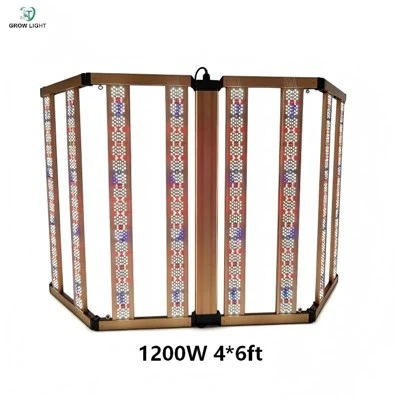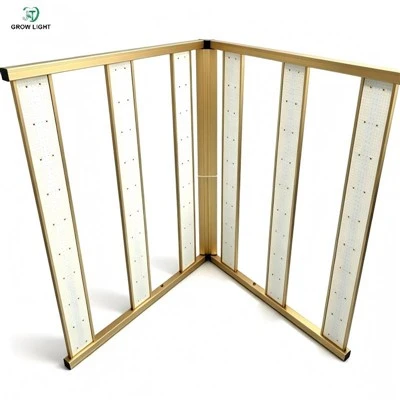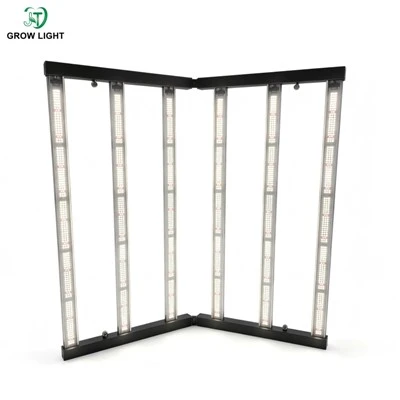

Hello everyone! Today we are going to talk about a very important but easily overlooked topic - the heat dissipation of LED Grow lights. Many friends may have encountered a situation where the lamp body becomes very hot when using a grow light, so they worry: "It's so hot, will it burn my lamp?" In fact, the heat dissipation of the lamp will not only not harm the life of the lamp, but it is a way of protection! So, what is the heat dissipation of Plant LED light? What effect does high temperature have on the life of the lamp? Let's take a deeper look.
Plant lamps can be divided into high-power and low-power. Heat is generated during use, causing the ambient temperature to rise. At present, low power can be used without special heat dissipation measures, and only a basic heat dissipation structure is needed, because LED plant light has high electro-optical conversion efficiency and relatively no heat generation.
High-power lamps are not the same. If the heat dissipation problem is ignored, it will not only affect its service life, but also burn the lamp tube, and affect the normal growth of the irradiated plants.
Why does the grow lamp heat up?
The heat of the grow lamp is a natural phenomenon. Its core is LED lamp beads, which convert the input electrical energy into light energy when working, but not 100% of the electrical energy will be converted into light energy, and part of it will be released in the form of heat energy. This causes the lamp beads and the lamp body to gradually heat up when the grow lamp works for a long time.
There are two main sources of heat:
The energy conversion efficiency of the lamp beads: LED lamp beads cannot completely convert electrical energy into light, so part of the excess energy is released in the form of heat.
Driving power supply: The driving power supply will also generate heat, especially when it runs at high power for a long time.

The impact of heat on LED plant lights
The heating is not terrible, but if the heat cannot be dissipated, that is the beginning of the problem. Its life, performance, and stability are directly related to heat dissipation.
1. The heat resistance limit of lamp beads
LED lamp beads have a maximum operating temperature that can be tolerated, usually around 110℃. If the temperature exceeds this limit, the semiconductor material inside the lamp beads will be damaged, resulting in dimming of the light, color temperature drift, or even complete failure.
2. The impact of power supply life
The driving power supply is the heart of the plant lamp. If the heat dissipation of the power supply is not done well, long-term high temperatures will accelerate the aging of internal components and directly affect the overall life of the lamp.
3. Decreased light efficiency
Excessive temperature will reduce the light efficiency of LED lamp beads, that is, at the same power, the brightness of the lamp will become lower, the light absorbed by the plant will become less, and the planting effect will also be affected.
The key to heat dissipation: temperature control and the role of heat sinks
In order to avoid these problems, good plant lamps will design professional heat dissipation systems, the most common of which is heat sinks. The function of the heat sink is to quickly conduct the heat generated by the lamp beads and power supply to prevent heat from accumulating inside the lamp body.
Why is it a good thing that the heat sink is very hot?
When you feel that the heat sink is very hot, it means that it is working properly! The task of the heat sink is to "take away" the internal heat and avoid temperature accumulation. If the temperature of the heat sink is not high, it means that the heat may remain in the lamp body, which is a dangerous signal.
Generally speaking, the temperature of the heat sink is within 70℃ and belongs to the normal range. This is because the maximum temperature that LED lamp beads can withstand is about 110℃. As long as the heat sink can take away the heat, the actual temperature of the lamp beads will be far lower than its heat resistance limit, and the lamp can operate stably.

Comparison of different heat dissipation methods
Currently, there are mainly the following heat dissipation methods for growlights:
1) Fan cooling:
The principle of using fans to transfer the heat generated by plant lamps to the air is very simple. Just like the heat dissipation principle of computers and TVs used in daily life, fans are used to convect air to ensure that the air temperature around the heating element is not too high. Simply through the fan, the LED plant grow lights generate and transfer hot air to the air, and then replenish normal temperature air to achieve the heat dissipation effect.
(2) Natural heat dissipation:
Natural heat dissipation means that no external measures are required and it works directly inside the lamp. The main principle is to make the LE lamp have a larger contact area with the air and use components with better thermal conductivity to better produce lamps. The heat is transferred to the air and then through natural convection, that is, hot air rises and cold air fills the position, thereby achieving the purpose of cooling.
At present, the main methods used are heat dissipation fins, lamp housings, system circuit boards, etc., which are also a relatively low-cost and good heat dissipation method and are widely used in various electrical equipment.
(3) Electromagnetic heat dissipation:
Electromagnetic heat dissipation is called electromagnetic jet heat dissipation. Instead of using a fan to convect the gas, electromagnetic vibration is used to drive the cavity in the film to vibrate, so that the air circulates continuously to achieve the effect of heat dissipation. The technical difficulty is complex. Some LED products have been put on the market.

How to judge whether the heat dissipation is good?
The following are some simple methods to help you judge whether the heat dissipation of the plant lamp is normal:
1. Touch the heat sink temperature
Touch the heat sink with your hand. If the temperature is between 60-70℃, it means that the heat sink is working normally. If it is too hot to touch, you may need to check the ventilation environment.
2. Observe the temperature change of the lamp body
After running for some time, use an infrared thermometer to measure the temperature of different parts of the lamp body. If a certain area of the lamp body is abnormally high, it may be caused by uneven heat dissipation.
3. Environmental ventilation conditions
The plant lamp needs good ventilation conditions when working. If the air around the lamp is not circulating, heat dissipation will be blocked.
4. Long-term operation observation
After the plant light has been working for a long time, if the brightness remains stable, it means that the heat dissipation system is effective. If the brightness dims or the lamp body makes abnormal noise (fan problem), there may be a problem with heat dissipation.
How to extend the life of LED Grow lights?
In order to extend the life of the grow light, it is crucial to choose a high-quality LED grow light. High-quality materials, design, and spectrum selection directly affect the performance and durability of the lamp.
1. Lamp material and design
High-quality LED chips are the core of the life and efficiency of LED lamps. High-quality chips can output higher light intensity with less energy and continue to work for a longer time.
Choose a lamp body with an aluminum alloy shell or other high thermal conductivity materials. These materials can effectively conduct heat and maintain the stable performance of the lamp. The larger the heat dissipation area of the lamp body and the thicker the heat sink, the better the heat dissipation effect.
2. Choose a spectrum suitable for plants
Plants need specific wavelengths of light to complete photosynthesis and promote growth, flowering and fruiting. High-quality LED lamps will provide a precise spectrum (mainly red and blue light) to help plants use light energy efficiently and reduce energy waste.
JT Grow Light uses high-quality LED beads, and when we design the structure of LED Grow Lights, we use thickened heat sinks and and increase the heat dissipation area of the heat sink as much as possible. Secondly, we can customize professional spectral solutions for different plants, through precise spectral control, not only to improve the yield and quality of planting, but also to save electricity costs. We can provide samples for testing, welcome to contact us for more information.

Summary
It is normal for plant lamps to heat up. The high temperature of the heat sink is not terrible, but a manifestation of good heat dissipation. As long as the temperature of the heat sink is within 70℃, the life of the lamp beads and the power supply can be well protected.
If you find that the heat dissipation system is not working properly, such as the heat sink is not hot or the lamp body is overheated, you may need to check the heat dissipation design or the use environment. After all, good heat dissipation is the key to the longevity of plant lamps and the basis for ensuring the healthy growth of your plants!