In greenhouses, vertical farms, and high-value crop cultivation, LED grow lights have become a critical tool for determining yield and quality. Compared to traditional HPS and fluorescent lamps, LEDs' greatest advantage lies not only in energy efficiency and long lifespan, but also in their spectral controllability. By precisely adjusting the ratio of blue, red, green, far-red, and UV/IR light, crop growth rate, nutritional content, and ultimate yield can be directly influenced.
Today, for both commercial LED grow lights in greenhouses and full-spectrum LED grow lights for vertical farming, spectral design has become a core competitive advantage.
Spectral Regulation of Nutrient Content
Light of different wavelengths not only drives plant photosynthesis but also alters nutrient accumulation. This is a key concern for many commercial growers pursuing high-quality vegetables and medicinal crops.
Blue Light (especially around 450nm)
Blue light promotes chlorophyll synthesis and stomatal opening, increasing photosynthetic rate. In terms of nutritional quality, research has shown that high-proportion blue light exposure can significantly increase the content of antioxidants such as vitamin C, soluble protein, and flavonoids. Choosing adjustable spectrum LED grow lights enables better control over plant nutritional quality and yield.
Red Light (approximately 660nm)
Red light is a highly efficient engine driving photosynthesis. It accelerates carbohydrate synthesis, thereby increasing biomass accumulation and promoting rapid plant growth. However, this rapid growth often dilutes nutrient concentrations.
A US vertical farm utilized a high proportion of red light in strawberry production, resulting in a 15% yield increase. Later, by adding blue and green light, they further improved the fruit's taste and sugar content. Therefore, the importance of full-spectrum LED grow lights is demonstrated.
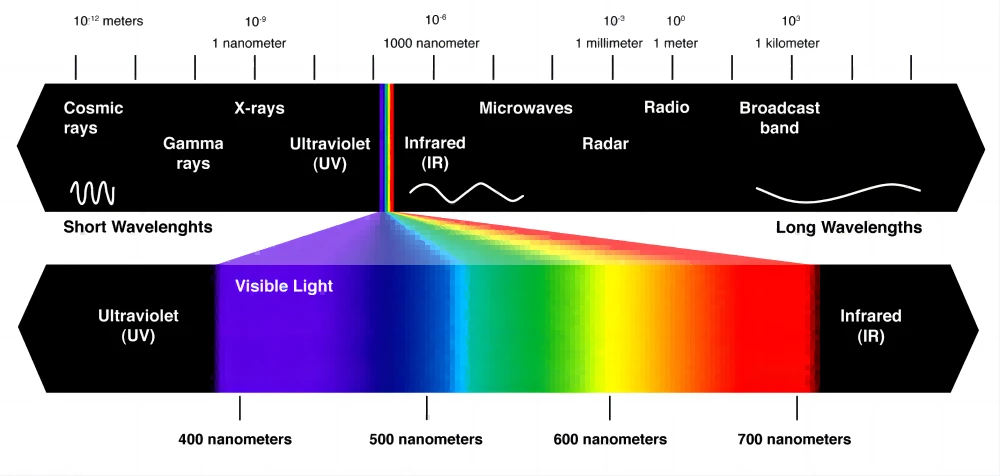
Peak Photosynthesis Efficiency: The Core Role of Blue and Red Light
Plant photosynthesis relies on chlorophyll a and chlorophyll b, which have different absorption intensities at different wavelengths.
Chlorophyll a has peak absorption at 430nm (blue light) and 662nm (red light).
Chlorophyll b has absorption peaks at 453nm (blue light) and 642nm (red light).
This indicates that blue and red light are the "main wavelengths" for photosynthesis and must be the core configuration of any full-spectrum LED grow light.
In actual spectrum design:
1) Blue light typically accounts for 10–20%, promoting chlorophyll synthesis and regulating plant shape.
2) Red light accounts for 35–50%, driving yield.
3) The remaining light is supplemented by green light, far-red light, and UV/IR light.
A commercial cannabis cultivation facility in Canada used commercial professional LED grow lights, achieving a 12% yield increase and increased terpene concentration, making its products more competitive in the medical market. This demonstrates the value of high-efficiency LED grow lights in the agricultural sector.
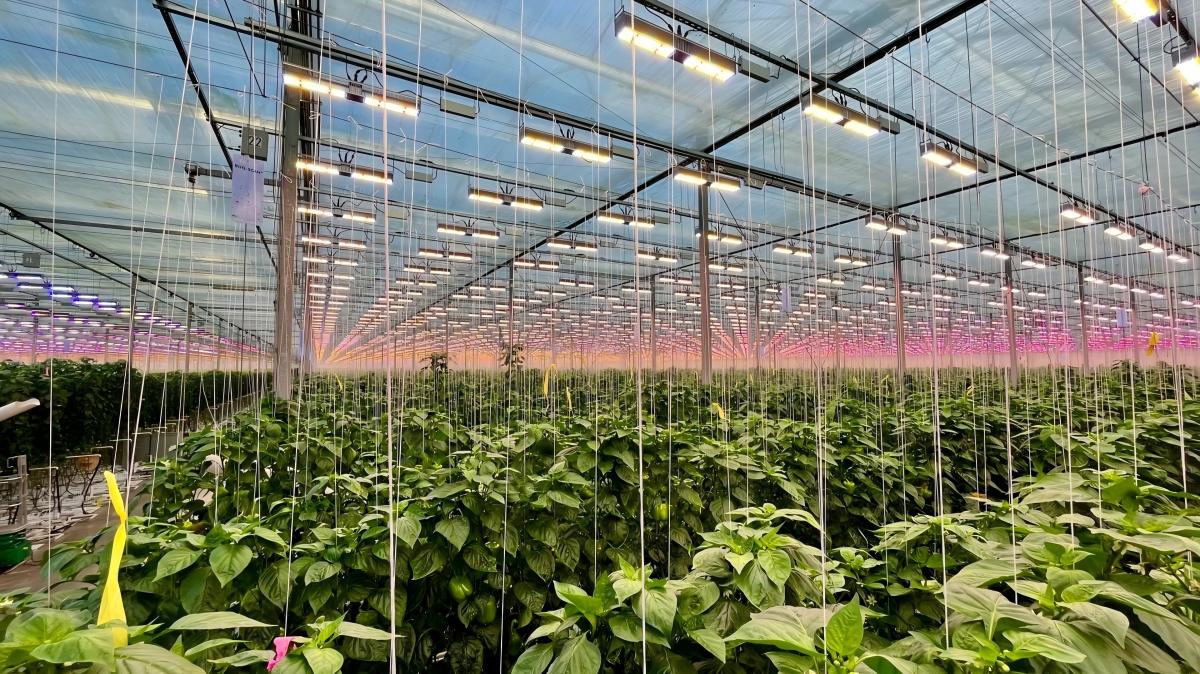
Spectral Penetration and Canopy Light Environment
For crops with multi-leaf structures, ensuring efficient photosynthesis in the lower leaves is a major challenge in commercial cultivation. Different wavelengths of light have significantly different penetrating abilities:
1. Red light has high energy, but is mostly absorbed by upper leaves, resulting in insufficient light in the lower layers.
2. Green light has a lower absorption efficiency, but has greater penetration, reaching deeper into the middle and lower leaves, compensating for the lack of red light and thus improving the photosynthetic efficiency of the entire canopy.
3. Far-red light (730nm) is barely absorbed by chlorophyll but can penetrate leaf layers and regulate plant morphology through phytochromes. The "escape effect" triggered by far-red light causes leaves to unfold, improving the canopy's light environment.
A Japanese vertical farm using full-spectrum LED grow lights for vertical farming has seen a 17% increase in lettuce yield and reduced leaf loss in the lower layers.

Commercial Applications and Spectrum Design Principles
Spectrum design is not a simple "red + blue" combination; it involves a dynamic balance.
The goal is high yield: increasing the proportion of red light and combining it with an appropriate amount of far-red light to promote plant expansion.
The goal is high nutrition: increasing the proportion of blue light to control plant compactness and increase the content of functional substances.
The goal is high uniformity and canopy utilization: adding an appropriate amount of green and far-red light to the spectrum improves penetration and distribution.
This is why full-spectrum LED grow lights have become a mainstream choice. They not only cover the red and blue absorption peaks necessary for photosynthesis, but also supplement with green and far-red light to achieve higher light energy utilization.
Conclusion
In over ten years of experience in the research, development, and application of LED grow lights, we have found that spectrum optimization directly determines crop quality and yield. Blue light enhances nutritional value, red light drives biomass, and green and far-red light improve canopy light transmittance and overall efficiency. For greenhouse growers, vertical farms, and cannabis producers, LED grow lights are more than just lighting tools; they are core devices that dynamically control nutrition, yield, and quality.
In the future, with the development of adjustable spectrum technology, adjustable spectrum LED grow lights will lead the industry trend, allowing growers to respond to market demand more flexibly.