
Most growers don't think about maintenance when choosing lighting-at least not in detail. Maintenance is treated as something inevitable, something to be dealt with later. The assumption is that maintenance frequency depends mostly on component quality: drivers, diodes, wiring. Structure is rarely part of the conversation.
In real commercial cultivation, that assumption quietly breaks down.
What many growers discover after several cycles is that maintenance is not just about what fails, but when attention is required, how disruptive it is, and whether problems appear suddenly or gradually. This is where foldable LED grow lights begin to show their real influence-not by eliminating maintenance, but by reshaping the maintenance cycle itself.
Maintenance cycles are shaped by access, not just reliability
Even the most reliable system needs attention over time. Dust accumulates. Connections loosen. Visual inspections matter.
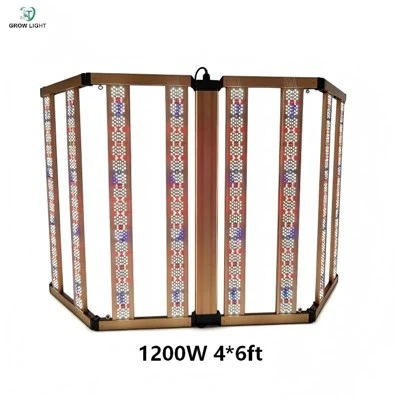
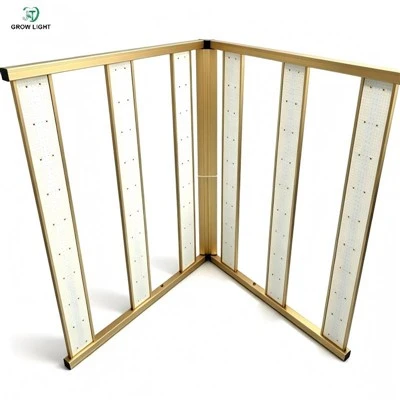
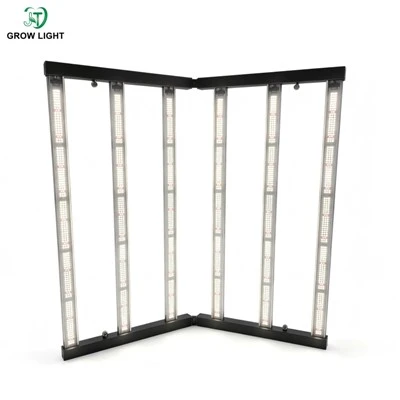
Foldable LED grow lights change maintenance cycles first and foremost by improving access. Their bar-based layouts and open structures make components visible and reachable without dismantling entire fixtures. This shifts maintenance from reactive to observational.
When growers can see issues early, they address them early. When systems hide issues, they fail loudly later.
This difference alone changes how maintenance fits into daily operations.
Foldable structure encourages incremental maintenance instead of shutdowns
In many rigid lighting systems, maintenance is disruptive. To access one component, multiple fixtures must be moved or powered down. As a result, growers postpone maintenance until it becomes unavoidable.
Foldable designs reduce this friction. Individual bars or sections can often be accessed without disturbing the surrounding system. Maintenance becomes something that happens in small increments, rather than in stressful shutdown windows.
Over time, this changes behavior. Growers stop "saving problems for later" and start solving them as they appear.
Maintenance timing becomes predictable rather than reactive
One of the most underrated benefits of foldable LED grow lights is predictability.
Rigid systems often mask gradual issues until they cross a threshold. Foldable structures, by contrast, expose gradual changes. Slight sagging, uneven spacing, or airflow disruption becomes visible before performance drops sharply.
This visibility allows growers to anticipate maintenance needs. Instead of reacting to yield loss or environmental instability, they intervene earlier, when corrections are smaller and less costly.
Predictable maintenance cycles reduce stress-not just workload.
Cleaning and inspection become part of routine workflow
Cleaning is maintenance, even if it's rarely labeled that way.
Foldable LED grow lights tend to accumulate dust and residue differently than enclosed fixtures. Their open geometry allows easier visual inspection and simpler cleaning methods. Wipe-downs can be performed without disassembly. Inspection becomes part of routine room checks rather than a special task.
This matters in commercial cultivation, where time is fragmented and attention is limited. Systems that fit into existing workflows get maintained. Systems that require special effort get ignored.
Structural stability reduces corrective maintenance
Corrective maintenance is the most expensive kind-the kind that fixes problems that shouldn't have happened.
Foldable LED grow lights with stable frames reduce the need for corrective action. Hinges that hold position, bars that remain aligned, and frames that resist drift minimize the cascade of small adjustments that plague less stable systems.
Growers often don't label this as "maintenance saved," but they feel it as fewer interventions and fewer unexplained inconsistencies.
Maintenance cycles change how teams are trained
Maintenance is also a human process.
In facilities using foldable LED grow lights, training new staff often becomes easier. The structure makes it clear what "correct" looks like. Deviations are easier to spot. Maintenance tasks can be explained visually rather than abstractly.
This reduces reliance on a few experienced individuals and spreads operational knowledge more evenly across the team. Over time, this resilience becomes part of system efficiency.
Expansion doesn't reset maintenance learning curves
One of the hidden costs of expansion is retraining. When new rooms use unfamiliar systems, teams must relearn maintenance patterns. Foldable LED grow lights reduce this burden by preserving structural familiarity across rooms.
Maintenance schedules, inspection routines, and corrective actions remain consistent. Expansion doesn't reset the clock-it extends what already works. This continuity is often underestimated during early planning stages.
Manufacturer insight: maintenance complaints rarely start with electronics
From a manufacturer's perspective, maintenance-related feedback reveals patterns.
At JT Grow Light, growers who raise maintenance concerns rarely begin by discussing diode failure rates. Instead, conversations focus on access, adjustment frequency, and how often fixtures require attention after installation.
This reinforces an important point: maintenance pain points are often structural, not electrical. As a result, JTGL designs foldable LED grow lights with long-term maintenance behavior in mind-prioritizing frame stability, hinge durability, and component accessibility. This is why many facilities choose foldable LED grow lights that are designed with long-term maintenance behavior in mind.
Maintenance cycles influence operational mindset
Systems shape behavior. When maintenance feels overwhelming, growers avoid it. When it feels manageable, they engage with it. Foldable LED grow lights tend to move maintenance from a disruptive event to a manageable routine.
This shift changes how growers relate to their rooms. Instead of constantly reacting to issues, they develop a rhythm-observe, adjust, continue.
That rhythm is the foundation of long-term operational calm.
Why maintenance improvements rarely show up in ROI calculations
Maintenance efficiency is difficult to quantify. It doesn't generate dramatic before-and-after charts. It shows up as fewer emergencies, smoother cycles, and more predictable outcomes.
Because of this, maintenance benefits are often undervalued during purchasing decisions. Yet over multiple cycles, they accumulate into real savings-time, labor, and mental bandwidth.
Foldable LED grow lights contribute to these savings quietly, through structure rather than specs.
Grower takeaway: maintenance is about rhythm, not repairs
Foldable LED grow lights don't eliminate maintenance. They change its character.
They turn maintenance from something reactive and disruptive into something incremental and predictable. They align maintenance with daily workflows instead of forcing special interventions.
For growers operating at scale, that change is not cosmetic. It is structural. Maintenance cycles determine how sustainable a system feels to run. Foldable design doesn't promise perfection-but it supports longevity.