The style, power, spectrum and even function of plant supplemental light are closely related to the environment and plant species.
Let's talk about the style first. From the earliest T8 tube style supplemental light, T15\T20 plant lights and some flat rectangular plant supplemental lights gradually appeared. The advantage of this kind of plant supplemental light is that from the supply side, the mold profile of the lamp is mature, and the market purchase price is not high. Most of them are ordinary lighting products with changed light sources. For example, T8 tube-style plant lights are available in many ordinary lighting lamps and tube products. Flat plant lights are improved from aquarium ornamental lights to plant lights.


Let's talk about power. As an individual consumer, you can simply regard the power of the plant supplemental light as the light intensity. The higher the power, the stronger the light intensity. The light intensity is also related to the distance between the lamp and the plant canopy. The closer the same lamp is to the plant, the stronger the light intensity. In plant lighting, the universal parameter for measuring this standard is PPFD (photosynthetic photon flux density). Some reviewers use LUX (illuminance) to measure the quality of plant lights, which is not accurate. In some cases, illuminance is proportional to light intensity, but it cannot be generalized.
The light intensity required is large for light-loving plants, and for shade-loving plants, the light intensity required is weak. If your plants need supplementary light, you must clarify whether they are sensitive to the demand for light intensity. If you are sure to use lamps for supplementary light, then "choose large rather than small" when choosing plant supplementary light. Plant supplementary lights below 50W are difficult to effectively supplement light for plants within 1-2 square meters unless the plant lights are very close to the plants (10-30cm). Plant supplementary lights with relatively high power now have dimming functions, which can also be used as a reference for purchase. If you want to introduce smart control, purchasing Tmall Genie or Xiaomi's smart socket is recommended.
Finally, let's talk about the spectrum. The premise of plant lights is the spectrum. There is no such thing as a 100% high-quality spectrum. Most of them can only achieve a spectrum with strong relative comprehensiveness. The requirements mentioned above are meaningful only based on a reasonable spectrum. If it is really difficult for you to know what kind of spectrum your plants need, you can roughly remember that for growing leaves and roots, choose a spectrum with relatively more 460nm blue light components, for flowering and fruiting, choose a spectrum with more 660nm red light components, and for plants in between, choose a spectrum with a balanced 460nm blue light and 660nm red light.
How should you choose LED plant supplemental light?
1. Determine the spectrum requirements
Different plant stages require different spectra, so first of all, we must clarify the goals:
Growth period: Choose a lamp with a high proportion of blue light (such as 400-500 nm range) to promote the growth of leaves and stems.
Flowering period: Choose a lamp with a high proportion of red light (such as 600-700 nm range) to help plants stretch stems and bloom.
Full growth cycle: Choose a full spectrum LED grow light, covering blue light and red light, suitable for the whole process of plant growth to flowering.
2. Check the light intensity and illuminated area
Plants need enough light intensity to promote photosynthesis, so pay attention to the following parameters:
PPFD (photon flux density)
Choosing a lamp with a high PPFD value (in μmol/m²/s) can provide higher photosynthesis efficiency. Usually required:
Growth period: 200-400 μmol/m²/s
Flowering period: 400-800 μmol/m²/s
Illuminated area
Depending on the size of your planting space, choose a supplementary light that can cover the entire planting area. For example:
Small planting box (1㎡): Choose a 100-300W LED lamp.
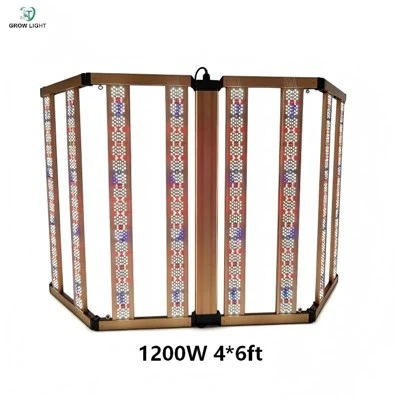
Medium-sized planting shed (4㎡): Choose a 600-1000W LED lamp.
3. Choose the appropriate power
The power determines the energy consumption and output light intensity of the lamp. High-power lamps are suitable for large-scale planting, but may require additional heat dissipation equipment.
Recommended by area:
0.5-1㎡: 100-200W
1-2㎡: 300-600W
Above 2㎡: 600W or more or a combination of multiple lamps
Tips: Higher power is not necessarily better. The most important thing is to choose a lamp that is suitable for the planting area.
4. Pay attention to the quality and life of the lamp beads
Lamp bead brand: Prefer lamp beads from well-known LED chip manufacturers (such as Samsung, Osram, etc.), which have higher brightness and longer life.
Lifespan: Most high-quality LED lamps have a lifespan of more than 50,000 hours.
A number of lamp beads: The more lamp beads, the more uniform the light; lamps with high power of a single lamp bead are prone to heat and require good heat dissipation design.
5. Heat dissipation performance
The heat dissipation performance of LEDs directly affects their lifespan and the stability of light output. Choose lamps equipped with efficient heat dissipation devices:
Aluminum heat sink: High-quality aluminum materials have better heat dissipation.
Passive heat dissipation design: Some high-end lamps use a fanless design, which optimizes the heat dissipation of the shell and runs quieter.
6. Dimming function
Some high-end LED fill lights support adjusting the ratio of blue light and red light to adapt to different growth stages of plants.
There are also lights with fully automatic programs that can set timers and staged spectrum changes, which are very suitable for beginners.
7. Consider the energy efficiency ratio
The energy efficiency ratio of LED is an important indicator. High-efficiency LED can output more light while consuming less electricity:
Luminous efficiency (lm/W or μmol/J): The higher the better, and the high-quality light efficiency is usually above 2.0 μmol/J.
Energy saving: Long-term running lights consume a lot of energy. Choose high-efficiency LEDs to save electricity bills.
Details to note:
1. Some manufacturers will confuse concepts and exaggerate the overall power of the lamp, and mark the theoretical power of the lamp beads as the nominal power of the whole lamp;
2. Do not choose plant fill lights whose spectral peaks are not at 460nm and 660nm. These are inferior products, using cheap and low-quality lighting lamps as plant lights;
3. Regarding the flicker problem of LED lamps all lighting products using AC power will have this problem. The current power supply technology can only "hide" the flicker as much as possible under the perception of human eyes and electronic devices. As long as the human eye cannot feel it, there is no big problem;
4. Blue light is not friendly to the human eye. If you use a plant-fill light, it is not recommended to stare at the light source for a long time;
5. Electrical products will heat up, and plant-fill lights are no exception. It is normal for lamps to heat up. Therefore, when purchasing a plant lamp, you should see whether its heat dissipation module is well made. Many merchants will cut corners on it;
6. The number of lamp beads is just a publicity gimmick. What matters is the power.
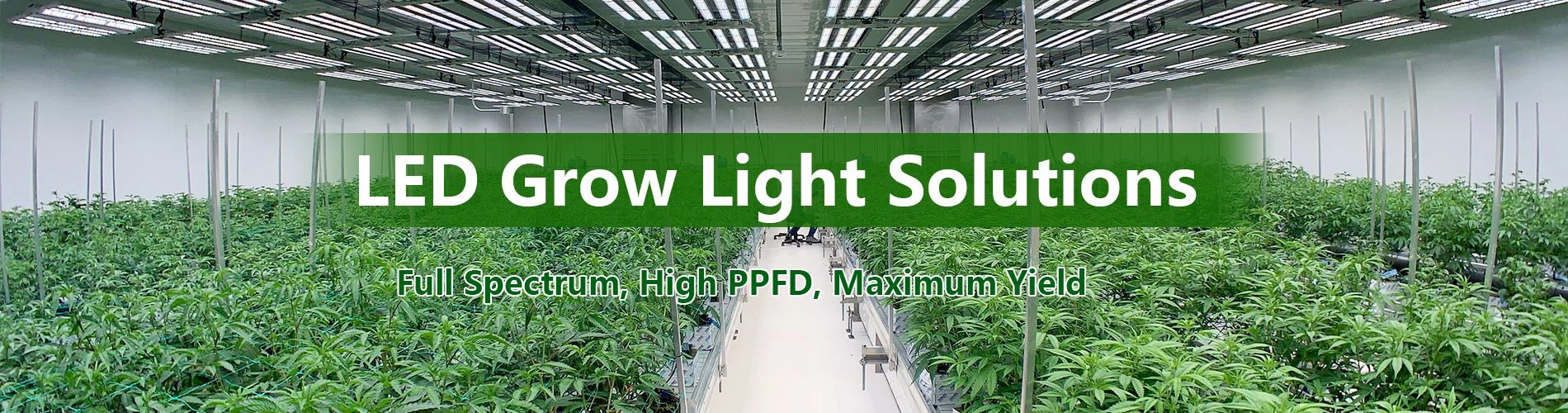
JT Grow Light has been deeply involved in the plant lamp industry for more than 10 years, and we have rich experience. If you don't know how to choose LED Grow Light for your plants, please feel free to contact us. We will provide you with the best lighting solution based on your planting environment and the type of plants you plant.