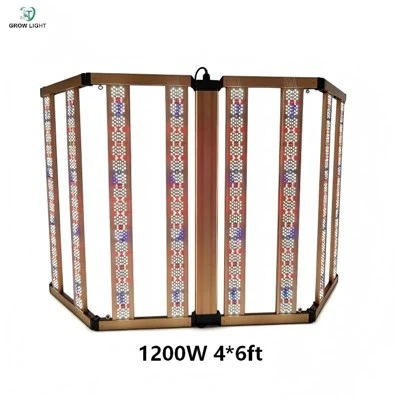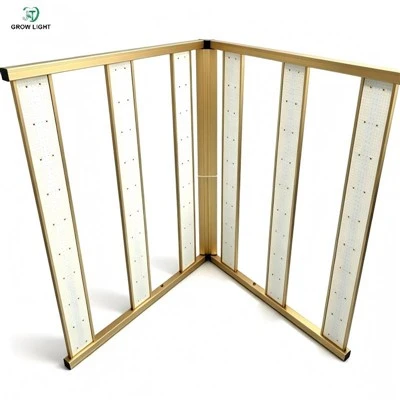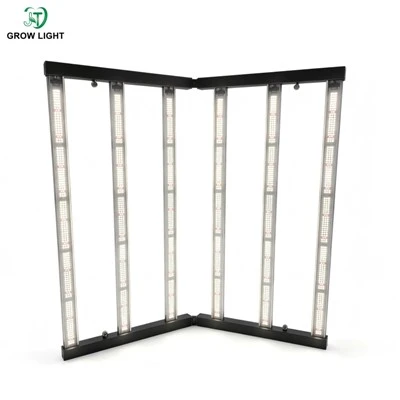
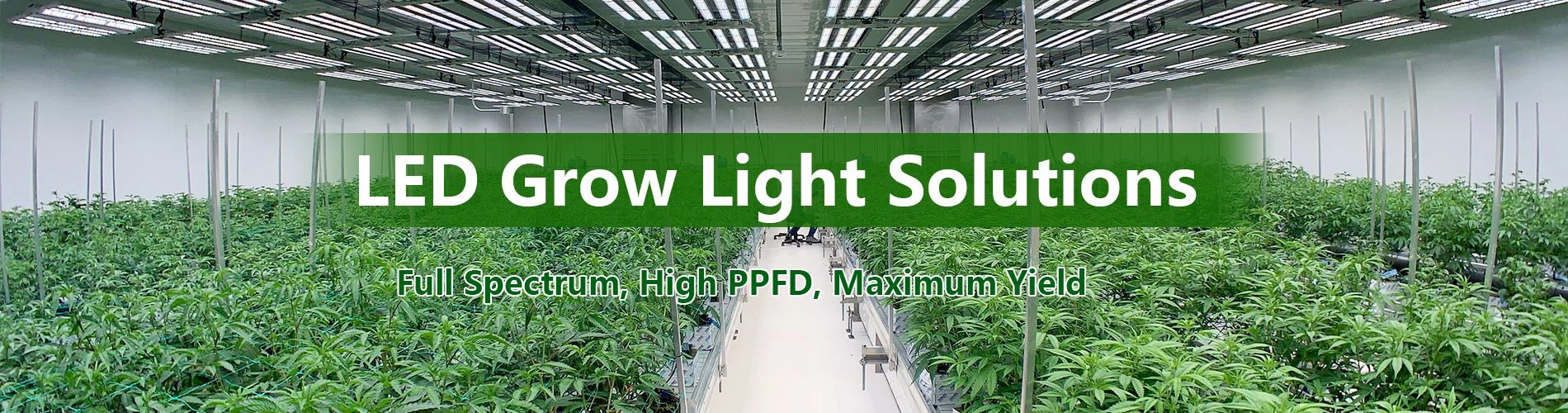
LED grow lights are very important for both commercial greenhouses and indoor growing right now. Full-spectrum grow lights have a direct effect on how well plants photosynthesize and how well they grow. Commercial producers need to know how spectrum and energy efficiency are related so they can figure out how to get greater yields and quality, conserve energy, and make the most money.
What does Photosynthetic Photon Efficiency (PPE) mean?
One of the most important things we look at when choosing LED grow lights is their photosynthetic photon efficiency (PPE). The unit of PPE is μmol/J, which stands for the quantity of micromoles of photosynthetically active photons (PAR, wavelength range 400–700 nm) made for every joule of electrical energy used.
In simple terms, the greater the PPE, the better plants can use the photons that are made by electrical energy. In other words, high-PPE lamps give off better light for the same amount of electricity, which helps plants photosynthesize more efficiently.
How Spectrum Affects PPE
The spectrum of an LED grow light not only impacts how well it works, but it also has a direct effect on the PPE. The luminous efficiency of LED chips varies a lot depending on the wavelength, which is why not all LED light sources have the same PPE.
1. Light blue (440–480 nm)
Blue light is essential for plants to flourish early on. It helps leaves get thicker, roots grow, and photosynthetic pigments form. It also speeds up the opening and closing of stomata, which makes photosynthesis more efficient.
Blue light wicks have a somewhat lower photoelectric conversion efficiency than red light wicks, which means that the PPE is also slightly lower.
So, when JT Technology makes commercial LED grow lights, they usually employ high-power blue light chips to make sure plants develop throughout the seedling stage.
2. Red Light (600–660 nm)
The best wavelength for photosynthesis is red light. It is the main thing that makes photosynthesis happen, and it helps plants bloom, generate fruit, and grow faster.
Red light beads usually have the best electro-optical conversion efficiency, and they also have the highest PPE.
So, if you want to improve PPE while still satisfying the needs of plant development, you can make the full-spectrum design have more red light.
3. Light in the far-red range (730 nm)
Far-red light doesn't do much for PPE calculations, but it does change the shape of plants and the timing of their blossoming.
It sends out photoperiodic signals that change the development and blooming time of plants. It is often used in commercial greenhouses to control or lengthen flowering. Furthermore, far-red LEDs are not very efficient, and they don't add much to PPE directly.
To avoid wasting energy, far-red light should be utilized as a supplement and not as the main light source.
4. Light green (500–570 nm)
Green light goes deep into the leaves, which helps photosynthesis and makes the light spread more evenly. Its LED efficiency is average, but its contribution to PPE is also average because it doesn't employ photosynthesis as well as blue and red light.
A well-balanced green light ratio in LED grow lights may ensure that plants get even light without cutting down on PPE too much.
5. Light in the UV and IR ranges
UV (ultraviolet) and IR (infrared) light don't add much to PPE calculations, but they are quite useful for growing plants commercially.
UV can make plants more resistant and encourage the growth of secondary metabolites, which are chemicals that plants make to protect themselves. For instance, plants may produce THC and CBD in cannabis or fragrant compounds in fruits.IR may change the shape of plants and the length of their days, which can help them bloom or mature their fruit.
In practice, UV/IR light should be utilized as a functional spectrum addition and should not be pursued for high PPE.
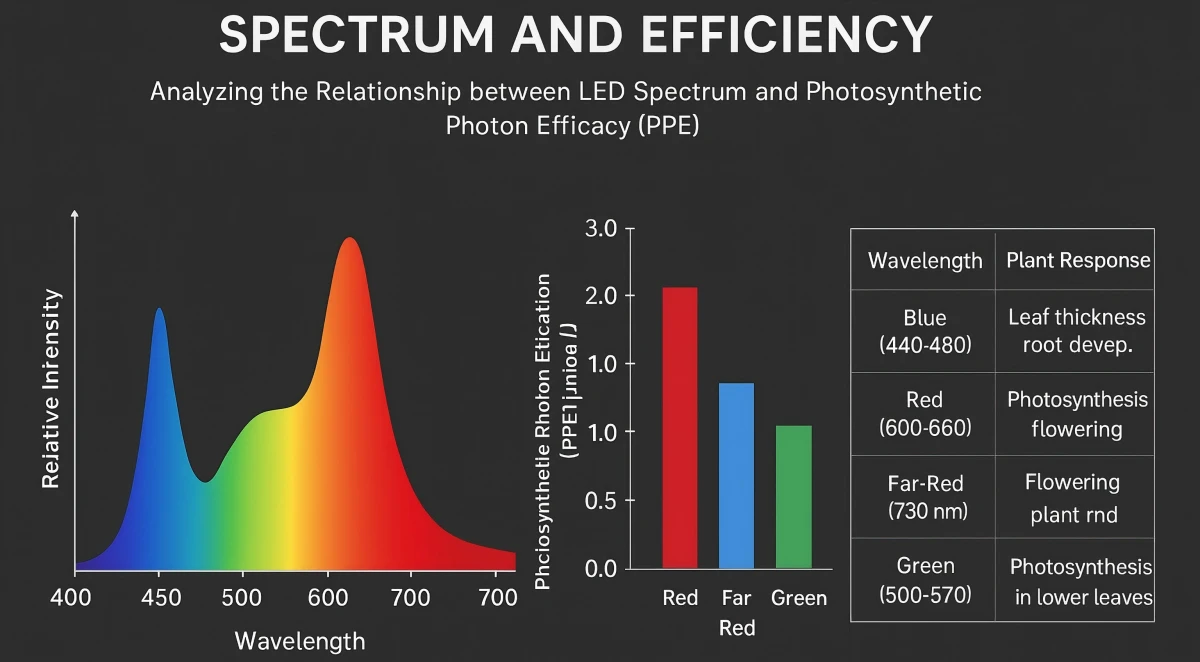
Finding the right balance between full-spectrum design and energy efficiency
When growing plants indoors in real life, LED grow lights must be designed to balance light efficacy (PPE) with the plant's needs.
For instance:
1. Lamps made just for PPE may mostly utilize red light, but if they don't have blue and green light, plants can grow too quickly, their leaves can become fragile, or photosynthesis may not happen enough in the lower layers.
2. Too much blue and green light may make plants seem better, but it lowers the lamp's overall PPE and uses more energy.
So, full-spectrum LED grow lights usually use high-efficiency red light chips as their main source of light, along with the right amounts of blue, green, and far-red light to get the most out of the light and make it look the best.
Choosing Chips and Managing Heat
In addition to designing the spectrum, you also need to consider ways to improve the photosynthetic photon efficacy (PPE) of LED grow lights:
1. Chip Quality: High-efficiency red and blue light chips are crucial and necessary for improving PPE.
2. Managing heat: Too much heat on an LED chip makes it less efficient and shortens its lifespan. Proper thermal management has a direct effect on long-term energy efficiency.
3. Efficiency of the Driver and Power Supply: High-efficiency constant-current drivers cut down on energy loss and ensure that the lamp output stays stable.
In conclusion
The main areas of research and development for commercial LED grow lights are spectral design and making them more energy efficient. By carefully choosing LED chips with varied wavelengths, getting the entire spectrum ratio just right, and combining thermal and driver optimization, growers can achieve the following benefits:
1. Better photosynthetic photon efficiency (PPE) lowers the cost of power.
2. An optimized plant structure makes leaves thicker and fruit better.
3. Make photosynthesis better in the lower leaves to produce more fruit overall.
4. Use far-infrared, UV, and IR light to control the photoperiod and the secondary metabolism.
Farmers may choose LED grow lights that are both energy-efficient and good for their crops because they know how spectrum and energy efficiency work together. This helps them save money and increase the quality of their crops when they grow them commercially.
JT Technology knows a lot about the spectrum and energy efficiency of LED grow lights. We know what our customers require when it comes to growing, so you won't regret purchasing our full-spectrum LED grow lights. Get in touch with us for further information.