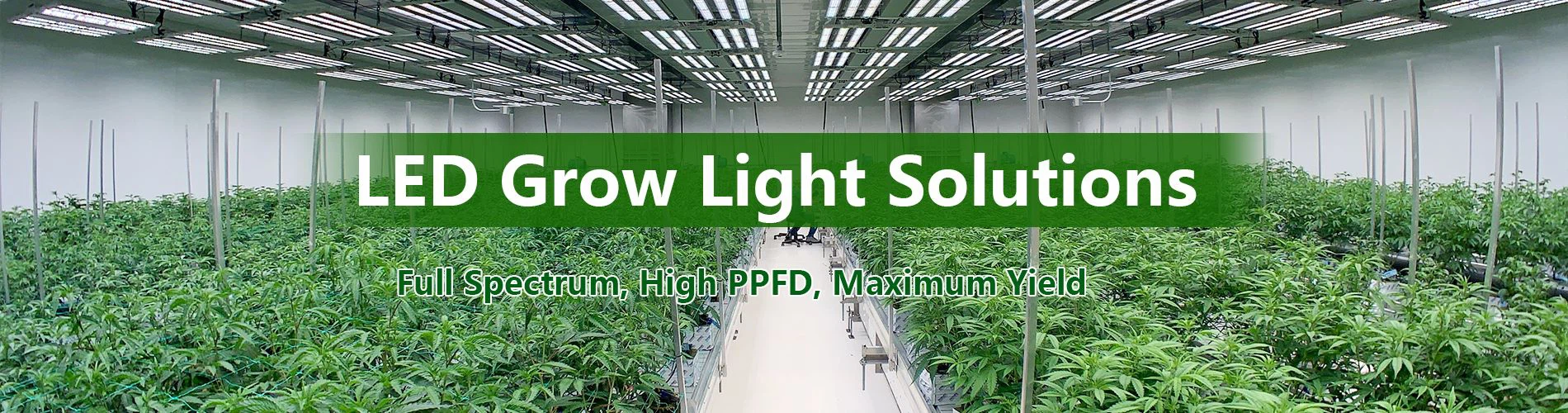

In greenhouse or indoor cultivation, toplighting isn't just about "hanging some lamps overhead." It's the backbone of the entire lighting system - shaping photosynthetic efficiency, plant uniformity, and final yield. Different crops have different canopy structures, light saturation points, and red/blue light preferences.
So the key question is: how do we design an LED toplighting setup that really fits each crop? Let's break it down crop by crop.
Tomato Toplighting - Getting Light Deep into the Canopy
Tomatoes are tall fruiting plants with overlapping leaves and stems that can grow over two meters.
Here, the main challenge isn't total light output, but how deeply that light can penetrate.
The deeper the light reaches, the better the lower leaves photosynthesize, which directly affects fruit size and uniformity.
Lens choice: 60° for stronger penetration
A 60° optical lens focuses the beam downward, sending photons deep into the canopy. This helps lower leaves stay active, leading to more even fruit development.
Spectrum: full spectrum with slightly enhanced red
A Full Spectrum LED Grow Light Bar covering 400–700 nm with a touch more red (660 nm) and far-red (730 nm) gives tomatoes balanced energy from seedling to fruiting. This combination improves flowering and fruit expansion.
Power setup: 660W / PPE ≈ 2.8 µmol/J
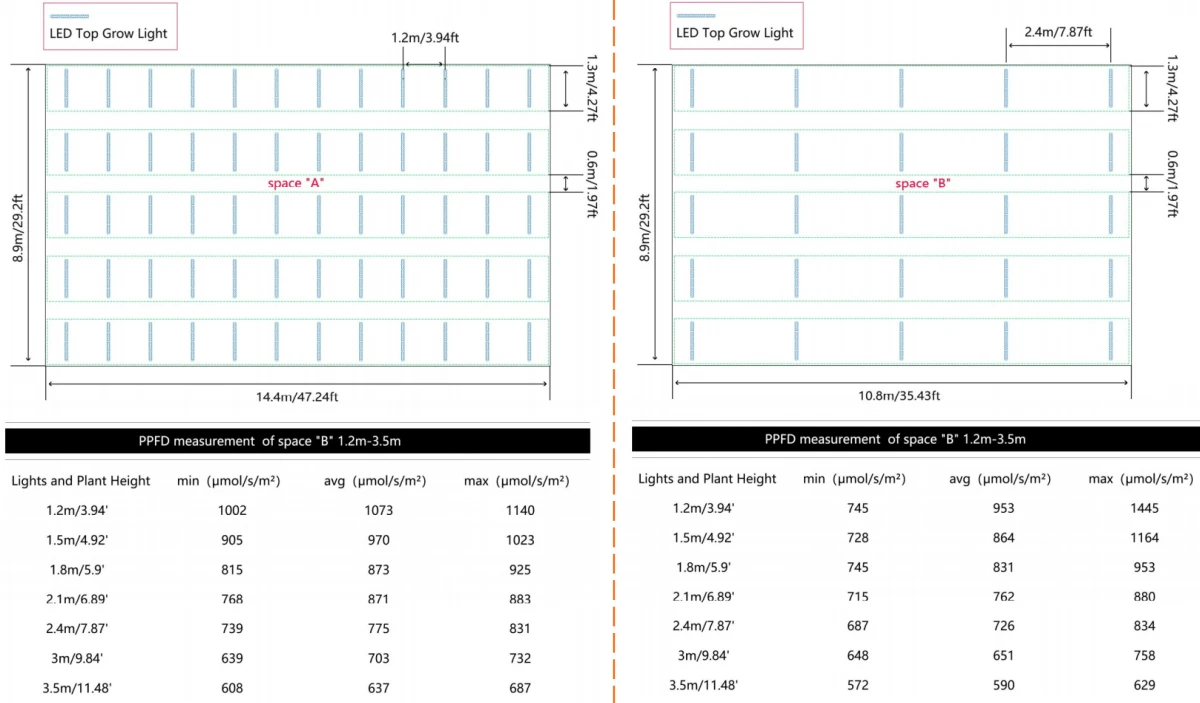
For commercial greenhouses, a Dimmable LED Greenhouse Grow Light around 660W provides consistent PPFD (600–800 µmol/m²/s). Dimming control allows fine-tuning during early growth and fruiting stages.


Cannabis Toplighting - Balancing Intensity and Spectrum
Cannabis growers often care most about spectrum control - and for good reason.
Yield, THC content, and bud density are all tightly linked to light intensity and color ratio.
So here, it's not just about "more light," but the right kind of light.
Lens design: mix 60° + 90° for precision and coverage
Use 60° lenses in the central canopy to boost PPFD, and 90° lenses on side fixtures to spread light evenly to the edges. This hybrid layout avoids light gaps while keeping center intensity high.
Spectrum control: full spectrum+ with flexible ratios
During the vegetative stage, enhance blue wavelengths (~450 nm) for tighter node spacing.
In flowering, increase red (660 nm) and far-red (730 nm) for bigger buds and better resin development.
Light efficiency: PPE ≥ 3.4 µmol/J
Cannabis requires high PPFD, but light burn is a risk. Choose Commercial LED Grow Lights for Cannabis with strong PPE performance (3.4 µmol/J or above) - this ensures high intensity with lower energy use. Dimming is essential here; it lets you fine-tune intensity without stressing plants.
| Crop | Lens Type | Recommended PPFD | Key Spectrum | Typical Power | PPE Range |
|---|---|---|---|---|---|
| Tomatoes | 60° | 600–800 µmol/m²/s | Full Spectrum + Red/Far-Red | 660W | ≈2.8 µmol/J |
| Cannabis | 60° center + 90° side | 700–1000 µmol/m²/s | Full Spectrum+ adjustable | 600–800W | ≥3.4 µmol/J |
Now, let's talk real solutions.
There are plenty of LED fixtures on the market, but what matters is how easily they fit your actual grow environment.
That's where JT Grow Light stands out - practical engineering meets professional design.
If you're looking for a Professional Greenhouse Lighting Solution that adapts easily to tomatoes, cannabis, and leafy greens, JT's full-spectrum toplighting systems are a solid choice.
01
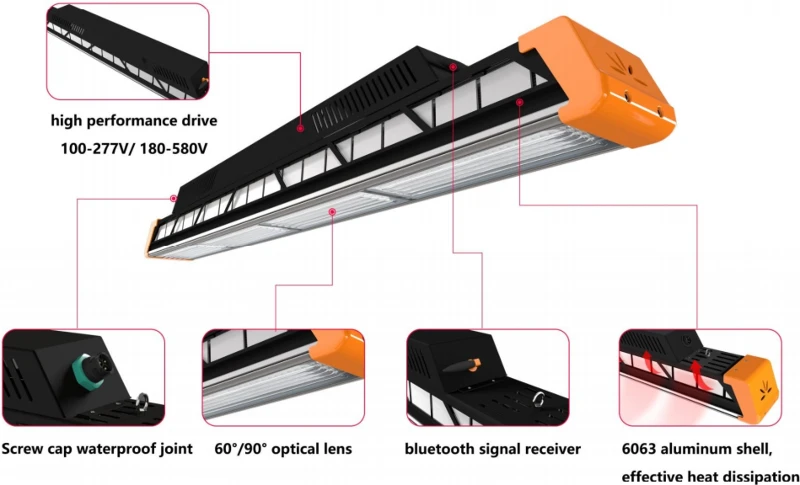
Multiple Lens Options (60° / 90°)
Interchangeable optics to match the canopy height and structure of different crops.
02
Multi-Channel Dimming
1- or 2-channel dimming allows you to adjust both intensity and spectral balance through each growth phase.
03
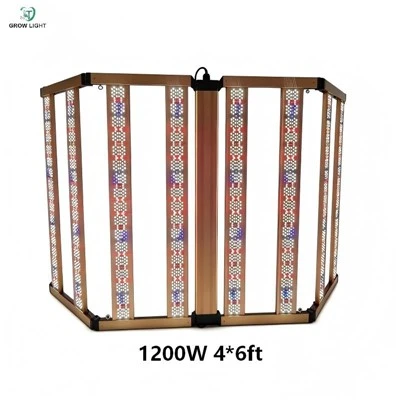
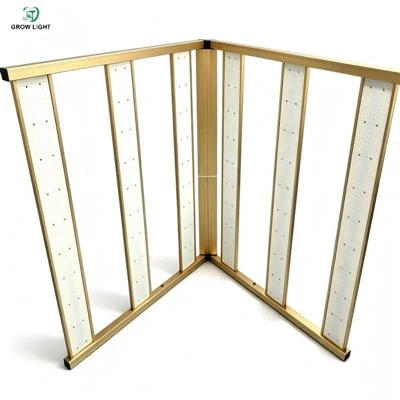
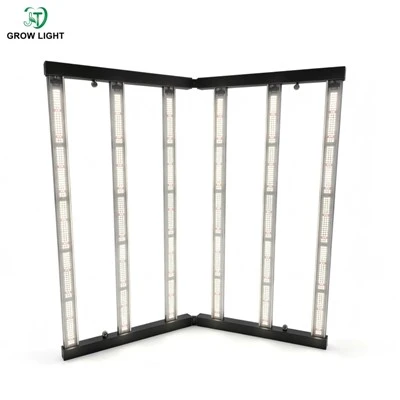
Modular LED Grow Light Bar Design
Easy to install, maintain, and expand - perfect for any greenhouse layout.
04
High PPE and Proven Reliability
With PPE up to 3.2–3.4 µmol/J, JT Grow Light's systems are trusted by growers across North America and Europe.
Final Thoughts - It's Not About "How Bright," but "Where the Light Goes"
Toplighting isn't a one-size-fits-all setup.
The smartest growers today focus less on total wattage and more on light distribution and spectral efficiency.
Match your lens angle, power density, and light recipe to the crop - and you'll see measurable gains in both yield and consistency.
If you'd like, the JT Grow Light team can even simulate your current greenhouse lighting layout and provide a quick PPFD map, helping you fine-tune before your next planting cycle.
Because optimizing your toplighting isn't just about better lights - it's about growing smarter.