
The duration of light, or photoperiod, is the fuse for the "time bomb" of orchid flowering! You decide when your orchids bloom.
Photoperiod is almost the only environmental parameter that remains constant year after year, so many plants (including some varieties of Cattleya and Phalaenopsis) use it as a signal for flowering.
We explained why photoperiod only works when the spectrum is stable in Why Spectrum Shapes Plant Behavior More Than Specs Ever Will.
Short-Day Flowering: Like poinsettias and chrysanthemums, some orchids only bloom when the "nights are long enough." If you give them a long day during the naturally short days of winter (artificially extending the light), sorry, it won't bloom!
Artificial Manipulation: Want it to bloom with short days in summer? Easy! Cover the plant with an opaque black cloth or plastic to artificially create a short period of daylight! Want it to grow continuously without flowering? Then provide a long day, such as 16 hours of light per day. Remember, continuous lighting can have side effects; it needs at least six hours of rest each day!
This technique of manipulating photoperiod requires precise and energy-efficient artificial light sources. Traditional lamps are energy-intensive and generate a lot of heat, making them uneconomical!

Light Quality Affects Orchid Morphology
Light quality refers to the color ratio of light (the relative number of photons in blue, red, far-red, etc.). This isn't just about aesthetics; it directly determines whether an orchid is "tall and slender" or "muscular and robust"!
Core of Photosynthesis
Photons in the 400-700nm wavelength range have the potential to drive photosynthesis. The full-spectrum LED grow lights we'll use provide a balanced spectrum, avoiding the spectral imbalance seen in older incandescent bulbs.
Red/Far-Red Ratio
This ratio is a key driver of orchid stem elongation! If your lights emit too much far-red light (like old-fashioned incandescent bulbs), your orchids will become leggy and tall and thin. In natural environments, the proportion of far-red light in the shaded area decreases, promoting the growth of the plant underneath.
Advanced Applications of UV & IR
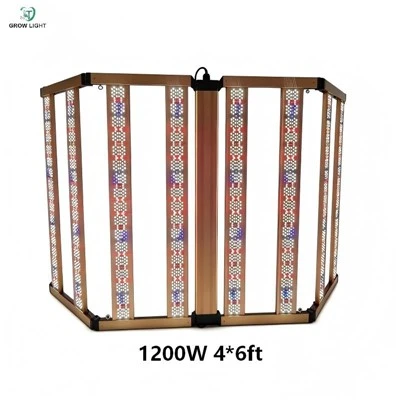
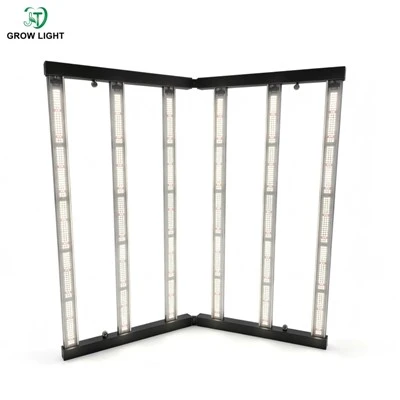
JT Photoelectric's LED Grow lights with UV & IR solution are designed for this purpose! By precisely adding far-red (IR) light to control stem elongation, while using ultraviolet (UV) light to regulate pigment synthesis and enhance stress resistance, orchids have thicker leaves and more vibrant flower colors! This is the true value of professional led grow lights!
For commercial crops like orchids, photoperiod control links directly to How to Control Orchid Cultivation with Light Intake.
Customized Lighting for Orchid Cultivation
Orchids have extremely precise light requirements. If the light intensity is too high (e.g., exceeding 1500 ft-candles), the leaves will scorch, causing unsightly brown spots, and the flower buds will also develop spots! This high-value crop cannot tolerate any mistakes!
JT Photoelectric's professional LED grow lights offer you solutions:

Full-Spectrum LED Grow Lights Solution
Our lights utilize a precision light-mixing array to provide a full spectrum of 400-780nm. This more balanced spectrum compared to traditional lights effectively prevents orchid scorching and undesirable morphology.

LED Grow Lights with Precise UV-IR Control
We understand the importance of light quality. Our lights can precisely control the ratio of red to far-red light, helping you manage orchid morphological development. Whether you want to control stem elongation or enhance leaf quality, LED Grow lights with UV-IR can achieve it!

Product Quality and Service Commitment
By precisely adding far-red light (IR) to control stem elongation, while using ultraviolet light (UV) to regulate pigment synthesis and enhance stress resistance, orchids develop thicker leaves and more vibrant flower colors! This is the true value of professional led-grow lights!
Stop guessing when lighting your orchids! Choose JT Grow Lights and let scientific spectrum analysis guarantee the quality of your orchids!