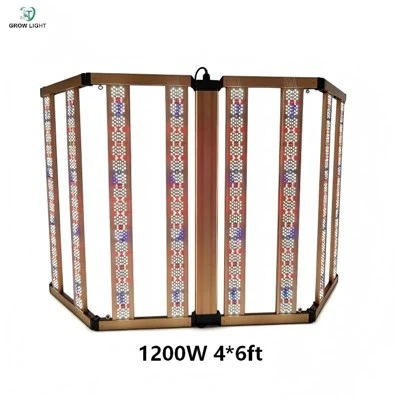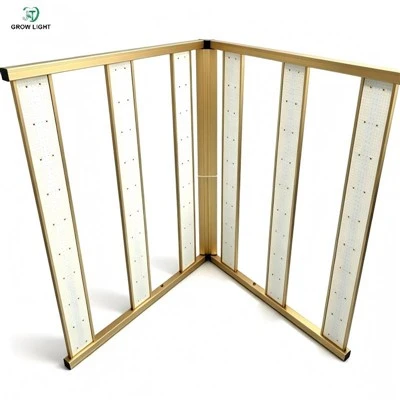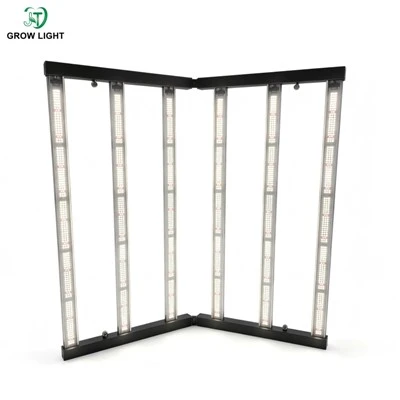
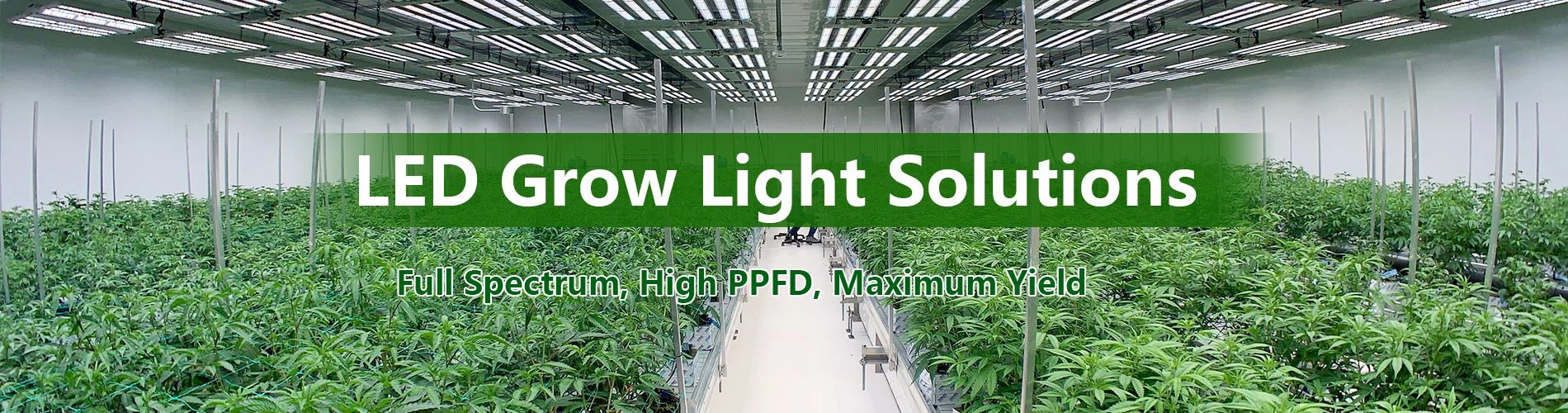
Hello everyone, today we are going to talk about a seemingly simple but very interesting topic: the light quantity and light quality of LED Grow Light. These two concepts are just like our usual meals, light quantity is "eating enough" and light quality is "eating well". If the light given to plants is its "meal", then the light quantity is to serve it a lot of food, regardless of the nutritional combination, while the light quality is a precisely matched nutritional meal. Does it sound interesting? Then let's dig deeper and see why the balance of light quantity and light quality is so important in plant growth.

Light quantity---the total amount of light, similar to "eating enough"
The light quantity is simply the total amount of light given to plants. If you use a more academic term, it is the total number of photons received by the plant. Suppose you take an LED Grow Lamp, suddenly adjust it to the highest power, and irradiate it 24 hours a day, then congratulations, the plant will definitely "eat" a lot of light.
The role of light
The role of light is to meet the basic photosynthesis needs of plants, so that its leaves can synthesize sugars and maintain basic growth. Just like people need to eat to have the strength to walk, plants also need light to support their daily activities. If the amount of light is not enough, the plants will show "malnutrition": the leaves turn yellow, become thinner, or even stop growing. Therefore, light is the basis for plant survival and allows them to "survive".
But the question is, is the more light the better? It's really not. Plants need "just the right" amount of light, not "over the top" light. If you give the plant a light amount far exceeding its needs, the plant will not only not grow faster, but may also be "light burned", and the leaves will show signs of burning. This is like when we eat, eating too much is not only not nutritious, but also easy to upset the stomach.
Another interesting point is that although the amount of light is important, it cannot completely replace the quality of light. In other words, the amount of light can make plants grow taller, but if the quality of light is not good, the flowers and fruits of the plant may not grow well. For example, if you use a lamp to provide plants with ultra-high light, but it lacks the red and blue light required for flowering and fruiting, the plants can survive, but they "cannot bloom or bear fruit". This is a bit like feeding people only rice and noodles. Although it can fill the stomach, it lacks vitamins and protein, and the body will also have problems.

Light quality: the nutritional combination of plants, similar to "eating well"
In short, it is the quality of light received by plants or the "nutrient content" of light. For example, plants are not like us humans who can eat grains and various meats, eggs and vegetables. They can only get "food" from light. These "foods" are different bands of light, such as red light, blue light, green light, ultraviolet light, etc. Each type of light has a different effect on plants, just like we eat meat to supplement protein, eat fruit for vitamins, and eat whole grains for dietary fiber.
The role of light quality
The role of light quality is to accurately meet the needs of plants at different stages of growth. For example:
Red light: promotes the flowering, fruiting and root development of plants.
Blue light: helps plants grow dense leaves and enhances photosynthesis.
Greenlight: Although most of it will be reflected by the leaves, it is also helpful for the overall health of the plant.
Ultraviolet light (UVA/UVB): stimulates plants to produce more secondary metabolites, and improves the flavor and nutritional value of the fruit.
So, if the amount of light is "how much food", the quality of light is "the nutritional combination of food". What plants need is not simply high light quantity, but a "high light quality" light source with sufficient brightness and a variety of suitable spectra. In this way, plants can "eat well and grow well".

Why is the light quality of LED plant lights more important?
At this point, you may ask: "Since both light quantity and light quality are important, which one is more important?" The answer is that in modern planting, light quality is more critical. Here are a few reasons:
1. Light quantity can be supplemented by time, but light quality cannot be replaced
When the amount of light is insufficient, you can remedy it by extending the exposure time. For example, if the plant originally needs 12 hours of strong light, but you only have a medium-intensity lamp, you can extend it to 16 hours or even 18 hours. Although the efficiency will be slightly worse, the plant can still grow normally.
But the light quality is different. If the spectrum of the lamp itself is missing, such as no red light or blue light, the plant cannot develop normally even if you irradiate it for 24 hours.
2. Different growth stages require different light quality
Plants grow in stages, and the light quality required in each stage is different:
Seedling stage: more blue light is needed to promote healthy leaf and root growth.
Growing stage: a combination of blue and red light is needed to help plants grow quickly.
Flowering and fruiting stage: more red light or even ultraviolet light is needed to stimulate flowering and fruit development.
If your lamp does not provide the corresponding light quality, the plant may be "malnourished", and problems such as seedling leggy growth, low flowering rate, and poor fruit quality will all come.

Light quality is more energy-saving and more efficient
Desperately increasing the amount of light will lead to higher energy consumption, but optimizing the light quality can allow plants to absorb light energy more efficiently. For example, if you provide too much green light to plants, the plants will reflect most of it, which causes waste. But if you use this energy on red and blue light, the plant will absorb more efficiently and grow better.
Use light quality to create a perfect LED Grow Light
Since light quality is so important, how should a good Grow Light be designed? We can look at it from the following aspects:
1. Full spectrum design
A good plant light must be full spectrum, which can simulate the various bands in natural sunlight, so that plants can get enough "nutrition" at different stages. This kind of light can not only increase the growth rate of plants, but also make their flowering and fruiting healthier.
2. Dynamic adjustment of light quality
Some high-end lamps can even dynamically adjust the spectrum ratio according to the growth stage of plants. For example, more blue light in the seedling stage, and more red light and ultraviolet light in the flowering stage, so that the growth efficiency of plants can be maximized.
3. Uniformity of light quality
The light quality should not only be good, but also uniform. If the spectrum distribution of the lamp is uneven, the light quality absorbed by the plant will be uneven, causing some parts to grow fast and others to grow slowly. Therefore, a good lamp should ensure that the light quality is evenly distributed throughout the entire irradiation range.

Solution for precise light quality control
To fundamentally solve the problem of light quality, we recommend a 4-channel dimming smart LED Grow light, which can provide the following 4 independently controllable spectra:
- 5000K cold white light
Function: Provide uniform basic lighting to promote the growth of plant leaves and stems, suitable for the seedling and vegetative growth period of plants.
Advantage: Ensure the healthy and rapid growth of plants, thicker leaves and stronger stems.
- 3000K warm white light + 660nm red light
Function: Support the flowering and fruiting stages of plants, and provide sufficient red light band support for flower bud differentiation and fruit enlargement.
Advantage: Greatly improve the flowering rate and fruit yield of crops, while enhancing color and flavor.
- UV (ultraviolet light)
Function: Increase plant resistance, reduce pests and diseases, and improve the quality of fruits, such as increasing vitamin content.
Advantage: Make plants stronger and enhance the market competitiveness of cash crops.
- IR (infrared light)
Function: Promote cell division, accelerate the differentiation process of flower buds, prolong the flowering period, and improve the uniformity and quality of fruits.
Advantages: Effectively increase yield while increasing the sweetness and nutritional value of fruits.

Summary: Balance of light quantity and light quality
Finally, let's summarize that both light quantity and light quality play an important role in plant cultivation, but they have different focuses:
Light quantity is the basis for plant survival, ensuring that it is "full".
Light quality is the key to plant growth, ensuring that it is "well fed".
We cannot completely ignore the light quantity, but in modern precision planting, optimizing light quality is undoubtedly more important. This not only allows plants to grow more healthily and efficiently but also saves energy and reduces planting costs. So, next time when you choose Grow Light, be sure to pay more attention to its spectral characteristics, rather than blindly pursuing brightness!
I hope this article can help you better understand light quantity and light quality, choose the most suitable lamp, and let your plants "eat well and be full" and thrive!