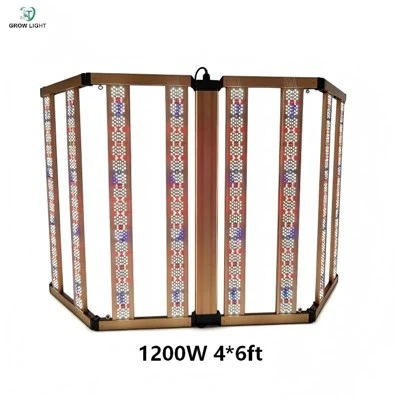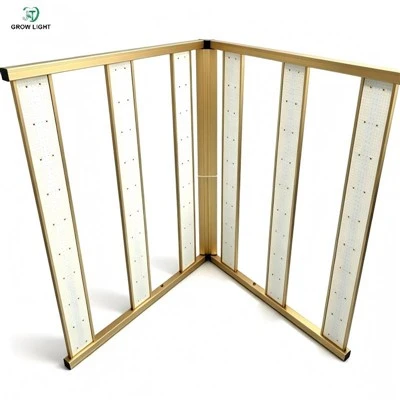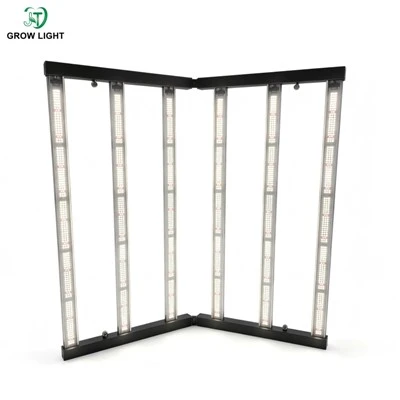
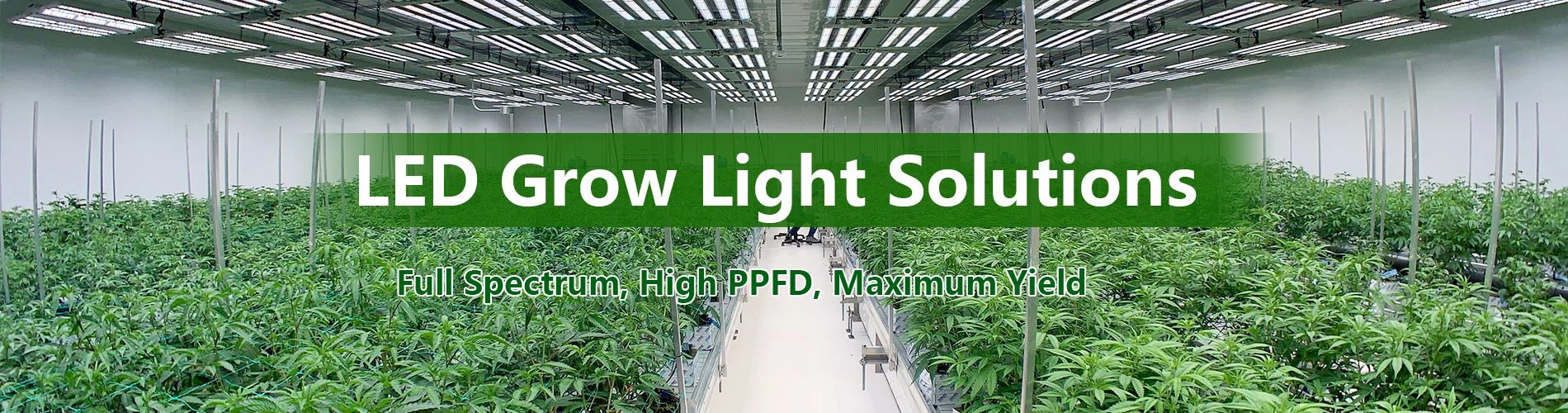
If you're running an indoor commercial farm, here's the thing: not all LED lights are made equal. Sure, brightness is important, but the spectrum-how much blue, red, far-red, and UV light your plants get-is what really drives growth, flowering, and fruit quality. Get this right, and your Commercial LED Indoor Grow Lights will do wonders. Get it wrong, and, well… let's say you'll notice it in your leaves, fruits, or buds.
Let's break it down crop by crop, and I'll also sprinkle in some practical tips on Adjustable LED Grow Lights and LED Full Spectrum Plant Growth Lights.

1. Leafy Greens: Keep Your Leaves Thick and Healthy
Leafy greens-think lettuce, spinach, kale-are all about speed and leaf quality. They need strong photosynthesis and rich chlorophyll.
1) What works best:
Blue Light (450–470nm): Thickens leaves, keeps plants compact, and makes them hardy.
Red Light (660nm): The main energy source for photosynthesis-without enough, growth slows.
Far-Red (730nm): Leafy greens don't really need much. A touch can stretch plants a bit if you like.
White or Full Spectrum: Balances everything for natural color and texture.
2) Quick tip: Blue around 20–30% works great, red as the main driver. If you have Adjustable LED Grow Lights, adjust them depending on how dense you want your leaves to be.
3) Bottom line: Blue for leaf health, red for growth, far-red for shape. Easy-peasy.
2. Fruits & Vegetables: Sweet, Juicy, and Eye-Catching
Crops like tomatoes, cucumbers, and strawberries aren't just leaves. They need flowering, fruit growth, and that sugar kick that makes customers happy.
1) Spectrum cheat sheet:
Red (660nm): Drives flowering, bud formation, and fruit expansion. Big player here.
Blue (450nm): Controls plant height and keeps leaves sturdy.
Far-Red (730nm): Moderate amounts help flower buds and fruit ripening.
UV-A (320–400nm): Tiny doses improve fruit color and sweetness.
2) Insider tip: Use LED Full Spectrum Plant Growth Lights to push blue during vegetative stages and bump red when fruits are forming. Your tomatoes and strawberries will thank you.
3) Bottom line: Red is king, blue keeps things tidy, far-red and UV-A boost fruit quality.
Looking for high-quality, reliable LED grow lights that deliver real results? JT Grow Light(JTGL) offers a full range of Commercial LED Indoor Grow Lights and Adjustable LED Grow Lights designed to match your crops' specific spectrum needs. With PPE levels hitting 2.8–3.2 μmol/J efficiency, our lights give plants the energy they need without wasting electricity. Whether you're growing leafy greens, fruits, flowers, or cannabis, JT Grow Light has a solution that helps you maximize yield, improve quality, and simplify management.

3. Flowers: Make Every Bloom Pop
Flower crops-roses, tulips, orchids-are picky. Light quality and timing control flower size, color, and fragrance.
1) Spectrum essentials:
Blue (450nm): Keeps plant shape compact and supports flower buds.
Red (660nm): Main engine for flower growth.
Far-Red (730nm): Adjusts flowering time and mimics natural dusk.
UV (280–400nm): Enhances petal color.
2) Little trick: Commercial Plant Grow Lights let you tweak spectrum and photoperiod. You get uniform blooms that actually sell better.
3) Bottom line: Balance blue and red, far-red sets the timing, UV sharpens the color.
4. Cannabis: Max Yield and Potency
Cannabis is super sensitive. The right spectrum impacts yield, bud density, and THC/CBD levels.
1) What to use:
Blue (430–470nm): Keeps plants compact and boosts leaf photosynthesis.
Red (660nm): Drives flowering and dry weight accumulation.
Far-Red (730nm): Helps night signals and improves bud maturation.
UV-B (280–315nm): Small doses can increase THC/CBD content.
2) Pro tip: Indoor Commercial Grow Lamps or adjustable full-spectrum LEDs let you dial blue for vegetative growth, red for flowering, and sprinkle UV-B or far-red for quality.
3) Bottom line: Red and blue are your base; far-red and UV-B lift potency and bud quality.

5. General Tips for Choosing the Right Spectrum
PPFD first, spectrum second: Always ensure enough light reaches your plants.
Adjust for growth stage:
Vegetative: More blue keeps plants compact.
Flowering/Fruiting: More red, plus far-red/UV to enhance quality.
Full-spectrum lights are safe bets: LED Full Spectrum Plant Growth Lights usually cover most crops.
Special wavelengths: UV and far-red, mainly for flowers and fruits. Leafy greens usually don't need them.
Quick grower hack: Adjustable LED Grow Lights let you switch spectrums between growth stages-save energy and grow smarter.
6. Wrapping Up
So, picking the right spectrum isn't rocket science, but it does matter. Whether you grow leafy greens, fruits, flowers, or cannabis, understanding what your plants "like" will get you better results from Commercial LED Indoor Grow Lights.
1) Leafy greens: Slightly more blue, red main, far-red optional.
2) Fruits & vegetables: Red main, blue shapes, far-red/UV-A improves quality.
3) Flowers: Blue/red balance, far-red for timing, UV for color.
4) Cannabis: Red/blue base, far-red/UV-B for potency and yield.
Use adjustable, full-spectrum LEDs and watch every leaf, fruit, and flower reach its full potential. Energy-efficient, flexible, and practical-that's how indoor farming should be.