The "Larf" Frustration: Why Your Top Buds Are Gold and Your Bottoms Are Trash
If you've ever spent weeks nurturing a crop only to realize during harvest that the bottom half of your plants is filled with airy, underdeveloped "popcorn buds," you're not alone. I've sat down with countless commercial growers who complain: "May, my top colas are perfect, 10/10 quality. But why is everything underneath turning into larf?"
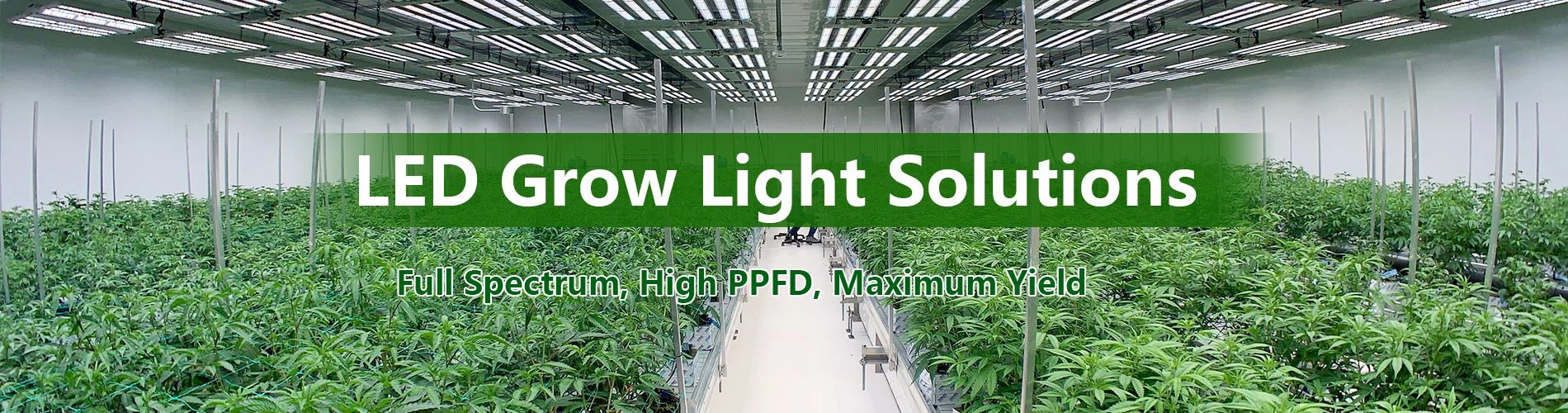
The truth is, most indoor grows don't lack light power-they lack light distribution. Traditional top-down lighting is like a midday sun in a dense jungle; it hits the canopy surface with intense PPFD, but physics takes over. The upper fan leaves act as a biological umbrella, absorbing up to 90% of the photons. By the time light reaches the mid-to-lower nodes, the PPFD often drops from 1000 µmol/m²/s at the top to a measly 50-100 µmol/m²/s at the bottom.
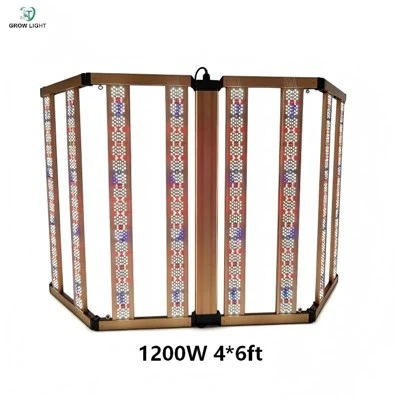
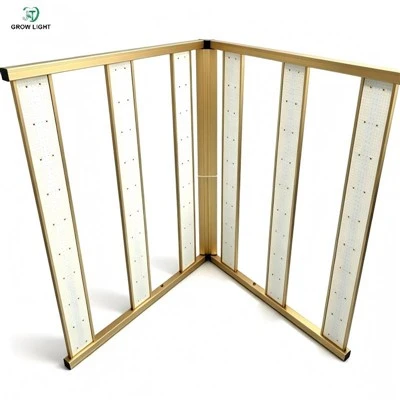
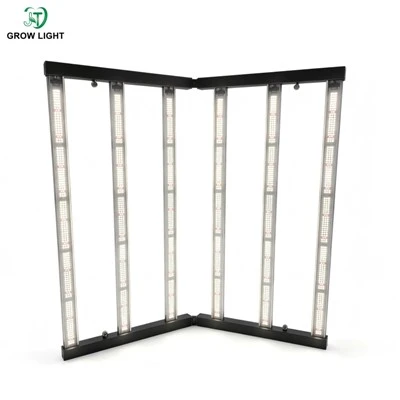
This is the exact problem under canopy grow lights were engineered to solve. It's not just about adding "more light"; it's about fixing the shadow zones that rob you of your profit.
Fix #1: The Physics of Light Attenuation in Dense Canopies
Modern cultivation focuses on high plant density (like SCROG or Sea of Green). While this maximizes square footage, it creates a "dead zone" in the lower 40% of the plant.
When we look at the quantum yield of photosynthesis, we see that lower leaves are still metabolically active, but they are starving. Under canopy LED grow lights function as a "photon injection" directly into these starving tissues. Scientific findings on PMC indicate that the underside of the leaf is highly receptive to photons, enabling a significant boost in CO2 assimilation.
At JTGL, we've seen that by placing slim, high-efficiency bars beneath the foliage, you activate the abaxial (underside) stomata of the leaves. Supplemental sub-canopy lighting can increase photosynthesis in the lower canopy by 15-20%. You are turning the entire vertical volume into a photosynthetic engine.
Fix #2: Transforming "Popcorn Bud" into Marketable A-Grade Flower
In a commercial facility, trim waste and extraction-grade biomass are the enemies of ROI. If 30% of your harvest is "larf," you are losing thousands of dollars every cycle in labor and lower market prices.
What under-canopy lights actually fix is bud density at the lower nodes. By providing a dedicated flowering spectrum (rich in 660nm Deep Red and 730nm Far-Red) directly to the lower bud sites, the plant no longer "gives up" on those flowers. Commercial case studies by Fluence highlight that this leads to a 25%+ increase in A-grade flower ratio.
- Commercial Reality: In our recent trials, the ratio of A-grade flowers increased from 37% to 52%.
- The Result: Those airy lower buds become dense, frost-covered, and chemically potent.
Fix #3: Unlocking the 20% - 30% Yield "Hidden" in Your Tiers
We need to talk about real numbers. According to a study published in MDPI, adding under canopy grow light can drive a dry inflorescence yield increase of nearly 29.95%.
Based on data from dense vertical farming, adding these lights typically results in:
- Total Yield Increase: 19% to 28% on average.
- Extreme Cases: Dense crops have seen gains up to 50-60% when the lower canopy was previously in total darkness.
At JTGL, we provide a professional lighting layout. We've seen growers try to "DIY" this with cheap lights, only to find they lack the IP65 waterproof rating needed for high-humidity environments. Our bars are designed for the "splash zone," ensuring safety while delivering 3.0 µmol/J+ efficiency.
Fix #4: Better Energy Management and Heat Control
A common mistake is "overdriving" top lights. Growers crank their 1000W LED to 100%, causing the top colas to suffer from light stress or terpene degradation due to excessive heat.
Under canopy lights fix this inefficiency. Instead of blasting 1000W from a distance, you can run top lights at 80% intensity and use high-efficiency sub-canopy bars (80W-120W) to fill the gap.
- The Math: You redistribute photons where they are most effective.
- HVAC Benefit: Because JTGL's LED bars use advanced heat dissipation aluminum, they don't create hot spots, reducing the load on your dehumidifiers and AC units.
Fix #5: Crop Uniformity for Automated Processing
For large-scale producers using automated trimming machines, uniformity is your best friend. Inconsistent bud size leads to "mangled" flower in the trimmer.
By balancing light levels from top to bottom, under canopy lighting ensures that buds harvested from the middle are almost identical in size and density to the top colas. This standardization makes your post-harvest processing faster and your final product brand-consistent.
Scientific Insight: Why the Spectrum Matters Under the Canopy
It's not enough to just throw "white light" down there. The lower canopy responds best to specific wavelengths:
- Deep Red (660nm): Essential for flower mass and trichome development.
- Far-Red (730nm): Triggers the Emerson Effect, speeding up the transition to flowering. Data from ASHS proves that 730nm Far-Red photons work synergistically with Red light to increase photosynthetic capacity.
At JTGL, we've seen that adding Far-Red in the sub-canopy can shorten flowering cycles by 3-5 days, allowing for more harvests per year.
Is Under Canopy Lighting the Right Move for Your Facility?
If you are a professional grower looking to:
- Maximize yield per square foot.
- Eliminate labor costs for lollipopping and pruning.
- Produce premium flower from top to bottom.
Then under canopy grow lights are the single most effective hardware upgrade you can make in 2026.
The JTGL Difference: Precision Manufacturing
We aren't just a trading company; we are your manufacturing partner. Our factory floor is where we build JTGL lights to survive the trenches of a commercial grow room. We provide detailed PPFD maps and ROI calculations before you spend a single dollar.
Next Steps: Let's Optimize Your Canopy
Every grow room is different-different strains, grow racks, and goals. Are you currently losing 30% of your crop to "popcorn buds"? Don't guess-measure.
Send us your current canopy dimensions and top-lighting specs. My team at JTGL will provide a complimentary lighting simulation to show you exactly how many grams per watt you are leaving on the table.
Contact us for a Custom Under-Canopy Solution
FAQ
Q: How much yield increase can I expect with an under canopy grow light?
A: Typically, professional growers see a yield increase of 20% to 30%. By providing high PPFD to shaded zones, you transform "larf" into dense, marketable A-grade flower.
Q: Does under canopy grow light replace top lighting?
A: No. It complements top lighting by targeting the lower 40% of the plant that top lights cannot reach, creating a distributed lighting environment for maximum productivity.
Q: What are the best wavelengths for under-canopy lighting?
A: A spectrum rich in 660nm Deep Red and 730nm Far-Red is best. This triggers the Emerson Effect, significantly boosting flowering density and shortening the harvest cycle by 3-5 days.
Q: Are under canopy LED grow lights worth the investment?
A: Yes. By increasing your A-grade bud ratio from 37% to 50%+, most commercial facilities see a full ROI within 1–2 harvest cycles due to reduced trim waste.
Q: Will under canopy lights burn my lower leaves?
A: Not if you use professional JTGL bars. Our high-efficiency 3.0 µmol/J chips and heat-dissipating aluminum ensure the bars stay cool, even in the dense "splash zone" of your grow racks.
References & Further Reading
- [MDPI Study] Subcanopy Supplemental Light Enhances Yields by 29.95%.
- [PMC Research] Photosynthetic benefits of abaxial epidermis light targeting.
- [Fluence Case Study] Rethinking the Lower Canopy for A-Grade quality.
- [ASHS Journal] Far-red photons and photosynthetic capacity.