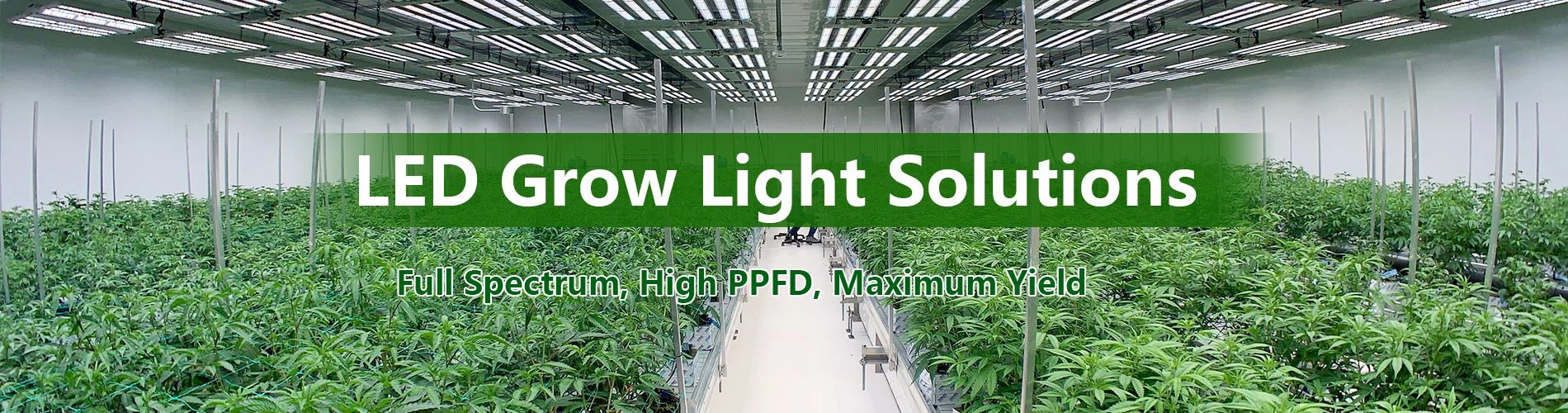
In commercial cultivation, under-canopy LED lighting has become an important tool for growers. Everyone knows the challenge: the lower leaves often don't get enough light, causing them to yellow, drop early, and lose their productivity. This not only affects photosynthesis but also reduces yield and quality. To fix this, many growers install supplemental lights under the canopy.
But here's the real question: should you go with a single-sided design or a 3-sided under-canopy grow light? On the surface, the difference may seem simple, but in practice, the results can be worlds apart.
Let's break down the comparison and see why the 3-sided design is gaining traction.
1. Coverage Matters: One Direction vs. Wide Beam
The first thing to consider with any grow light is coverage. Traditional single-sided under-canopy lights usually deliver a beam angle of 120–150°. That means they throw light forward, but the sides remain shaded. In dense canopies, this leaves plenty of "dark corners" where lower leaves struggle.
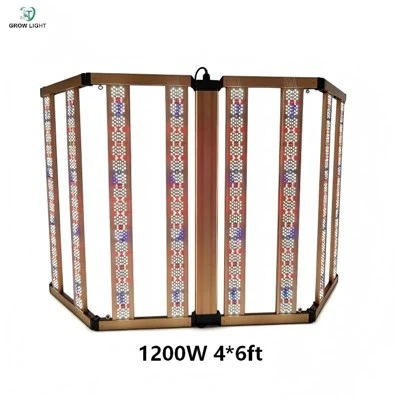
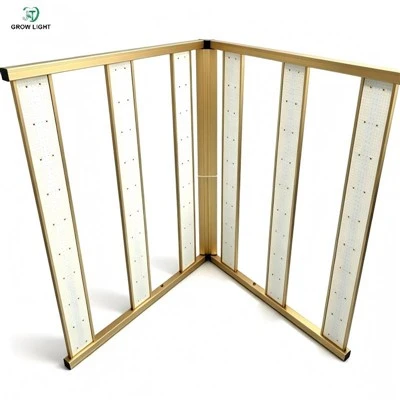
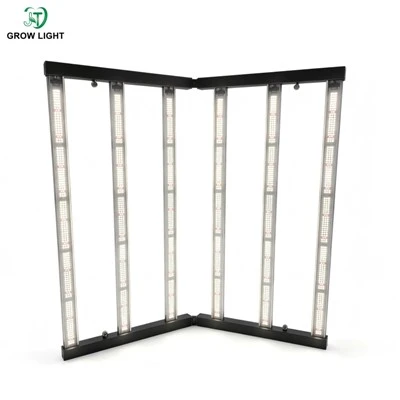
By contrast, 3-Sided Under Canopy Grow Lights spread light from three independent panels, producing up to a 240-degree under-canopy LED grow light effect. Think of it as wrapping the lower branches in a blanket of light. The sides, backs, and shaded leaves receive equal attention, resulting in a more balanced coverage.
This is why many growers call a wide-beam under-canopy grow light their "mini sun" for the lower canopy.

2. Plant Health and Yield: Seeing the Difference
It's not that single-sided fixtures don't help-they do. But they tend to light one section well and leave another behind. Over time, shaded leaves age faster, lose their function, and drop.
With a 3-sided system, the story changes. Even distribution keeps lower leaves alive and photosynthetically active. More active leaves mean more carbohydrates produced, which translates into healthier plants and higher yields. Some of our customers reported that after switching to wide-angle under-canopy strip lighting, yields went up by 10–15% on the same footprint.
3. Energy Use and Efficiency: Who Saves More?
A common concern is whether three-sided lights consume more energy. The truth is, watt for watt, they can actually be more efficient.
Take a 120-w under-canopy LED grow light as an example. A single-sided version may light only the front area, leaving you to add extra fixtures to cover the gaps. The same wattage in a 3-sided version, however, spreads over a much wider area, eliminating the need for so many additional units.
So while the unit price may be higher, you often end up buying fewer lights and paying less in long-term operating costs.
4. Installation and Flexibility
Single-sided lights are picky about installation. If you don't get the angle just right, one side of the canopy stays in the dark. This is especially frustrating in vertical racks, where space is tight.
The full spectrum under canopy lights with three-sided output gives you far more freedom. The wider beam angle means you don't have to stress over precision alignment-plants get even coverage regardless. That's a big win for multi-layer setups.
Since we're on the topic, let me briefly introduce our latest 3-sided under-canopy grow lights at JT Grow Lights.
These fixtures deliver a 240° wide beam through independent three-sided illumination. Combined with high-efficiency full-spectrum chips, they bring balanced light directly to shaded leaves and branches. With IP65 waterproof protection, easy installation, and strong durability, they're designed for greenhouses, indoor farms, and vertical rack systems alike.
Growers who've tested them reported that lower branches-once practically useless-now produce strong flowers and fruit. That's the kind of difference the right design makes.
Where They Shine
1. Greenhouses: Solves lower-canopy shading and improves consistency.
2. Indoor farms: Works well in tight spaces where every inch matters.
3. Vertical farming: Perfect for multi-layer racks, ensuring no leaf is left behind.

5. ROI: Crunching the Numbers
Let's do some quick math. Imagine you needed 10 single-sided 120W units to cover your canopy-that's 1,200W total. By switching to a 3-sided design, you might achieve the same coverage with only 7 fixtures, totaling 840W.
That means lower upfront fixture count, reduced electricity use, and better yields. For commercial growers, the return on investment comes faster than many expect.
6. Beyond "Just More Panels"
At first glance, three-sided lights might look like single-sided fixtures with extra panels slapped on. But engineering them is far more complex:
Heat management: Three-sided designs demand smarter thermal solutions to maintain LED lifespan.
Spectrum quality: It's not just about shining light-it must be a full spectrum under-canopy solution that supports both veg and flowering stages.
Electrical safety: More complex housings require stronger waterproofing and dustproofing to survive tough growing environments.
These are the details we focus on heavily during product development.
7. Looking Ahead: Why Three-Sided Is the Future
From what we see in the market, more growers are moving from single-sided to three-sided fixtures. The logic is simple: better light = more productivity = better ROI.
In the next few years, as indoor and vertical farming continue to expand, 3-sided under-canopy grow lights are likely to become the standard, while single-sided units will likely fade into niche use.

8. Conclusion
Single-sided under-canopy grow lights can work, but they come with limitations: narrow coverage, shading issues, and less efficiency.
Three-sided designs, on the other hand, deliver 240° wide coverage, better light distribution, easier installation, and stronger ROI. They turn the lower canopy from a weak spot into a productive zone.
If you're considering upgrading your lighting system, take a closer look at what a wide-beam under-canopy grow light can do. Many growers find that by the very first harvest, the difference speaks for itself.