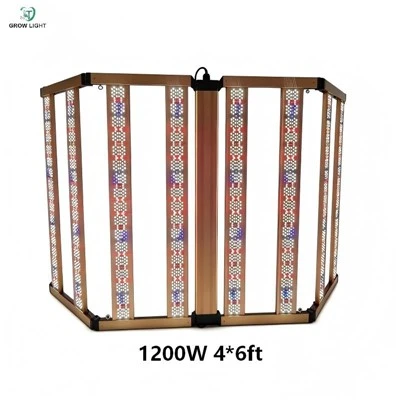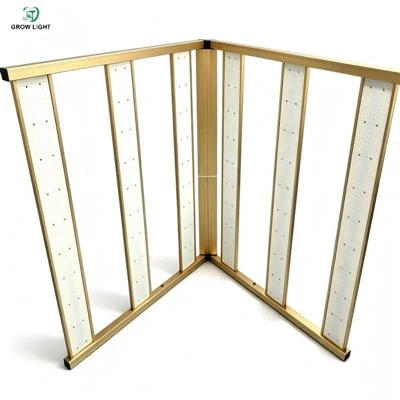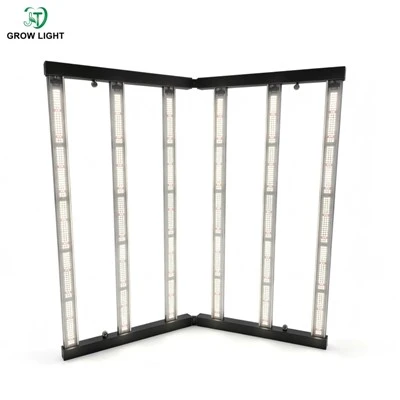
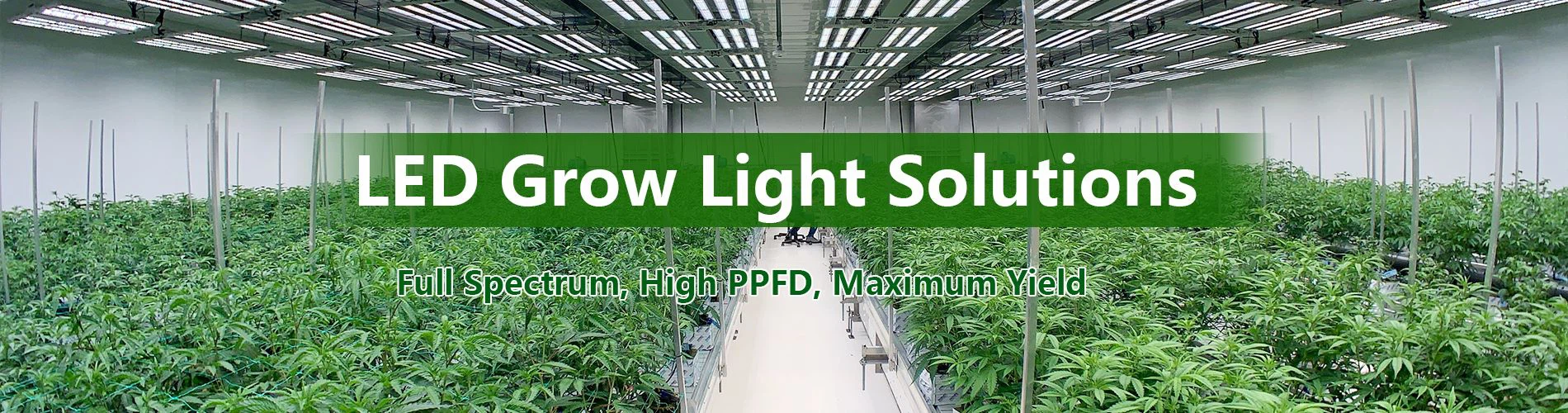
LED plant grow light is an essential lighting tool for modern agriculture, horticulture, and home gardening. Light is vital for plant growth in greenhouses, indoor farming, or plant factories. For this reason, LED Grow Lamps, which produce high efficiency, adjustable spectrum, and low heat input, will be your Go-To device.
What is an LED Grow Light?
An LED grow light is an artificial light source made specifically to meet the required needs of plants. It employs light-emitting diode (LED)Technology to fine-tune the light spectrum available for photosynthesis.
Conventional light sources, including incandescent, fluorescent, and high-pressure sodium (HPS) sources, also have certain disadvantages, including high energy consumption, high heat generation, and inefficient spectra. In this regard, full spectrum LED grow lights can accurately provide the plant growth mechanism for different stages such as germination, flowering, or fruiting, while minimizing energy consumption and maintenance costs and achieving higher efficiency.
How Does LED Grow Light Work?
Plants use two kinds of light primarily for photosynthesis:
🌱400-500nm: Blue light |Stimulates chlorophyll to yield and speeds up vegetative growth
🌱Red light (600-700nm): Great for flowering and fruiting, boosting the harvests.
Cannabis and other high-yield crops often require a balance of blue and red light, plus additional far-red and UV light, to promote optimal plant health and cannabinoid production.
These lights work by using specific LED chips that produce more targeted wavelengths that mimic sunlight to give plants optimal growing conditions.
Advantages of LED Grow Lights
LED grow lights provide several key advantages over traditional HPS, fluorescent, or metal halide (MH) lamps:
💡 Energy Saving & High Efficiency
LED grow lights are 50% more efficient compared to conventional lighting solutions, emitting more photosynthetic photon flux density (PPFD) per unit of power. Spectrum tuning leads to better light output with less wasted photons, making it more effective.
💡Low Power Output, Avoids Burning of Plants
The compliant traditional HID systems (such as the HPS lamps) produce too much heat and need cooling systems as discussed in (Erkan 2023).
LED grow lights emit far less heat, allowing the leaves of plants to be kept much closer without the risk of burning them.
💡 Customizable Spectrum
LED lights can be set for various plants and also different stages of growth. Seedlings need more blue light, flowering plants need lots of red.
Some high-end LED grow lights allow dynamic spectrum adjustment according to different growth phases.
💡 Long Lifespan
HPS lamps have a lifetime of improper 10,000-20,000 hours, while LED grow lights last for 50,000+ hours.
This lowers replacement needs and long-term maintenance costs.
💡 SAFE & Eco-Friendly
LED grow lights do not contain mercury, lead, or other harmful substances and emit no UV or IR radiation, so they are also safer for both plants and humans. With their small footprint, LED lighting systems are perfect for today's sustainable agriculture.
Environmental Applications of LED Grow Lights
🚀 Indoor Farming
Great for dark places like basements, indoor plant racks, and vertical farms. Common applications include:
Greens (leafy greens (lettuce, spinach)
Microgreens
Medicinal plants (cannabis, herbs)
🚀Greenhouse Supplement Lighting
In an indoor setting, however, the plant relies solely on artificial lighting (LED grow lights), so be sure to monitor your lighting schedule and make changes as needed. Suitable for:
Tomatoes, cucumbers, peppers
Strawberries, blueberries
🚀Plant Factories
Plant factories use 100% artificial light and can produce crops 365 days a year. Suitable for:
Large-scale production of continuous Lettuce and wheatgrass
Development of new crops and scientific research
🚀 Home Gardening
Ideal for growing plants in apartment balconies or offices, like:
Herbs (mint, basil, rosemary)
Ornamental houseplants (monstera, succulents)
Flowering plants (ifros, roses, etc)
LED grow lights Common spectrums
Selecting the appropriate spectrum is critical to enhance plant growth.
📌Blue Light (400-500nm) – Stimulates Leaf Growth
Key wavelength: 450nm
Strengthens photosynthesis and promotes chlorophyll production
Great for seedlings and vegetative stages
📌Red Light (600-700nm) – Promotes Flowering & Fruiting
Key wavelength: 660nm
Enhances flowering and fruit set, leading to higher crop yield
Appropriate for use with fruiting crops, such as tomatoes and strawberries
📌Far-Red Light (700-750nm) – Growth Cycle Management
Key wavelength: 730nm
Promotes stem elongation and enhances flowering
Good for long-day plants
📌Greenlight (500-600nm) – Increases light penetration
Enhances photosynthesis on lower leaves and light uniformity
Used frequently in full-spectrum lighting
📌 Full-Spectrum LED Lights
Mimics natural sunlight, great for all element stages
Perfect for multi-crop environments and general-purpose growing
How to Pick the Proper LED Grow Light?
⚠️ Select the Right Spectrum
Leafy greens (e.g., lettuce): Blue-enhanced spectrum
Flowering & fruiting plants (e.g., tomatoes): Red-enhanced spectrum
Someone with a bit bigger growing area can use full-spectrum LED lights.
⚠️Think PPFD (Photosynthetic Photon Flux Density)
Seedlings: 100-300 μmol/m²/s
Light levels needed during different stagesVegetative growth: 300-600 μmol/m²/s
Flossing & frutting: 600-1000 μmol/m²/s
⚠️ Get the Right Power Output
Home gardening: 30W-100W
Governmental farming: 200W-1000W
Greenhouses: Multiple light configurations
JT Grow Light can provide professional lighting solutions based on different plant species and growing environments, ensuring optimal growth and productivity.
https://www.china-growlight.com/led-grow-lights