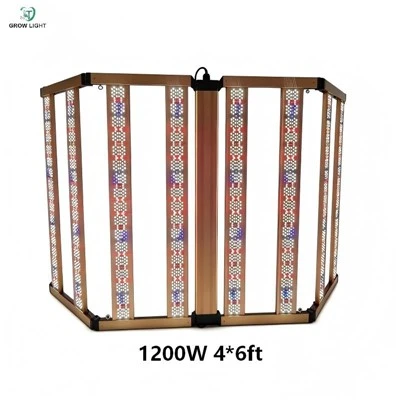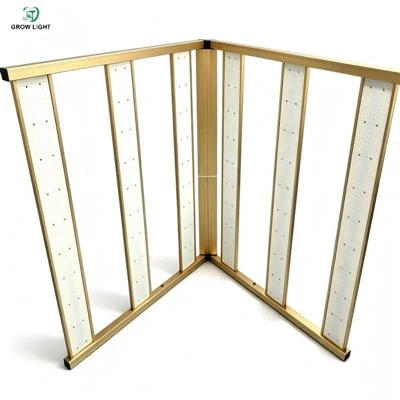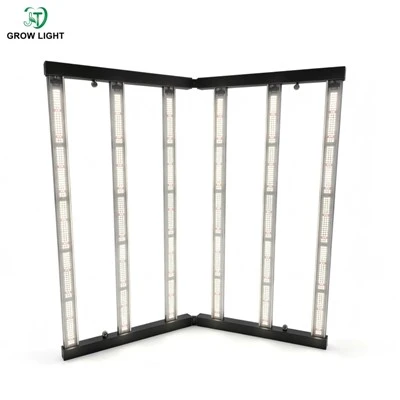
一, Red and blue light together: the "golden partner" for plant growth
The "bimodal absorption characteristics" of plant photosynthesis make red and blue light the most common spectral scheme for LED plant lights. Chlorophyll a and chlorophyll b have large absorption peaks in the red (620–750 nm) and blue (400–520 nm) ranges. In other bands, however, they use less than 50% of the light energy. This quality makes the mix of red and blue light a "precise strike" way to make better use of light energy.
1. The functional separation of red and blue light
Red light (660nm): This light is known as the "carbohydrate master" of plants because it helps make chlorophyll a and speeds up the storage of sugar. Under red light, the sugar content of strawberries goes up by 18%, while the yield of tomatoes goes up by 30%.
Light blue (450nm): It can stop stems from becoming longer and make leaves thicker by acting as a "morphological regulator" of plants. In conditions with little blue light, succulent plants are likely to "spread a big cake." When the amount of blue light hits 30%, the plant becomes 40% more compact.
2. Ratio optimization: from "experience value" to "data-driven"
diverse crops have very diverse needs for red and blue light, thus a "light formula" needs to be used to get the right match:
For leafy greens like lettuce and spinach, the best red to blue light ratio is 2:1 to 3:1. A greenhouse test indicated that employing LED lights with a 3:1 ratio made the lettuce leaves 20% thicker and the vitamin C content 15% higher.
Fruits and vegetables, like cucumbers and tomatoes, need more red light (4:1–6:1). When there is more red light than blue light (6:1), the rate at which tomato flower buds differentiate goes up by 25%, and the rate at which fruit deformities happen goes down to less than 5%.
Plants that are succulent should have a 1:1 to 2:1 ratio. Too much blue light can stop growth, and too much red light can speed it up. A 1:1 ratio is the greatest way to get the right balance between how quickly plants color and how close they are to each other.
3. Common use cases
A flower greenhouse in Yunnan employs LED lights that are 4:1 red to blue. This boosts the yield of cut African chrysanthemum blooms by 40%, and the color of the petals is much more even than with typical high-pressure sodium lamps. This plan solves the problem of too much blue light stopping stem growth by cutting it down to 20%.
二, Full spectrum scheme: mimicking natural light for a "luxury buffet"
Full spectrum LED lights use multi-chip integration technology to cover the full range of 380–780nm, which is like the way natural sunshine has a constant range of colors. The main benefit is that it meets all of the needs of plants throughout their life cycle. It works especially well in greenhouses that don't get any natural light.
1. Three main technological ways to do full spectrum analysis
Type of fluorescent powder conversion: A continuous spectrum is made by exciting yellow fluorescent powder with a blue LED chip. This solution is not very expensive, but the energy density in the red light area is not high enough, therefore more red light chips need to be added to make up for it.
Multi-chip hybrid type: combines red, blue, green, and white LED chips of different colors and lets you change the spectrum dynamically by dimming each chip separately. One type of full-spectrum lamp has a 6-chip design, a spectral continuity of 95%, and a CRI (color rendering index) of 90 or more, which is similar to the level of natural light.
This sort of quantum dot technology uses quantum dot materials to make very accurate cuts in the spectrum. The CREE XTE-FS series, for example, changes blue light into 660nm red light using quantum dot layers. This makes the light 99% pure and increases the efficiency of energy conversion by 20%.
2. Regulating the spectrum in stages
The main benefit of full spectrum lighting is that they can "dynamically adapt."
Seedling stage: Increase the amount of blue light to 40% to 50% to help the roots grow and the stem diameter of lettuce seedlings grow by 15%.
During the flowering season, adding orange light (590–620nm) and far red light (700–750nm) can make chrysanthemums bloom 7 days earlier and make their flowers 10% bigger.
At the maturity stage, raise the amount of red light to 70%, speed up the change in color of tomato fruit, and raise the amount of carotenoids by 30%.
3. Common uses
A vegetable factory in Shouguang, Shandong Province employs full spectrum LED lighting to grow 60 kg of tomatoes per square meter each year. This is 50% more than the old sodium lamp method. The technology uses an IoT platform to keep an eye on how plants are growing in real time. It also changes the spectral ratios on the fly and makes energy use 35% more efficient.
三, Adjustable Spectral Technology: The "Intelligent Engine" of Precision Agriculture
Cloud control systems and artificial intelligence algorithms let adjustable spectrum LED lights change the spectra in real time. The main advancement is changing the "fixed light formula" to a "scene-based light environment."
1. Analyzing the technical architecture
Hardware layer: Using independent driver modules for several channels, it can dim red, blue, green, white, far red, and other bands independently, with a dimming accuracy of 0.1%.
Software layer: Use AI algorithms to combine crop growth models with data from environmental sensors and provide the best spectrum solutions. The "light temperature humidity" coupling model for strawberry growth can automatically vary the ratio of red to blue light to keep up with changes in the temperature differential between day and night.
Application layer: This layer has a library of lighting formulas for more than 30 crops, including tomatoes, peppers, lettuce, and more. It also lets users create their own spectral curves.
2. Putting a number on the economic advantages
Data from a vertical farm project shows that after utilizing adjustable spectrum LED lights:
Cut energy use by 40% and get back the cost of your equipment in five years;
Cut the time it takes for crops to grow by 15% and raise the amount of food they produce each year by 25%;
Pests and diseases are 30% less common, and chemicals are 50% less common.
3. Common use cases
Wageningen University in the Netherlands produced the "PlantFactory 4.0" system, which uses changeable spectrum LED lights to improve the "light formula" for growing lettuce.
During the nutritional growth period, the PPFD (photosynthetic photon flux density) is kept at 200 μ mol/m ²/s with a red to blue light ratio of 3:1. Seven days before harvesting: Change the red-blue light ratio to 6:1 on its own, raise the PPFD to 300 μ mol/m ²/s, and raise the amount of soluble sugar in lettuce by 18%.
四,Three common mistakes and how to fix them when choosing a spectrum
Misconception 1: Going toward "full spectrum" without thinking
Some companies say that the "white LED+fluorescent powder" solution is full spectrum, however it really doesn't have the 660nm red and 450nm blue peak values. Solution: Ask the supplier to send you spectra and PPFD test reports to make sure that the energy density of the main bands is up to specification.
Mistake 2: Not thinking about how to get rid of heat
LED chips with a lot of power make a lot of heat, and using plastic substrates will make the light fade faster. Solution: To keep the junction temperature below 65 °C, lamps with ceramic substrates and aluminum heat sinks should be given first priority.
Misunderstanding 3: Putting too much faith in one spectrum
certain phases of growth need certain spectral ratios to work. Solution: Use an adjustable spectrum system or change out the lights in stages based on how the crop grows.