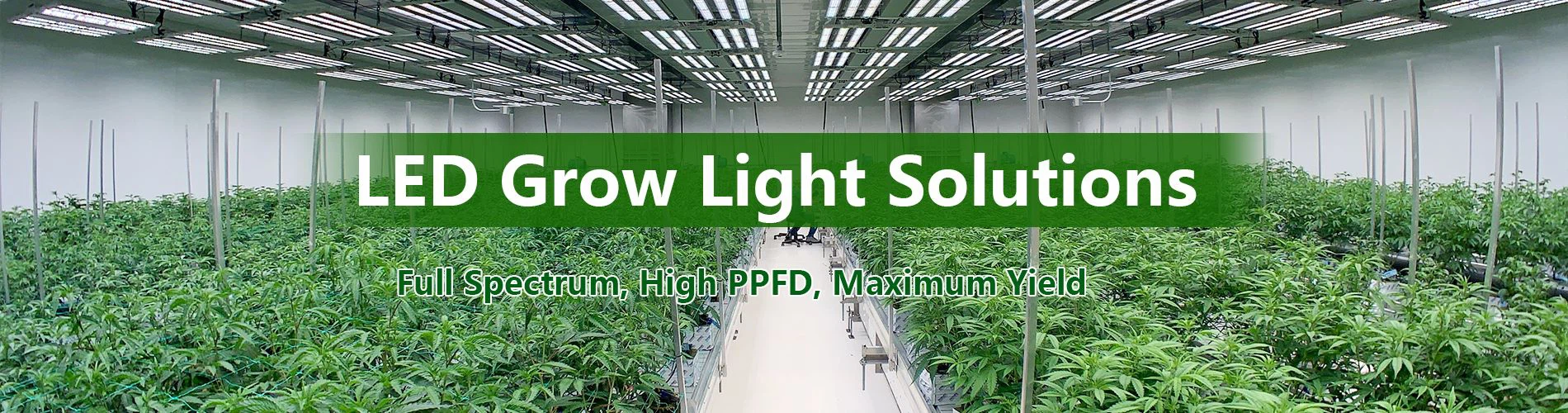
It is surprisingly common for a shipment of "export" LED grow lights to arrive only for the buyer to discover the units are wired for 220 V, carry no usable North American safety listing, and cannot qualify for the utility rebates that were part of the original project math. In many of these cases the products were simply domestic-market fixtures that had been packed and labeled for overseas sale. Knowing how to tell a genuine export-certified LED grow light from a domestic-spec unit is therefore not a paperwork exercise-it is a practical risk filter that protects both installation timelines and project economics.
Not EveryExportGrow Light Is Actually Built for Export
Buyers often only learn the difference after the container is opened. The voltage does not match the local grid, the plugs are wrong, the safety certificates do not correspond to the model numbers on the cartons, or the fixtures are missing from the current DLC Horticultural QPL. What looked like a competitive export-ready offer turns out to be a domestic product that was never engineered or tested for the destination market. The lower unit price is quickly erased by rework, failed inspections, or lost incentives. This is why verification has to happen before the deposit is released, not after the goods land.
What Actually Differs Between Export-Grade and Domestic-Market Units
Voltage and Electrical Compatibility
Domestic Chinese units are almost always built for 220–240 V. Export versions intended for North America are normally specified for 120 V or dual-range 120–277 V operation. European-bound units stay in the 220–240 V range but must still meet local frequency and safety rules. Connecting a 220 V domestic driver to a 120 V North American circuit can produce under-performance, excess heat, or early failure. The reverse combination is simply unsafe. A reliable supplier will state the exact input voltage range on both the datasheet and the product label itself.
Certification Requirements That Differ by Destination Market
Export-grade products carry the marks required by the target market. Domestic-market units usually carry only the Chinese CCC mark, or none at all. The presence or absence of CE, UL/ETL, and a current DLC Horticultural listing is therefore one of the clearest practical indicators of whether a fixture was prepared for export or simply relabeled.
Certification Check One CE for the European Market
What CE Marking Actually Verifies vs What It Doesn't
CE is a manufacturer's self-declaration that the product meets the applicable EU directives, mainly the Low Voltage Directive and the Electromagnetic Compatibility Directive. It addresses electrical safety and emissions. It does not confirm photometric performance, long-term reliability, or horticultural suitability. CE is required for legal sale in the EU, but it is not a third-party performance certification and it is not accepted as a safety listing in North America.
Certification Check Two UL/ETL for the North American Market
Why ULETL Matters for Electrical Safety Compliance in the US
UL and ETL marks are issued by OSHA-recognized Nationally Recognized Testing Laboratories. For horticultural lighting the relevant standard is typically ANSI/UL 8800. These listings confirm that the fixture has been evaluated for electrical safety, construction, and fire risk under North American codes. Most commercial facilities, insurers, and electrical inspectors require one of these marks. A CE mark alone does not satisfy the requirement. When a supplier claims a CE UL ETL certified grow light, the listing number should be checked on the official UL or Intertek database rather than accepted from a PDF alone.
Certification Check Three DLC Horticultural Listing
Why DLC Matters Specifically for Commercial Grow Lights, Not Just General LED Products
The DesignLights Consortium maintains a separate Horticultural Qualified Products List with its own technical requirements. Under the current V4.0 rules the minimum photosynthetic photon efficacy is 2.5 µmol/J. DLC listing is focused on performance and efficiency; it is not a safety certification. A general lighting DLC listing does not automatically qualify a product for the horticultural QPL.
How DLC Listing Ties to Utility Rebate Eligibility
Many North American utility programs will only pay rebates on fixtures that appear on the current DLC Horticultural QPL. Without a matching listing for the exact model and configuration, the project can lose a significant share of the expected incentive. For buyers targeting the US market, DLC listed grow light for US market status is often treated as a commercial necessity rather than an optional extra.
Component-Level Differences Buyers Often Miss
Driver Quality and Input Voltage Range
Export-certified units normally use drivers rated for the target voltage range and frequently include wider input tolerance and better thermal protection. Domestic drivers may be optimized only for 220 V and can lack the same safeguards. Always ask for the driver model number and its official input-voltage specification.
Wiring, Plug Types, and Connector Standards by Region
North American fixtures commonly ship with NEMA plugs (5-15P, 6-15P, or locking types depending on wattage and voltage). European units typically use Schuko (Type F) or other regional plugs. Cable colors, grounding methods, and connector ratings also differ by market. A fixture supplied with a Chinese-style plug or simply unterminated leads is a practical signal that it was not prepared for the destination market.
How This Plays Out Across Different Product Types
1100W LED Full Spectrum Commercial Grow Light Certification Checklist for Large Fixtures
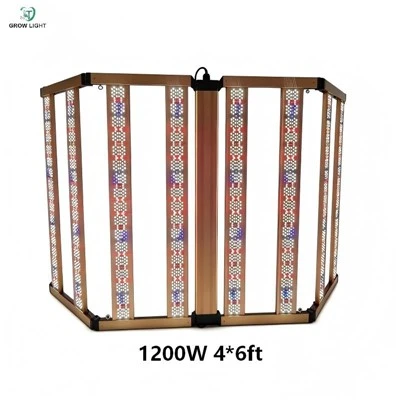
High-wattage toplights draw significant current and are usually installed in facilities subject to electrical inspection. Confirm the correct voltage rating, UL/ETL (or equivalent) listing, and-if rebates are part of the project-current DLC Horticultural QPL status. The driver and internal wiring should match the stated voltage.
Full Spectrum LED Grow Light Bar Certification Checklist for Bar-Format Fixtures
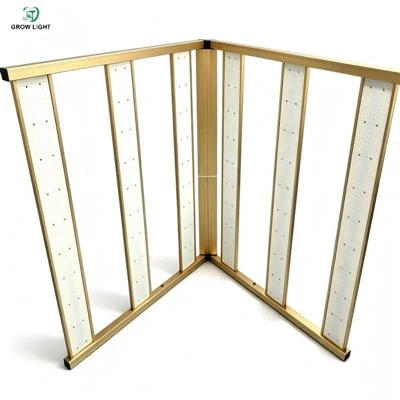
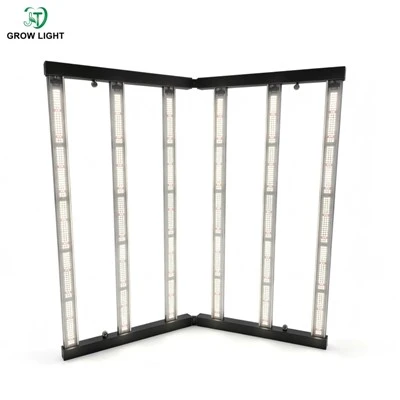
Linear bars are often daisy-chained and used in multi-tier or greenhouse layouts. Check voltage compatibility, connector type, and whether the safety listing covers continuous-row installation. CE is required for Europe; UL/ETL for North America. DLC listing is increasingly requested on commercial projects.
LED Under Canopy Supplemental Grow Light with Full Spectrum for Indoor Plants Certification Checklist for Supplemental Units
Under-canopy and supplemental fixtures are sometimes treated as lower priority for certification. In a commercial facility they still require the same safety marks as the primary lighting. Confirm voltage, plug type, and safety listing; request DLC status if rebates form part of the project economics.
|
Product Type |
Typical Export Target Markets |
Priority Certifications to Verify |
|
1100W LED Full Spectrum Commercial Grow Light |
US, Canada, EU |
UL/ETL + DLC (US/Canada); CE (EU) |
|
Full Spectrum LED Grow Light Bar |
US, EU, multi-tier facilities |
UL/ETL or CE + voltage match; DLC if rebates apply |
|
LED Under Canopy Supplemental Grow Light with full spectrum for Indoor Plants |
Indoor commercial & research |
Same safety marks as primary lights; voltage & plug compatibility |
Real-World Scenario A Buyer Who Received Domestic-Spec Units Labeled as Export-Ready
A greenhouse operator in North America ordered what was described as export-ready commercial fixtures from a supplier offering a noticeably lower price. After arrival the units turned out to be 220 V domestic-spec products fitted with temporary plug adapters. They could not be hard-wired to the local 277 V service without replacing the drivers, the safety listing numbers did not match the model numbers on the fixtures, and the project lost its planned utility rebate. The combined cost of rework, downtime, and lost incentives substantially exceeded the original price difference. The root cause was straightforward: voltage specifications and certification documents were never checked against the actual production configuration before the deposit was paid.
Export-Certified vs Domestic-Market UnitsA Quick Comparison
|
Aspect |
Export-Certified Units |
Domestic-Market Units |
|
Voltage |
Matched to destination (120 V / 120–277 V / 230 V) |
Typically 220–240 V only |
|
Safety Certification |
UL/ETL (North America) or CE (Europe) |
Often CCC only or none |
|
Performance Listing |
DLC Horticultural QPL when required |
Rarely listed |
|
Plug & Wiring |
Destination-standard plugs and cable |
Local Chinese plugs or unterminated leads |
|
Typical Use |
Commercial export projects |
Domestic Chinese market |
Industry Trend Why More Overseas Buyers Are Requesting Certificate Copies Before Payment
In the last few years a growing share of international buyers have moved from accepting catalog claims to requiring verifiable certificates before any payment is released. Repeated experiences with voltage mismatches, invalid listings, and rebate denials have made pre-shipment document checks standard practice among professional purchasers. Many now treat the ability of an LED grow light manufacturer or LED grow light factory to supply model-specific, verifiable certificates as a basic qualification filter rather than an optional courtesy.
Regulatory Notes for Commercial Buyers
Why Uncertified Units Can Create Compliance Risk for Commercial Projects, Not Just the Supplier
In commercial facilities the responsibility for safe installation often sits with the project owner or the electrical contractor. Unlisted or incorrectly rated fixtures can lead to failed inspections, insurance complications, or local code violations. The risk is therefore not confined to the supplier; it can affect project timelines, insurance coverage, and even facility licensing.
How to Verify You're Getting a Genuine Export-Certified Product
When working with any LED grow light manufacturer, LED grow light factory, wholesale LED grow light supplier, or custom export-certified grow light partner, treat the documentation as part of the product specification itself.
What Documentation a Reliable LED Grow Light Manufacturer Should Provide Before Shipment
Exact input voltage and frequency rating for the production batch
UL, ETL, or CE certificate with matching model numbers (verifiable on the official database)
Current DLC Horticultural QPL listing confirmation when applicable
Driver specification sheet showing the input voltage range
Photos or clear description of the plugs and labeling that will appear on the shipped units
Written confirmation that the production units match the certified configuration
Request these items before the deposit is released. A supplier that cannot or will not provide them is signaling higher risk.
FAQ
Q: How do I know if a grow light is really certified for my country?
A: Cross-check the certificate number on the official UL, Intertek, or relevant European database and confirm that both the model number and the voltage rating match the product being shipped.
Q: Why do some cheap grow lights lack proper certification?
A: Certification testing and ongoing factory surveillance add cost. Some low-priced units are built only to domestic standards and never undergo the testing required for export markets.
Q: Is a CE mark enough for the US market?
A: No. CE is not recognized as a safety listing by US electrical inspectors. UL or ETL listing is required for most commercial installations in North America.
Q: Does DLC certification matter?
A: Yes for many commercial projects in the United States and Canada, because utility rebates are frequently tied to current DLC Horticultural QPL status.
Q: What happens if the voltage does not match?
A: The fixture may under-perform, overheat, fail early, or present a safety hazard. In commercial settings it can also fail electrical inspection.
Q: How can I verify that a certification is genuine?
A: Use the certificate number to search the official database of the issuing body. Do not rely solely on a PDF supplied by the seller.
Q: Can I order custom export-certified grow lights?
A: Yes. Many factories can produce voltage-specific and certification-specific versions when the order volume justifies the configuration and testing
If you would like to review certification documents, obtain a quotation, or evaluate samples for a specific market, feel free to share your project requirements and destination country