The Market Is Moving Fast Here's the Proof
Before the predictions, a few numbers that show this isn't hype. The global LED grow light market was valued at around $4.13 billion in 2024 and is projected to reach roughly $12.55 billion by 2033 - growing about 13% a year. Within that, the vertical farming segment is the fastest mover, expected to grow at a striking 26.4% annually from 2026 to 2034 because indoor farms run entirely on artificial light.
And growers are voting with their wallets. Industry surveys report that nearly 65% of commercial growers are shifting toward LED lighting for better spectrum control and lower heat, while a little over half say they've seen more consistent crops and steadier yields after switching. Here's the growth picture at a glance
|
Segment |
Now |
Forecast |
Growth |
|
Global LED grow light market |
$4.13B (2024) |
$12.55B (2033) |
~13% CAGR |
|
Vertical farming segment |
- |
2026–2034 |
26.4% CAGR |
|
Commercial growers shifting to LED |
~65% |
- |
- |
That's the backdrop. Now, what will all those growers actually demand from their lights?
Tunable, Full-Spectrum Light
For years, adjustable light "recipes" were a premium add-on. That's changing fast. The ability to dial the color of light - more blue for leafy growth, more red and far-red for flowering - is moving from a nice-to-have to a basic expectation. Recent market data shows spectrum-tunable fixtures already make up roughly half of new installations.
Why it matters to you: a tunable light lets one fixture serve your crop through every stage, instead of buying different lights for different jobs. And spectrum isn't just marketing - it changes results. In the Utah State University study mentioned below, a white-plus-red LED recipe produced 27% more usable yield per dollar than HPS, and tuning the blue fraction shifted total yield by about 12%. When you shop for a Professional LED Light For Indoor Farming, full-spectrum and tunable output is quickly becoming the floor, not the ceiling.
More Light Per Watt
Electricity is one of the biggest costs in any indoor grow. In fact, a 2022 research review found that lighting can be the single largest share of energy use in a vertical farm, and around 58% of LED upgrades are driven mainly by the hunt for energy savings.
The numbers behind that shift are striking. The standard way to measure a grow light's efficiency is photon efficacy - how much plant-usable light it makes for each watt of power, written as μmol/J. Older high-pressure sodium (HPS) lamps land around 1.7 μmol/J, while modern LEDs reach 2.5 to 3.5 μmol/J. Researchers at Utah State University's Crop Physiology Laboratory measured exactly this gap in a peer-reviewed 2021 study. In practical terms, horticulture specialists note that swapping out old 400W HPS lamps for modern LEDs can cut lighting electricity costs by more than 50%, and most growers report energy savings in the 40–60% range. One often-cited comparison found a 750W LED fixture delivering roughly 23% more usable light than a 1000W HPS - while drawing about 30% less power.
Here's the side-by-side:
|
Metric |
Old HPS |
Modern LED |
|
Photon efficacy |
~1.7 μmol/J |
2.5–3.5 μmol/J |
|
Lighting energy use |
Baseline |
40–60% less |
|
Heat output |
High |
Low |
|
Spectrum control |
Limited |
Tunable / full-spectrum |
|
Typical payback |
- |
2–3 years* |
*For growers running long photoperiods in regions with above-average electricity prices.
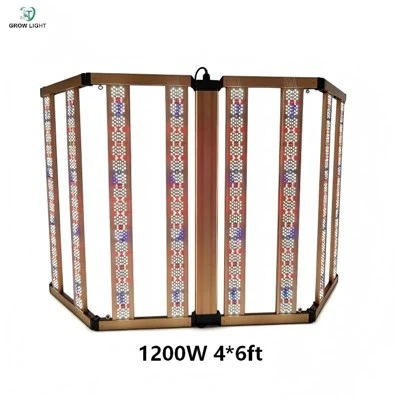
The future belongs to fixtures that squeeze more usable light out of every watt. This is exactly where a high-efficiency 1100W Wide Bar LED Grow Light For Indoor Plants shines - high output paired with strong efficacy means you cover more canopy while keeping the power bill in check. For growers running long photoperiods in regions with above-average power prices, that efficiency can pay back the upgrade in as little as two to three years. When you compare fixtures, look past the wattage on the box and ask how much actual plant-usable light each watt produces.
Even Coverage Across Big Spaces
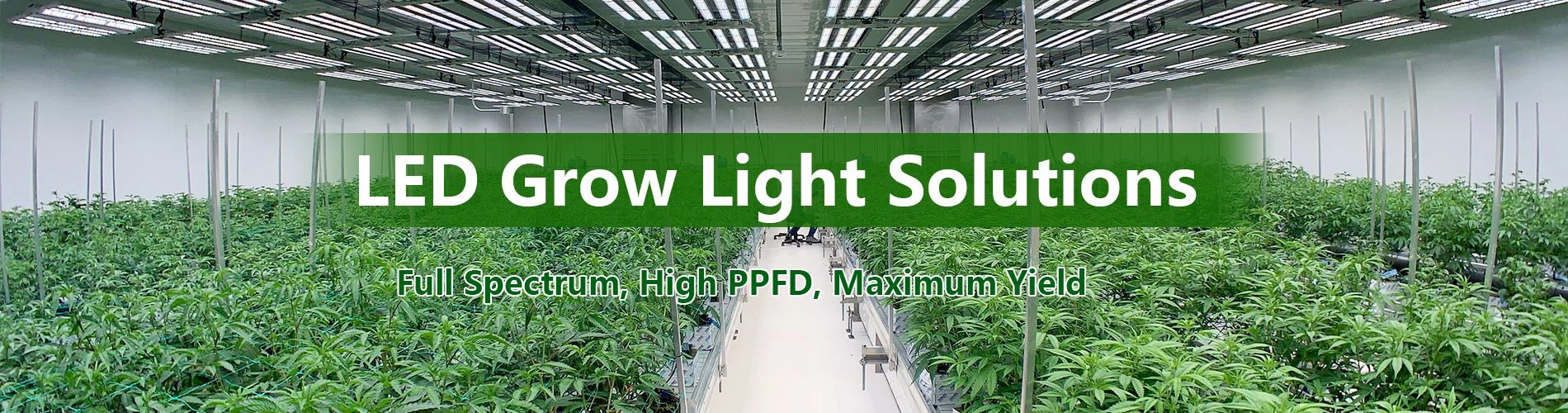
As greenhouses scale up and vertical farms stack plants floor to ceiling, even light coverage becomes mission-critical. Patchy light means patchy harvests - some plants race ahead while others lag, and your whole cycle gets harder to manage.
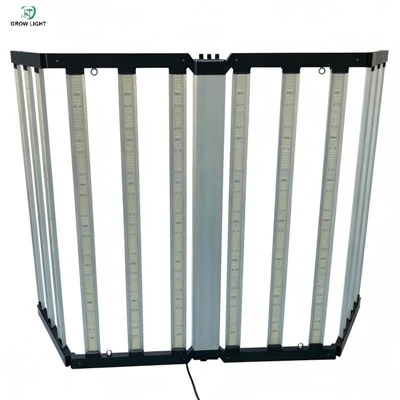
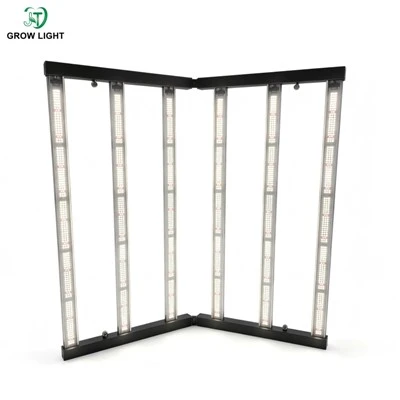
This is where bar-style fixtures earn their place. A 1100W Wide Bar LED Grow Light For Indoor Plants spreads light across a long, wide footprint, which makes it easier to keep every plant on a bench - or every tier on a rack - getting a fair share. Compact UFO LED Grow Lights For Greenhouse units are perfect for smaller or flexible layouts, but for large, repeatable commercial runs, wide bars are built for uniformity at scale. Many growers run both: bars for the main canopy, UFOs for corners and supplemental spots.
Smart Control and Dimming
The next wave of grow lights isn't just about more power - it's about more control. Growers increasingly want to:
Dim by zone, so different crops or stages get exactly what they need.
Schedule photoperiods automatically instead of flipping switches.
Monitor and adjust remotely, especially across multi-zone facilities.
As one industry outlook put it, the next real difference between fixtures won't be more watts - it'll be control depth. Buying lights that can plug into dimming and scheduling systems keeps your operation flexible as it grows.
Durability and Long-Term ROI
Finally, growers are thinking in years, not seasons. A fixture that fades quickly or fails early eats any savings it promised. The future demand is for lights with slow, predictable light loss and warranties that back it up - typically five years or more for serious commercial gear.
Buying for durability is really buying for return on investment. A well-built 1100W Wide Bar LED Grow Light For Indoor Plants that holds its output for tens of thousands of hours simply costs less per harvest than a cheap fixture you replace twice as often.
Real Example Future-Proofing a Commercial Greenhouse
A [crop type] greenhouse in [region] was running aging fixtures and rising power bills. Working with sunhingstones, they replaced their old lights with wide-bar fixtures and added zone dimming.
After [one/two] growing cycles, the operation reported roughly [X%] lower lighting energy use and [a measurable yield or uniformity gain], while gaining the flexibility to fine-tune light by crop stage. Instead of a lighting setup they'd outgrow, they got one ready for the next decade. (sunhingstones' horticulture fixtures were recognized at [ESTA / industry event] for [award or standout feature], underscoring a focus on efficiency and forward-looking design.)
FAQ
Q: What features should a future-proof grow light have?
A: Look for full-spectrum or tunable output, strong efficiency (usable light per watt), even coverage, smart-control compatibility, and a solid warranty. Those five traits track exactly with where greenhouse farming is heading.
Q: Is a 1100W bar LED grow light good for a commercial greenhouse?
A: Yes. A 1100W Wide Bar LED Grow Light For Indoor Plants delivers high output with wide, even coverage, which suits large benches and multi-tier racks where uniformity matters most.
Q: Are tunable-spectrum grow lights worth the extra cost?
A: For most commercial growers, yes. One tunable fixture can serve a crop through every stage, and adjustable spectrum is fast becoming a standard expectation rather than a luxury.
Q: How much can LED grow lights cut my energy bill?
A: Savings vary by setup, but energy efficiency is the top reason growers upgrade - and since lighting is often the largest energy cost in indoor farming, even modest gains per watt add up quickly.
Q: Bar light or UFO light - which is better for my greenhouse?
A: For large, even coverage at scale, wide bars lead. For smaller or flexible layouts, UFO LED Grow Lights For Greenhouse are simpler and easy to reposition. Many growers use both together.
Buy for Where You're Going, Not Just Where You Are
The growers who win over the next few years won't be the ones who bought the cheapest lights - they'll be the ones who bought the right ones. Full spectrum, real efficiency, even coverage, smart control, and lasting build quality: get those, and your lighting keeps paying off long after the install
Contact now