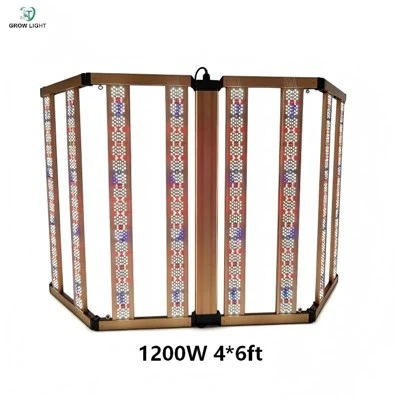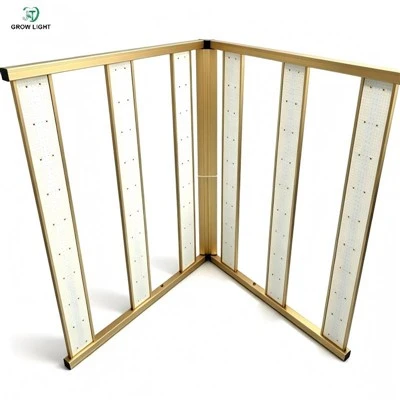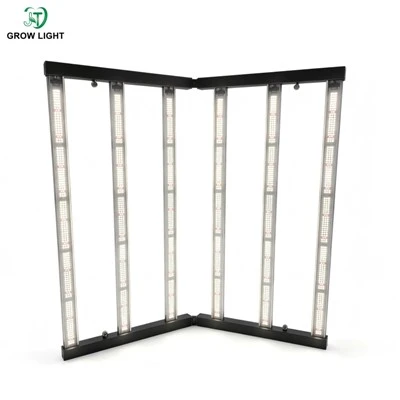
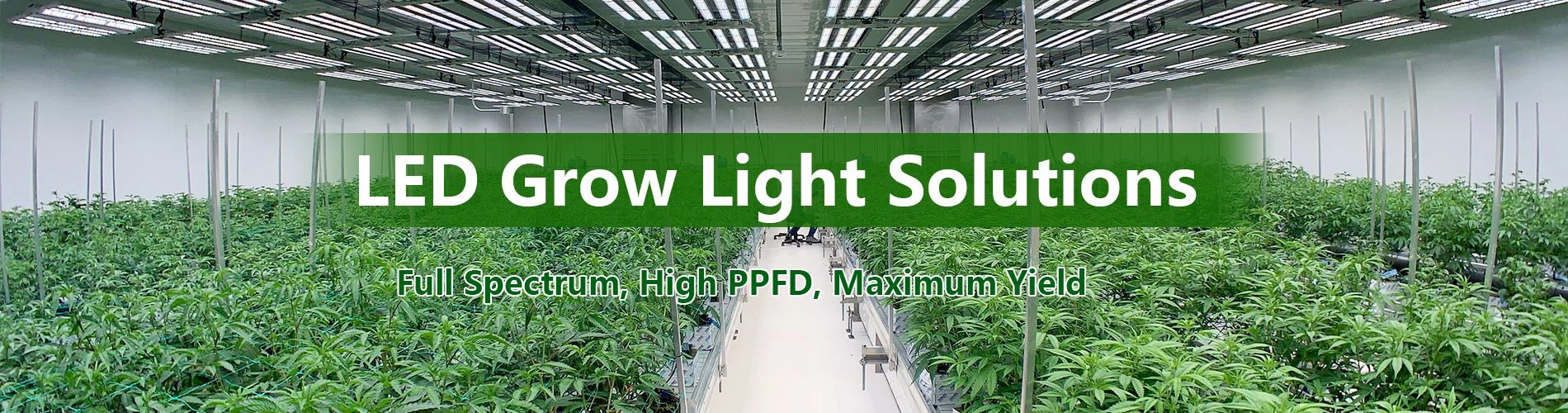
When you walk into a modern greenhouse, you might find that the first thing that catches your eye isn't the vibrantly growing plants but the rows of softly glowing lights overhead. These lights are full-spectrum LED toplighting.
Many growers ask: Why is full-spectrum toplighting paramount? How much does it affect photosynthesis, flowering, and fruit quality? Let's discuss this topic today.


What is "full spectrum"?
Natural sunlight contains various wavelengths, from ultraviolet to infrared, and different wavelengths correspond to different physiological responses in plants. So-called full-spectrum LED grow lights are designed to mimic the distribution of sunlight as closely as possible. Only in this way can plants grow healthily and evenly.
If the light spectrum is incomplete, it's like a person eating only one dish; the nutritional balance is unbalanced. The same is true for plants-only with full-spectrum illumination can photosynthesis be efficient and stable.
This is why more and more commercial greenhouse cultivation is using full-spectrum LED strip grow lights to replace traditional HPS lamps.
Blue light (400-500 nm)
Helps maintain compact leaves and strong stems.
01
Red light (600-700 nm)
Promotes flowering and fruiting.
02
Green light
Allows lower leaves to participate in photosynthesis.
03
IR&UV
Regulate plant metabolism and enhance fruit colour and flavour.
04
Why is "toplighting" so critical in greenhouses?
In indoor grow houses, plants rely entirely on artificial light; however, in greenhouses, the situation is much more complex. While greenhouses have natural light, weather and seasons can affect light intensity. This aspect is where supplemental light for greenhouses plays a crucial role.
Rapid Lighting
High-quality commercial LED grow lights for greenhouses automatically replenish light levels on cloudy days or in winter. When natural light falls below the plant's saturation point (approximately 400 µmol/m²/s), these lights maintain stable photosynthetic efficiency, preventing plants from starving.
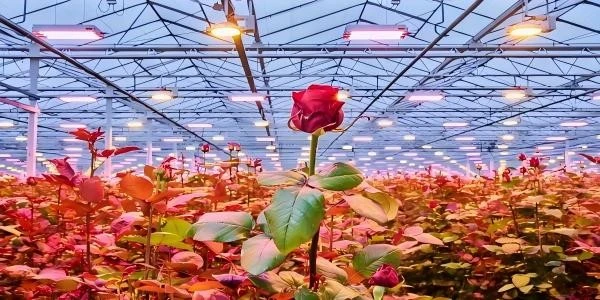
Uniform Light
Toplighting offers another advantage: more even light distribution. For tall crops like tomatoes, hemp, and cucumbers, uneven light distribution can lead to ripening fruit in the upper layers while the lower layers receive less light. The uniform illumination of toplights ensures that every layer of leaves receives a healthy dose of sunlight.

How Does the Light Spectrum Affect Flowering and Fruiting Quality?
This is a key concern for growers. Light is not just "energy"; it's also a "signal" that directly influences plant hormones.
Different spectral combinations, like seasonings, can make plants grow differently.
Thus, modern greenhouse supplemental lighting is no longer just about brightness; it's about the right spectrum.
blue
Blue light increases chlorophyll content, resulting in greener leaves and enhanced photosynthesis.
01
Red
Red light activates the plant's phytochrome system, promoting flowering and fruit sets.
02
IR
Far-red light causes stem nodes to elongate, fruits to enlarge, and their appearance to appear fuller.
03
UV
Small amounts of UV light can stimulate plants to produce more secondary metabolites.
04

JT Grow Light's "A-spectrum" Customised Spectrum Solution
In our work with growers, we at JT Grow Light have discovered that what they truly want isn't "the brighter, the better", but "just right". Different crops and stages have completely different spectral requirements.
Thus, we developed our unique A-spectrum customised spectrum system. This is an adjustable full-spectrum design based on actual crop growth data, not theoretical parameters.
With our solution, customers can freely adjust the spectrum ratio based on their crop type. For example:
Increasing the proportion of red light to accelerate the flowering cycle;
Adding a small amount of far-red or UV light to enhance fruit colour and aroma;
Fine-tuning the spectrum peak based on sunlight conditions at different latitudes.
PPE value of 2.9-3.4 µmol/J, low energy consumption, and high light efficiency.
Adjustable Spectrum = Higher Yield and Better quality.
In many commercial greenhouse applications, upgrading from traditional HPS or single-colour LEDs to full-spectrum supplemental light for greenhouses has resulted in an average yield increase of 20%-35%. Fruit is more uniform, flowering is more regular, and nutrient content is higher.
The reason is simple: plants in a full-spectrum environment don't waste energy "adapting" to light but instead directly convert light energy into biomass. Combined with adjustable light spectrum, dimmable light intensity, and controllable photoperiods, growers can even mimic the natural rhythm of sunrise and sunset, reducing photostress and controlling flowering time.
This is the beauty of smart farming-it's not about growing more but about growing smarter.
Energy-Efficient and High-Yield Commercial Greenhouse Solutions
The two major challenges facing modern greenhouses are high energy costs and fierce market competition. Traditional HPS lamps generate a lot of heat and consume a lot of electricity, requiring subsequent cooling costs. LEDs, on the other hand, convert over 90% of energy into light, offering greater efficiency.
Using Greenhouse LED Grow Lights can reduce overall energy consumption by 40%–50%, while the lamps offer a lifespan of over 50,000 hours and require virtually no maintenance.
The most surprising aspect is the quality of the crops. Fruits are brighter, vegetables are greener, and flowers are more vibrant. Whether you're growing high-end tomatoes, strawberries, or medicinal plants, superior appearance and taste can command a higher market premium.
Full-spectrum LED toplights aren't just a fad; they're an inevitable trend in modern greenhouse development.
They allow plants to continuously and efficiently photosynthesise under the influence of sunlight, allowing growers to truly achieve "less electricity, more harvest".
The R&D team at JT Grow Light is already developing such a system-combining wireless dimming and intelligent spectral algorithms to create a truly smart greenhouse LED lighting solution.
With JT Grow Light's A-spectrum custom solution, you can create a unique spectrum tailored to each crop.