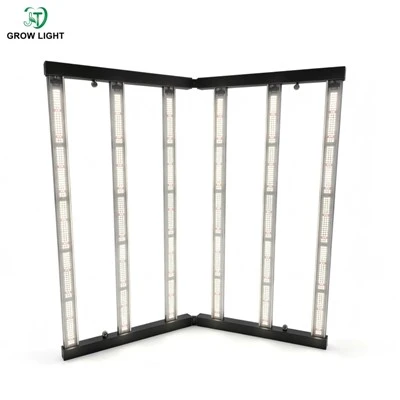
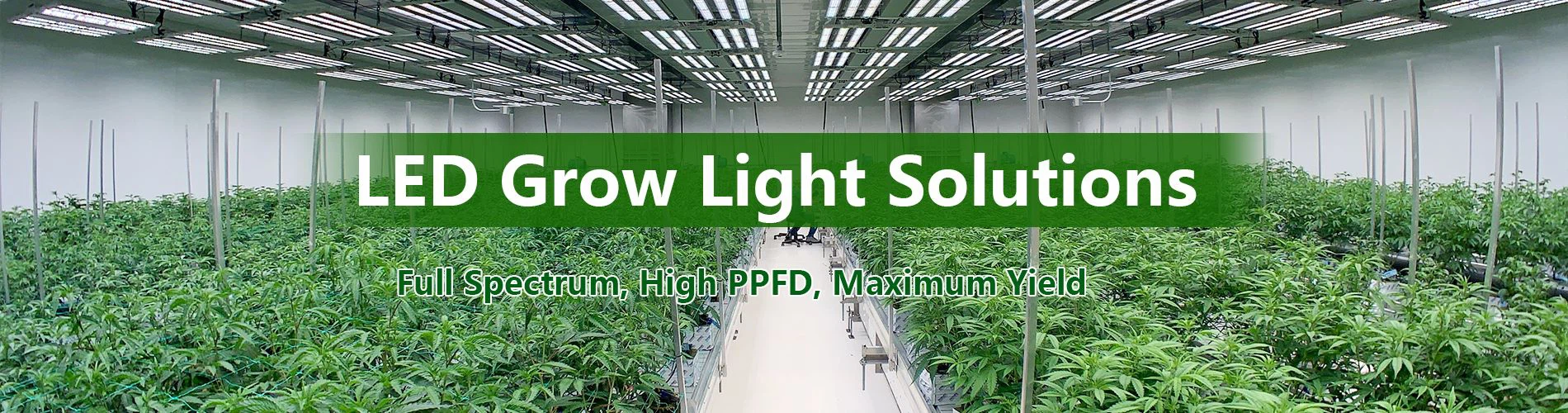
Many people have questions about how the grow light can make fruits and vegetables grow more and better? To be honest, this question sounds simple, but there are many scientific reasons behind it. Today, I will talk to you about how LED Grow Lights "solve" the growth problem of fruits and vegetables, making them bigger, tastier, and more productive.
mainly depends on two points
One is to provide additional light, and the other is to provide a more accurate spectrum. Next, I will explain how these two key points work.
- The first point: provide extra light
We know that plant growth cannot be separated from light. Light is as important to plants as food to us humans, because it is the "energy source" for plants to photosynthesize. Through photosynthesis, plants convert light energy into nutrients needed for growth, such as sugar, starch, and cellulose. These nutrients will eventually be "stored" in fruits and vegetables, forming the pulp and sweetness we eat.
But the problem is that in the natural environment, the light time and intensity are limited. For example, on rainy days, when the days are short in winter, or in places with insufficient light (such as greenhouses, indoor planting fields, etc.), the photosynthesis of plants will be limited, which will directly affect their growth rate and yield.
So, humans invented Grow Lights. It can provide plants with additional light when natural light is insufficient, ensuring that plants can photosynthesize better and convert light energy into nutrients. For example, the sun sets after 5 pm. At this time, turning on the Grow light can extend the photosynthesis time absorbed by plants, so that plants can get more light.
Longer photosynthesis means that plants can synthesize more nutrients. These nutrients are directly used to "feed" fruits and vegetables, making them grow bigger and fuller. Therefore, the first function of plant lights is to help plants accumulate more nutrients by increasing light, thereby increasing yields.
For example:
Suppose a tomato takes 70 days to mature under natural light conditions, but after using a plant light, the tomato can enjoy a few more hours of light every day, and may mature in 60 days, and the fruit is sweeter and redder. This is the benefit of increasing the light time.

- The second point: provide a more accurate full spectrum
We just talked about the "quantity" of light, and now let's talk about the "quality" of light.
Although natural light is the most primitive light source for plants, it is not perfect. Natural light contains light of various wavelengths, such as ultraviolet light, blue light, green light, red light and infrared light, etc., and plants do not "reject all" every kind of light. They like and absorb the most efficiently, mainly red light and blue light.
Why are red light and blue light so important?
Blue light: It can stimulate the rapid growth of plant leaves and promote the efficiency of photosynthesis. So when there is enough blue light, plants grow faster and stronger.
Red light is particularly important for plant flowering and fruiting. Simply put, it tells plants, "It's time to bloom" and "It's time to grow fruits."
The advantage of Grow lamps is that they can accurately control these spectra and provide "customized light" according to plants' needs, something that natural light cannot do. For example, in the flowering stage of plants, the proportion of red light can be increased to help plants bloom and bear fruit quickly; while in the seedling stage, blue light is mainly used to help plants accumulate nutrients quickly.
For example:
If you want to make the sugar content of melons higher, you can use plant lights to increase the proportion of red light, so that the plants will accumulate more carbohydrates during the growth process, and eventually make the fruit sweeter. Similarly, watermelons, strawberries, and grapes can improve their quality by adjusting the spectrum.

What are the benefits of this precise spectrum? Not only can it make melons and fruits grow more, but it can also make them grow better, such as sweeter fruits, brighter colors, and better taste.
How do LED Grow lights combine "quantity" and "quality" at the same time?
It not only provides excess light but also adjusts the "recipe" of light. In short, it can change the photosynthesis of plants from "normal performance" to "extraordinary performance".
1. Promote plants to use light energy more efficiently
Some of the light in natural light (such as green light) is not very useful for plants, but plant lights can filter out these "useless light" and concentrate the light energy on red and blue light. This is like opening a "light energy highway" for plants, which increases their growth efficiency exponentially.
2. Help plants adapt to different growth stages
The needs of plants change with the growth stage. For example, if leaves need to grow in the seedling stage, use more blue light; if fruits need to be produced in the flowering stage, use more red light. Plant lamps can be flexibly adjusted according to these needs, so that plants can "eat" the most appropriate "light nutrition" at each stage.
3. Extend the lighting time
Under natural conditions, the sun only comes out for a few hours a day, but plant lamps can provide light 24 hours a day. If you need to accelerate plant growth, you can increase its lighting time and let it "work" longer every day.
Specific application scenarios
- Greenhouses
In winter or rainy weather, the light in the greenhouse is usually insufficient, and plant lamps can provide additional light to ensure that the growth of fruits and vegetables is not affected. For example, strawberry greenhouses often rely on plant lamps to increase winter production.

- Vertical agriculture
Vertical farms in cities rely entirely on plant lamps as light sources. There is no natural light here, and the plant lamp is both the "sun" and the "nutritionist", which makes fruits grow faster by adjusting the spectrum.

- Indoor planting at home
Now some families have begun to use plant lamps to grow vegetables and fruits. For example, cherry tomatoes grown on the balcony have more fruits and mature faster after using plant lamps.
Summary
Therefore, plant lamps can increase the yield of fruits and vegetables by two tricks: providing additional light and accurately regulating the spectrum. It not only makes up for the lack of natural light but also provides a "customized spectrum" according to the different needs of plants so that fruits and vegetables grow faster, sweeter and bigger. This technology has become an indispensable part of modern agriculture, not only improving planting efficiency but also allowing us to enjoy high-quality fruits and vegetables anytime, anywhere.