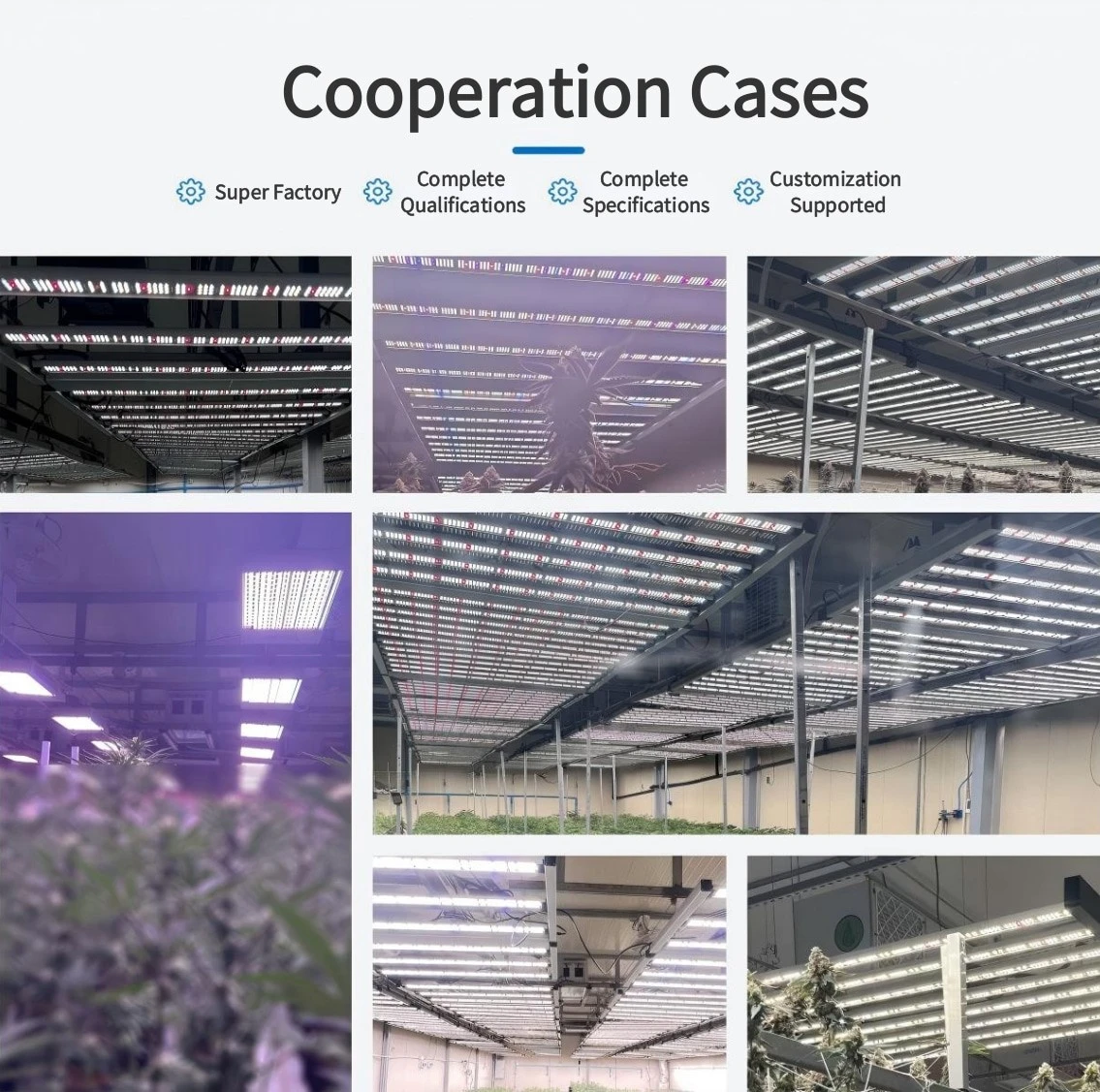
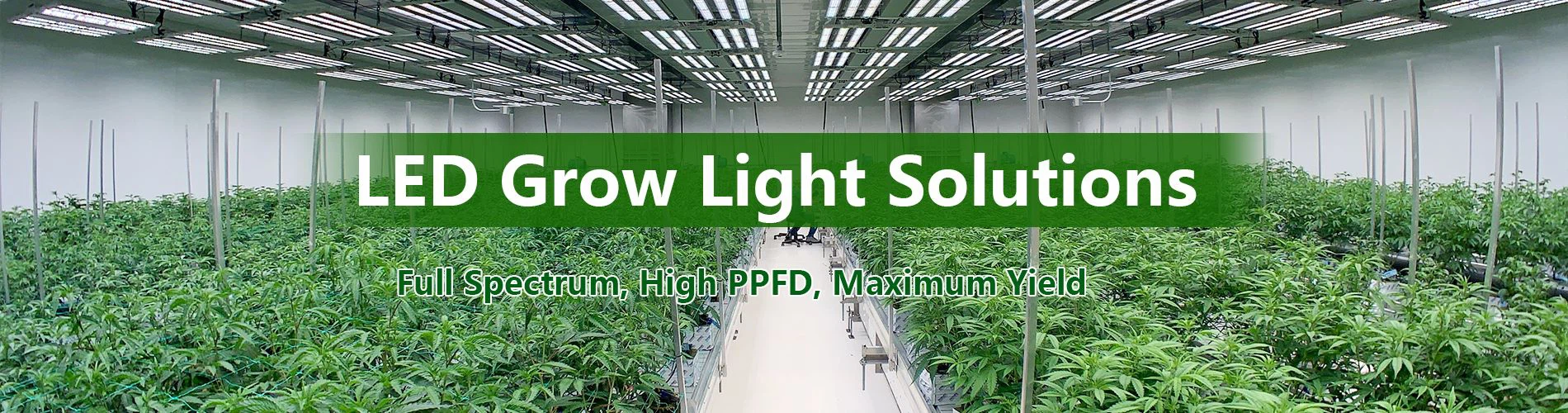

I remember a project manager telling me something that sounded almost silly at first: the light was fine, the plants were fine, but the team was already tired before the first light was even hung. Not because the work was hard in a technical sense, but because the light was physically awkward. Big frames, wide footprints, long cartons, and that constant feeling of don't bump it, don't scratch it, don't bend it. That's the part people rarely say out loud when they talk about commercial cultivation.
Once you scale, lighting stops being only about photons. It becomes about handling, workflow, repeatability, and how smoothly a room can be built without drama.
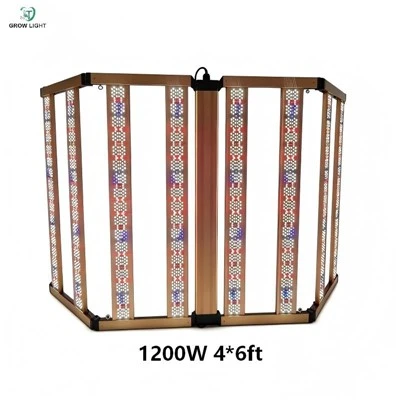
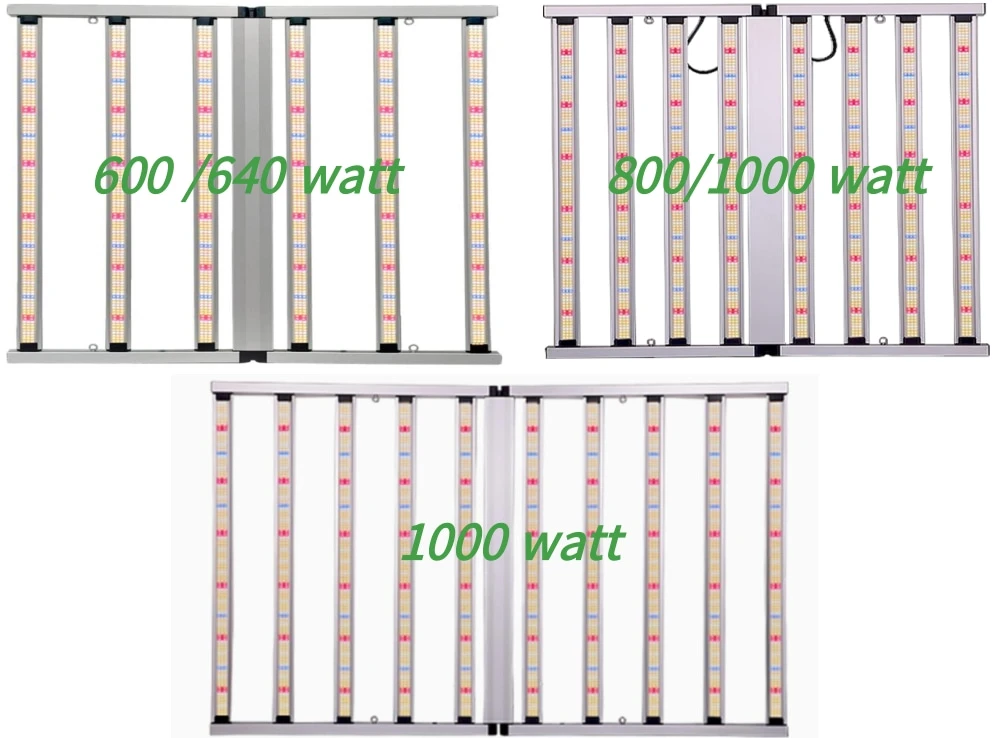
If you look at what the market actually uses today, the "popular" style is not popular because it looks modern. It's popular because it works. A modern Foldable LED grow light platform is basically a multi-bar lighting structure designed around standard canopy footprints like 4ft × 4ft or 4ft × 6ft. The bars are spaced so the fixture can cover a wider area more evenly, which is exactly what commercial cultivation wants: fewer hotspots in the center, less drop-off at the edge, and fewer rooms where plants on the outside always lag. The wattage options like 600W, 720W, 800W, and 1000W are simply different "levels" built on that same logic-same footprint idea, different intensity, different bar count and bar arrangement, and it lets growers match light to plant demand instead of buying one oversized fixture and dimming it forever.
Here's the catch though. That structure is physically big. A 4×4 or 4×6 multi-bar fixture, once fully assembled, has a large flat geometry, and that geometry is exactly what makes it painful to pack, carry, store, and hang. You can have the best full spectrum, great diodes, solid drivers, and still lose time and patience just because the fixture is inconvenient in real life. This is where the "foldable design" didn't show up as a trend. It showed up as a correction.
Foldable design solved the handling pain without changing the working footprint
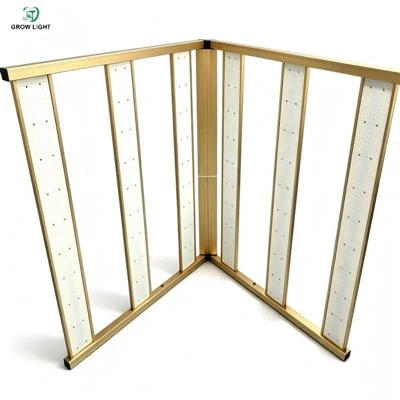
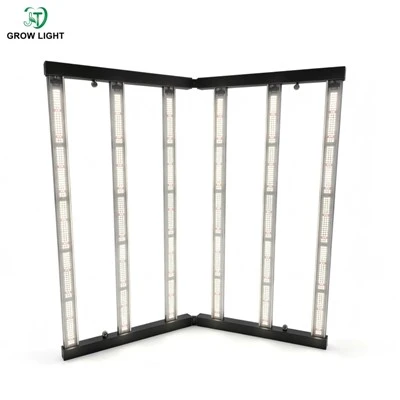
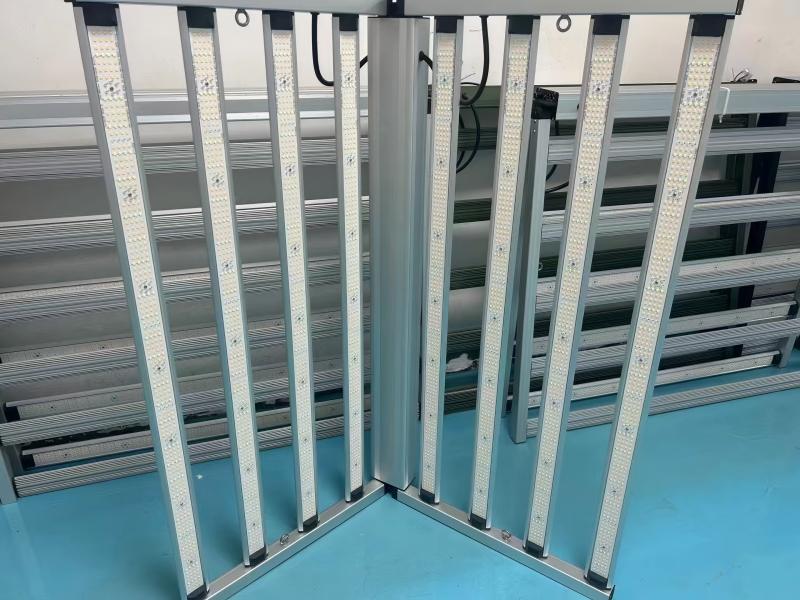
A Folding LED Grow Light in this category is not "foldable" because someone wanted a fancy angle adjustment. It's foldable because the working footprint is big, but the pre-install footprint needs to be manageable. The fixture folds inward for shipping and handling, and then unfolds into its final 4×4 or 4×6 shape when it's time to hang. That sounds simple, but for commercial cultivation, it changes the emotional experience of an install day. Instead of wrestling a huge, rigid frame, the team handles a compact unit, moves it through doors and aisles more easily, and then opens it up where it will live.
The key point is that the unfolded light still behaves like the original structure it was designed to be. The bar spacing still supports uniform coverage. The illuminated area is still broad. The fixture is still built to meet the practical footprint growers actually use. Foldable doesn't rewrite biology. It rewrites the logistics of getting the same proven structure into the room.
And this is the part most people miss: growers didn't adopt foldable because they suddenly cared about convenience. They adopted it because convenience becomes a production factor when you're hanging dozens or hundreds of fixtures and trying to keep schedules tight.
Installation is where foldable became "obviously better"
If you've ever watched a commercial install, you know what the real enemy is: too many steps. Every extra step is a chance for a mistake, and in a grow room mistakes don't announce themselves immediately. They quietly show up later as uneven plant response, inconsistent canopy height, or that one zone where the crop always feels slightly off.
With a foldable grow light, the install sequence becomes clean: open the carton, unfold, hang, connect, power on. That's it. No long on-site assembly. No "where is that missing bracket." No half-hour debate about which direction a bar should face. The fewer moving parts in the process, the faster the crew becomes consistent, and consistency is what commercial cultivation lives on. A lot of buyers think they're paying for the fold. In reality they're paying for fewer ways to mess up the room.
There's also a human reality here. Install teams might not be the same people who run the crop. The person hanging the lights may not be the person who will notice later that a row is slightly misaligned or that a connector is under tension. Foldable design reduces the number of decisions an installer needs to make, so the result becomes more repeatable even when different crews are involved.
This is also why many commercial growers now look for foldable platforms that arrive pre-assembled and ready to deploy. At JT Grow Light, our foldable LED grow lights are built around standard 4×4 and 4×6 footprints, shipped in a compact folded form, and designed to be opened, hung, and powered on without extra on-site assembly. For large installs, that simplicity is often what keeps projects on schedule.
Where JT Grow Light fits into this story
From the manufacturer's side, this is exactly why we see Foldable LED Grow Lights requested more than ever. People are building commercial cultivation rooms like production lines now. They want a fixture platform that matches standard footprints, stays uniform, and installs without drama. At JT Grow Light, when a buyer tells us their goal is a clean 4×4 or 4×6 layout with predictable hanging and quick deployment, this foldable platform is usually where the conversation naturally lands. We can talk full spectrum options, bar configuration, and power selection, but the reason they came to foldable in the first place is often structural and operational, not marketing.
If you want the honest conclusion, it's this: foldable became popular because the industry matured. Once growers started treating lighting like a scalable component instead of a one-off purchase, foldable design stopped being a "feature" and became the default way to deliver a big, uniform, commercial fixture without making the install miserable. That's why it stuck.