
The quantity of light takes precedence over the quality of light. This principle is of paramount importance, as it pertains to a series of issues in bio-optical experimental research and the industrialization of spectral technology.
1. What is light quantity?
Light quantity refers to the photosynthetic photon flux density (PPFD). For artificial plant lighting, light quantity denotes the amount of PPF per square meter incident on a specific plane of the plant (e.g., the plant canopy).
PPFD represents the molar photon density available for photosynthesis on the illuminated surface, measured in μmol/m²·s.
Many mistakenly equate light quantity with light intensity (light intensity), including certain standards in plant grow light technology.
To state the conclusion upfront: Light quantity is not equivalent to light intensity, nor is it the same as illuminance.
In photometry, light intensity is defined as the strength of light emitted by a point source in a given direction, denoted by the symbol I. It equals the luminous flux emitted by the point source per unit solid angle in that direction, measured in candelas (cd), where 1 cd = 1 lm/sr.
Considering the physical units of light intensity and illuminance, light quantity bears no relation to either.
Why light quantity is often misunderstood as luminous intensity is an intriguing question.
First, English lacks a distinct term for "light quantity." In domestic and international plant lighting research papers, expressions like "light intensity" or simply "intensity" are frequently used to describe light quantity. Second, intuitively, light quantity carries a photon density effect, making it easy to associate with luminous intensity.
Here are two key points to understand light quantity: it is energy exchange, and it lacks a cosine effect.
2. Light quantity has a strictly defined wavelength range
The wavelength range for light quantity is 400-700nm. Accurate terminology refers to PAR light quantity.
Ultraviolet and far-red light lack PPFD measurements, but plant-absorbed energy can be calculated using photon flux density (PFD).
3. Misconceptions about photosynthetic efficiency and light quantity
If PAR light quantity is divided into blue, green, and red bands, photosynthetic efficiency differs across these bands. Red and blue bands exhibit significantly higher efficiency than the green band. However, light quantity is often expressed as:
Light Quantity = Blue Light Quantity + Green Light Quantity + Red Light Quantity
For two spectra with identical light quantities (e.g., white + red vs. red-blue spectrum), the red-blue spectrum achieves higher photosynthetic efficiency than the white-red combination.
For full-spectrum LED grow lights in greenhouse applications, the necessity of green light spectrum requires consideration based on photosynthetic efficiency/power.
When calculating sunlight intensity, weighted algorithms are essential. Never use raw SPD values from sunlight for calculations, as unweighted data leads to excessive energy consumption in plant light spectrum design.
4. Relationship Between Light Quantity and Quality
Light Quantity = Blue Light Quantity + Green Light Quantity + Red Light Quantity
Light Quality = Red Light Quantity / Blue Light Quantity
The above two equations clarify the relationship between light quantity and quality. Photosynthetic efficiency primarily correlates with light quality.
Light quality is not an inherent property of the light source itself, but rather a plant attribute, whereas light quantity is a light source property.
Has anyone considered that if sunlight's light quality and quantity can be measured, could its PPF also be obtained?
5. Mechanism of High Light Quantity Masking Light Quality
Light quality relates to leaf absorption efficiency, while total light energy absorption by plants correlates with light quantity. This explains why light quantity takes precedence over light quality: despite sunlight's poor light quality, it does not impair photosynthetic efficiency in plants. The reason is that photosynthesis within plant leaves solely produces sugars. As long as sufficient sugars are generated by light quantity to meet plant needs, the impact of light quality diminishes.
For artificial lighting, light quantity is proportional to power consumption, meaning it directly correlates with cultivation costs. Artificial lighting applications should minimize light quantity while maintaining suitable light quality.
Light quantity versus light quality, light quantity versus cost, spectrum versus cultivation environment, light quantity versus lighting method-all considerations share a single objective: reducing cultivation energy consumption.
Simply put, light quantity refers to the "number of photons" plants can actually use for photosynthesis-technically termed PPFD (photophotons per square meter per second). This differs from the commonly used terms "light intensity" or "brightness."
6. This brings us to LED Grow Lights.
In greenhouse and indoor cultivation, we cannot simply "scatter light" like the sun does. Therefore, we must be more precise:
1. Light quantity must be sufficient, but not randomly stacked-it requires precise control;
2. Light quality must be appropriate to maximize efficiency per unit of light.
3. Cost must be considered-we cannot pursue effects at the expense of energy consumption.

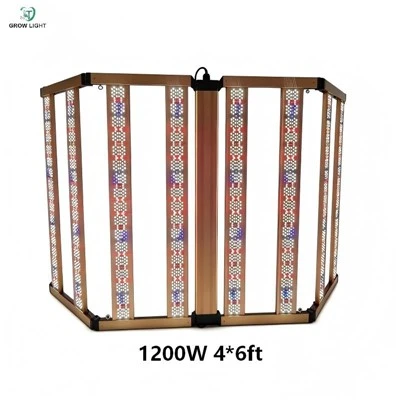
JT Grow Light offers distinct advantages in this regard:
1) Sophisticated spectral design-moving beyond simplistic "red+blue" formulas to create solutions based on real-world plant testing and validated data;
2) High-efficiency LED chips paired with professional optical structures, ensuring higher PPFD output at equivalent energy consumption;
3) Our products suit diverse scenarios-greenhouses, indoor spaces, and cannabis cultivation-with customizable spectral services for applications like commercial LED plant grow lights and greenhouse supplemental grow lights.

JT Technology continues advancing spectral research. Every new spectral discovery represents innovation in this blue-ocean market, driving both technological progress and market differentiation. The plant lighting market will grow exponentially as electricity costs decrease.