Greenhouse producers are under increasing pressure to maximise yields, lower costs, and keep year-round production in the competitive agricultural scene of today. Artificial lighting becomes a necessary fix as sunlight by itself sometimes falls short in providing the light needs of plants-especially in winter, cloudy days, or in high-latitude areas. Greenhouse LED Grow Lights have become the first choice for commercial operations among the several lighting systems.
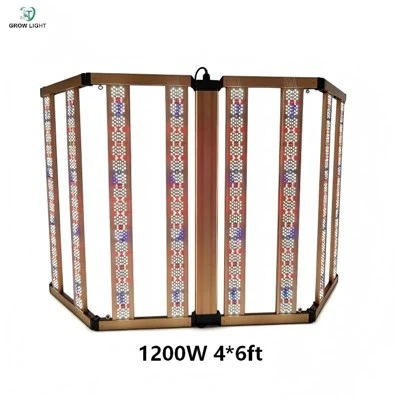
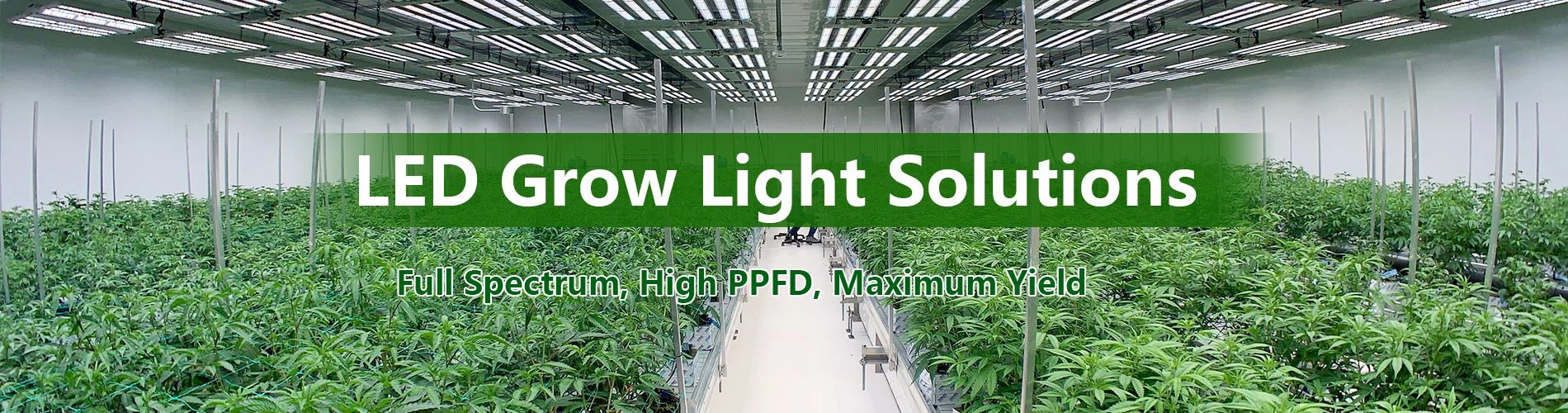
We will investigate in this post why LED Grow Lights in greenhouses are not only a fad but a need. We will walk through the advantages, uses, and main product types, including Linear LED Grow Lights, explain why they are regarded as Top LED Grow Light alternatives, and how they operate as efficient supplemental light for greenhouse production.
Why would LED Grow Lights be used in greenhouses?
Light-emitting diodes used in LED Grow Lights for greenhouse use generate photosynthetic active radiation (PAR), therefore supporting plant development. LEDs are very energy-efficient, long-lasting, and spectrally tunable, unlike conventional lighting technologies like HPS (high-pressure sodium) or fluorescent lights.
LED grow lights are applied in a greenhouse setting to either:
1. Add additional natural sunshine to cover the light gaps when it is erratic or limited.
2. During nightfall or in areas with low sunlight, provide complete artificial lighting.
Their several forms-linear LED grow lights, top-hanging panels, and intercanopy strip lights-allow them to be flexible enough for varied crop kinds and greenhouse construction.

Why is the best supplemental light for greenhouse crops LED grow lights?
Many crops grown in greenhouses call for a particular daily light level, sometimes referred to as the Daily Light Integral (DLI). Plant development and yield suffer when DLI declines below ideal levels from seasonal changes, overcast clouds, or short days.
Here's the reason supplemental LED light for a greenhouse is so efficient:
1. Aimed for the spectrum
LED grow lights give exact spectrum control, unlike HPS or metal halide bulbs. This allows you to provide the precise wavelengths your crops require-red and blue for photosynthesis or far-red for flowering-so improving plant development and shortening of growth cycles.
✅ Customisable spectrum equals improved crop performance and quality, thus it counts.
2. Excellent Energy Efficiency
LEDs turn more of the electricity into usable light than they do heat. Less energy waste and lower cooling expenses follow from this.
✅ A substantial portion of the running expenses for greenhouse operations is related to electricity. By 30 to 50%, commercial greenhouse LED grow lights help to lower energy costs.
3. Reliability and Longevity
With their continuous output over years of use, top-grade LED grow lights can last up to 50,000 hours or more.
✅ Reduced maintenance, reduced replacements, and less labour disruption define why it matters.
4. colder operation
LEDs run cooler than high-radiant heat HPS lamps. In greenhouses where extra heat could cause plant stress or higher HVAC loads, this is especially important.
✅ Reduced canopy temperatures allow lights to be positioned closer to plants, hence enhancing light intensity and homogeneity.

The Function of Commercial Grow Lights Powered by Greenhouse
Commercial greenhouse LED grow lights provide scalability, control, and the best return on investment for large-scale growers. In this sense:
1. Regular Year-Round Yields
Growers can create lush greens, tomatoes, hemp, or flowers any season with the correct lighting system. Constant DLI guaranteed by LED lights maximises photosynthesis and plant growth.
2. Connection with Smart Controls
Through integrated software, most contemporary commercial LED systems enable dimming, scheduling, and remote control. This lets real-time environmental data guide dynamic light adjustment.
✅ Automating light output depending on actual conditions increases efficiency and reduces waste.
3. Yield and ROI benefits
Top LED Grow Light systems may look more expensive initially, but their quick pay off comes from:
1) Improved agricultural output
2) Faster cycles of harvest
3) Less power and HVAC expenses
4) Longer product lifetime
Knowing Greenhouse Linear LED Grow Lights
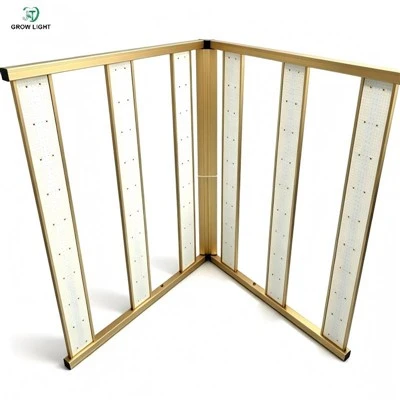
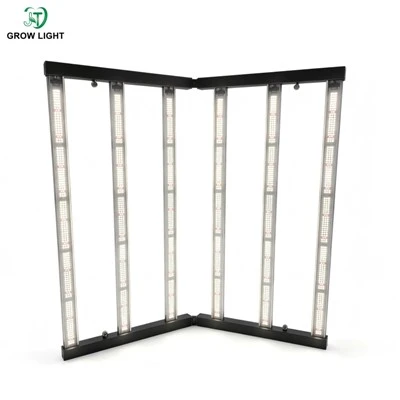
A popular lighting style, especially for additional top lighting in the greenhouse, is linear LED grow lights. They are long, narrow, and easy to install on greenhouse frames.
Key Features:
1) Uniform PPFD (photosynthetic photon flux density) over large areas
2) Slender design reduces the shadowing of natural light.
3) Simple installation and minimal upkeep required
They are ideal for high-wire crops like tomatoes or cucumbers, where top lighting needs to cover rows evenly without obstructing airflow or natural sunlight.
✅ Why choose a linear format? Efficient coverage + adaptability + reduced shading.
Crop-Specific Applications of Greenhouse LED Grow Lights
Different crops have different lighting needs. Let's explore a few examples of how LED grow lights for greenhouses enhance productivity:
1. Leafy Greens (Lettuce, Kale, Spinach)
1) Require moderate DLI (~12–17 mol/m²/day)
2) Benefit from a blue-red balanced spectrum to promote compact growth and deep color
3) LEDs help prevent elongation and boost antioxidant content
2. Tomatoes and Cucumbers
1) Require high DLI (~20–30 mol/m²/day)
2) Red and far-red light promote flowering and fruiting
3) Linear LED systems provide ideal coverage over vine rows
3. Cannabis (Where Legal)
1) High DLI demand (~30+ mol/m²/day)
2) Benefit from an adjustable spectrum, including UV and IR for cannabinoid production
3) Top + intercanopy LED strip lighting improves bud density
Environmental and Sustainability Benefits
Using Greenhouse LED Grow Light systems contributes to sustainability in several ways:
1) Reduced carbon emissions due to lower power usage
2) Lower pesticide use as healthier plants that resist disease better
3) LEDs are mercury-free and recyclable
As governments worldwide push for greener agriculture, adopting energy-saving solutions like LEDs can qualify growers for tax breaks or green subsidies.
Conclusion: Investing in the Future with Greenhouse LED Grow Light Systems
As demand for local, year-round produce continues to grow, investing in advanced lighting technologies is no longer optional-it's essential. Whether you're growing tomatoes, lettuce, or cannabis, LED grow lights for greenhouse environments offer the precision, efficiency, and flexibility to elevate your operation.
If you're considering upgrading your greenhouse lighting, our Top LED Grow Light solutions-especially our Linear LED Grow Lights-are engineered to deliver high efficiency, customizable spectrum, and long-term durability. Contact us today to get a free lighting plan and take your greenhouse productivity to the next level.