For a long time, the grow light industry has been driven by hardware innovation.
Higher efficacy, better heat dissipation, more bars, wider coverage - progress was measured by engineering upgrades and manufacturing efficiency.
This approach made sense in the early stages of the market. LED technology was still evolving, and replacing traditional lighting systems was the primary goal. Fixtures mattered. Power mattered. Cost mattered.
But as the industry matures, something fundamental is changing.
Growers are no longer asking whether LEDs work.
They are asking which light actually improves yield, quality, and consistency under real cultivation conditions.
And that question cannot be answered by fixture specifications alone.
From Hardware-Centered Thinking to Spectrum-Centered Reality
As fixture performance becomes increasingly standardized, practical differences now come more from how spectrum is applied across real cultivation systems, rather than from hardware structure alone - especially in commercial environments using high-output LED grow lights.
Today, most grow light products on the market meet a similar baseline in terms of efficacy, reliability, and basic spectrum coverage.
The performance gap between fixtures is narrowing, especially in commercial-grade products.
Yet growers continue to see vastly different results.
Two facilities may use lights with similar PPFD levels and comparable power consumption, but one achieves higher yields, better uniformity, or improved crop quality, while the other struggles with inconsistency.
This is where the industry begins to confront a deeper truth: light performance is not defined by hardware parameters, but by biological response.
Spectrum is not just a physical output measured in nanometers.
It is a biological input that interacts with plant physiology, growth stages, and cultivation systems.
Once the market reaches this level of understanding, the focus inevitably shifts away from fixtures and toward spectrum validation.
Why Spectral Claims Are No Longer Enough
For years, spectrum design in the grow light industry has been guided largely by experience, partial data, or short-term trials.
Manufacturers test a spectrum, observe acceptable growth, and move forward.
While this approach helped accelerate product development, it also created a structural weakness: Many spectral designs were never validated under controlled, repeatable scientific conditions.
Without standardized validation, spectrum performance becomes difficult to compare, verify, or trust.
A spectral validation experiment changes this completely.
Instead of relying on assumptions or isolated observations, validated spectrum development takes place within structured horticultural and plant physiology systems. Light quality, intensity, and photoperiod are tested across defined variables, and plant responses are measured over time.
Growth morphology, biomass accumulation, yield distribution, and physiological indicators become the reference, not marketing language.
In this framework, plants themselves become the evidence.
Why Most Companies Cannot Do This Alone
True spectral validation is not something that can be improvised.
It requires:
- Long experimental cycles
- Controlled cultivation environments
- Specialized equipment
- Scientific research frameworks
- Consistent data collection and analysis
For most grow light manufacturers, even highly capable ones, this level of validation exceeds what an internal product lab can realistically support.
This is why the industry is increasingly moving toward collaboration between enterprises and academic or research institutions.
As spectrum technology evolves from physical design to biological application, scientific rigor becomes unavoidable.
This shift is not a matter of preference - it is a matter of necessity.
The Market Is No Longer Buying Lights - It Is Buying Results
Another reason spectral validation is becoming critical is market pressure.
As manufacturing capacity increases globally, product margins continue to compress.
Hardware differentiation alone is no longer enough to sustain long-term value.
At the same time, growers face rising operational costs and greater demand for consistency.
They are not interested in abstract performance metrics - they care about outcomes.
Yield per square meter.
Uniformity across the canopy.
Energy efficiency converted into real ROI.
In this environment, the role of a grow light company begins to change.
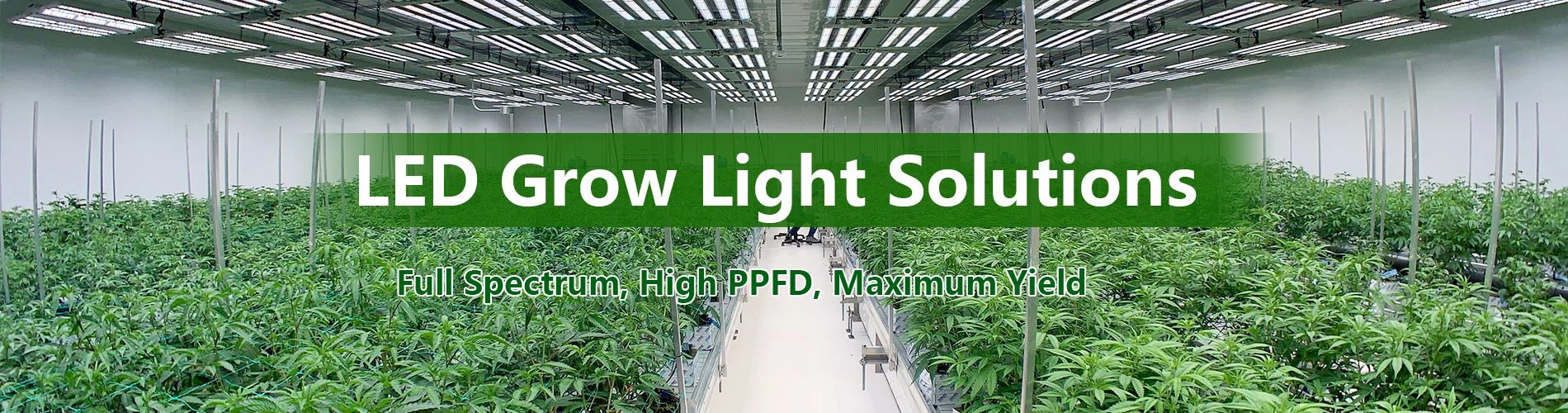
In dense canopies, spectrum delivery is no longer limited to top lighting alone, which is why many commercial growers are now integrating under-canopy LED grow lights to improve lower-site development and overall yield consistency.
The most competitive companies are no longer simply suppliers of fixtures.
They are becoming providers of lighting solutions that integrate spectrum, application context, and cultivation strategy.
JTGL's Perspective: From Physical Spectrum to Biological Spectrum
At JTGL, this industry shift has shaped how we approach product development and technical support. From the beginning, we recognized that fixture quality alone would not define long-term competitiveness. While engineering reliability, thermal management, and high-efficacy design remain essential, they are only the foundation.
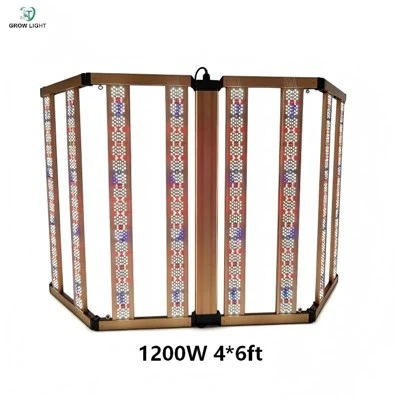
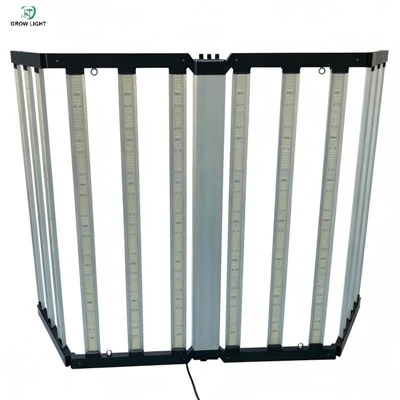
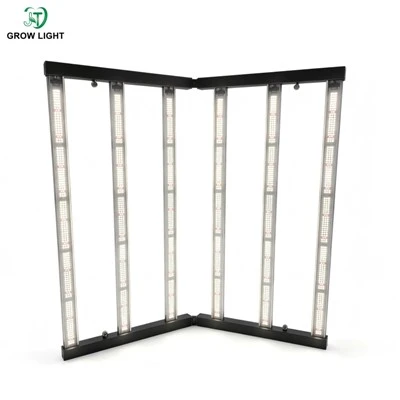
The real challenge lies in understanding how spectrum behaves biologically - not just physically. This is why JTGL has been steadily moving toward the application of biological-level spectra. In practice, spectrum performance is also influenced by fixture architecture and light distribution, particularly in large-scale facilities where foldable and multi-bar LED grow lights are commonly used to balance coverage and uniformity.
Rather than treating the spectrum as a static configuration, we analyze how it interacts with different crops, growth stages, and cultivation systems.
In commercial cultivation, the same spectrum does not perform identically in every environment.
Facility design, plant density, photoperiod strategy, and operational goals all influence the outcome.
Recognizing this complexity allows spectrum to become part of the growing methodology, not just a feature of the fixture.
Validation as Long-Term Technical Credit
One of the most important consequences of spectral validation is the creation of technical credibility.
Marketing claims are temporary.
Validated results accumulate over time.
In an industry serving agriculture, where results directly impact livelihoods, trust cannot be built solely through promotion.
It must be earned through consistent, verifiable performance.
Spectral validation experiments create a common reference system.
They allow different technologies and approaches to be evaluated under comparable conditions, making technical service levels transparent and meaningful.
This is especially true in integrated cultivation systems, where lighting must work alongside vertical grow rack systems, environmental control, and planting density to deliver consistent biological outcomes.
Over time, this forms what can be called long-term technical credit - a reputation built not on claims, but on proof.
The Future Direction of the Grow Light Industry
As the industry continues to evolve, several trends are becoming clear:
- Product manufacturing will increasingly standardize
- Hardware margins will continue to compress
- Spectrum differentiation will move from physical design to biological effectiveness
- Technical service value will exceed product value
In this future, customization will not be about fixture shape or wattage alone.
It will be about matching validated spectral strategies to specific cultivation goals.
Companies that invest in spectrum validation, biological understanding, and technical service capabilities will define the next stage of the market.
Those who rely solely on marketing narratives will gradually lose relevance.
A Responsibility Beyond Technology
Finally, it is important to recognize that bio-optical technology serves a broader purpose.
Grow lighting supports modern agriculture. Its success directly affects food systems, medicinal cultivation, and sustainable production.
In this context, exaggerated or unverified claims do more than mislead customers - they undermine trust in the entire industry.
Spectral validation is not just a technical requirement. It is an ethical one.
At JTGL, we believe that respecting plant biology and agricultural realities is not optional. It is the responsibility that comes with participating in this industry.
Conclusion
The grow light industry is entering a new era.
An era where spectrum must be proven, not promoted.
Where biological response matters more than specification sheets.
Where long-term credibility outweighs short-term visibility.
Spectral validation is no longer a future concept.
It is becoming the foundation upon which the next generation of grow light companies will be built.
And for those willing to invest in verification, collaboration, and biological understanding, it represents not a challenge - but an opportunity.