
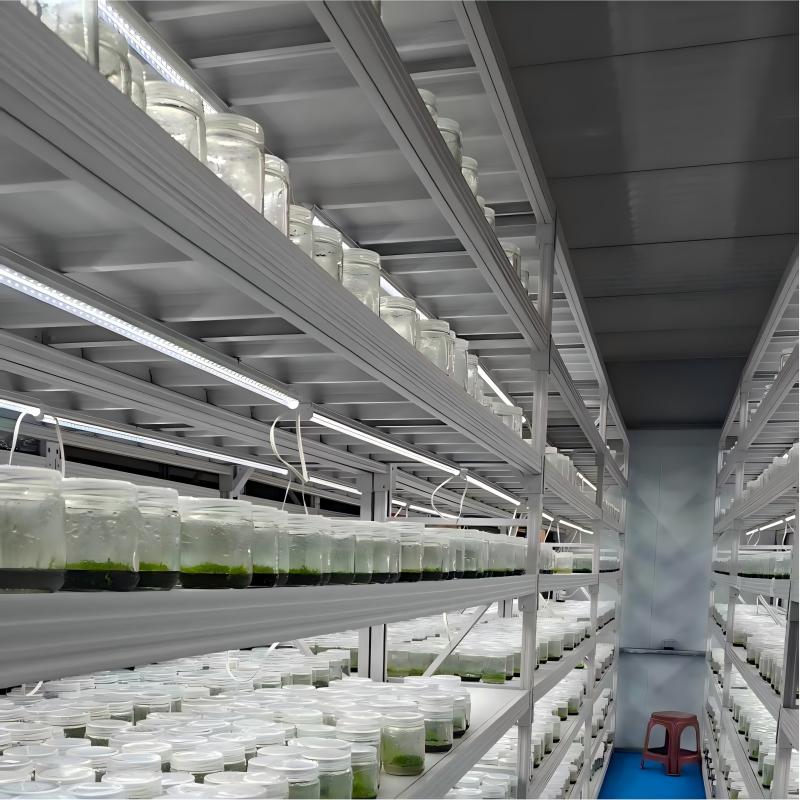
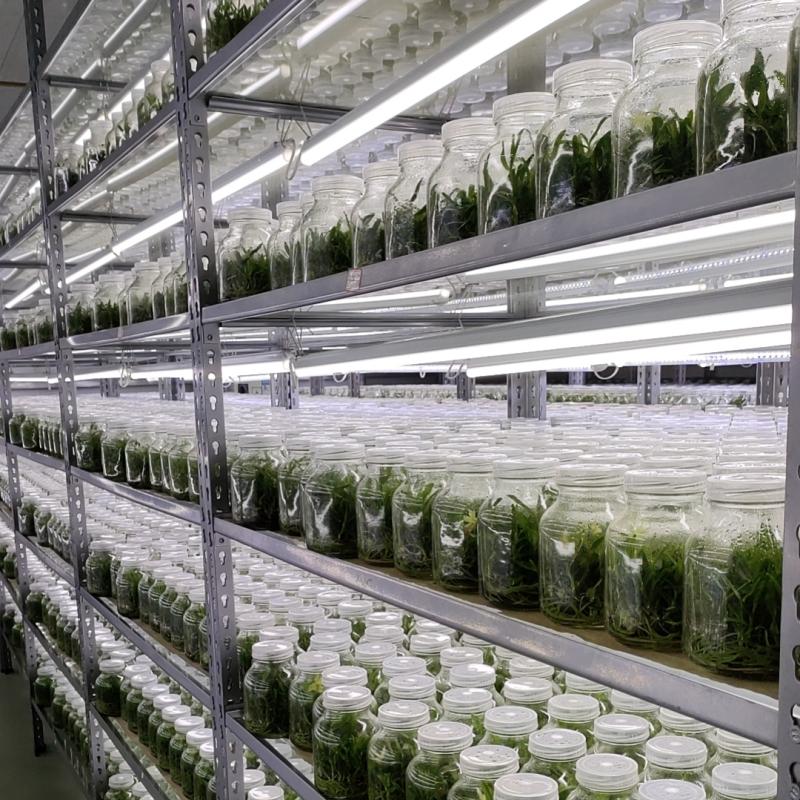
Lighting is one of the biggest running costs in a tissue culture room, because the lights stay on 12 to 16 hours a day, every day. Shelf space is the other big factor, since every extra culture vessel per square meter means more output. In our latest tissue culture project, we worked on both: a custom grow rack to make full use of the room, and energy-saving T8 LED grow lights to bring down the monthly power bill.
Project Background
The customer in Abbotsford, BC, Canada, was building a tissue culture room and wanted a complete setup from one supplier: shelving, lighting, and a layout that supports daily lab work. They had three requirements: stable racks that last, lights that don't add heavy electricity costs, and a design that can be adjusted as their cultures change.
The Grow Rack: Built for Load, Humidity and Long Use
Size and structure
We chose a 4 ft × 8 ft grow rack (about 1.2 m × 2.4 m). This size fits standard room layouts well and leaves space for aisles. It also matches the length of a 1.2 m T8 tube, so the lighting can be installed along the full shelf width.
Each shelf supports up to 250 kg, enough for culture vessels, trays and their media loaded together. Strong shelves matter in a tissue culture room, because the weight builds up fast once the shelf is full.
Adjustable shelf height
The spacing between layers is adjustable within a 30 to 40 cm range. This lets the lab match the shelf height to the vessel size and plant height, and change it later if the crop or the growth stage changes. A fixed shelf can't do that without rebuilding.
Material
The rack is made of cold-rolled steel, treated for corrosion and rust resistance. Tissue culture rooms are humid and are cleaned often, so the material matters. For indoor use, the rack is designed for a service life of 5 years or more.
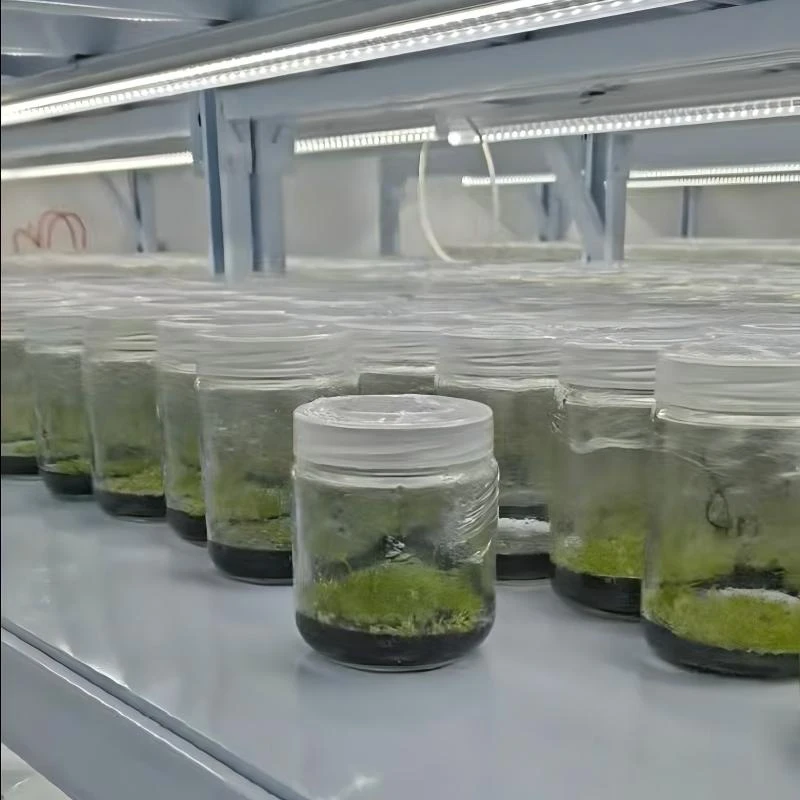
The Lighting: T8 LED Grow Lights with Dual-Chip Design
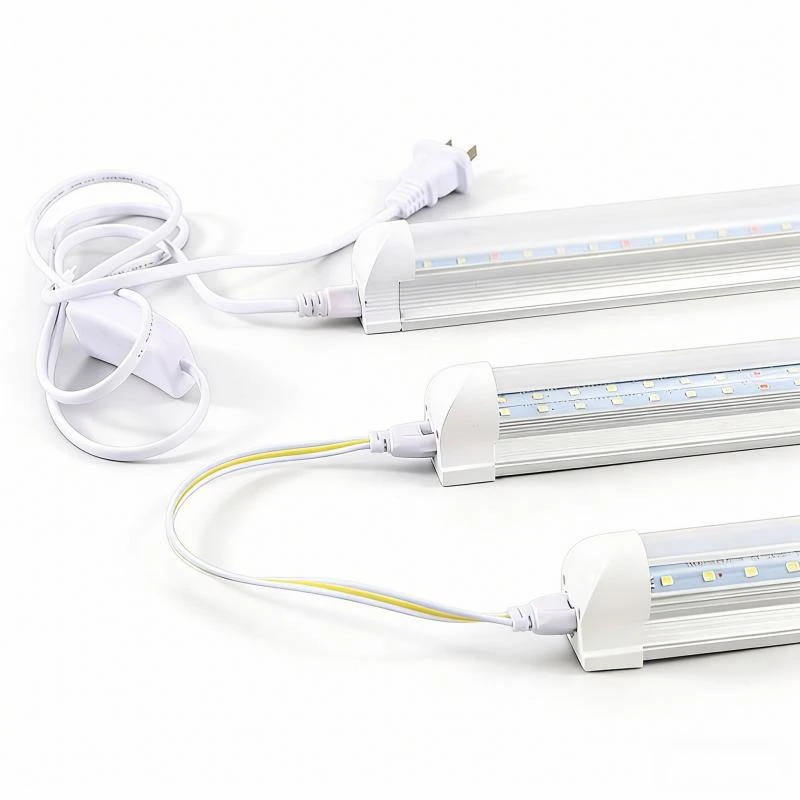
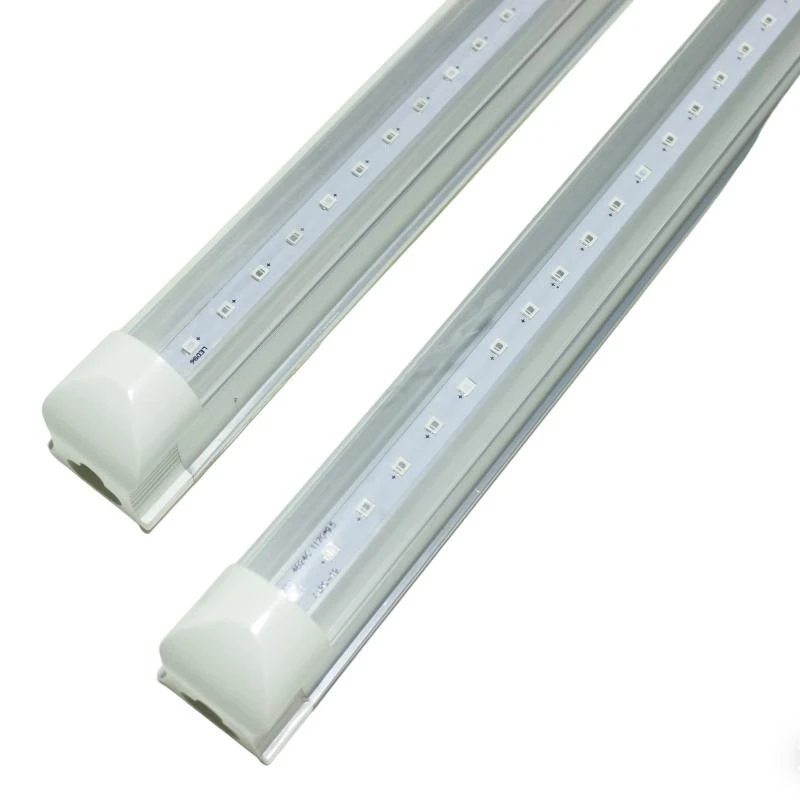
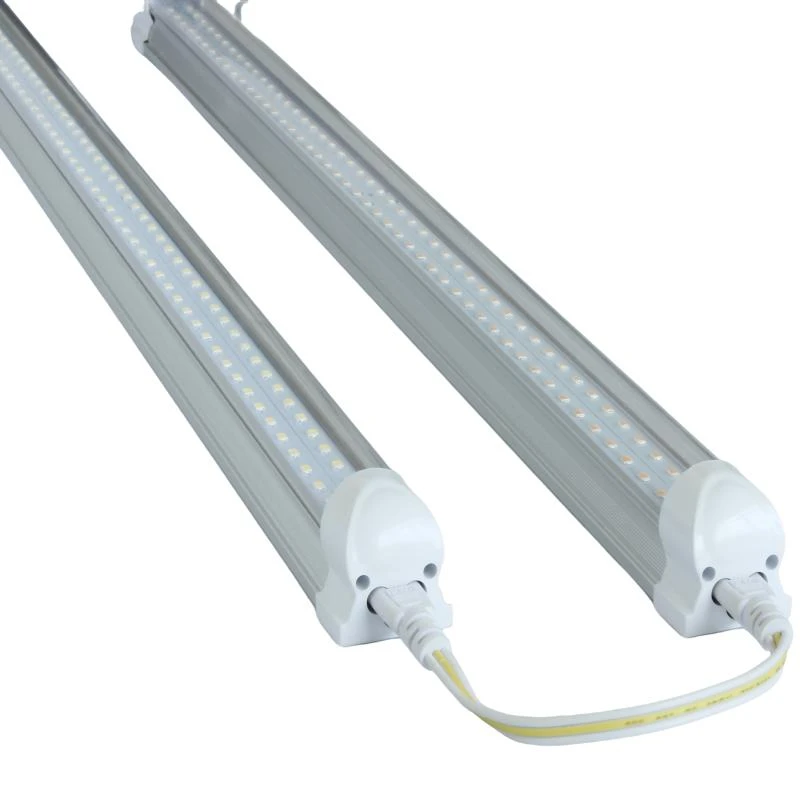
For the lighting, we recommended our T8 LED grow lights, 1.2 m long, 9W.
- Dual-chip LED design: The high-efficacy dual-chip beads allow a 9W tube to deliver the lighting effect of a conventional 18W tube.
- Lower power use: Half the wattage means roughly half the electricity for the same number of tubes.
- Integrated, connectable design: The tubes link together, so installation under the shelves is quick and the wiring stays tidy.
- Full spectrum white light, suitable for tissue culture shelves.
What this means for the electricity bill
Here is a simple example. At 16 hours a day for 365 days, an 18W tube uses about 105 kWh a year, and a 9W tube uses about 52.6 kWh. That saves about 52.6 kWh per tube each year. For a project with 1,000 tubes, the difference is over 52,000 kWh a year. Your actual savings depend on your running hours and local power price.
Why One Supplier Makes It Easier
When the rack and lights are planned together, the shelf height, tube length, and layout all fit from day one. The customer avoids mismatched sizes and extra modifications, and can start production sooner.
Are you planning a Tissue Culture Room? Send us your room size, culture vessel size, and the number of shelves you need. We will suggest a rack layout and a lighting plan for your project.