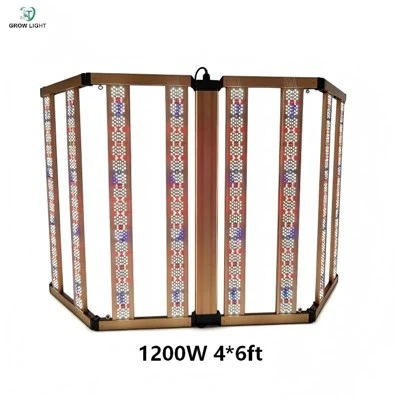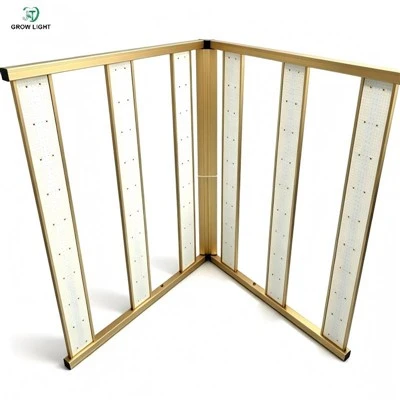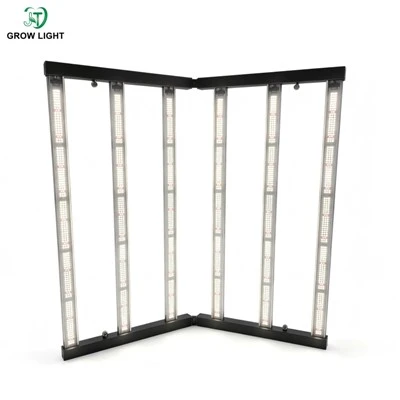
If you've been shopping around for a 1000W LED grow light with UV channels, you've probably run into this exact situation. Two fixtures sitting side by side in a quote sheet. Same wattage. Same footprint. Same dual channel dimming. Both list UV in the spectrum. And then you get to the price line, and one is noticeably more expensive than the other - sometimes by 15%, sometimes by a lot more.
Most buyers assume it's just a markup game. Someone's padding the price, or someone's cutting corners. But after years of sourcing and quoting these fixtures for growers and distributors across North America and Europe, I can tell you it usually comes down to one specific component buried inside the housing: the driver.
Specifically, whether that driver is isolated or non-isolated.
We've covered the technical side of what isolated and non-isolated drivers actually are, how they work, and the safety implications in a previous article on this site. If you haven't read it yet, it's worth a look before or after this one - it goes deep into the electrical side. This article picks up from a different angle: the money side, the "how do I even tell which one I'm buying" side, and the "does it actually matter for my grow" side. Let's get into it.
A Real Quote Sheet Scenario
Here's a scenario that plays out constantly in our inbox. A distributor is comparing two 1000W fixtures for a vertical farm project. Both units:
- Draw 1000W at full output
- Offer 2-channel dimming (main spectrum + UV/IR supplemental channel)
- List similar PPFD figures on the spec sheet
- Look nearly identical from the outside - same aluminum housing, same passive cooling fins, same mounting brackets
One quote comes in around $180 per unit. The other comes in around $270-290 per unit. Same order quantity, same lead time. A 20-30% swing on a "same spec" product is enough to make any procurement manager nervous - is the cheaper one missing something, or is the pricier one just overpriced?
Both lights may genuinely deliver similar PPFD and draw similar wattage. The difference is inside the driver housing, and it's not something you'll see just by looking at the fixture from three feet away.

Why Does an Isolated Driver Actually Cost More? Breaking Down the Real Numbers
This is the part most buyers never get a straight answer on, so let's break it into actual cost categories.
1. Transformer and material cost
An isolated driver needs a transformer (or an isolated flyback/LLC topology) that physically separates the input AC side from the output DC side using copper windings and insulation barriers. That transformer core, the extra copper winding, and the reinforced insulation material all add direct bill-of-materials cost. A non-isolated driver skips this component entirely, using a simpler buck-converter style circuit that shares a common ground reference between input and output.
On a 1000W driver, this transformer and associated components alone can add several dollars per unit in raw material cost - which sounds small until you multiply it across a production run of a few thousand units.
2. Certification and safety testing cost
This is the part that surprises most buyers. Getting a driver certified as meeting SELV (Safety Extra Low Voltage) or Class II isolation standards under UL8750, UL1310, or IEC 61558 requires dedicated lab testing - dielectric withstand testing, isolation resistance testing, creepage and clearance distance verification. These tests aren't a one-time formality; they need to be repeated whenever the driver design changes.
Certification testing for an isolated driver typically runs meaningfully higher than for a non-isolated one, because the lab has to verify the isolation barrier holds up under stress conditions (surge, humidity, temperature cycling). That testing cost gets baked into the per-unit price once you factor in amortization across a production batch.
3.Manufacturing complexity and yield
Winding a transformer by hand or on semi-automated equipment takes longer than populating a simpler non-isolated PCB. There's also a yield consideration - isolated drivers have a higher rejection rate during quality control because the isolation barrier has to pass a hard failure/pass test. A driver that fails isolation testing can't just get a minor rework; often the whole unit gets scrapped.
4.Weight and shipping cost
Isolated drivers are physically heavier because of the transformer core. On a large order shipped by sea, this is a minor factor. But for air freight or smaller orders, the added weight per unit adds up across a container or pallet.
Here's a simplified breakdown table to put numbers around this:
| Cost Factor | Non-Isolated Driver | Isolated Driver |
|---|---|---|
| Transformer/core material | Not required | Added material cost |
| Certification testing (per design) | Lower testing scope | Higher testing scope (SELV/Class II verification) |
| Manufacturing time per unit | Faster assembly | Slower, more manual winding steps |
| QC rejection rate | Lower | Higher (isolation barrier is a hard pass/fail test) |
| Typical weight impact (1000W driver) | Baseline | Noticeably heavier |
| Typical price premium at 1000W | Baseline | Often 15-30% higher landed cost |
These figures vary by factory and design, but the pattern holds across the industry: an isolated LED driver cost is real, it's traceable to specific manufacturing steps, and it's not just a markup for the sake of it.
How to Tell Which Driver Type Your 1000W Grow Light Actually Uses
Since you can't see the driver from the outside, here are the practical ways to figure this out before you commit to an order.
1. Check the output voltage on the spec sheet
This is the fastest clue. If the datasheet lists an output voltage under roughly 60V, it's very likely designed around a SELV/isolated topology. If the output voltage is significantly higher (over 100V, sometimes into the 200-300V range for high-power fixtures), it's almost certainly a non-isolated design, because non-isolated drivers commonly run higher output voltages to reduce current and simplify the circuit.
2. Look for label markings
Legitimate manufacturers will mark the driver or the fixture with terms like "Class II," "SELV," "Double Insulated," or "Isolated" if that's genuinely the design. If none of these appear anywhere on the label or spec sheet, don't assume - ask directly.
3. Weigh it
This sounds unscientific, but it works as a rough gut-check. Two 1000W fixtures with a similar housing size - if one is noticeably heavier than the other, the heavier one often has the isolated driver with its transformer core inside.
4. Request the safety certification report
A fixture claiming ETL, CE, or UL certification should have a certification report on file that specifies the driver's isolation class. This is standard documentation for OEM/ODM buyers to request before finalizing a purchase order.
5. Check where the driver is mounted
This is honestly the fastest visual tell, and you don't even need a spec sheet for it. Isolated drivers are physically bigger - the transformer core inside takes up real estate - so manufacturers almost always mount them externally, either as a separate box wired to the fixture or strapped to the back of the housing. Non-isolated drivers are compact enough to tuck directly inside the fixture's own frame, sitting flush with the heat sink or housing with no separate box hanging off it.
So if you're comparing product photos side by side: a fixture with a visible external driver box (sometimes called a "remote driver") is very likely isolated. A fixture where everything - driver included - is built into one slim housing is very likely non-isolated. It's not 100% foolproof on its own, but paired with the voltage check above, it's usually enough to tell you which type you're looking at before you even open a conversation with the supplier.
Yes, and here's why UV changes the equation slightly.
UV LEDs are more sensitive to current fluctuations than standard full-spectrum diodes. Small instabilities in driver output can shorten UV diode lifespan faster than they would affect the main spectrum channels. A well-built driver - isolated or not - needs tighter current regulation to keep UV output consistent and to avoid premature degradation of the UV emitters.
Combine that with dual channel dimming, and the driver's internal design has to manage two separate output circuits instead of one. This adds complexity regardless of isolation type, but it does mean that on a dual channel dimming grow light 1000W unit, corners cut anywhere in the driver - isolated or non-isolated - tend to show up faster as flickering, inconsistent UV output, or channel imbalance over time.
In short: isolation type and dimming/UV channel quality are two separate variables, but they both come from the same source - how much the factory invested in the driver. A factory cutting cost on isolation is statistically more likely to also cut cost elsewhere in the driver's regulation circuitry.

Is the Price Difference Worth It? A Grower's Cost-of-Ownership View
This is really the question every buyer is actually asking, even if they phrase it as "which one should I buy."
There's no universal answer, but there is a useful framework: total cost of ownership, not just purchase price.
| Consideration | Non-Isolated Driver | Isolated Driver |
|---|---|---|
| Upfront unit price | Lower | Higher |
| Electrical shock risk in wet/humid environments | Higher | Lower |
| Suitability for greenhouse/hydroponic environments | Requires extra caution | Better suited |
| Typical driver failure/replacement cost over 5 years | Varies, some designs run hotter | Generally more stable under stress |
| Compliance documentation for commercial/insurance purposes | May require extra scrutiny | Easier to document for inspectors/insurers |
| Best fit | Dry indoor rooms, budget-conscious small-scale grows | Greenhouses, hydroponic systems, licensed commercial facilities |
For a hobby grower running a single tent in a dry, climate-controlled room, a non-isolated driver in a reputable, well-built fixture is not automatically a dealbreaker - plenty of these run reliably for years. The bigger concern is humidity exposure and grounding, not the fixture's power output itself.
For a commercial cultivation facility - especially anything involving hydroponics, misting systems, or high ambient humidity like a greenhouse - the calculation shifts. Facility insurance policies, local electrical codes, and worker safety liability all start to matter more than a 15-20% difference in unit cost. Losing a driver every year or two due to moisture-related failure, or dealing with an electrical incident on a commercial site, costs far more than the upfront premium for an isolated driver would have.
For OEM/ODM buyers and distributors reselling into regulated markets in the US and EU, this decision also has a compliance dimension. Retailers and end customers increasingly expect documentation on driver safety class, especially as more commercial growers install lighting in wet or semi-wet environments.
Industry Trend: Buyers Are Asking About This More Than They Used To
A few years ago, most buyers only cared about PPFD, wattage, and price. That's changed. In our own client conversations over the past couple of years, we've seen a clear increase in buyers - particularly in Europe and among licensed commercial cultivators in North America - specifically asking about driver isolation type, SELV compliance, and requesting certification reports before finalizing an order.
Part of this is being driven by insurance underwriters and facility inspectors paying closer attention to electrical safety documentation on commercial grow sites. Part of it is simply buyers getting burned once by a cheap fixture and becoming more careful the second time around.
If you're sourcing as a 1000W grow light wholesale buyer or distributor, this is worth building into your own sales conversations - being able to answer this question confidently is becoming a differentiator, not just a technical footnote.
What This Looks Like on an Actual Purchase Order
To make this less abstract, here's how this typically plays out when a distributor or commercial grower is finalizing a bulk order for a 1000W UV fixture.
Say a buyer requests quotes from three suppliers for 200 units of a 1000W, dual channel dimming grow light with a UV/IR supplemental channel. All three send back spec sheets that look nearly identical: same PPE range (roughly 2.6-3.1 µmol/J), same claimed PPFD footprint, same IP65 rating, same ETL/CE/RoHS claims.
The quotes come back at $215, $238, and $276 per unit.
A buyer who only compares the spec sheet numbers will likely default to the cheapest option, assuming the other two are simply charging more for the same thing. But once you ask each supplier directly - "is this an isolated or non-isolated driver, and can you send the driver's own datasheet" - the picture usually becomes clear. In a case like this, it's common to find that the $215 option uses a non-isolated driver with a higher output voltage (often in the 100-300V range), the $238 option uses a partially isolated design or a lower-tier isolated driver from a less established driver brand, and the $276 option uses a fully isolated driver with a recognized driver brand and a complete SELV test report on file.
None of the three suppliers are being dishonest about wattage or PPFD. The difference sits entirely in a component the spec sheet doesn't fully disclose unless you ask.
This is exactly why, when we quote OEM/ODM orders, we recommend buyers build a simple two-line question into every RFQ they send out: what is the driver's isolation type, and can you provide the driver's certification report separately from the fixture's general certificate. It takes one email, and it usually resolves the price confusion faster than any amount of back-and-forth negotiation.
Material and Spec Parameters Worth Comparing Side by Side
Beyond just isolation type, a few other parameters are worth lining up when comparing two seemingly identical 1000W UV fixtures, since driver quality tends to correlate with overall build quality:
- Output voltage range: as covered above, a strong early indicator of isolation type
- Driver brand: recognized driver brands (Meanwell-tier or equivalent) typically publish full datasheets and test reports; generic or unbranded drivers often don't
- Rated lifespan (hours): isolated, well-built drivers commonly carry longer rated lifespans, often 50,000 hours or more, compared to lower-tier non-isolated drivers rated closer to 30,000-40,000 hours
- Operating temperature range: a driver rated for a narrower temperature window is more likely to be a cost-reduced design
- Power factor (PF): isolated drivers on higher-end fixtures often report PF above 0.95, while cost-reduced designs sometimes sit lower
- Total harmonic distortion (THD): relevant for larger commercial installations where multiple fixtures share a circuit; higher THD can cause issues with other equipment on the same electrical line
None of these show up in a quick glance at a product photo, which is exactly why a side-by-side comparison request - not just a spec sheet - is worth the extra step before a bulk order.
FAQ
Q: How much more does an isolated driver typically add to a 1000W grow light's price?
A: It varies by factory and build quality, but a realistic range is roughly 15-30% higher landed cost compared to an equivalent non-isolated design, driven mainly by material, certification, and manufacturing time differences.
Q: Can I request driver specification documents before placing a wholesale order?
A: Yes. Any established OEM LED grow light factory should be able to provide a separate driver datasheet and relevant certification documentation on request. If a supplier resists this request, treat it as a red flag.
Q: Does a higher price always mean a light has an isolated driver?
A: No. Price alone isn't proof. Always verify through the output voltage spec, label markings, or a direct request for the driver datasheet rather than assuming based on price.
Q: Is driver type something OEM/ODM buyers should specify in their purchase agreement?
A: For any commercial order, especially destined for greenhouse, hydroponic, or licensed cultivation environments, yes. Specifying isolation type in writing protects both parties and avoids disputes if a substitution happens during production.
Two LED grow lights can look identical, list the same wattage, offer the same dual channel dimming, and both mention UV in the spectrum - and still be genuinely different products underneath the housing. The isolated versus non-isolated driver decision is one of those details that doesn't show up in a glance at the spec sheet but shows up in real-world reliability, safety, and long-term cost.
If you're comparing quotes and the price gap doesn't make sense at first glance, ask about the driver. A supplier that can answer clearly, with documentation, is one worth doing business with - regardless of which driver type they end up recommending for your specific setup.