The Freight Problem Nobody Talks About Until It's Too Late
Here's a conversation we have almost every month with distributors and commercial growers: they find a great commercial LED grow light, the specs look perfect, the price per unit looks fair - and then the freight quote comes back and changes everything.
Large fixed-frame fixtures, especially anything sized for a serious canopy, are bulky. A non-folding 1.1m x 2.4m panel takes up its full footprint in a container no matter what you do with it. That means fewer units per 40HQ container, more dimensional weight charges, and in a lot of cases, damaged corners or bent frames by the time the shipment reaches the warehouse. We've seen buyers eat 15-20% extra cost on freight alone simply because the fixture couldn't fold down for transit.
This is exactly the problem a foldable LED grow light is built to solve - and it's why we've seen demand for foldable commercial fixtures grow steadily among both first-time importers and established distributors over the past two years. Less wasted container space, lower freight cost per unit, and a lot less risk of shipping damage. For anyone sourcing fixtures in volume, this isn't a nice-to-have feature. It's the difference between a profitable order and a margin-eating one.
What "Foldable" Actually Means - And Why 1800W Changes the Math
Folded vs. Unfolded: Volume and Container Loading Comparison
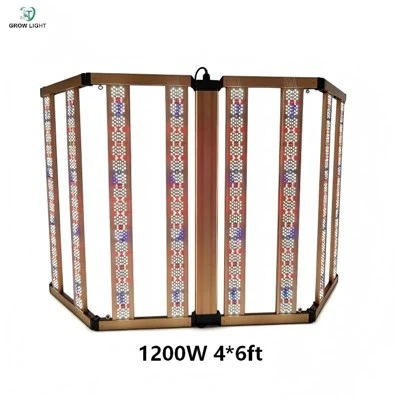
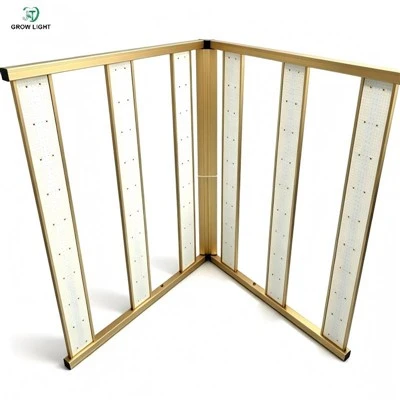
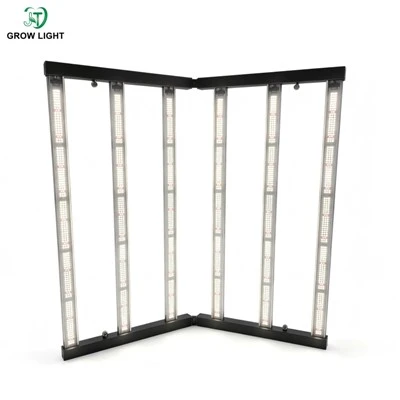
A 3-fold design means the fixture's light bars hinge inward, collapsing the unit down to roughly a third of its unfolded length. Our 1.1m x 2.4m foldable LED grow light unfolds to its full canopy-coverage size on site, but ships folded down to approximately 0.8m in length. That difference matters more than it sounds like on paper.
In real terms: a standard 40HQ container that might fit 180-200 units of a comparable non-folding fixture can typically fit 260-300+ units of the same wattage class when the fixture folds. That's not a small efficiency gain - for a distributor ordering a full container, that can mean 60-100 extra units landed at the same freight cost. Run the math on a $150-250 per-unit landed cost difference, and the folding design alone can save a five-figure sum on a single container order.
Why 1800W Is the Sweet Spot for Large Canopy Coverage
Wattage isn't just a number on a spec sheet - it determines what canopy size you can actually cover with consistent intensity. At 1800W, our foldable fixture is built to deliver full, even coverage across a large commercial footprint, which is exactly why we sized it at 1.1m x 2.4m in the first place - large commercial cannabis rooms and multi-tier setups need fixtures that don't leave weak spots at the edges of the canopy.
For context, the market has been trending toward higher-efficacy fixtures in this range, with commercial growers increasingly expecting somewhere in the 2.5-2.8 μmol/J range from a serious 1000W+ fixture, and PPFD output in the 1000-1200+ μmol/m²/s range at typical mounting height for flowering-stage canopies. An 1800W fixture sitting in this efficacy band isn't just "bright" - it's positioned to replace multiple smaller fixtures or older HPS setups in one install, which is a major reason commercial operations are moving away from traditional double-ended HPS in the first place.
Foldable LED Grow Lights vs. Traditional Fixed-Frame Commercial Lights
We get asked constantly whether the folding mechanism is a trade-off - does it cost something in durability or light output? Here's how the two actually compare in practice:
| Factor | Foldable Design | Fixed-Frame Design |
|---|---|---|
| Container loading efficiency | 260-300+ units/40HQ (comparable wattage) | 180-200 units/40HQ |
| Freight cost per unit | Lower - reduced dimensional weight | Higher - full footprint shipped |
| Shipping damage rate | Lower - compact, protected folded state | Higher - exposed frame edges |
| On-site installation labor | Slightly higher - requires unfolding | Lower - ready out of the box |
| Light output consistency | Equal, when hinge engineering is solid | Equal |
The one honest trade-off is installation time - folding fixtures need a few extra minutes per unit to unfold and lock into position on site. For a 50-100 unit commercial install, that's a real labor cost to plan for, but it's almost always smaller than the freight savings on the front end.
This is where manufacturing quality actually matters, and it's worth being direct about it: not every "foldable" fixture on the market is built the same. We've inspected competitor units where the folding hinges were the first point of failure after a few months of repeated folding and unfolding during relocations or maintenance. At JT Grow Light, our foldable fixtures are built and tested through our own SMT chip placement and assembly line - we run over 2,000 units daily through a 5,200 sqm facility with more than 100 staff, and every hinge point on our foldable fixtures goes through repeated stress-cycle testing before a design goes into production. That's not a marketing line - it's the difference between a fixture that folds reliably for years and one that cracks at the hinge after a season of warehouse handling.
What to Check Before You Order - Buyer's Checklist
Certification & Compliance
If you're selling or operating in North America, DLC and ETL/UL certification aren't optional extras - many states require DLC-listed fixtures for commercial cannabis cultivation rebate eligibility, and ETL or UL listing is often a basic requirement for commercial electrical inspection sign-off. If you're sourcing for the EU market, CE marking plus compliance with WEEE, REACH, and (for fixtures sold via marketplaces like Amazon) EPR registration is required before the product can legally reach end customers. Always ask your supplier for current, verifiable certification documents - not just a logo on a spec sheet.
PPFD, Efficacy, and Real-World Coverage Data
Don't take "1800W" alone as a buying signal. Ask for the actual PPFD map at your intended mounting height, and ask for the efficacy rating (μmol/J) - this tells you how much usable light you're getting per watt of electricity, which directly affects your customers' or your own operating costs over the life of the fixture. A well-engineered 1800W fixture should be delivering meaningfully more canopy-level PAR than two or three smaller fixtures combined, with better uniformity and fewer hot spots or shadowed edges.
Where This Fits in a Commercial Grow Operation - And What's Next
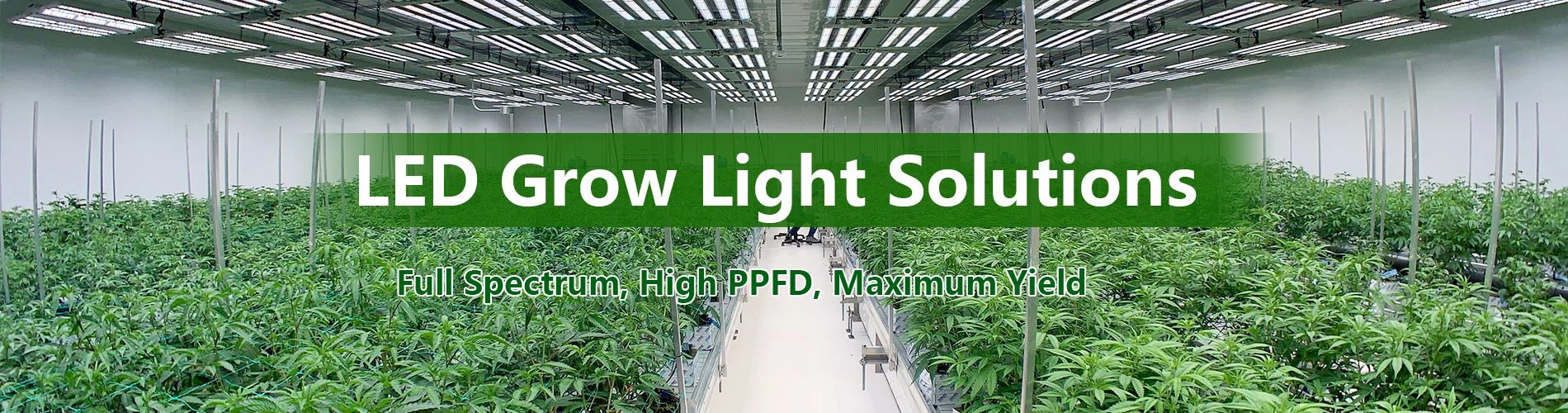
If you're scaling a commercial cannabis operation, building out a vertical farming setup, or sourcing fixtures as a distributor planning a container order, the foldable LED grow light format solves a real, specific problem: getting serious lighting power to your site without freight costs eating into your margin.
We've worked through this exact calculation with growers and distributors across North America and Europe - container loading plans, PPFD requirements for specific canopy sizes, certification needs by region. If you've got a grow room size, a target canopy coverage, or a container order you're trying to plan around, send us the details. We'll walk through the actual numbers with you - coverage, freight savings, and what a realistic landed cost looks like for your specific project.