What "Custom Spectrum" Actually Means at the Manufacturing Level
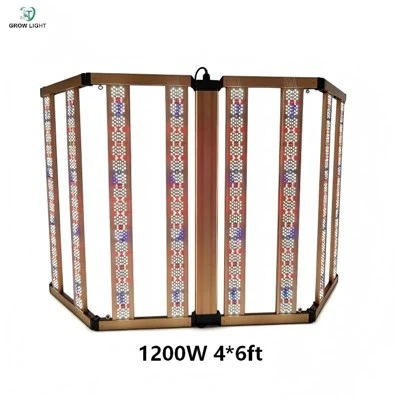
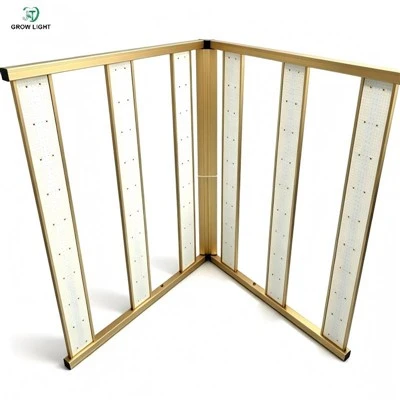
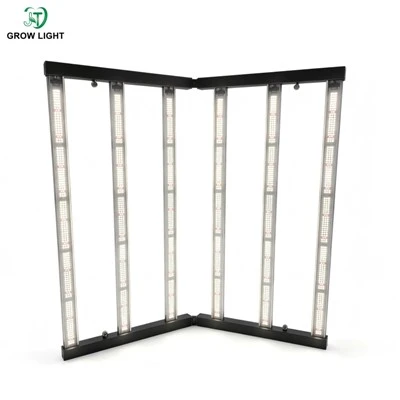
Custom spectrum, at the factory level, means adjusting which LED chip types get used and in what ratio, specific wavelength bands like blue chips centered around 450-460nm, red chips in the 620-750nm range, and sometimes far-red or UV chips layered in for targeted effects. This is fundamentally a chip selection and board layout decision made during production, not something adjusted after the fact through a dial or app.
This distinction matters because it's commonly confused with dimming. Dimming changes overall brightness, how much total light output a fixture delivers. Spectrum defines the composition of that light, the actual ratio of wavelengths present. A fixture can be highly dimmable and still have a completely fixed spectrum, or have a genuinely customized spectrum with no dimming function at all. These are two separate product decisions, and conflating them is one of the most common mistakes buyers make when requesting a quote.
Why Different Crops and Growth Stages Actually Need Different Spectrums
The science behind this isn't marketing, it's plant physiology. Plants use specific pigments to capture light energy for photosynthesis: chlorophyll A peaks in absorption around 430nm (blue-violet) and 680nm (red), chlorophyll B peaks around 450nm (blue) and 640nm (orange-red), and carotenoids absorb broadly across 400-500nm as accessory light-harvesting pigments. Phytochromes, red and far-red photoreceptors, separately regulate flowering timing, germination, and shade-avoidance responses. A spectrum designed around these actual absorption peaks delivers photon energy where plants can genuinely use it, rather than simply mimicking what sunlight looks like to the human eye.
This translates into real, practical differences by growth stage. Blue light generally supports compact, sturdy vegetative growth, building strong stems and root development, while red light plays the dominant role in driving flowering and fruit production. For commercial vegetative and propagation stages specifically, blue light ratios in the range of roughly 15-25% of total PAR output are commonly recommended, climbing to 30-40% during early propagation when compact growth matters most.
Comparison Table Common Grow Light Spectrum Components and Their Typical Roles
|
Spectrum Component |
Typical Wavelength Range |
Primary Role in Plant Growth |
|
Blue light |
400-500 nm |
Compact vegetative growth, strong stems, chlorophyll excitation |
|
Red light |
600-700 (up to 750) nm |
Flowering, fruit production, primary photosynthetic driver |
|
Far-red light |
700-750 nm |
Flowering timing regulation, shade-response signaling, terpene development |
|
Green/yellow light |
~500-600 nm |
Canopy penetration to lower leaves, generally minor role in targeted spectrums |
|
UV light |
280-400 nm |
Supplemental use for terpene/resin enhancement in late-stage growth |
4FT 50W Inter Lighting LED Grow Light For Vegetable - A Case for Targeted Spectrum Design
A 4FT 50W Inter Lighting LED Grow Light For Vegetable fixture is a clear example of where targeted spectrum design earns its keep. Leafy vegetable crops during their active vegetative stage generally respond well to a spectrum with a stronger blue component, supporting the compact, sturdy growth habit that's actually desirable for this crop category, rather than the tall, stretched growth pattern a red-heavy spectrum tends to encourage. Leafy greens and herbs commonly perform well within a PPFD range of roughly 200-400 µmol/m²/s during vegetative growth, and matching the spectrum ratio to this crop category, rather than defaulting to a generic full-spectrum mix, is exactly the kind of customization that separates a purpose-built vegetable grow light from a one-size-fits-all fixture.
40W Linear LED Grow Light Bar For Greenhouse & Vertical Farming - Balancing Custom Spectrum With Uniform Coverage
A 40W Linear LED Grow Light Bar For Greenhouse & Vertical Farming introduces a second variable alongside spectrum: uniformity across multi-tier growing racks. In vertical farming setups specifically, a spectrum that's technically well-matched to the crop still needs to deliver consistent PPFD across the entire growing surface, since uneven light distribution creates its own growth inconsistency problems regardless of how well-tuned the wavelength ratio is. This is why customization requests for linear bar fixtures in vertical farming applications typically need to specify both target spectrum ratio and the physical coverage area together, rather than treating spectrum as an isolated decision separate from fixture placement and beam angle.
720W LED Grow Light With Single Channel Dimming For Commercial Growing Why High-Power Fixtures Have Different Customization Trade-offs
A 720W LED Grow Light With Single Channel Dimming For Commercial Growing highlights an important distinction worth understanding before requesting a quote. Single-channel dimming means the fixture's overall brightness can be adjusted, but the spectrum ratio itself is fixed at the manufacturing stage and doesn't shift as you dim. This is different from a multi-channel system, where separate LED strings, say blue and red, can each be independently dimmed to actively shift spectrum ratio in real time, not just overall intensity.
For large commercial installations, this trade-off is usually intentional. Single-channel high-power fixtures are simpler, generally more cost-effective at scale, and well-suited to operations running a consistent crop and growth cycle where the spectrum ratio doesn't need to change dynamically. The customization here happens once, at the ordering stage, when the fixed spectrum ratio gets specified, rather than being something adjusted repeatedly after installation.
What's Actually Customizable vs What Usually Requires a Fixed Product Line
Chip type selection and ratio are the most commonly customizable elements at the factory level, generally available with a sufficient minimum order quantity to justify a dedicated production run. Real-time adjustable spectrum, where the ratio itself can be changed after installation rather than fixed at manufacturing, is a different capability entirely, and it requires a multi-channel product architecture specifically designed for that function. Not every custom spectrum request needs this level of complexity, and it's worth being clear with your supplier about whether you need a fixed custom recipe or genuine post-installation spectrum adjustability, since these represent different product lines with different cost structures.
Industry Trends Why More Growers Are Requesting Crop-Specific Spectrum Recipes
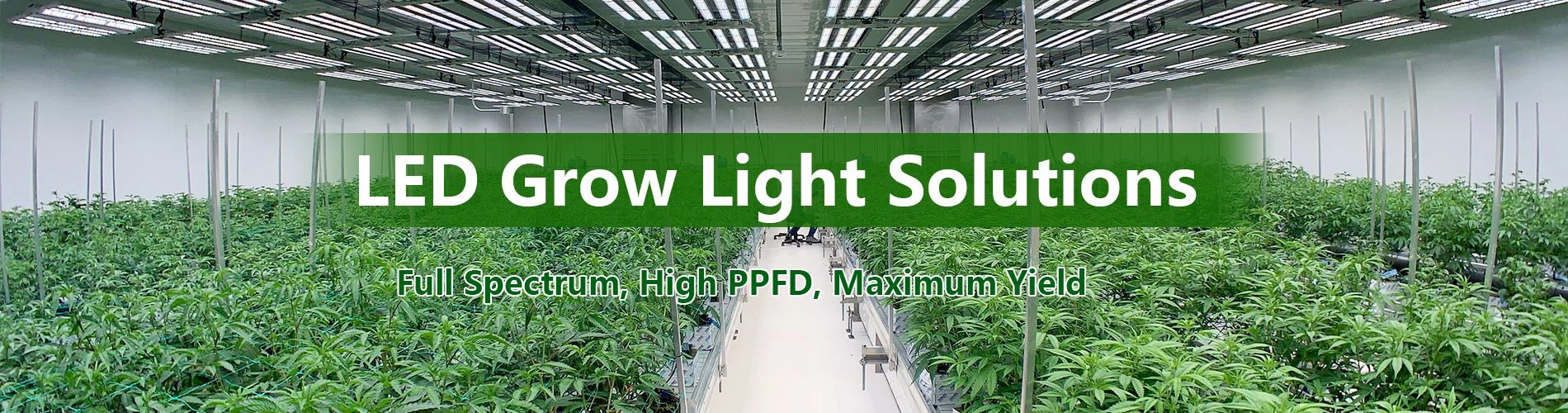
As precision agriculture and vertical farming scale into larger commercial operations, more growers are moving away from generic full-spectrum fixtures toward crop-specific spectrum recipes developed in direct consultation with their lighting supplier. This shift reflects a broader industry recognition that PPFD intensity and total wattage are starting points, not the full picture, and that matching spectrum composition to a specific crop and growth stage delivers measurable improvements in structure, yield, and quality that generic lighting can't consistently replicate. This trend is also being reinforced by growing data availability: as more commercial growers track yield outcomes against specific spectrum recipes, that accumulated data is making it easier for both growers and manufacturers to refine crop-specific recommendations rather than relying on general industry rules of thumb alone.
Regulatory Context Worth Knowing
There's currently no single unified international standard governing horticultural lighting spectrum output the way there is for general illumination color rendering. That said, custom spectrum fixtures still need to meet standard electrical safety certification requirements, commonly UL or CE depending on the target market, and it's worth confirming this explicitly with your supplier, since a fixture being custom-built doesn't exempt it from basic electrical safety compliance. Requirements can vary by target market and application type, so confirming current certification standards for your specific region before finalizing a custom order is worth the extra step.
Real Example - A Sunhing Stones Case Study on a Crop-Specific Spectrum Order
We've worked with commercial growing clients through Sunhing Stones who were initially running a generic full-spectrum fixture across a leafy green crop line with underwhelming results, taller, leggier growth than the target market wanted. After providing specific crop and growth stage information to guide a custom spectrum request weighted more heavily toward blue wavelengths, the resulting fixture produced noticeably more compact, market-ready growth compared to the original generic setup.
(Note: this case is illustrative. Please share the actual client background and specific details so this section can be updated with accurate information before publishing.)
A Note on Industry Standards and Recognition
Within the horticultural lighting manufacturing industry, there's a growing expectation that suppliers offer genuine spectrum customization capability rather than a single fixed product line marketed as suitable for every crop and growth stage, reflecting the broader industry shift toward precision, crop-specific lighting strategies.
Common Mistakes When Requesting a Custom Spectrum Grow Light
A handful of mistakes come up repeatedly when buyers approach spectrum customization:
Confusing dimming capability with spectrum customization. These are separate product features, and a highly dimmable fixture doesn't necessarily have an adjustable or custom spectrum.
Requesting a "better spectrum" without specifying crop and growth stage. A supplier can't build a targeted recipe without knowing what it actually needs to target.
Not accounting for minimum order quantity requirements. Custom chip ratios generally require enough order volume to justify a dedicated production run.
Assuming a custom fixture skips standard safety certification. Custom spectrum doesn't exempt a fixture from meeting standard electrical safety requirements for its target market.
What to Prepare Before Requesting a Custom Spectrum Quote
A few specifics make the sourcing conversation considerably more productive:
Identify your specific crop variety and growth stage you're optimizing for, since spectrum needs genuinely differ between vegetative leafy greens and flowering or fruiting crops.
Describe your growing environment, greenhouse, vertical farm, or fully enclosed indoor space, since this affects both spectrum and coverage planning.
Ask about minimum order quantity and sample lead time for a custom chip ratio production run.
Confirm that the custom fixture still carries standard electrical safety certification appropriate for your target market.
FAQ
Q: Can LED grow light factories really customize the light spectrum?
A: Yes, generally by adjusting the ratio and type of LED chips used, such as specific blue and red wavelength bands, though this typically requires providing crop-specific details and meeting a minimum order quantity for a dedicated production run.
Q: What's the difference between custom spectrum and adjustable dimming?
A: Custom spectrum refers to the fixed wavelength composition built into the fixture at manufacturing, while dimming adjusts overall brightness. A fixture can have one, both, or neither, and they're independent product features that shouldn't be assumed to come together automatically.
Q: Do different crops actually need different light spectrums?
A:是的,这一判断是基于植物光合色素的吸收特性来得出的.蓝光通常促进植物的紧凑型生长,而红光则有助于开花和果实的形成.因此,根据特定作物所需的光谱比例进行照明,可以带来与常规全光谱照明截然不同的生长效果.
Q: Is there a minimum order quantity for custom spectrum grow lights?
A: Generally yes, since custom chip ratios require a dedicated production run rather than pulling from standard stock, though the specific threshold varies by manufacturer and the extent of customization requested.
Q: Can a single-channel dimming grow light still have a custom spectrum?
A: Yes. Single-channel dimming means overall brightness adjusts while the spectrum ratio stays fixed at whatever was specified during manufacturing, which is a completely valid form of spectrum customization, just not one that changes after installation.
Q: What spectrum works best for leafy greens versus flowering crops?
A: Leafy greens generally do well with a blue-leaning spectrum supporting compact vegetative growth, commonly within a 200-400 µmol/m²/s PPFD range, while flowering and fruiting crops generally need a red-leaning spectrum shift and higher PPFD, often in the 600-900 µmol/m²/s range or more during peak flowering.
Q: Do custom spectrum grow lights still need safety certification?
A: Yes, custom spectrum fixtures still need to meet standard electrical safety certification for their target market, commonly UL or CE depending on region, and this should be confirmed directly with the supplier rather than assumed.
Q: How do I request a custom spectrum quote from a manufacturer?
A: Provide your specific crop variety, growth stage, growing environment, and coverage area upfront, then ask about minimum order quantity, sample lead time, and confirmation of standard safety certification for the custom fixture.
Final Thoughts Custom Spectrum Is a Real Option, But It Starts With Knowing Your Crop
LED grow light factories genuinely do support spectrum customization in most cases, but the value of that capability depends entirely on how specific a grower can be about what they're actually trying to optimize for. A 4FT 50W Inter Lighting LED Grow Light For Vegetable, a 40W Linear LED Grow Light Bar For Greenhouse & Vertical Farming, and a 720W LED Grow Light With Single Channel Dimming For Commercial Growing can all be built around a targeted spectrum recipe, but none of them get built well from a vague request to "just make it better."
Before reaching out for a custom spectrum quote, it's worth pulling together your specific crop, growth stage, and growing environment details, since a supplier working from real information can put together a genuinely useful recommendation instead of another generic full-spectrum product