
In commercial cultivation, the first grow cycle is rarely the problem.
Lights are new. Diodes are fresh. Drivers are operating at peak efficiency. Thermal interfaces are clean. HVAC systems are still working exactly within the load profiles they were designed for. Everything feels easy.
The room responds quickly. Environmental targets are stable. Yield uniformity looks excellent. Decisions made during the planning phase feel validated. And that is precisely why the first cycle is such a dangerous reference point.
Most foldable LED grow lights on the market today are optimized-consciously or not-for that first cycle. They are designed to look strong early, to perform well on paper, and to impress buyers before time has a chance to expose deeper design choices.
Five-year reliability is a very different question. It is not about whether a grow light still turns on. It is about whether it still behaves in a way the system can tolerate-without forcing constant compensation, higher energy use, or tighter operational margins.
This article looks at why first-cycle performance tells you very little about long-term reliability, what truly determines whether foldable LED grow lights remain stable after five years, and why system-focused design matters more than peak specifications.
Why First-Cycle Performance Hides Most Long-Term Problems
The first grow cycle is forgiving. During that initial period, almost every component in the system is operating under ideal conditions. Diodes are running cool. Drivers are efficient. Structural materials have not yet experienced repeated thermal expansion and contraction. Dust has not accumulated. Electrical connections are still pristine.
Design choices that will later create problems simply haven't had time to surface.
High power density doesn't look dangerous yet. Thin aluminum housings still feel adequate. Running diodes close to their rated limits doesn't immediately cause instability. Marginal thermal paths appear sufficient because heat loads remain predictable.
This is why many parameter-driven foldable LED grow lights perform extremely well in the first cycle. On paper and in practice, they seem efficient, powerful, and cost-effective.
But first-cycle success does not mean the design is healthy. It only means the system has not yet been stressed. Time is the stress test.
Five-Year Reliability Is About Margin, Not Lifespan
One of the most common misunderstandings in lighting procurement is confusing lifespan with reliability.
Lifespan answers the question: Will the light still function?
Reliability answers a much harder question: Will the light still behave predictably within the system?
A grow light can remain operational for five years and still quietly destabilize everything around it.
True long-term reliability comes from margin-thermal margin, electrical margin, structural margin, and optical margin. These margins allow the light to absorb aging without forcing the system to compensate. When margins are thin, aging has consequences. Small efficiency losses translate into higher heat output. Minor thermal changes alter moisture behavior. Subtle shifts in light distribution affect canopy uniformity.
When margins are generous, aging becomes manageable. The system absorbs change without stress. This is why five-year reliability cannot be added later through maintenance or tuning. It must be built into the design from the start. Five-year reliability is not a product feature-it is a system-level outcome shaped by lighting behavior, HVAC interaction, and long-term operational margins.
Foldable Design Is Not the Risk - Unstable Geometry Is
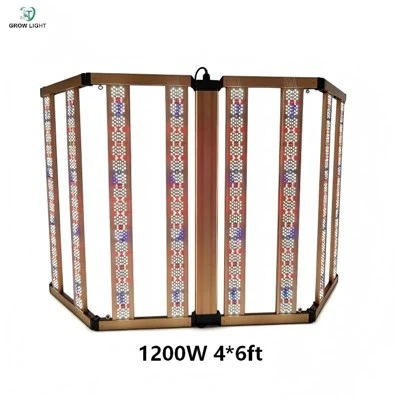
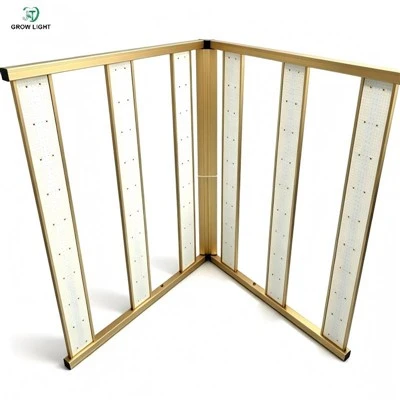
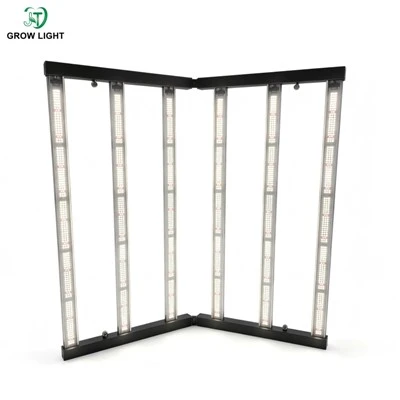
Folding exists for logistics: shipping efficiency, installation convenience, and modular deployment. Once unfolded and mounted, a properly designed foldable LED grow light behaves as a fixed structure.
The long-term question is not whether a light folds, but whether its deployed geometry remains stable over time.
Designing for five-year reliability means designing for the unfolded state. Light bars must maintain consistent spacing. Structural stiffness must prevent subtle sagging or misalignment. Thermal expansion must be accounted for so that geometry does not drift as materials age.
In poorly designed lights, long-term thermal cycling causes slight geometric changes-not enough to be visible, but enough to affect light distribution and airflow interaction. Over years, this slowly reshapes the load the system sees.
In well-designed foldable LED grow lights, geometry is controlled. Structural rigidity, material thickness, and load distribution ensure that the light behaves the same in year five as it did in year one. The difference is not obvious at first. It becomes obvious later.
Why First-Cycle Designs Start Burdening HVAC by Year Three
One of the clearest signs that a grow light was designed for first-cycle performance rather than long-term reliability appears not in the lighting system, but in HVAC behavior.
As lights age, even modest efficiency losses translate into changes in heat release. When diodes are driven aggressively and thermal margins are tight, those changes are amplified.
Heat is released less evenly. Temperature recovery slows after lights-off. Moisture removal becomes harder during dark cycles. HVAC systems compensate by running longer and cycling more frequently.
From an operator's perspective, HVAC appears to be the problem. Energy consumption rises. Control becomes more sensitive. Environmental stability narrows.
In reality, HVAC is responding to a lighting system that no longer behaves the way it did when the room was commissioned.
Lights designed for five-year reliability minimize this effect by keeping thermal behavior predictable. Conservative diode loading, robust heat dissipation, and stable geometry ensure that HVAC continues to operate within its intended design envelope. Lights designed for first-cycle performance push that burden onto the system over time.
The Design Tradeoffs That Separate Year-One Winners from Year-Five Survivors
Designing for five-year reliability requires making choices that may not look impressive on a spec sheet.
- It means accepting slightly lower peak output in exchange for thermal stability.
- It means using thicker aluminum rather than lighter housings.
- It means selecting drivers for electrical stability rather than minimum cost.
- It means operating diodes well below their rated maximums.
These choices reduce headline numbers, but they preserve behavior. Many grow lights that dominate early performance comparisons do so by minimizing margin. They look excellent initially, but they leave no buffer for aging. Design-focused foldable LED grow lights take the opposite approach. They assume continuous operation. They assume thermal cycling. They assume environmental stress.
As a result, they may look less aggressive in year one-but they remain system-friendly in year five.
At JTGL, foldable LED grow lights are designed with long-term operation as the baseline assumption. Every major design decision reflects that assumption.
- High-quality LED chips are selected from widely recognized domestic brands or premium options like Samsung. These LED chips offer consistent output and uniform aging characteristics, reducing uneven degradation over time.
- LED chips are operated at approximately 75% of their rated power, leaving substantial thermal and electrical margin. Lower junction temperatures slow degradation and preserve light shape far beyond the first few cycles.
- The light frame is built from thick, aviation-grade aluminum alloy, not to prevent structural failure, but to ensure long-term thermal stability.
- Heat spreads evenly. Thermal cycling stress is reduced. Geometry remains stable.
- Drivers are chosen with power factors above 0.95, ensuring efficient energy conversion and minimizing waste heat. Stable current delivery protects LED chips and reduces internal stress throughout the system.
The foldable structure itself is engineered for deployment, not compromise. Once installed, it behaves as a rigid, predictable lighting system designed to coexist with HVAC and environmental controls over many years.
This approach does not eliminate aging. It controls it.

Why Five-Year Reliability Is a System-Level Capability
The most important insight is this: five-year reliability is not a component attribute. It is a system capability.
A grow light cannot be reliable in isolation. Its behavior affects airflow, temperature distribution, humidity control, and operational margin. When lighting design ignores this reality, the system absorbs the cost.
Lights designed around first-cycle performance externalize their aging costs. HVAC runs harder. Controls become fragile. Operators compensate.
Lights designed for five-year reliability internalize those costs. Aging occurs slowly and predictably. The system remains stable.
Almost any modern grow light can perform well for one cycle. The real test is what happens after thousands of hours, dozens of thermal cycles, and years of continuous operation.
By then, marketing numbers no longer matter. What matters is whether the system still feels comfortable to operate.
Designing foldable LED grow lights for five-year reliability requires discipline. It requires resisting the temptation to chase short-term metrics. It requires understanding how lighting behavior interacts with the rest of the system over time.
Not every manufacturer makes those choices. But for commercial growers who plan to operate facilities for the long term, those choices make all the difference.