In many commercial grow rooms, nothing dramatic ever happens to the lights.
They don't suddenly shut off.
They don't visibly break.
They don't trigger alarms or force emergency replacements.
And yet, after a few months, the room feels different. Humidity becomes harder to control. Temperature recovery takes longer. HVAC runs more often. Environmental settings that once worked comfortably now require constant tweaking. Yield uniformity slips just enough to be noticeable, but not enough to be obvious.
When growers start looking for the cause, they usually don't look at the lights. After all, the lights are still working. That assumption is where the problem begins. Most grow lights don't break systems by failing. They break systems by slowly changing the way the system behaves, until everything else has to compensate.
This article explains how that happens, why it's so easy to miss, and why the difference between "system-friendly" grow lights and parameter-driven grow lights only becomes clear with time.
Grow Lights Rarely Fail - They Drift, and the System Pays the Price
In the first year of operation, most commercial grow lights behave predictably. Light distribution matches the design layout. Heat output aligns with HVAC calculations. Moisture behavior follows expected patterns.
Over time, that predictability erodes.
LED chips age unevenly. Drivers lose efficiency. Thermal paths change. Light distribution subtly shifts. None of these changes is dramatic on its own, but together they alter the load profile the system was designed around.
This is not failure. It is drift.
The system does not collapse. Instead, HVAC works harder. Airflow margins shrink. Control windows narrow. Energy consumption rises quietly. Operators compensate without realizing they are compensating for lighting behavior that has changed. By the time the system feels "fragile," the root cause is already embedded.
The Light Still Looks Fine - But the Load Is No Longer the Same
One of the most misleading aspects of long-term lighting degradation is that visual brightness tells you almost nothing.
To the human eye, most fixtures still look bright after three or even five years. Measured PPFD averages may still fall within acceptable ranges. On paper, nothing looks wrong.
But plants don't respond to averages. They respond to spatial and temporal consistency. As grow lights age, light output rarely declines uniformly. Certain diodes weaken faster. Some bars lose output earlier. Spectral balance drifts subtly. The result is not a dramatic drop in light, but a gradual loss of uniformity.
At the canopy level, this shows up as uneven growth, inconsistent maturation, and localized stress. Growers often attribute these symptoms to genetics, nutrition, or training because the lights appear to be functioning.
What's actually happening is that the light load has changed shape, and the system is no longer operating under the conditions it was designed for.
When the System Starts Compensating for the Lights
The most telling sign that grow lights are breaking a system is not found in the lighting data - it's found in system behavior.
HVAC systems begin to intervene more often. Fans run longer. Dehumidification cycles increase. Night-time humidity becomes harder to manage. Temperature recovery after lights-off slows down.
None of this feels like a lighting problem. It feels like HVAC underperformance.
In reality, HVAC is doing exactly what it's supposed to do: responding to a load that has changed.
As light distribution becomes less uniform and thermal behavior drifts, the system compensates. That compensation has a cost: higher energy use, tighter control margins, and increased mechanical wear. The grow lights are still operating, but the system is no longer operating comfortably.
Parameter-Driven Grow Lights Age Poorly at the System Level
Many of the lights that cause long-term system instability share similar design philosophies.
They are optimized for impressive specifications: high output, high efficacy, low upfront cost per watt. Diodes are driven close to their limits. Thermal margins are tight. Materials are chosen to meet minimum requirements, not to absorb years of thermal cycling.
In the first year, these lights perform exceptionally well. Output is strong. Numbers look great. The system behaves as expected.
As time passes, the lack of margin becomes a problem.
When diodes lose efficiency, heat output increases. When heat increases, thermal paths matter more. Thin aluminum struggles to dissipate energy evenly. Drivers operate under greater stress. Small inefficiencies compound.
The lights don't fail - they become harder for the system to live with.
This is why many facilities discover that their systems feel less stable after several years, even though no single component appears to be broken.
Why HVAC Often Takes the Blame First
In long-running facilities, HVAC systems are often blamed for issues that originate elsewhere.
Energy costs rise. Humidity control becomes erratic. Operators assume HVAC capacity is insufficient or equipment is aging prematurely.
What's often overlooked is that HVAC was designed for a specific load profile - one defined by lighting behavior at the time of installation.
As grow lights age and drift, HVAC is forced to operate outside its optimal range. Short cycling increases. Dehumidification efficiency drops. Control strategies become less effective.
The HVAC system becomes the visible problem, even though it is reacting to invisible changes in lighting behavior.
This misdiagnosis leads to expensive upgrades, over-sizing, or unnecessary system modifications - all while the original cause remains unaddressed.
System-Friendly Grow Lights Are Designed for Year Three, Not Year One
The difference between lights that quietly break systems and lights that support long-term stability lies in design intent.
System-friendly grow lights are not designed to win spec sheet comparisons. They are designed to behave predictably over time.
That means conservative diode loading. Robust thermal pathways. Materials chosen for long-term stability rather than minimum cost. Drivers selected for efficiency and electrical stability, not just compatibility.
These design choices reduce drift. Light distribution remains more consistent. Heat release stays predictable. HVAC systems continue operating within their intended envelopes.
This is not about perfection - all systems age. It's about aging gracefully, without forcing other systems to compensate. This is why system failure often has little to do with broken equipment and everything to do with how long-term reliability was-or wasn't-designed into the grow room from the beginning.
How JTGL Approaches Long-Term System Stability
At JTGL, lighting design starts with the assumption that fixtures will run continuously for years.
That perspective changes design decisions.
High-quality diodes are selected from recognized domestic brands or premium options like Samsung, ensuring consistent output and uniform aging characteristics. Instead of pushing diodes to their rated limits, each fixture operates at roughly 75% of rated diode power, leaving ample thermal and electrical margin.
The aluminum housing is built from thick, aviation-grade material, not to prevent collapse, but to ensure long-term thermal stability. Heat spreads evenly. Junction temperatures remain controlled. Thermal cycling stress is reduced.
Drivers are chosen with power factors above 0.95, minimizing wasted energy and unnecessary heat generation. Stable current delivery protects diodes and preserves consistent light behavior over time.
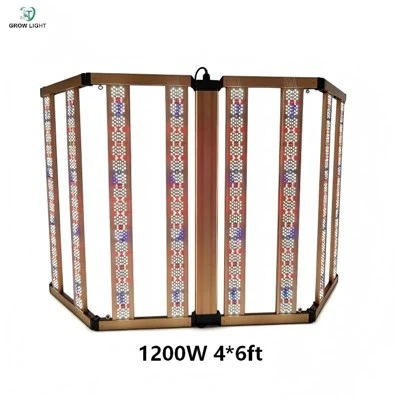
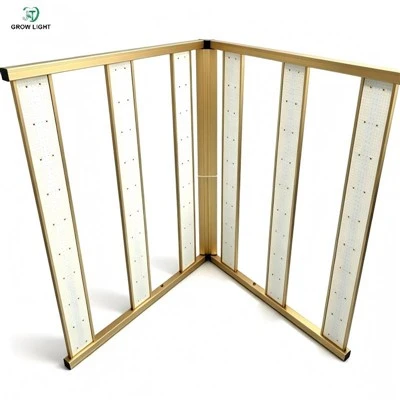
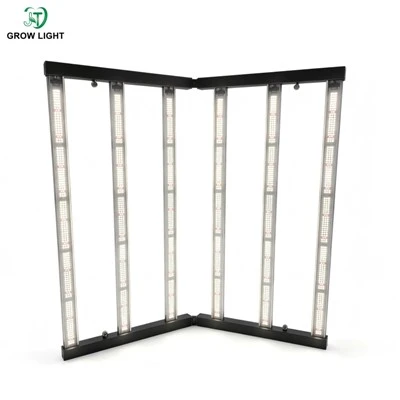
The foldable structure itself is designed for logistics and installation efficiency. Once installed, it functions as a rigid, stable system that does not introduce additional long-term risk. These decisions don't eliminate aging - they control it.
Why System Breakdown Feels Sudden, Even When It Isn't
One of the most frustrating aspects of system degradation is how sudden it feels.
In reality, the system has been compensating for years. Small adjustments accumulate. Tolerances shrink. Operators adapt.
Eventually, the margin is gone.
At that point, the system feels fragile. Any small disturbance causes noticeable problems. What feels like a sudden breakdown is actually the end of a long, quiet process.
This is why so many growers are surprised when they finally trace instability back to lighting. The lights never failed. They simply changed enough that the system could no longer absorb the difference.
Grow Lights Don't Break Systems - Time Exposes Bad Design
The most important conclusion is this: grow lights don't destroy systems overnight.
They reveal whether a system was designed with long-term reality in mind.
Lights designed around short-term performance and marketing numbers place hidden stress on everything around them. Over time, that stress surfaces as instability, inefficiency, and operational frustration.
Lights designed for long-term behavior age more quietly. They preserve system balance. They allow HVAC and environmental controls to do their jobs without constant intervention.
In commercial cultivation, success is not defined by how impressive a system looks in its first year. It's defined by how little it demands from operators in its third, fourth, and fifth.