Most cultivation facilities don't fail because the first room didn't work. They fail because the second, third, or tenth room couldn't be built the same way. Expansion doesn't test ambition - it tests whether early decisions were repeatable.
Lighting sits quietly at the center of this problem. Not because it directly limits yield, but because it shapes how easily success can be copied. When facilities begin planning future expansion, lighting decisions stop being about today's harvest and start becoming about tomorrow's constraints.
This is where foldable LED grow lights enter the conversation - not as a trend, but as a structural tool.
Expansion exposes mistakes that small operations can hide
A single room can tolerate inefficiency. Workarounds don't feel dangerous when they exist only once. A cable routed awkwardly. A fixture layout that "mostly works." A spacing decision that made sense at the time. Expansion magnifies system weaknesses faster than single-room trials.
When a facility scales, every compromise is multiplied. What was once a minor inconvenience becomes an operational tax. Lighting systems that rely heavily on on-site interpretation are especially vulnerable. Each installer makes slightly different decisions. Each room drifts further from the original benchmark. Growers often assume expansion problems are operational. In reality, many of them are structural.

Repeatability matters more than flexibility during expansion
Flexibility sounds attractive early on. Adjustable spacing. Custom layouts. Freedom to adapt. In the first room, flexibility feels empowering. During expansion, it becomes dangerous.
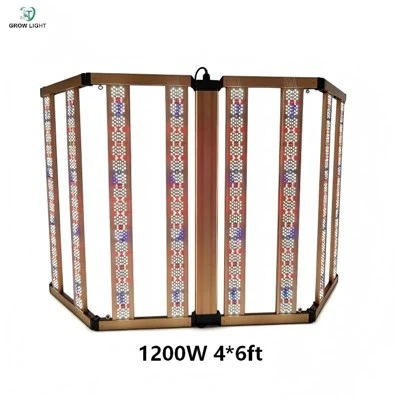
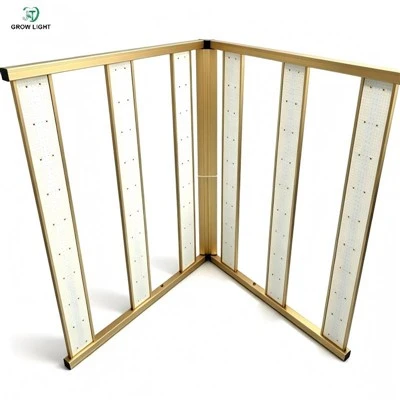
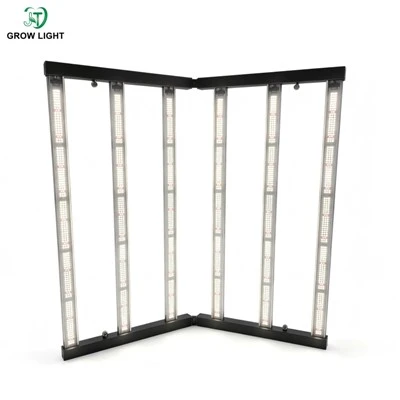
Facilities planning for future growth benefits from systems that behave the same way every time. Foldable grow lights support this by enforcing fixed geometry once deployed. A 4×4 or 4×6 footprint becomes a repeatable unit rather than a suggestion.
This repeatability allows new rooms to be built without rethinking layout fundamentals. The room isn't redesigned - it's cloned.
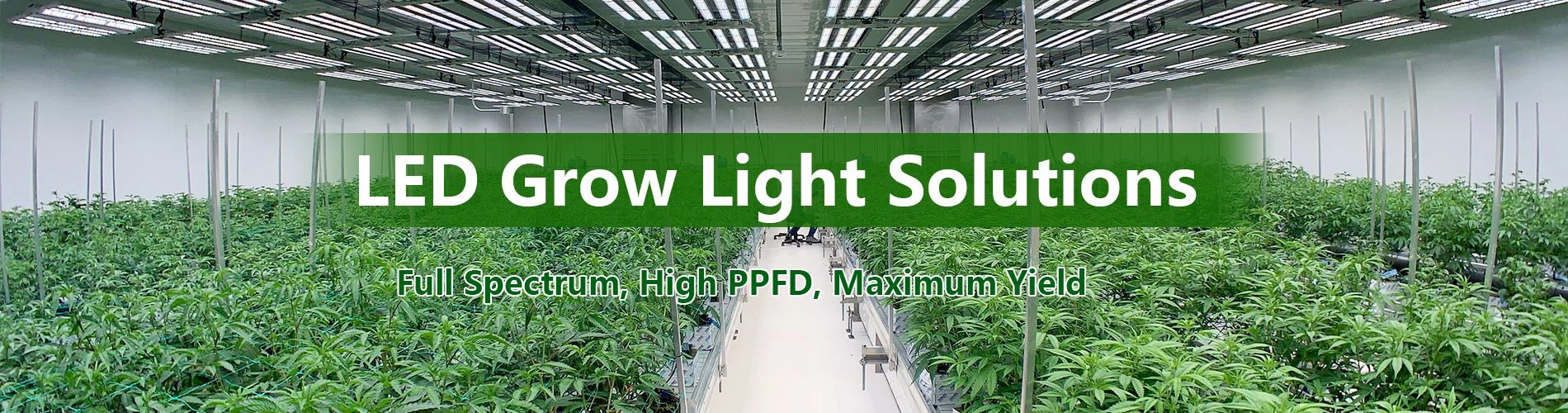
In commercial cultivation, especially cannabis cultivation, where consistency across rooms affects scheduling, compliance, and forecasting, this matters far more than customization. For cultivation facilities planning phased growth, many operators standardize their layouts around foldable LED grow lights to ensure new rooms replicate existing performance without redesign.
Expansion planning is really constraint planning
Future expansion is never unlimited. Ceiling height. Electrical capacity. HVAC load. Structural support. These constraints define how far a facility can grow.
Lighting systems that change behavior across installations make constraint modeling difficult. If spacing, coverage, or power density shifts from room to room, planners lose predictability.
Foldable LED grow lights reduce this uncertainty. Because their deployed geometry is consistent, planners can model expansion accurately. Power load remains stable. Coverage assumptions remain valid. Future rooms behave like existing ones.
This predictability allows expansion decisions to be made earlier - and with fewer surprises.
Early lighting decisions lock future options
One of the least discussed risks in expansion planning is path dependency. Early decisions shape what is possible later.
A lighting system that fits perfectly today may block future density increases. A layout optimized for one crop may resist adaptation. A fixture footprint that requires manual interpretation may become a bottleneck when scaled.
Foldable grow lights don't eliminate path dependency, but they clarify it. Their structure makes limitations visible early. Growers can see whether a system will scale before expansion forces the issue.
This visibility is valuable. It allows strategic decisions to happen before capital is committed.
Standardization simplifies growth beyond construction
Expansion doesn't stop at building rooms. It extends into staffing, training, and daily operations.
As facilities grow, teams grow. New technicians. New operators. New maintenance routines. Standardized lighting layouts reduce training time and error rates. When every room uses the same foldable LED grow light platform, familiarity replaces improvisation.
Operators don't need to learn exceptions. Maintenance teams don't encounter surprises. Troubleshooting becomes faster because variables are reduced.
This operational simplicity rarely appears in purchasing spreadsheets, but it becomes increasingly valuable as facilities scale.
Expansion magnifies small inefficiencies into real costs
What feels manageable at small scale becomes expensive at large scale. Extra installation time. Additional adjustments. Minor misalignments. Each adds labor, delays, and risk.
Foldable LED grow lights reduce these costs by minimizing on-site decisions. Structure arrives defined. Installation becomes execution rather than interpretation. Rooms come online faster and with fewer corrections.
In phased expansion projects, this difference compounds. The cost savings from reduced friction often exceed the perceived premium of standardized systems.
Cannabis cultivation highlights the value of replication
Cannabis cultivation places unique pressure on expansion planning. Regulatory oversight. Batch consistency. Harvest timing. Product uniformity.
In this environment, variability is not just inconvenient - it is risky.
Foldable LED grow lights appeal to cannabis operators because they support replication. Rooms behave similarly. Light distribution patterns repeat. Growth timelines align more closely.
This alignment simplifies planning and reduces surprises across multiple flowering cycles.

Manufacturer perspective: expansion reveals buyer intent
From a manufacturer's point of view, expansion-focused buyers ask different questions. They are less interested in novelty and more interested in reliability.
At JT Grow Light, conversations with expansion-minded facilities often revolve around whether a lighting platform can remain unchanged as the operation grows. Will the same fixture still make sense in five rooms? Ten rooms? Twenty?
Foldable LED grow lights tend to appeal to this mindset because they support disciplined growth. They don't force expansion - but they don't resist it either.
When foldable design does not guarantee success
It's important to be honest: foldable design alone does not guarantee smooth expansion. Poor planning, unrealistic density targets, or ignored infrastructure limits can still derail growth.
Foldable LED grow lights reduce risk, but they cannot rescue flawed assumptions. Expansion success still depends on realistic modeling and disciplined execution. The advantage of foldable systems is that they make these assumptions visible earlier - when changes are still affordable.
The grower takeaway
For facilities planning future expansion, lighting decisions are no longer about maximizing today's yield. They are about ensuring tomorrow's rooms behave like today's successes.
Foldable LED grow lights support this goal by standardizing structure, simplifying replication, and reducing variability across installations.
Expansion does not reward clever improvisation. It rewards systems that perform the same way, room after room, cycle after cycle.
In that context, foldable design is not about convenience. It is about strategic restraint - choosing systems that scale without fighting back.