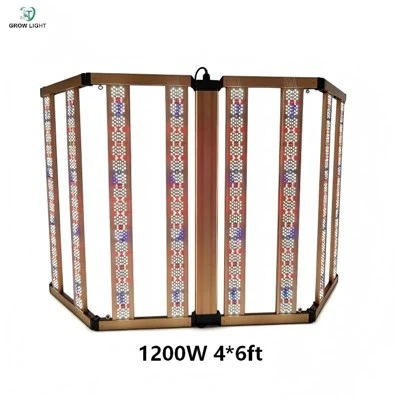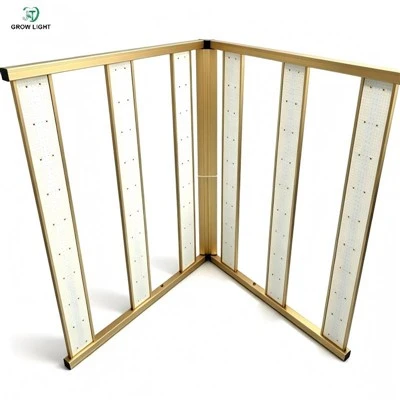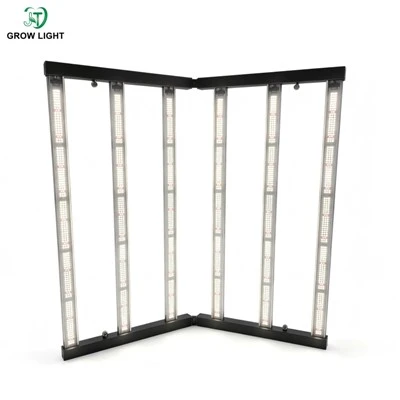
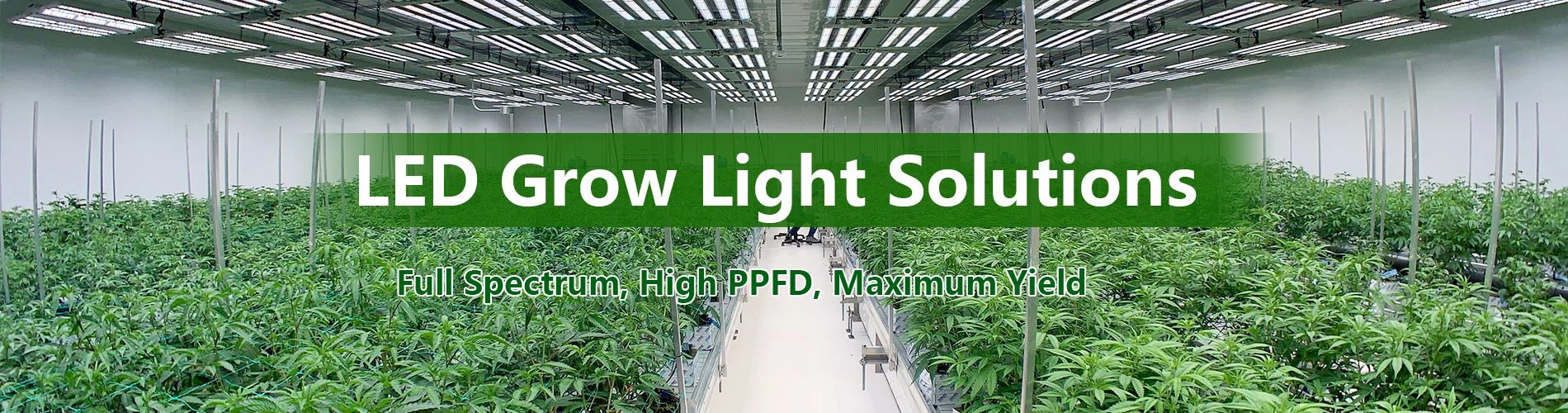

Every grower has seen it happen. A project launches with confidence because the lighting specs look perfect. High wattage. High PPFD. Full spectrum. Foldable structure. On paper, everything checks out. Yet weeks into operation, something feels wrong. Plants don't respond as expected. Environmental stability becomes harder to manage. Yield projections quietly get revised downward.
The frustrating part is this: nothing is "technically wrong."
The lights work. The data is real. The power is there.
So why do some high-power foldable LED grow lights still fail in real commercial cultivation projects?
The answer rarely sits in one spec. It lives in the gap between theoretical performance and system behavior. High-power setups often reveal their weaknesses during expansion.
High power magnifies system weaknesses instead of fixing them
Power is not neutral. It amplifies whatever system it enters.
In a well-balanced grow room, high-output lighting can push performance forward. In a marginally balanced room, it exposes every weakness. Temperature gradients widen. Humidity control becomes harder. Small airflow inefficiencies turn into stress patterns.
Growers often assume higher wattage gives them "headroom." In practice, it removes tolerance. High-power foldable grow lights demand tighter environmental control than many rooms can realistically provide.
When those controls fall short, the lights get blamed-even though the system was never designed to support that level of intensity. This is why experienced growers evaluate foldable LED grow lights not only by wattage, but by how well their systems can support that power in real cultivation environments.
PPFD numbers don't represent usable light
One of the most common traps is equating PPFD maps with real-world usability.
A high-power folding LED grow light can deliver impressive peak PPFD values. But plants don't grow under charts. They grow under conditions. If that intensity isn't evenly distributed across the canopy, or if it overwhelms the plant's ability to transpire and regulate temperature, performance suffers.
In cannabis cultivation especially, excess intensity without matching airflow and VPD control often leads to stressed plants rather than higher yield. Leaves curl. Flower development becomes inconsistent. The room looks powerful but behaves unstable.
High power increases the margin for error, not the margin for success.
Foldable structure doesn't guarantee correct deployment
Foldable design is often misunderstood as "self-correcting." Many growers assume that because a light unfolds into a defined shape, deployment mistakes are impossible. That assumption causes problems.
High-power foldable LED grow lights still require discipline. Hanging height. Spacing between fixtures. Alignment across the room. When these variables drift, high output magnifies the consequences.
In several real projects, failure wasn't caused by the light's capability, but by slight inconsistencies multiplied across dozens of fixtures. Each one was "almost right." Together, they created uneven stress. Foldable structure reduces decisions, but it does not eliminate responsibility.
Heat load isn't just about temperature readings
Another hidden issue with high-power systems is how growers interpret heat.
Many look at ambient temperature and assume everything is under control. But plants experience radiant and convective heat differently. High-power foldable grow lights increase radiant load at the canopy, even when air temperature appears acceptable.
If airflow and leaf-level cooling are not sufficient, plants operate under chronic stress without triggering obvious alarms. Growth slows. Metabolism shifts. Yield suffers quietly. This is one of the most common reasons high-power systems "underperform" without obvious failure.
More power often hides poor layout decisions
High-output lighting can compensate for bad layout-for a while.
Poor spacing. Uneven coverage. Marginal overlap zones. High-power foldable LED grow lights can mask these issues initially because they flood the room with photons. But over time, the underlying imbalance reasserts itself.
Plants closest to ideal zones thrive. Others lag. Uniformity disappears. Growers then respond by adjusting feeding, genetics, or schedules-treating symptoms rather than causes. In many failed projects, the lighting system didn't fail. The layout was never designed to handle that level of intensity consistently.
Problems that appear manageable in one room become critical during scaling. A high-power foldable grow light that works "well enough" in a pilot room may become unmanageable when replicated across multiple rooms.
Power density increases. Heat accumulation compounds. Environmental control becomes reactive instead of stable. This is why some growers report success in early trials but struggle during expansion. The lighting choice didn't change. The system context did. High power reduces forgiveness during replication.
The psychological trap of "spec-driven confidence"
One of the most dangerous dynamics in lighting decisions is psychological.
High specs create confidence. Confidence reduces scrutiny. When growers believe they've "overbuilt" lighting, they pay less attention to integration. Environmental planning becomes secondary. Execution discipline relaxes.
This is not a technical problem. It's a human one. Several real-world failures stemmed from the belief that lighting was "handled," allowing other systems to lag behind. When issues emerged, the lighting took the blame-even though it was simply doing exactly what it was designed to do.
Manufacturer perspective: power must match system maturity
From a manufacturer standpoint, high-power systems reveal how mature a grow operation truly is. At JT Grow Light(JTGL), feedback from commercial cultivation projects consistently shows that high-power foldable LED grow lights perform best in facilities with disciplined environmental control, airflow planning, and layout consistency.
In less mature systems, moderate power with higher stability often outperforms aggressive output. Not because the lights are weaker, but because the system can support them. This isn't about selling less power. It's about matching power to reality.
Why "failure" doesn't mean the light was wrong
It's important to define failure honestly. Most high-power foldable lights that "fail" are not defective. They meet their specifications. They deliver output. The failure occurs at the system level.
When growers recognize this, they stop chasing specs and start evaluating integration. They ask different questions. Not "how much power," but "how much power can my system actually use."
That shift often leads to better outcomes than simply upgrading equipment. High-power foldable LED grow lights are tools. Powerful ones. But power is not a shortcut.
Used within a balanced system, they enable exceptional results. Used without discipline, they expose weaknesses faster than any other component.
For growers, the lesson is simple but uncomfortable:
If a high-power system fails, it's rarely because the light wasn't strong enough. It's because the system around it wasn't ready.
Understanding that difference saves money, time, and frustration-and leads to better decisions long before plants show stress.