In modern indoor cultivation, nearly every grower has encountered this phenomenon: the plant's top canopy appears vibrant and thriving, yet lifting the foliage reveals an entirely different world beneath.
There, light is dim, leaves appear dull, flower buds are sparse, sugar content is low, and moisture easily accumulates, fostering mold growth. This isn't because the plant is "unhealthy," but because the way light propagates in the physical world dictates...
Relying solely on overhead lighting prevents plants from reaching their full potential. As research deepens, LED technology matures, and yield competition intensifies, more growers recognize that true yield limitations stem not from wattage, but from light distribution.
This is precisely why under-canopy lighting has gained prominence.
No matter how powerful your overhead lights are, once plant canopies become dense, light penetration decreases exponentially.
Scientific research shows:
- Upper leaves directly absorb 90% of photons
- Only 5–10% of PAR (Photosynthetically Active Radiation) reaches the lower layers
- Critical spectral bands (blue and red light) suffer severe loss during penetration
- Insufficient bottom-layer energy leads to underdeveloped buds in lower tiers (commonly called "popcorn flowers")
You invest 100% energy in the upper canopy, yet less than 10% reaches the lower tiers. This is why uneven light distribution causes robust upper growth but poor middle- and lower-level development-not a technical flaw, but an optical law.
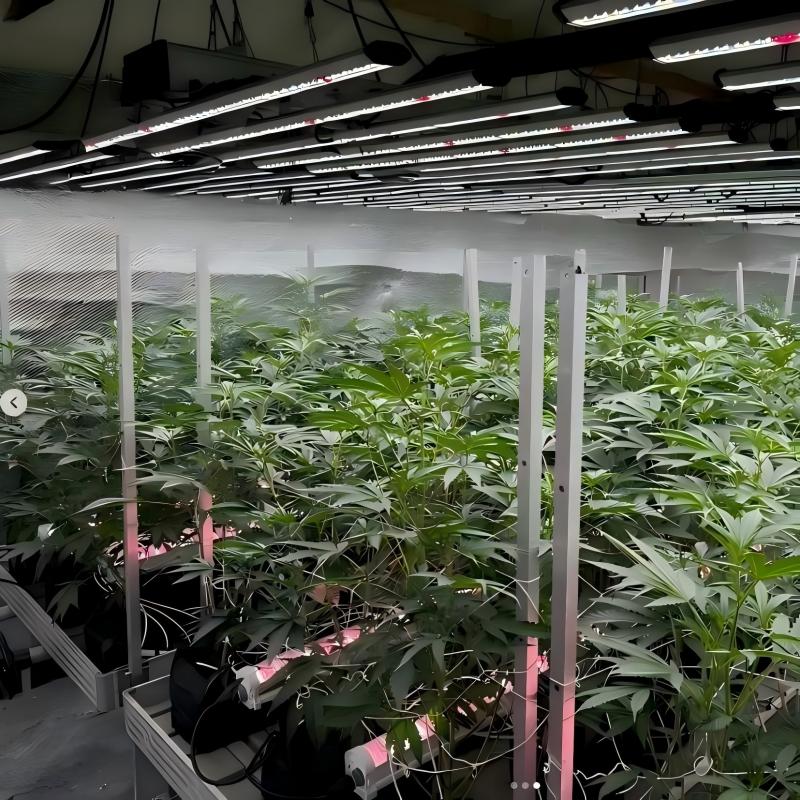
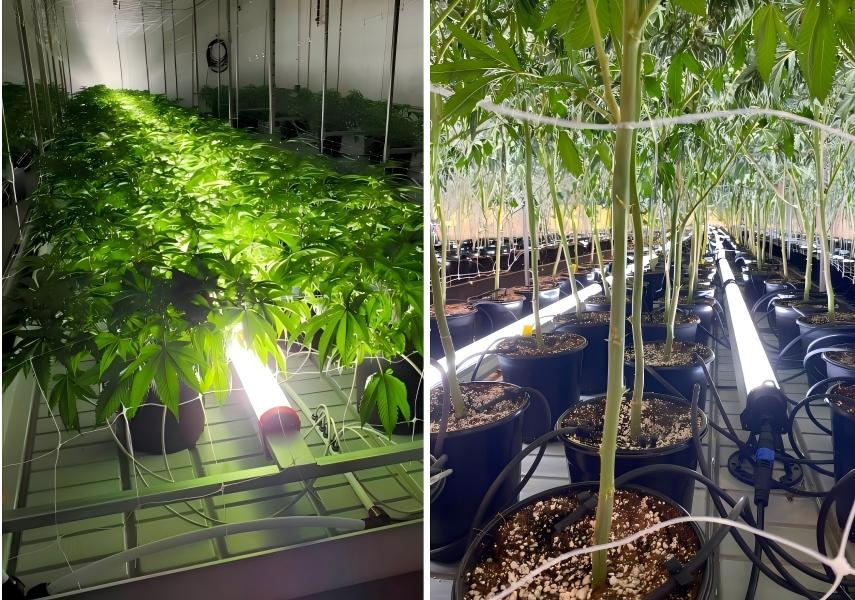
2. Under-Canopy Lighting Emerges as "Optical Remediation."
What truly elevates under-canopy lighting isn't marketing, but science.
Lower leaves aren't incapable of absorbing light; rather:
- Upper surface absorption rate: ~90%
- Lower surface absorption rate: ~50–60% (still highly significant)
If you can deliver light to the lower layers, they can utilize it effectively.
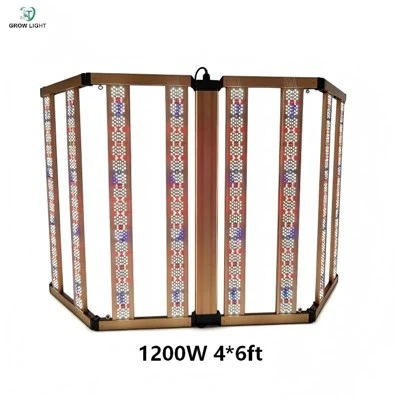
Combined with modern LEDs' high PPE (2.8–3.1 μmol/J), supplemental lighting is now more cost-effective and efficient than ever. For instance, the JT-UCL 4ft LED under-canopy grow lights have become essential tools for canopy illumination.
3. Commercial cultivation is adopting a unified "distributed lighting strategy"
Previous lighting approaches primarily focused on toplighting, prioritizing maximum intensity at the top. However, extensive experiments show that when toplighting reaches a certain PPFD (e.g., 700–900 μmol/m²/s), leaves tend toward light saturation. Beyond this point, increasing wattage yields only marginal yield gains while creating light waste. However, dense foliage in the upper canopy blocks light, leaving the middle and lower layers severely underserved. Research thus proposes a more efficient strategy:
Instead of wasting 1000W entirely on top lighting, allocate it as 800W top light + 150W under-canopy LED grow lights.
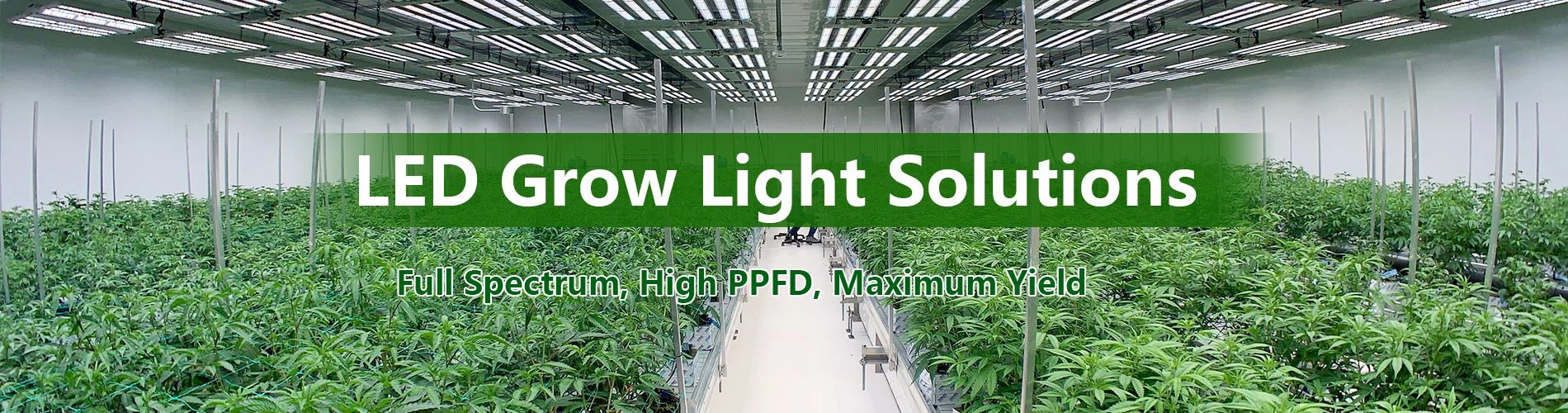
This is precisely why most commercial greenhouses, vertical farms, and medical cultivation facilities are transitioning to this approach.
Results:
Energy consumption remains the same or even decreases
1
>>
PPFD distribution across the entire plant becomes more uniform
2
>>
Significant improvement in lower bud volume, density, and resin content
3
>>
30–60% reduction in popcorn buds
4
>>
20–40% increase in marketable Grade A buds
5
>>
15–30% increase in total dry flower yield
6
4. Advantages of JT-UCL120W LED Under-Canopy Grow Lights
In real cultivation environments:
1) Lower zones require moderate PPFD levels
2) Medium-power light bars provide more uniform coverage
3) Fixtures must be lightweight to avoid rack load stress
4) Low heat output prevents root zone microclimate disruption
5) Flexible installation and daisy-chain capability required
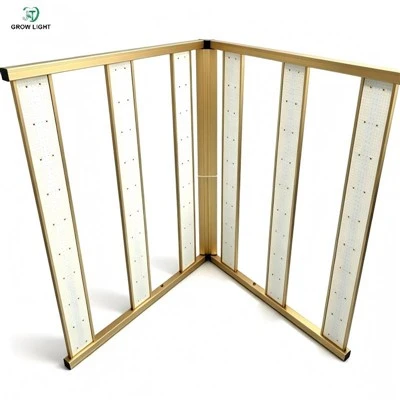
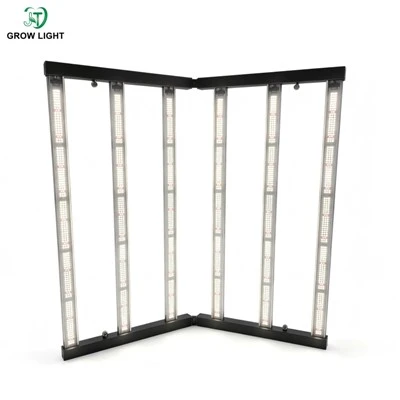
This precisely aligns with the optimal range for 120W under-canopy lights. The JT-UCL120W under-canopy grow lights are designed to meet these requirements:
4FT Length
- Perfectly matches most grow racks and 4×4 growing zones
- Light spreads naturally with minimal shadowing
01
Three-Sided Light Emission (240–270°)
- Significantly broader coverage than standard 120° light bars
- Crucial for dense canopy growth.
02
PPE 2.8–3.1 μmol/J
- Higher output with lower energy consumption
- Lower layers require efficient light, not intense illumination.
03
IP66
- Engineered for humid, spray irrigation, and chemical environments
- Bottom zones experience the highest humidity-waterproofing must be reliable.
04
Supports Series Connection
- 120V (7–8 units)/240V (12–14 units)
- Reduces wiring in large greenhouses, offering greater cost efficiency for large-scale projects.
05
In a typical 4×4 cannabis area using only overhead lighting:
- Top PPFD: 800–1200 μmol/m²/s
- Mid PPFD: 300–500 μmol/m²/s
- Lower PPFD: 50–120 μmol/m²/s
After adding two 4ft LED under-canopy grow lights (120–125W each):
- Lower canopy PPFD: 200–350 μmol/m²/s
- Significant reduction in light distribution standard deviation
- Most noticeable improvement in lower bud density
Grower's real-world feedback: "The lower canopy used to be the part I dreaded most, but now it's the part I trust most."


6. Why does under-canopy lighting not only boost yield but also enhance flower quality?
- Lower canopy buds typically suffer from low light exposure: Fibrous, undersized, lacking terpenes, insufficient resin production/virtually worthless post-drying
- But with improved light distribution, Flowers in Zones C and B now exhibit Grade A structure; deeper color, higher density; increased THC and terpene content; and significantly enhanced batch consistency
- For commercial growers, a batch's value depends on Grade A flower percentage, not total weight.
This is where the true value of under-canopy lighting lies.
The following recommendations are based on JTGL engineering tests + grower feedback:
- Height above ground: 10–20 cm
Position closer to the base of the stem, angled slightly inward.
- Distance from plant: 20–30 cm
Avoid light pressure while preventing wasted light energy.
- Lighting duration: Synchronized with flowering phase (typically 12/12)
Lower layers require no additional hours.
- Pairing: 640W–850W overhead lighting
Distributed lighting outperforms single high-wattage fixtures.
- Add bottom fans
Prevent humidity buildup at the base.


8. Summary: Under-Canopy Lighting Offers Greater Rationality
Previously, focus centered on: higher PPFD; higher PPE; stronger light intensity; broader coverage.
Only in recent years has recognition grown that even the most powerful overhead lighting cannot overcome structural issues caused by light attenuation.
The JT-UCL120W under-canopy grow light, representing this 120W, 4FT, three-sided light supplementation approach, scientifically complements traditional lighting methods.
It reduces light waste, enhances overall plant utilization efficiency, and ensures the middle and lower layers are no longer "the neglected world."
As CEA continues its rapid development, LED under-canopy lighting will become the standard configuration of the future.
FAQ
Q: Do plants need under-canopy grow lights during the vegetative stage?
A: No, canopy density isn't high enough during vegetative growth to require additional energy.
Q: Is canopy lighting better than bottom lighting?
A: Both can increase yield on lower branches. Bottom lighting works best for the lowest buds; side lighting is more effective for mid-level branches.
Q: Can increasing top lighting (beyond 800-900 watts/4x4 ft) compensate for the absence of LED under-canopy grow lights?
A: No, upper foliage can absorb only limited light energy. Most additional light would be wasted or cause plant overheating.
Q: Which spectrum is best for under-canopy LED grow lights?
A: Research indicates red/far-red dominant spectra promote lower bud enlargement; many grow shops use mixed spectra for optimal results.
Q: Can I reduce the number of under-canopy LED grow lights to save energy?
A: Two lights per 4 ft x 4 ft growing space are typically used to ensure even coverage, though smaller areas may require only one. Avoid excessive lighting to prevent leaf damage.
Reference Sources
- Academic Databases (e.g., ScienceDirect, Frontiers in Plant Science, MDPI Plants)
- Controlled-Environment Agriculture Industry Reports (Fluence, Philips/Signify, GPN)
- Commercial Grower Case Studies from greenhouse and indoor cultivation facilities
- Horticultural Lighting Manufacturers' Optical & Performance Lab Testing (e.g., Shine Lighting, third-party photometric labs)