In the rapid development of controlled environment agriculture (CEA), optimizing lighting strategies is becoming a key variable for improving the yield and quality of many crops. For decades, growers have relied primarily on top lighting systems, but as crop canopy structures have become more complex and plant densities higher, a long-neglected problem has become increasingly apparent: severe light deficiency within and below the canopy.
Recent research and experiments show that in tomatoes, strawberries, cucumbers, various vertically grown crops, and the rapidly emerging commercial cultivation of hemp, under-canopy lighting is no longer an "optional" method, but a key technical means to improve light utilization, optimize canopy uniformity, and enhance yield and stability.
This article will delve into the scientific logic, optical behavior, and crop responses behind canopy lighting from a technical perspective, and, combined with JTGL's engineering R&D experience, explain why under-canopy grow lights are becoming a new standard in high-end facility agriculture.
1. Why is there insufficient light inside the canopy?
Whether it's hemp, tomatoes, or strawberries, once the plant height exceeds a certain threshold, an unavoidable problem arises: light from the top can never penetrate evenly across the entire canopy.
The main reasons for this phenomenon include:
Increasing Leaf Area Index (LAI)
When LAI is too high, the light attenuation becomes more significant with each layer of leaves penetrated. Studies show that for some crops, PPFD decreases by 70-85% at a depth of 40–50 cm.
Self-shading caused by canopy geometry
The relatively horizontal angle of the top leaves easily creates photovoltaic shading, resulting in the lower and middle layers receiving almost no effective photons.
Significant lateral branching in hemp crops
Broad lateral branches further block light. Some growers find that it's not that the plant lacks vitality, but rather that the lower part doesn't receive any light for photosynthesis.

This means: Lower leaves are in a near-dormant state of photosynthesis; lower flower spikes are weak, airy, and lightweight; only the upper 20-30% actually contribute to yield.
This leads to a key question: Top lighting cannot truly activate the productivity of the entire plant.
2. How does Under-Canopy Lighting change the distribution of light within the canopy?
Insufficient light at the top is not due to a lack of light, but rather an unreasonable light distribution.
This is precisely the value of under-canopy grow light: allowing light to enter the canopy from different directions, changing the path of light in space.

Multi-directional photon entry paths
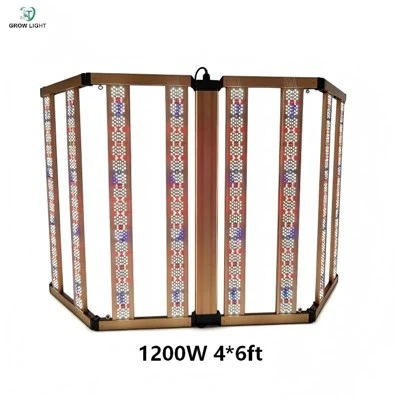
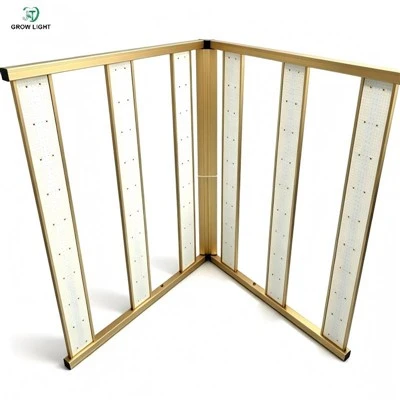
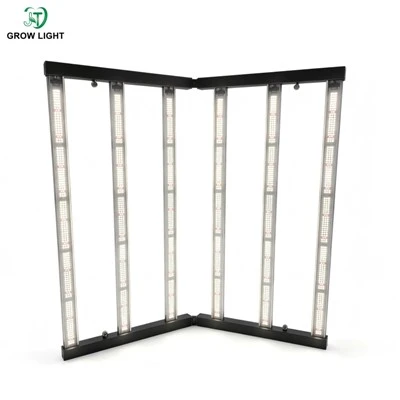
For example, JTGL's 3-sided under-canopy light provides 240–270° multi-directional light output.
This optical structure doesn't provide "more light," but rather light from different directions.
Photons at different angles can:
- Penetrate the gaps between horizontal leaves
- Reach branches and leaves that were previously completely shaded
- Activate obscured flowering sites
- Re-illuminate lower buds that are usually discarded

Significantly improved light distribution uniformity
In internal experiments, we measured:
- With top light only, lower PPFD ≈ 5–15% of upper PPFD
- With under-canopy illumination, lower PPFD can be increased to 40–60%.
This isn't just "adding light to make it brighter," but rather making photosynthesis usable and sustainable throughout the entire plant.

Under-canopy lighting alters the physiological behavior of the entire canopy
When the lower canopy participates in photosynthesis, three significant changes occur:
- Lower leaves no longer prematurely yellow and fall off;
- Branches thicken and transport efficiency increases;
- Lower flower spikes become more compact, with a significant increase in dry weight.
In protected agriculture, this balanced growth itself is a huge economic benefit.
3. Why is hemp particularly suitable for Under Canopy Lighting?
While many crops benefit, hemp is one of the most significantly affected, for three reasons:
The Cannabis canopy structure provides high shading
Mature plants have extremely high LAI (lower canopy area) and lateral branching, naturally placing the lower half in a low-light environment.
Lower canopy spikes are highly sensitive to light response
With increased light:
- Airy buds are significantly reduced.
- Style color is more uniform.
- Cannabinoid and terpene development is more stable.
- Flower firmness is improved (crucial for market price).
The commercial value of cannabis highly depends on "consistency in overall plant quality."
Significant differences between top and side flowers lower the grade of the entire batch.
Under-canopy lighting allows for synchronized maturation throughout the plant, which is extremely important for commercial growers.

4. Why do most ultimately choose under-canopy lighting?

Inter-canopy lighting
Lights are hung in the middle of the plant or between branches.
Disadvantages:
- Too close to tissue, prone to photobleaching.
- Disrupts airflow.
- Obstructs access during harvesting and maintenance.
- Significant microclimate fluctuations (localized temperature increases).

Side-lighting
Lights are installed on trellises or side walls.
Disadvantages:
- The central canopy is difficult to illuminate.
- Maintenance and tying operations are easily interfered with by the lighting fixtures.
- Branches easily get too close to the fixtures, causing overexposure.

Under-canopy lighting
Lights shine from below, avoiding most of the risks of the previous two methods.
Advantages:
- More even lighting, covering the entire lower layer.
- Completely unobstructed, making harvesting and pruning convenient.
- Does not interfere with airflow.
- More stable microclimate.
- Plants are less likely to be scorched.
- Simple installation and lower cost.
This is why under-canopy grow lights have rapidly become popular in North American greenhouses and indoor cannabis facilities.
5. How should under-canopy lighting be configured?

Spectrum
Research on the most effective spectra for cannabis is ongoing, but two trends have become clear:
- Red light (especially 660nm) enhances biomass and lowers flower spike development.
- Moderate far-red light improves canopy transmittance and yield.
JTGL's under-canopy lights use a full spectrum + red-rich spectrum (320–800nm), suitable for the light penetration needs of dense canopies.

PPFD (Light Per Filter)
The under-canopy is not necessarily better the brighter it is.
- General recommendation: 80–150 PPFD. Too high will inhibit leaves; too low will not activate photoreaction centers.
JTGL uses an upward flexible diffusion optical structure to achieve uniform supplemental lighting without overexposure.

Energy Consumption and Lighting Strategy
Under-canopy lighting is not "extra electricity," but rather a redistribution of light power.
For example:
Traditional solution:
- 1000W top light → Almost no light in the lower layer
Optimized solution:
- 680–850W top light + 260–340W JTGL under canopy light
Result: Same energy consumption → Improved overall PPFD of the canopy → Improved light utilization → Increased output
This is true "energy efficiency optimization".

6. Why are JTLG's Under-Canopy Lights more engineering-wise?
The engineering team focused on solving three key issues when developing this light:
1) 240–270° multi-directional light output, truly illuminating the center of the canopy.
Unlike the industry's "pure forward-facing lighting," JTGL uses a multi-directional light cavity structure to allow light to enter the canopy from multiple angles, reducing self-shading effects.
2) Lightweight and quick to install, without altering the structural stress.
Weighing less than 2.3kg, it does not add extra load to vertical racks.
3) High CRI, Stable Light Color, Adaptable to Humid and Hot Environments
A CRI of 95 makes it easier for managers to observe leaf color changes.
IP65 construction is suitable for the high humidity and daily cleaning environments of cannabis farms.
4) Strong Series Connection Capacity, Simplified Engineering Wiring
- 120V: 7–8 strips can be connected in series
- 240V: 12–14 strips can be connected in series
Reducing installation time and project wiring costs.
Under-Canopy Lighting will become the new mainstream in cannabis cultivation because it solves two of the most difficult bottlenecks in facility agriculture over the past decade:
✓ Lack of light inside the canopy
(leading to a significant waste of potential yield)
✓ Uneven plant growth and unstable yield
(affecting commercial grade and profitability)
The essence of under-canopy lighting is not simply "adding another row of lights," but rather allowing the entire plant to contribute to yield.
With the accumulation of more experimental data and the continuous evolution of LED technology and optical design, under-canopy lighting will not only be a "supplementary lighting device," but a core component of future canopy management strategies.
For facility agriculture producers seeking high yields, stability, and consistent quality, this is a technological direction worth considering as early as possible.
References:
1. ScienceDirect: Research on Canopy Lighting Applications
2. Frontiers in Plant Science: Research on LED Light Distribution in and Under the Canopy
3. Produce Grower: Intracanopy Lighting Research
4. Greenhouse Grower: Greenhouse Interlighting
5. Shine Lighting: Greenhouse Interlighting