
Heat stress in strawberry racks rarely shows up all at once.
Most of the time, it creeps in quietly. Plants don't collapse. Sensors don't alarm. But fruit size starts to vary. Flowering becomes less consistent. Leaves look fine in the morning and slightly tired by the end of the day. By the time people start adjusting airflow or irrigation, the system has already been under pressure for weeks.
In many rack systems, heat stress is not caused by a single failure. It's the result of small design decisions adding up over time, and lighting is often one of the biggest contributors.
Heat stress is not just a temperature reading
One of the biggest misunderstandings about heat stress is treating it as a number on a screen.
Room temperature can look acceptable while the plant zone is already too warm. In rack systems, strawberries sit in a narrow layer where air movement is limited. Heat builds up close to the canopy and stays there longer than expected.
Strawberries are especially sensitive during flowering and fruit development. Even slight, repeated temperature increases at canopy level can affect fruit set and quality, long before obvious symptoms appear. This is why growers often feel something is "off" before they can measure exactly what it is.
Why rack systems trap heat more easily
Rack systems behave very differently from open rooms or single-layer setups.
Each layer creates a horizontal barrier. Airflow slows down. Warm air has fewer paths to escape. When lights are installed close to the canopy-as they must be in rack systems-heat is introduced directly into this confined space.
As more layers are added, these effects compound. What worked on two or three levels can start to fail on six or eight. Heat doesn't rise cleanly. It spreads sideways, lingers, and gradually raises the baseline stress level of the crop. This is why heat issues often appear only after a system scales.
Lighting is a major heat source
It's easy to underestimate how much heat lighting introduces into a rack system.
Even efficient LED fixtures convert a portion of electrical energy into heat. When that heat comes from a high-wattage source concentrated in a small area, it creates local hotspots that are hard to manage.
In rack systems, the problem isn't that LEDs are inefficient. It's that the heat is delivered too aggressively, too close, and too unevenly. Once heat is introduced at the wrong point, ventilation and cooling systems are forced into a reactive role instead of a stabilizing one.
This issue is closely tied to how lighting is distributed in vertical systems. We've discussed the broader design logic in LED Tube Grow Lights Design for Vertical Farming.
Common lighting mistakes in strawberry rack systems
Many heat-related problems can be traced back to a few recurring lighting choices.
One is relying on fewer, higher-wattage fixtures. While this may simplify installation, it concentrates both light and heat in specific zones. Another is assuming that if leaves are not burning, heat is not an issue. Strawberries often respond to heat stress through reduced consistency rather than obvious damage.
A third mistake is copying lighting layouts from greenhouse or open-room designs without adjusting for rack geometry. What works with more vertical space and airflow does not automatically translate to stacked systems.
Many of these issues don't show up on day one. They usually appear only after a system has been running for a while. When that happens, walking through the lighting layout step by step is often more useful than adjusting one setting at a time.
Low wattage, close placement, even spread
Avoiding heat stress in rack systems is less about adding cooling and more about how heat is introduced in the first place.
Lower wattage fixtures spread heat across a wider area instead of dumping it into one spot. When combined with close placement and linear layouts, they create a more uniform environment at canopy level.
This approach doesn't eliminate heat, but it makes it predictable and manageable. Plants experience a steady condition instead of fluctuating micro-hotspots, which is far easier for strawberries to tolerate over long production cycles.
How this translates into a practical lighting solution
In practice, avoiding heat stress on strawberry racks often comes down to how light is delivered, not how much is delivered.
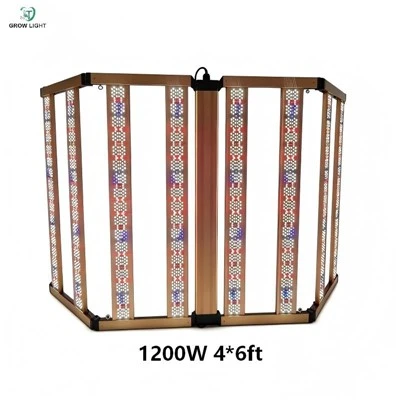
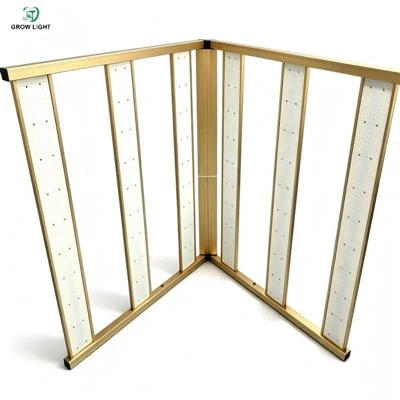
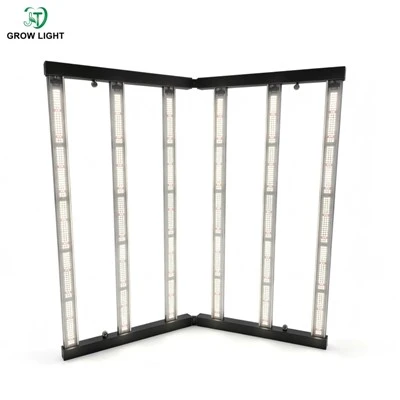
This is where a 40W Linear LED Grow Light Bar approach works well. Instead of relying on a few high-output fixtures, multiple 40W linear LED grow light bars can be placed along each rack layer. Light is distributed evenly across the tray, and heat enters the system gradually rather than in concentrated hotspots.
Because each light runs at a moderate output, lights can be installed close to the canopy without pushing temperature too hard at the plant level. Over long operating hours, this makes a noticeable difference. The rack zone stays more stable, and airflow systems have an easier job maintaining balance.
This kind of setup does not eliminate heat, but it keeps heat predictable. And in strawberry production, predictability is often the difference between a system that runs smoothly and one that requires constant adjustment.
A large part of this approach comes down to choosing the right wattage for close-placement lighting. We explain why this matters for strawberries in Why 40W Works Better for Strawberry Rack Lighting.
If this sounds familiar in your own rack setup, it's usually easier to look at the whole picture-fixture layout, wattage, and spacing-rather than trying to fix heat symptoms one by one.
Designing light and heat together
In well-performing rack systems, lighting and thermal design are not treated as separate problems.
The lighting layout determines where heat enters the system. Once that is set, airflow and cooling can be tuned to support it. When lighting design ignores thermal consequences, no amount of airflow adjustment fully fixes the issue.
This is why successful systems often start with conservative lighting choices and refine from there, rather than pushing output and trying to correct heat later.
A simple rule for safe rack lighting
There is a practical rule that many experienced growers follow, even if they don't phrase it this way: If your lighting setup makes you worry about heat every day, the design is already working against you.
Good rack lighting should fade into the background. It should deliver consistent light, introduce heat gently, and allow the system to run without constant intervention.
For strawberry rack systems, avoiding heat stress is less about pushing harder and more about getting the design right. If you're at that stage, that's usually the right moment to talk.