
If you grow strawberries on racks, you already know this: The "lighting problem" usually doesn't look like a lighting problem at first.
The top leaves look fine. Plants don't scream. Then a few weeks later, you start seeing it-some trays are ahead, some are behind, fruit size isn't as consistent, and the room feels just a bit warmer than you'd like. People start adjusting nutrients, airflow, irrigation timing… and sometimes the real reason is simpler: the light setup doesn't match rack reality.
That's why strawberry rack lighting is its own category. What works in a big open room doesn't automatically work once you stack layers, shrink the distance, and run the system day after day.
Strawberry grow racks change the rules
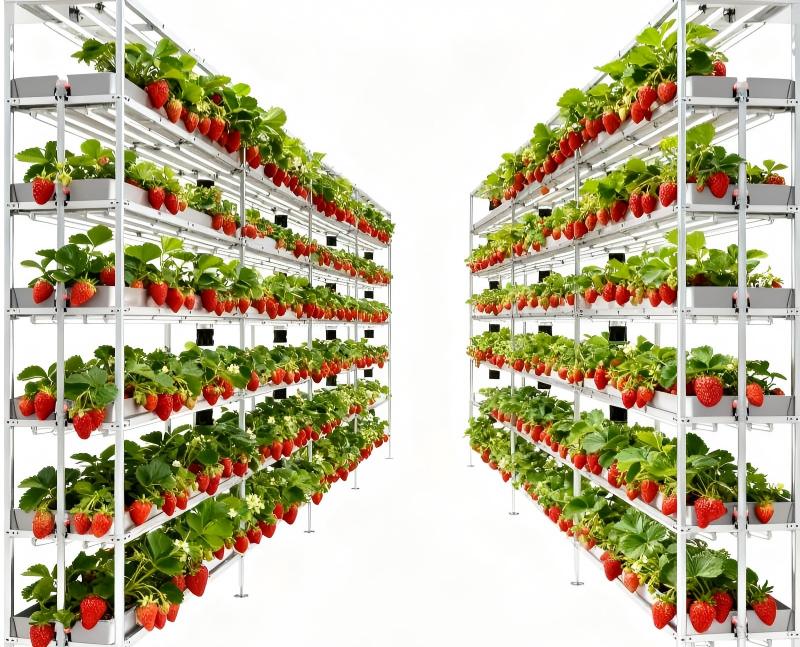
Grow racks are tight. The distance is short. You don't get the luxury of hanging lights high and "letting it blend".
And strawberries are not a crop you push hard for a few weeks and finish. They run long. They flower and fruit continuously. On the same shelf, you'll have new leaves, open flowers, and fruit filling at the same time. So the lighting has to be steady. No drama. There should be no significant fluctuations.
That's the first reason wattage matters. This is not because higher wattage is considered "bad" but rather because the rack system penalises any activity that results in hot spots, excess heat, or uneven coverage.
The big misunderstanding: thinking wattage equals results
A lot of people see a rack and think, "Let's use fewer lights, higher wattage and keep it simple." On paper, that sounds efficient. In real rooms, it often creates two headaches:
- The light becomes too concentrated
When a high-power fixture sits close to the canopy, you get a bright center and weaker edges. Strawberry plants don't all sit perfectly under the "sweet spot," so performance becomes uneven across the tray.
- Heat becomes harder to manage.
Even if one fixture doesn't feel hot by hand, put several of them across layers and run them for long hours-heat stacks up in the rack zone. And strawberries notice that kind of "quiet heat" long before humans do.
This way of thinking isn't unique to strawberries. It comes from broader vertical farming lighting design, which we explain in more detail in LED Tube Grow Lights Design for Vertical Farming.
Why 40-watt linear LED grow light bar fits rack distance better
1. Racks force close placement. There's just no space
A 40W linear LED grow light sits in a safer range for that close distance. It gives you usable output without turning the shelf into a hot zone. It also gives you room to design the layout the way racks want it: more distributed light, more even spread.
This is the part many growers miss: with racks, you're not trying to win by intensity. You're trying to win by coverage.
This is the kind of decision that usually depends on rack height, plant spacing, and how the system is expected to scale. If you're working through these choices for a strawberry rack project, comparing notes often helps clarify what makes sense.
2. Even coverage beats peak intensity
Strawberries punish unevenness. Not immediately, but steadily. When coverage is patchy, you don't just get "a little uneven growth." You get a chain reaction:
- Some plants shade others more
- Airflow changes from tray to tray.
- Flowering time spreads out.
- Fruit sizing becomes less consistent
This is also why many strawberry rack systems move toward linear layouts instead of point-source fixtures. We explain this in more detail in Why Use Linear LED Grow Light Bars for Vertical Strawberry Farms.
So if you can make one thing better in strawberry grow rack systems, make it uniformity. That's why linear lights work well here. A linear LED grow light bar spreads light down the shelf length instead of creating a few bright points.
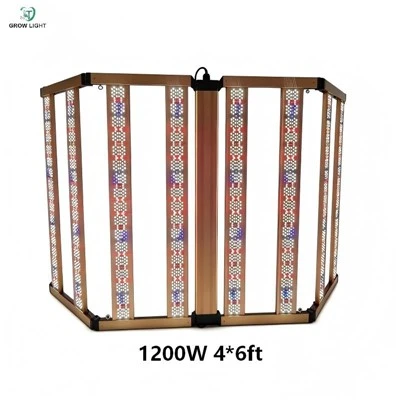
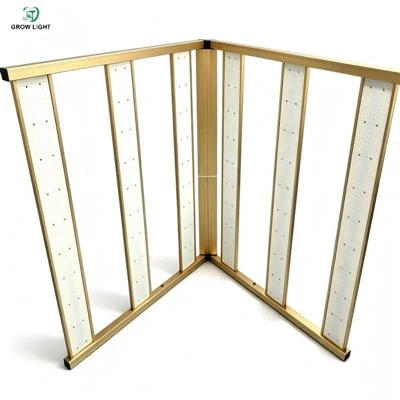
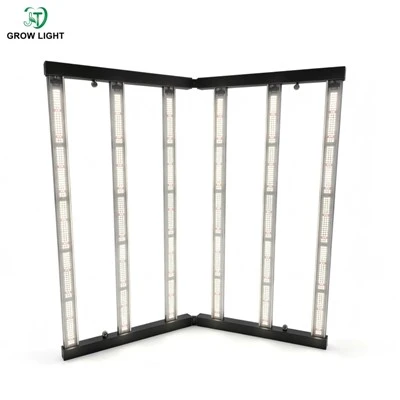
With multiple 40W bars per layer, you get a smoother light field. Less guessing. Less chasing problems later. Instead of relying on one high-output source, multiple 40W linear LED grow light bars can be arranged along each shelf, creating a more even light plane across the tray. The result is better uniformity, lower heat concentration, and a setup that behaves more predictably as the system scales. This is the same design logic behind our 40W linear LED grow light developed for strawberry rack systems.
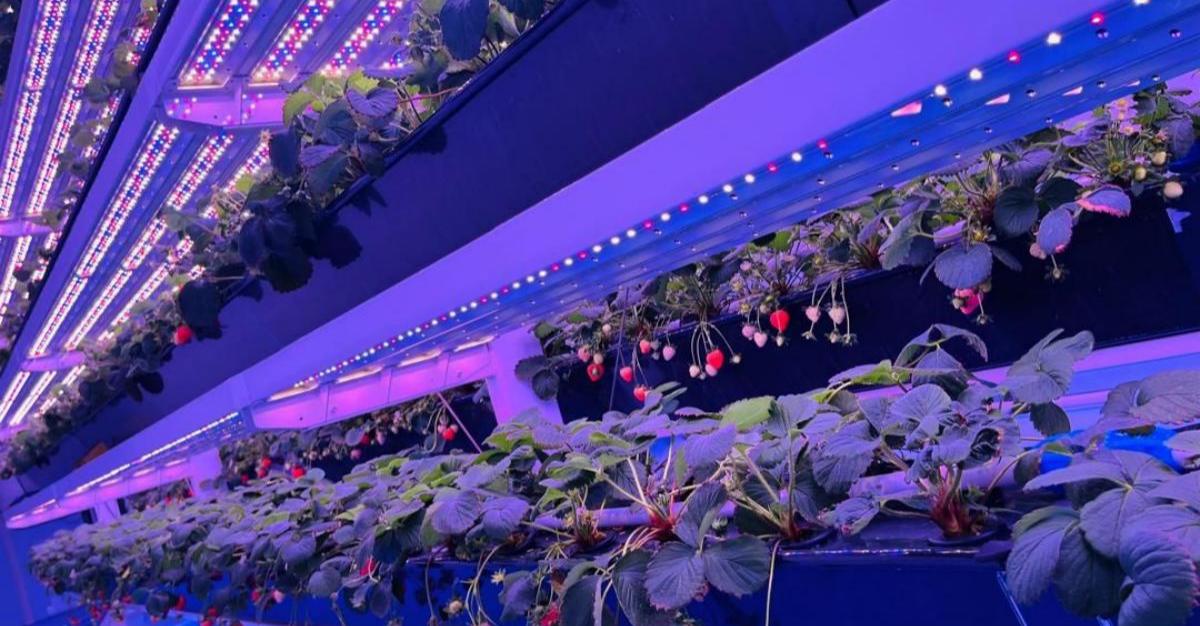
3. Heat stress is the quiet killer in rack rooms
In rack setups, heat doesn't behave as it does in open rooms. Warm air gets trapped between layers. The canopy zone holds onto it. And the longer you run, the more it compounds. You can have a room sensor that looks "okay" while the plant zone is already drifting into stress.
Lower-wattage fixtures help because they don't dump heat into one spot. They spread it out. Pair that with passive cooling, and you reduce those sharp hot zones that cause trouble over time.
This is also why a lot of rack projects look fine at a small scale and start struggling after expansion. When you add layers, you don't just add plants-you add heat sources. Heat-related issues often show up slowly in rack systems. We've shared how lighting choices contribute to this in How to Avoid Heat Stress in Strawberry Rack Systems.
Why 40W is a practical middle point
People sometimes ask: why 40W? Why not 20W? Why not 60W?
Because grow racks are not just plants. They're also wiring, drivers, installation time, and daily maintenance.
- Go too low (like 20W), and you need a lot more units to build the same coverage. More wiring, more labor, more connections to manage.
- Go too high (like 60W+), and you increase heat risk and reduce flexibility. You start spacing lights further apart, and the uniformity you wanted from racks begins to disappear.
40W sits in a reasonable middle zone. It scales well. You can design a clean layout layer by layer without turning the system into a wiring project or a heat project. This section describes what "good strawberry rack lighting" looks like in real-world applications. It's not the brightest setup. It's the one that stays stable.
You want a layout that:
- Keeps the rack evenly lit, edge to edge.
- Avoids harsh spots at close distance
- Doesn't make you fight heat every afternoon
- Behaves the same on every layer, so expansion is predictable
That's why 40W linear bars often make sense. They're not exciting. They're reliable. And in strawberries, reliability is what keeps quality consistent and harvest planning sane.
For growers building or expanding strawberry racks, lighting designs like this often start with choosing the right wattage and layout-and only then selecting the fixture that fits that system. Strawberry rack lighting rarely fails because of one big mistake. It usually comes down to a series of small choices adding up. If you're planning or expanding a grow rack system and want to sanity-check those choices, that conversation is often worth having early.