
In many commercial grow rooms, lighting problems don't announce themselves loudly. Power consumption looks fine. PPFD readings appear acceptable. Lights are running. On paper, everything checks out. And yet, plants tell a different story. Uneven canopy development. Edge trays lagging. Subtle but persistent differences between rows, layers, or batches that never quite disappear.
I've seen this pattern repeat itself across projects of different sizes and crops. And over time, one conclusion becomes hard to ignore: most lighting issues are not caused by insufficient light, but by inaccurate light placement.
Light placement accuracy is rarely discussed because it's harder to quantify than wattage or efficacy. But in modern commercial cultivation-especially in vertical racks, nurseries, and close-canopy systems-it often matters more than increasing output. This is exactly where tube LED grow lights and LED grow light bars quietly outperform many more complex lights.
Most Grow Rooms Don't Lack Light - They Misplace It
A common misconception in lighting design is that increasing intensity automatically improves results. In practice, this approach often masks underlying placement problems instead of solving them.
High-output lights tend to concentrate light around central zones. As distance increases or canopy height fluctuates, distribution changes rapidly. Plants directly beneath the light receive excessive light, while edges and lower areas operate below optimal levels. The result is variability, not improvement.
Light placement accuracy is about ensuring that photons consistently land where plants can actually use them-across the entire target canopy, not just in ideal measurement spots. When placement is inaccurate, no amount of additional power truly fixes the problem. It simply increases waste and stress. This is why many experienced growers eventually shift their focus from "how much light" to "where the light goes".
Why Linear Light Sources Offer Structural Placement Advantages
The difference between point-based lights and linear lights is fundamentally geometric.
Traditional high-power lights behave like concentrated sources. Their placement relies heavily on mounting height, beam angle, and careful spacing to approximate uniformity. In environments where canopy height is stable and vertical space is generous, this approach can work reasonably well.
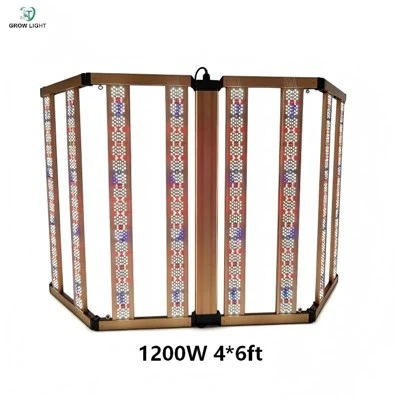
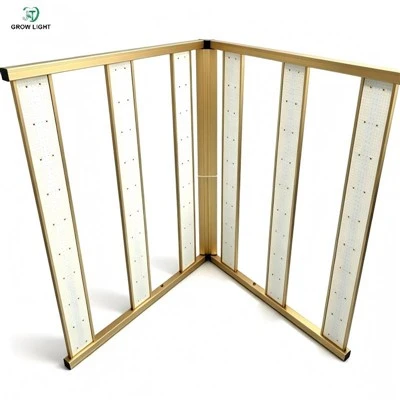
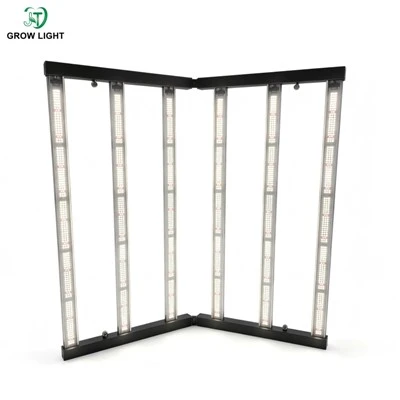
Tube LED grow lights and LED grow light bars, by contrast, are inherently linear light sources. They emit light along a defined line, not from a single focal point. This structural characteristic allows light to follow crop layout rather than forcing crops to adapt to light distribution.
In row-based cultivation, multi-layer racks, and shelving systems, linear placement mirrors plant geometry. Light runs parallel to plant rows, shelves, or trays. Overlapping distribution becomes predictable and adjustable. Placement is guided by physical alignment instead of optical compromise.
This structural simplicity is the foundation of placement accuracy. It allows designers and operators to control light behavior through layout rather than relying on compensatory intensity.
Close-Canopy Systems Expose Placement Errors Immediately
Placement accuracy becomes critical when canopy-to-light distance shrinks. In close-canopy environments-often 20 to 40 centimeters in rack systems-small deviations in light position produce disproportionate effects. A slight tilt, a warped housing, or uneven mounting can create hotspots and shadows that directly influence growth.
This is where LED grow lights tube systems demonstrate a practical advantage. Parallel tube placement distributes light evenly across the canopy plane. Overlapping light fields reduce sensitivity to minor height variations. Plants experience a smoother photon gradient, even as canopy thickness changes over time.
Structural stability plays a surprisingly important role here. A light that shifts, sags, or deforms under thermal stress gradually loses placement accuracy. Over months of continuous operation, this drift becomes visible in crop response.
This is one reason why thick aluminum construction, like that used in JTGL's LED tube grow lights, matters beyond heat dissipation. Rigid housings help maintain alignment in close-canopy installations, ensuring that light stays where it was originally designed to land-cycle after cycle.
Light Placement Determines Whether Spectrum Even Matters
Spectral tuning often gets more attention than placement, but the two are inseparable. A full spectrum LED grow light tube can only deliver its intended biological effects if the spectrum actually reaches the entire target canopy evenly. When placement is inconsistent, spectrum becomes fragmented. Plants in different positions effectively receive different "recipes," even though the light output remains unchanged.
This is why many growers experience mixed results after switching to improved spectra without addressing placement. Internode spacing improves in one area, while another section stretches unpredictably. Leaf expansion varies across trays. The issue is not spectrum quality-it's placement precision.
Once light placement becomes stable and repeatable, spectrum adjustments suddenly start behaving as expected. This is where multiple spectrum options within a tube LED platform become genuinely useful rather than theoretical. With accurate placement, spectrum becomes a fine-tuning tool instead of a blunt instrument.
JTGL's LED tube grow lights are often selected in projects where growers want this level of control. Stable placement combined with selectable spectral options allows operators to adjust growth behavior without redesigning physical layouts-a key advantage in commercial environments.
Environmental Stress Quietly Undermines Placement Accuracy
Light placement accuracy is not a one-time achievement. It must be maintained under real operating conditions.
Commercial grow rooms are humid, frequently cleaned, and exposed to nutrient mist and condensation. Over time, moisture intrusion, corrosion, and thermal cycling degrade Light integrity. Mounting points loosen. Housings warp subtly. Internal components shift.
These changes are rarely dramatic, but they affect placement long before Lights fail outright.
This is where IP65-rated LED tube grow lights offer a hidden advantage. The goal of IP65 protection is not simply to prevent water damage, but to preserve mechanical stability under long-term environmental exposure. Sealed designs reduce internal corrosion and moisture-induced deformation, helping Lights maintain their original alignment.
In large-scale facilities, this durability translates directly into placement consistency across rooms and over time. Light stays where it belongs, even as environmental complexity increases.
Where Tube LED Grow Lights Deliver the Greatest Placement Accuracy
The placement advantages of tube LED grow lights are most pronounced in systems where geometry and repeatability matter more than brute force.
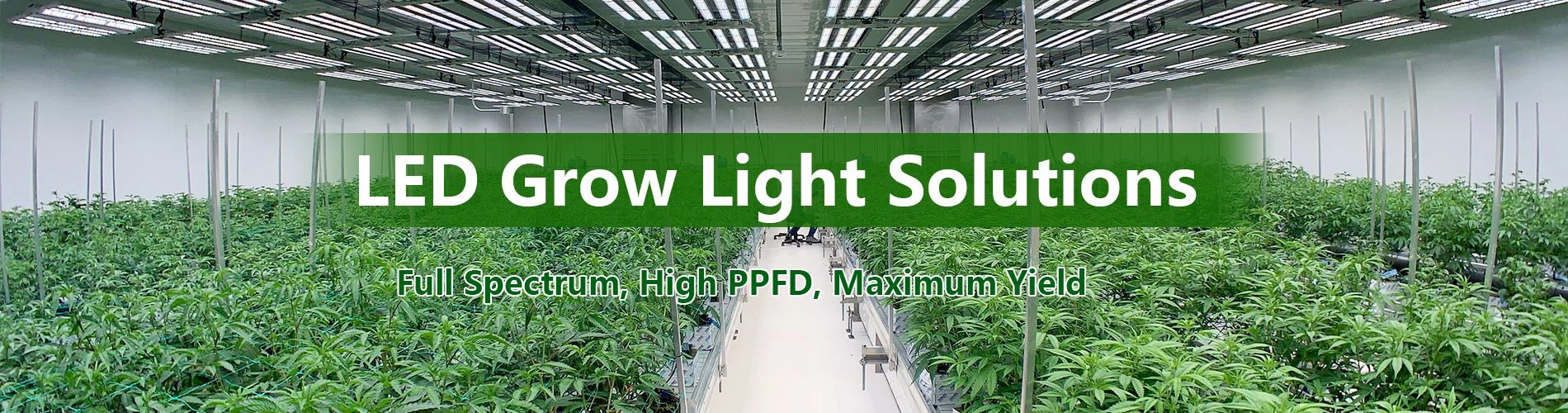
These include multi-layer rack systems, vertical farms, nurseries, propagation rooms, and any cultivation environment with defined rows or shelving. In these contexts, LED grow light bars and full spectrum LED grow light tubes align naturally with plant layout, delivering predictable, uniform coverage.
In contrast, environments that prioritize deep canopy penetration, high ceilings, or flowering-stage intensity may place less emphasis on placement precision and more on raw output. In such cases, tube-based solutions are not inherently superior. Placement accuracy matters most where distance is limited and uniformity is essential. Understanding this boundary is part of using tube LED grow lights effectively rather than universally.
Placement Accuracy Is a System Property, Not a Light Feature
One of the most important lessons from real projects is that light placement accuracy emerges from system behavior, not isolated components.
Lights must be structurally stable. Mounting must be repeatable. Layout must follow crop geometry. Environmental resistance must preserve alignment. When these elements align, tube LED grow lights become powerful tools for controlling where light actually goes.
Manufacturers like JTGL focus on these system-level realities. Our LED tube grow lights emphasize rigid construction, stable thermal performance, environmental protection, and practical spectrum options-not as marketing points, but as requirements for long-term placement accuracy.
In commercial cultivation, the difference between acceptable results and consistent excellence often lies in these details. Light that reaches the right place, at the right time, every cycle, creates predictability. And predictability is the foundation of profitable growing.
Why Placement Accuracy Changes How You Design Lighting Systems
Once placement accuracy becomes the priority, lighting design changes.
Instead of asking how powerful a Light is, operators ask how precisely it can be positioned. Instead of compensating for uneven coverage with extra wattage, they refine layout. Instead of chasing higher numbers, they reduce variability.
This shift explains why tube LED grow lights continue to gain relevance in modern systems. They allow light to be treated as a controlled input rather than a blunt force.
And in environments where precision determines success, getting light in the right place is more efficient than getting more light.
That is the quiet but decisive advantage of tube LED grow lights-and why placement accuracy is becoming one of the most important metrics in commercial cultivation today.